Based on recorded story, mood and style. Your preferences can change the order.
Memory and identity
What changes Picnic at Hanging Rock: slow, atmosphere-led and episodic. The Hole: emergence opens a mystery, flashbacks revise the group's history and psychological reveal reframes the story.
After disappearing for eighteen days, British school student Liz emerges from an underground bunker, while three of her classmates remain missing. In interviews with psychiatrist Dr. Horwood, Liz tells a story about being unpopular, joining an exclusive group, and hiding in a disused wartime shelter during a school outing. Her account shifts as details fail to align, turning the rescue into a psychological mystery about adolescent desire, betrayal, and the dangers of trusting a single narrator.
Based on recorded story, mood and style. Your preferences can change the order.
Survival
What changes Picnic at Hanging Rock: slow, atmosphere-led and episodic. Elephant: fragmented and understated.
Over the course of an ordinary school day, the film follows several students through corridors, classrooms and small social encounters before their paths converge in a sudden act of violence. It offers fragments rather than a conventional explanation, shifting perspective and revisiting moments with little interpretive guidance. The restrained surface makes routine detail unsettling, while its refusal to simplify causation leaves space for difficult questions.
Both share themes of adolescence, plus an unsettling atmosphere.
Why this matches +
Genres: Psychological thriller / Drama
Shared film traits
Based on recorded story, mood and style. Your preferences can change the order.
Coming of age
What changes Picnic at Hanging Rock: slow, atmosphere-led and episodic. Stoker: slow-burn suspense and sudden violence.
After her father dies in a car crash, eighteen-year-old India Stoker lives with her unsettled mother Evelyn. At the funeral, her previously unknown uncle Charlie arrives and says he will stay with them. India distrusts his charm, especially as people who challenge his story begin disappearing, while Evelyn grows closer to him. A visit from India's great-aunt deepens the family's unease, and India starts to recognize a disturbing affinity between herself and the uncle she barely knows. The isolated family home becomes a setting for a slow, dangerous coming-of-age.
Both share themes of adolescence, plus a dreamlike atmosphere.
Why this matches +
Genres: Drama / Romance
Shared film traits
Based on recorded story, mood and style. Your preferences can change the order.
Coming of age · Memory and identity
What changes Picnic at Hanging Rock: slow, atmosphere-led and episodic. The Virgin Suicides: reflective and memory-led progression.
Years after five sisters died by suicide, the neighborhood boys who watched them as teenagers revisit their fragmentary memories of the Lisbon family. The film centers on the girls’ restricted lives under protective parents and on the distance between what the boys observed and what they can truly know. Sofia Coppola’s adaptation is a melancholy study of adolescence, family control, and retrospective mythmaking; its subject matter is handled as tragedy, not as a puzzle to solve.
Based on recorded story, mood and style. Your preferences can change the order.
Coming of age
What changes Picnic at Hanging Rock is tagged dreamlike and unsettling; Dazed and Confused is tagged nostalgic and loose.
On the last day of school in 1976, a group of Texas teenagers move between parties, cruising, school traditions, and uncertain summer plans. The film follows several overlapping circles rather than a single protagonist, catching the way older students exercise power while younger ones try to decide how much they will conform. Its loose shape turns ordinary adolescent rituals into a portrait of a moment before adulthood begins.
Based on recorded story, mood and style. Your preferences can change the order.
Memory and identity
What changes Picnic at Hanging Rock: slow, atmosphere-led and episodic. A Single Man: measured and interior.
In 1960s Los Angeles, a British professor is grieving the sudden death of his partner and tries to move through one day while deciding whether he can continue living alone. Encounters with a friend, a student and strangers alter the emotional texture of that day without undoing his loss. The film turns clothing, color and routine into close expressions of grief, loneliness and the fragile possibility of renewed attention.
Both share themes of grief, plus a dreamlike and unsettling atmosphere.
Why this matches +
Genres: Thriller / Drama
Shared film traits
Based on recorded story, mood and style. Your preferences can change the order.
Memory and identity
What changes Picnic at Hanging Rock: slow, atmosphere-led and episodic. Stay: disorienting, recursive and slow-building.
Psychiatrist Sam Foster takes on Henry Letham, a college student who warns that he will die by suicide at midnight on his twenty-first birthday. As Sam investigates Henry’s past and tries to keep him safe, familiar people and places behave in impossible, repeated ways. Sam’s fiancée Lila understands the seriousness of Henry’s crisis, while Sam becomes increasingly uncertain about what he sees. Marc Forster’s thriller builds a puzzle from unstable perception, grief, and the effort to reach someone in danger.
Based on recorded story, mood and style. Your preferences can change the order.
Survival
What changes Picnic at Hanging Rock: slow, atmosphere-led and episodic. Prisoners: slow burn.
Two young girls disappear during a neighbourhood holiday gathering, leaving their families dependent on an investigation that produces uncertainty faster than reassurance. One father becomes convinced that a released suspect knows more than he admits and decides that protecting his child justifies methods the police will not use. The detective's parallel search exposes a wider history while the parent's private certainty creates victims and consequences of its own.
Both share themes of adolescence and grief, plus an unsettling atmosphere.
Why this matches +
Genres: Drama / Coming-of-age
Shared film traits
Based on recorded story, mood and style. Your preferences can change the order.
Coming of age
What changes Picnic at Hanging Rock: slow, atmosphere-led and episodic. This Is England: a summer of social discovery gradually shifts into moral conflict.
In 1983, twelve-year-old Shaun Fields is lonely after his father’s death in the Falklands War and begins spending time with a local group of skinheads. Their welcoming friendship changes when Combo, an older member newly released from prison, returns and introduces racist nationalist politics into the group. Shane Meadows’s drama follows Shaun’s search for belonging as affection, identity, and ideology become entangled, keeping the consequences close to a child still learning how adults shape his world.
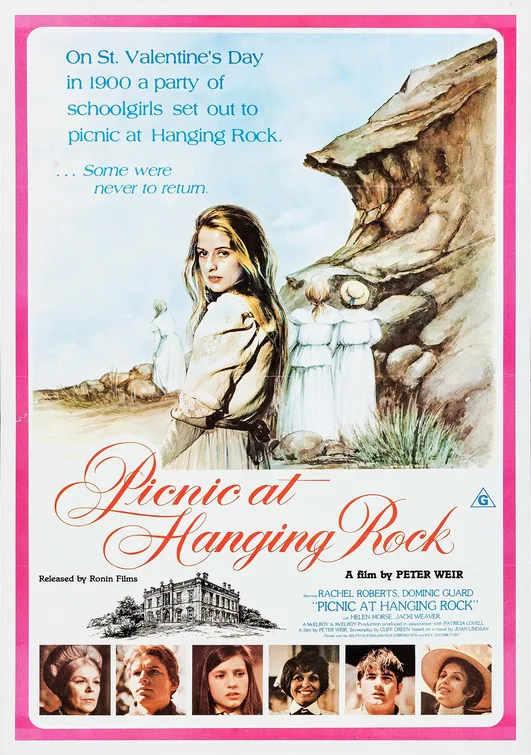
At an Australian girls' boarding school in 1900, a Valentine's Day picnic at Hanging Rock ends with several students and a teacher missing. Their disappearance fractures the school's carefully ordered routines and draws in classmates, staff and local residents. As searches and rumors grow, the surviving students struggle with grief and uncertainty, while the landscape offers no clear explanation. The film lets absence reshape the whole community.
What drives the story
The disappearance of several women from a school picnic becomes a mystery whose effects ripple through students, staff and community.
The people at its centre
Miranda, Marion, Irma and Edith occupy different roles within the school hierarchy, while Sara's exclusion adds another quiet absence.
What it feels like
The landscape is filmed as both alluring and unreadable, so atmosphere, pauses and uncertain memory matter more than a solved mystery.
Worth knowing
The film does not solve its central disappearance like a detective puzzle; ambiguity is the point, not a missing final clue.
AdolescenceRepressionGrief
Mood
Dreamlike · Unsettling · Meditative
Pacing
Slow · Atmosphere-led · Episodic
Visual style
Lyrical · Sunlit · Dreamlike · Natural landscape
Storytelling
Disappearance · Ensemble mystery · Coming of age · Period drama