Based on recorded story, mood and style. Your preferences can change the order.
Social hierarchy · Romance and intimacy
What changes Raise the Red Lantern: patient repetition of household routines accumulates into psychological pressure. The Wedding Banquet: a private arrangement expands into a banquet and a series of comic attempts to keep different truths apart.
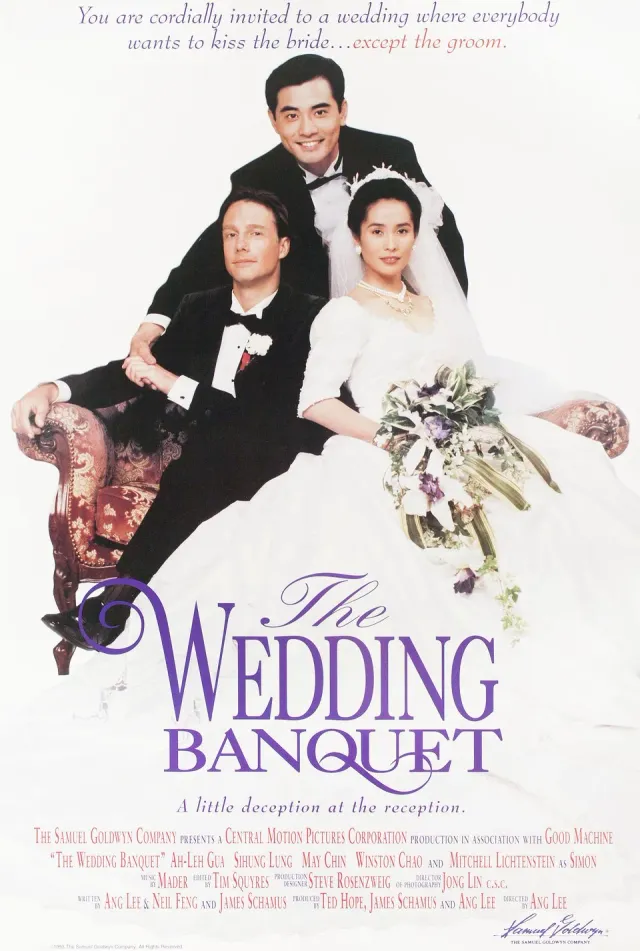
Wai-Tung Gao, a Taiwanese immigrant in New York, lives happily with his partner Simon but has not told his traditional parents that he is gay. His parents want him to marry and continue the family line, so he and Simon invent impossible requirements for a bride. When Wei-Wei, a penniless artist renting from Wai-Tung, agrees to a marriage of convenience, the plan seems manageable until his parents travel from Taiwan for a lavish banquet. The visit turns a private arrangement into a comic web of performance and concealment. As the parents’ expectations collide with Simon’s place in Wai-Tung’s life, the family must decide what honesty and care can look like.
Based on recorded story, mood and style. Your preferences can change the order.
Romance and intimacy · Memory and identity
What changes Raise the Red Lantern: patient repetition of household routines accumulates into psychological pressure. Eat Drink Man Woman: repeated sunday meals frame separate storylines as each family member makes an unexpected change.
Semi-retired Taipei chef Chu prepares an elaborate Sunday dinner for his three adult daughters, whose lives are moving in different directions. Jia-Jen is a chemistry teacher and Christian; Jia-Chien is an airline executive with a suppressed love of cooking; and Jia-Ning is a college student working at a fast-food restaurant. The family meal gives each woman a place to announce changes, while Chu’s own decisions unsettle the household’s assumptions about him. Across repeated dinners, food becomes both an expression of care and a way to avoid difficult conversation. Ang Lee’s ensemble drama observes how changing relationships can renew a family’s connection.
Based on recorded story, mood and style. Your preferences can change the order.
What changes Raise the Red Lantern: patient repetition of household routines accumulates into psychological pressure. Rebecca: slow burn.
A shy young companion marries a wealthy widower and moves into his imposing country house, where reminders of his first wife dominate daily life. The housekeeper's hostility and the new bride's insecurity make an absent woman seem more powerful than anyone living there. As concealed facts about the earlier marriage emerge, romantic reassurance becomes entangled with class authority, jealousy and the moral cost of protecting a household's secrets.
Based on recorded story, mood and style. Your preferences can change the order.
What changes Raise the Red Lantern: patient repetition of household routines accumulates into psychological pressure. Crazy Rich Asians: buoyant and relationship-led.
An American economics professor accompanies her boyfriend to a wedding in Singapore and discovers that his family occupies an extraordinary position of wealth. Their relationship becomes subject to judgments about status, upbringing and family duty that she had not anticipated. Navigating lavish gatherings and private confrontations, she must decide how to preserve her dignity and independence without treating love as a contest she can win through approval.
Based on recorded story, mood and style. Your preferences can change the order.
Memory and identity
What changes Raise the Red Lantern: patient repetition of household routines accumulates into psychological pressure. Lust, Caution: slow-burn and intensifying.
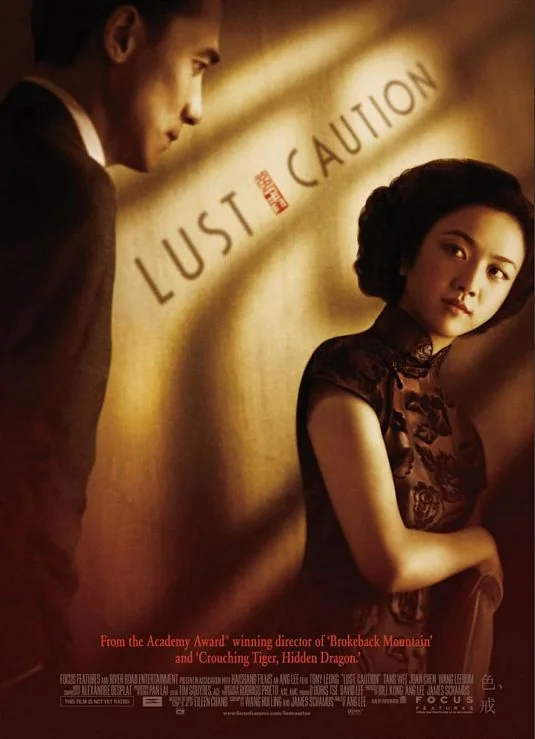
During wartime Shanghai, a young woman becomes involved in a resistance plan that requires her to approach a powerful official under an assumed identity. Their relationship grows into a dangerous entanglement that complicates the mission and her sense of agency. The period drama combines political espionage with intimate, adult material, examining how performance and desire can become tools of survival while leaving the participants vulnerable to betrayal.
Based on recorded story, mood and style. Your preferences can change the order.
Social hierarchy · Power and authority
What changes Raise the Red Lantern: patient repetition of household routines accumulates into psychological pressure. Story of O: ritualized, measured and episodic.
Fashion photographer O is taken by her lover René to Château Roissy, where an organized circle subjects her to rituals of sexual control. As René's older half-brother Sir Stephen assumes authority, O is pushed to distinguish obedience from affection while trying to retain a sense of self. Her encounters with Jacqueline and the women at Anne-Marie's country house broaden the film's closed study of desire, hierarchy and agency.
Based on recorded story, mood and style. Your preferences can change the order.
Social hierarchy · Romance and intimacy
What changes Raise the Red Lantern: patient repetition of household routines accumulates into psychological pressure. Farewell My Concubine: decades of personal change and national history circle back to the performers’ signature opera.
Beginning in 1920s Peking, the film follows Douzi and Shitou, two boys trained in a Peking opera troupe who grow into performers Cheng Dieyi and Duan Xiaolou. Dieyi specializes in the female role in Farewell My Concubine, while Xiaolou plays the king. Their artistic partnership and personal attachment are tested when Xiaolou marries Juxian and when political upheavals repeatedly reshape public life. Across decades of war, revolution and ideological campaigns, the performers return to the opera that made them famous. Their changing loyalties and memories show how private relationships and an art form are pressured by forces beyond the stage.
Based on recorded story, mood and style. Your preferences can change the order.
Romance and intimacy · Memory and identity
What changes Raise the Red Lantern: patient repetition of household routines accumulates into psychological pressure. Yi Yi: interwoven stories follow each family member as separate events reveal overlapping questions about life and perspective.
Over the course of a year in Taipei, the middle-class Jian family faces a wedding, a grandmother’s stroke, business troubles and the strains of ordinary family life. Father NJ reconnects with a former love while negotiating a new business deal; his wife Min-Min leaves for a Buddhist retreat; daughter Ting-Ting navigates adolescent relationships; and young Yang-Yang observes the adults with unusual curiosity. Each family member sees only part of the whole, and the film follows how private choices ripple through the household and its wider community.
Based on recorded story, mood and style. Your preferences can change the order.
Memory and identity
What changes Raise the Red Lantern: patient repetition of household routines accumulates into psychological pressure. Downton Abbey: The Grand Finale: an ensemble farewell resolves personal and household storylines.
As the Crawley family and their household approach another period of change, Lady Mary becomes the focus of a public scandal that threatens Downton’s place in society. The family must adapt while familiar servants and relations consider their own futures. The period drama closes the film series by returning to class, loyalty, and family continuity, letting small domestic decisions carry the weight of a larger goodbye.
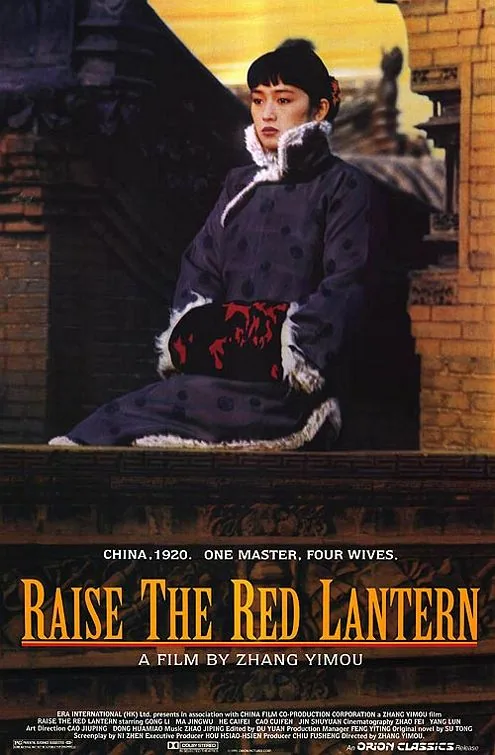
In 1920s China, university student Songlian joins the wealthy Chen household as its fourth wife after her family’s finances collapse. The master’s daily choice of which wife receives the lit red lanterns determines access to his attention and brings privileges such as meals and foot massages. Songlian initially enjoys the ceremony, then learns how it fuels competition among the wives and servants. Alliances, concealed histories and rigid household rules turn the elegant compound into a system of surveillance, where even small gestures carry weight and each woman must navigate the limits placed on her.
What drives the story
The nightly lantern ritual distributes status and attention, making household rules the force that organizes each conflict.
The people at its centre
Songlian’s alliances with the other wives shift as she learns how affection, rivalry and survival are entangled.
What it feels like
Careful compositions and repeated ceremonies make the household’s beauty feel inseparable from its confinement.
Worth knowing
The drama’s pressure comes from women competing within a ritualized system that keeps real authority elsewhere.
Patriarchyritualstatus
Mood
Elegant · tense · oppressive · mournful
Pacing
Patient repetition of household routines accumulates into psychological pressure
Visual style
Symmetrical courtyard compositions · saturated red lanterns and tightly controlled interiors
Storytelling
New wife enters a ranked household; ritualized privileges spur rivalry and intrigue