An unexpected guardianship forces a grieving man to revisit the place and history he has been unable to re-enter.
Why this matches +
These offer a related experience with a meaningful difference in story, tone, or presentation.
An adjacent discovery: a related idea with a different viewing experience.
Genres: Drama
Shared film traits
Based on recorded story, mood and style. Your preferences can change the order.
What changes Manchester by the Sea portrays a man living with guilt after an accidental tragedy and struggling to accept family responsibility, using a restrained drama rather than a mystery built around gifts.
After his brother Joe dies, Lee Chandler returns to the Massachusetts town he left and learns that he has been named guardian of Joe's teenage son, Patrick. The practical arrangements bring him face to face with an earlier catastrophe: a house fire accidentally killed Lee's three children, and he could not remain in the community afterward. Patrick wants to stay with friends and his band, while Lee cannot imagine rebuilding a life there. The two negotiate care without a consoling cure, settling on a future that preserves a relationship Lee can bear.
Bereavement drives Julie to abandon possessions and relationships, but unfinished music and new knowledge make complete withdrawal impossible.
Why this matches +
These offer a related experience with a meaningful difference in story, tone, or presentation.
An adjacent discovery: a related idea with a different viewing experience.
Genres: Drama / Art
Shared film traits
Based on recorded story, mood and style. Your preferences can change the order.
What changes Three Colours: Blue follows a woman withdrawing after a devastating accident and gradually reconnecting with others, without Tim's secret donation plan.
After a car crash kills her composer husband and young daughter, Julie survives and tries to erase the attachments that bind her to her former life. She leaves the family home, avoids her husband’s unfinished music and seeks anonymity in Paris. Yet the score continues to surface in fragments, and Olivier asks her to help complete the work they had been creating together. Julie also learns that her husband’s private life was not what she believed. Her attempt at freedom becomes less about forgetting than deciding what she can carry forward and with whom she can share it. The film repeatedly interrupts scenes as music catches Julie off guard, making memory arrive without her consent.
A grieving executive writes to abstract forces while coworkers attempt to draw him back into life.
Why this matches +
These offer a related experience with a meaningful difference in story, tone, or presentation.
An adjacent discovery: a related idea with a different viewing experience.
Genres: Drama / Fantasy
Shared film traits
Based on recorded story, mood and style. Your preferences can change the order.
What changes Collateral Beauty follows a grieving man whose relationships become entangled with a plan addressing loss, with an ensemble and symbolic encounters rather than organ donation.
After the death of his young daughter, advertising executive Howard Inlet withdraws from his colleagues and writes letters to Love, Time, and Death. His worried coworkers try to reach him through an unusual plan involving performers who embody those ideas, while their own grief and moral choices become part of the story. David Frankel's drama uses a lightly fantastical device to explore loss, friendship, and the difficulty of returning to life.
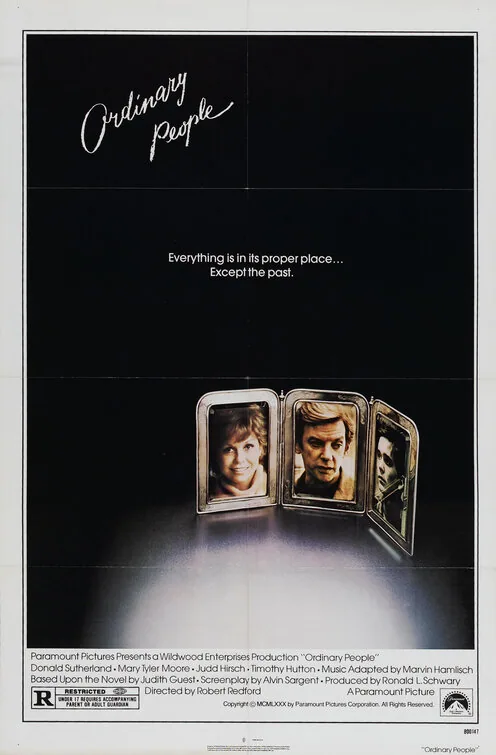
The film’s central action is Conrad’s attempt to live with grief, while the family’s outward order repeatedly blocks honest mourning.
Why this matches +
These offer a related experience with a meaningful difference in story, tone, or presentation.
An adjacent discovery: a related idea with a different viewing experience.
Genres: Drama
Shared film traits
Based on recorded story, mood and style. Your preferences can change the order.
What changes Ordinary People examines a survivor's guilt and the difficult work of reconnecting with family after a death, centering therapy and family communication rather than a private redemption scheme.
After the accidental drowning death of their eldest son Buck, the affluent Jarrett family tries to resume ordinary routines. Younger son Conrad returns home after a suicide attempt and psychiatric hospitalization, struggling with guilt and the belief that he should have died instead. Therapy with Dr. Berger helps him name grief and anger, while his father Calvin tries to reconnect with both sons’ absence. His mother Beth maintains control through social appearances and finds Conrad’s vulnerability intolerable. Their conflict forces Calvin to recognize that family recovery may not mean preserving the household intact.
After a distracted drive kills seven people, including his fiancée, Tim Thomas organizes a private plan to help people he judges deserving of a second chance. He gives bone marrow, a kidney, and portions of his liver and lung to selected recipients while investigating their character; his final plan is to donate his heart and corneas after his death. His growing relationship with Emily Posa complicates a decision he has already made, while blind pianist Ezra and abused mother Connie reveal how selectively Tim tries to intervene in other lives. The final disclosure reframes his generosity as an attempt to answer guilt through a private deservingness test, not a model of real transplant practice.
What drives the story
Tim’s private system of eligibility gives his grief a structure, but the process also puts him in the position of deciding who deserves help.
The people at its centre
His care for Emily and his recipients is sincere yet controlling; the film asks whether a self-punishing act can repair harm to people he never met.
What it feels like
Nonlinear revelations and recurring images of water and observation delay the meaning of Tim’s gifts; the film’s donor plan is deliberately melodramatic and should not be mistaken for medically or ethically realistic transplant guidance.
Worth knowing
A high-emotion drama about guilt, organ donation and suicide; its moral premise is deliberately melodramatic and should not be mistaken for real donor practice.
GuiltGenerosityMortality
Mood
Melancholic · Secretive · Sentimental
Pacing
Nonlinear · Revelatory · Measured
Visual style
Quiet close-ups · Recurring water imagery · Private spaces
Storytelling
Redemption drama · Organ donation · Romantic tragedy