The fugitives must keep moving toward safety while each landscape imposes a different survival problem.
Why this matches +
Selected for the central appeal: Wartime journeys about exile, cultural encounters and personal growth.
Genres: Drama / Adventure
Shared film traits
Based on recorded story, mood and style. Your preferences can change the order.
War and civilian life
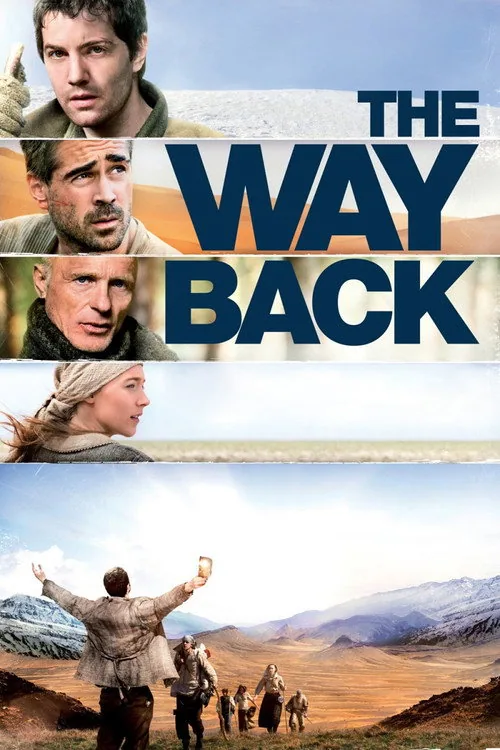
What changes The Way Back follows prisoners escaping during World War II and undertaking a long journey across Asia.
During the Second World War, a Polish prisoner escapes a Soviet labor camp with a small group of men. They travel south across Siberia, the Gobi Desert, and the Himalayas, relying on one another through hunger, weather, and exhaustion. Their route leads toward British India, but the long journey repeatedly tests the group’s capacity to keep moving and to care for its weakest members. Peter Weir’s survival drama follows the trek in stark landscapes and is based on a disputed memoir.
The search for a reincarnated teacher runs beside Siddhartha’s story, but the parallel strands have different status: one is a contemporary fictional investigation, the other a dramatized religious life.
Why this matches +
These offer a related experience with a meaningful difference in story, tone, or presentation.
An adjacent discovery: a related idea with a different viewing experience.
Genres: Drama
Shared film traits
Based on recorded story, mood and style. Your preferences can change the order.
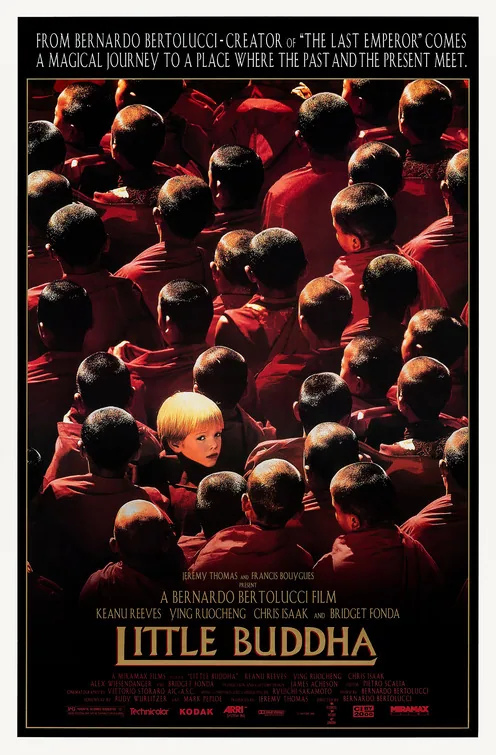
What changes Little Buddha explores Tibetan Buddhist traditions through the relationship between Western and Tibetan characters.
Tibetan Buddhist monks believe a Seattle boy may be the reincarnation of their teacher and visit his family to test that possibility. The film intercuts the modern search with a stylized account of Siddhartha Gautama’s life, turning the child’s ordinary world into a meeting point between faith, family anxiety and religious story. His parents respond differently as the monks explain their tradition, but the film does not establish the search as an objective test that proves rebirth to viewers. Bertolucci’s visual epic is an outsider-made representation of Tibetan Buddhism and combines a fictional family with a sacred narrative. It can invite curiosity about reincarnation while remaining distinct from the diverse practices and actual processes through which communities recognize tulkus.
Dengler leads an escape from captivity and tries to reach safety after his aircraft is downed.
Why this matches +
These offer a related experience with a meaningful difference in story, tone, or presentation.
An adjacent discovery: a related idea with a different viewing experience.
Genres: Adventure / Drama
Shared film traits
Based on recorded story, mood and style. Your preferences can change the order.
War and civilian life
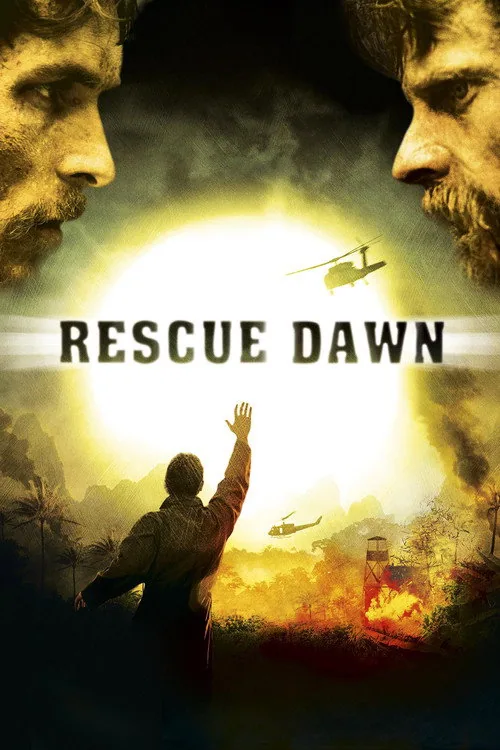
What changes Rescue Dawn follows a prisoner of war's escape and difficult journey toward freedom.
Navy pilot Dieter Dengler is shot down over Laos during the Vietnam War, captured, and held in a remote prisoner camp. He refuses an offer to condemn the United States and begins planning an escape with other prisoners, whose strength and willingness to take risks differ. Werner Herzog’s survival drama follows the escape into dense jungle, where the group must improvise food, shelter, and a route toward rescue. The film is based on Dengler’s account and emphasizes the physical costs of captivity and flight.
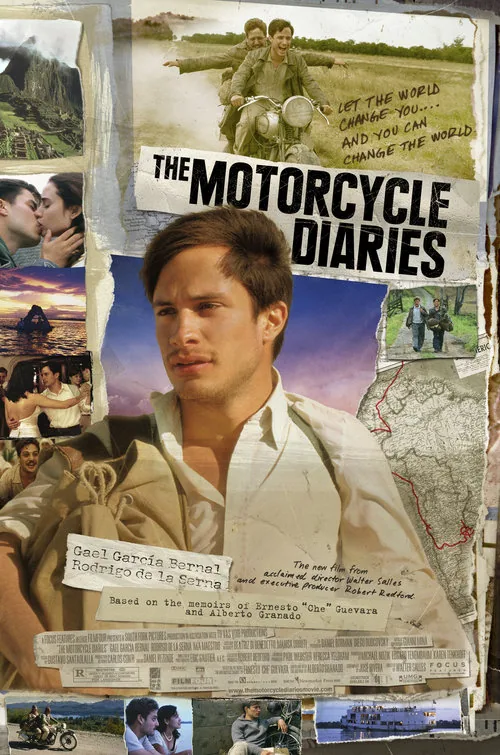
The motorcycle’s breakdown strips away the planned itinerary and brings the travelers into closer contact with people and places they would otherwise pass quickly.
Why this matches +
These offer a related experience with a meaningful difference in story, tone, or presentation.
An adjacent discovery: a related idea with a different viewing experience.
Genres: Drama / Adventure
Shared film traits
Based on recorded story, mood and style. Your preferences can change the order.
What changes The Motorcycle Diaries follows a privileged young traveler whose journey changes his awareness of other people's lives.
In 1952, medical student Ernesto Guevara and biochemist Alberto Granado set out across South America on a battered motorcycle. What begins as an impulsive road trip becomes a series of encounters with mine workers, Indigenous communities and people living with illness and poverty, including patients at a leper colony in Peru. The motorcycle fails, forcing the friends to continue by other means and changing the pace of their journey. Ernesto’s experiences broaden his view of the continent’s inequalities, though the film does not present a complete account of the later revolutionary he will become. Walter Salles adapts the travel memoirs of both men as a formative coming-of-age road film.
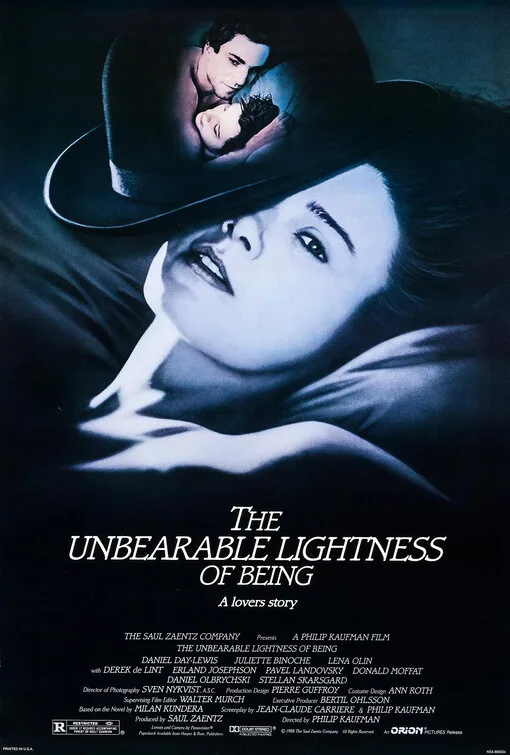
Tomas’s defense of freedom clashes with Tereza’s need for fidelity; Sabina treats independence as a protection against attachment.
Why this matches +
These offer a related experience with a meaningful difference in story, tone, or presentation.
An adjacent discovery: a related idea with a different viewing experience.
Genres: Drama / Romance
Shared film traits
Based on recorded story, mood and style. Your preferences can change the order.
What changes The Unbearable Lightness of Being places intimate relationships and personal choices amid political upheaval and exile.
Tomas, a Prague surgeon who resists attachment, moves among his lover Sabina and his increasingly devoted wife Tereza as political upheaval transforms private life. During the 1968 Soviet invasion of Czechoslovakia, Tereza photographs the occupation and the couple flee to Switzerland, where exile does not resolve their competing desires. Sabina also encounters Franz, whose idealism cannot provide the freedom she needs. The film follows the four across relationships, migration and changing political conditions, testing the difference between lightness and responsibility through choices whose emotional consequences persist.
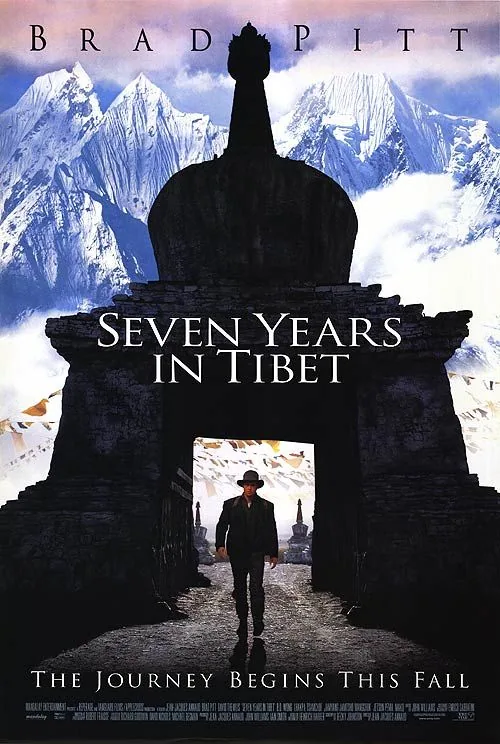
Austrian climber Heinrich Harrer leaves his pregnant wife to join an expedition, then becomes a prisoner of war when World War II begins. He and fellow mountaineer Peter Aufschnaiter escape and reach Lhasa, where Harrer gradually forms a friendship with the young Dalai Lama while the Chinese government advances into Tibet. The film contrasts Harrer’s early vanity and emotional absence with the attention he learns to give another person, then sends him back to face the son he never knew. His personal change unfolds alongside a political history the adaptation compresses into a Western traveler’s perspective.
What drives the story
Harrer’s escape brings him into a new community, while the approaching invasion makes his friendship with the Dalai Lama inseparable from questions of responsibility and departure.
The people at its centre
His bond with the boy leader encourages humility, but the film’s central redemption also depends on the family he abandoned and the son who has reason to resent him.
What it feels like
Mountain landscapes and a measured travel narrative make geography part of Harrer’s transformation, while the later political crisis abruptly narrows the characters’ room to choose.
Worth knowing
A reflective adventure-biography with major historical compression and a Western protagonist’s viewpoint. Harrer’s documented Nazi Party and SS membership was disclosed during production; dialogue was revised before release, but the film gives that history limited weight and is not a substitute for Tibetan perspectives on the period.