Explore films connected to The Unbearable Lightness of Being through Desire and commitment, political repression, exile. Choose the qualities you want to carry into your next watch.
What should feel similar?
Find your next favourite
9 films · Closest overall matches
Hide films you’ve seen or don’t want. Saved on this device.
No matches for this combination yet.
Try another option or reset your choices to see more films.
Based on recorded story, mood and style. Your preferences can change the order.
Memory and identity
What changes The Unbearable Lightness of Being: interwoven romantic arcs, historical turning point and episodic movement between prague and exile. Hiroshima mon amour: nonlinear and measured.
A French actress and a Japanese architect begin an affair in postwar Hiroshima, where her film work about peace does not grant her full access to the city’s history. Their conversations open onto her earlier love affair in occupied Nevers and the punishment that followed its loss. Repetition, fragmented images and documentary traces let one memory interrupt another without making the woman’s private suffering equivalent to the atomic bombing. The architect can ask her to remember, but cannot turn memory into shared ownership. The film’s formal argument lies in that unfinished encounter between personal recollection, public catastrophe and the limits of witnessing.
Based on recorded story, mood and style. Your preferences can change the order.
Romance and intimacy · Social hierarchy
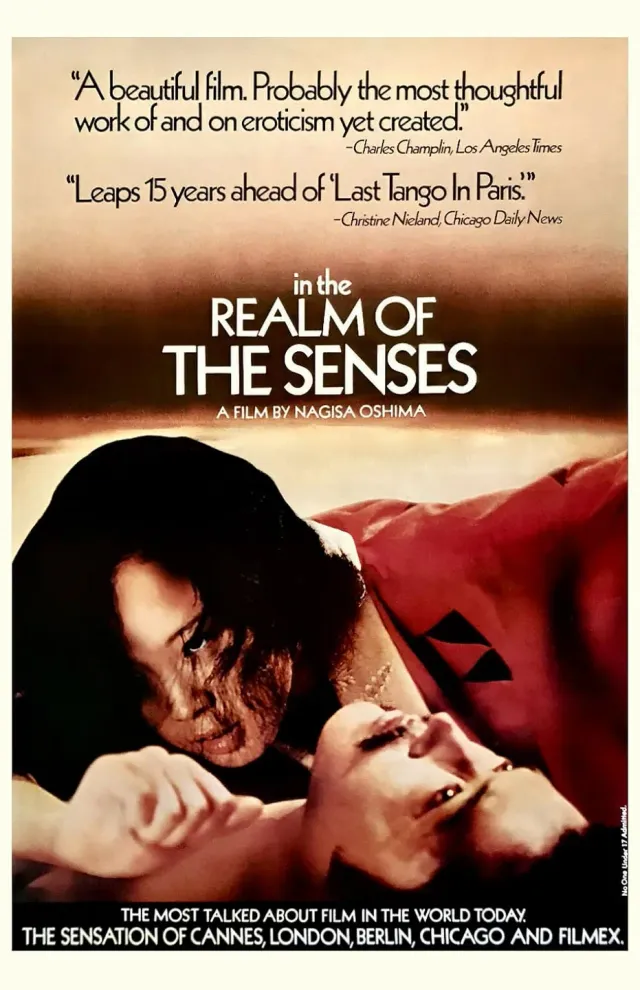
What changes The Unbearable Lightness of Being: interwoven romantic arcs, historical turning point and episodic movement between prague and exile. In the Realm of the Senses: repetitive, escalating and intimate.
In 1936 Tokyo, former sex worker Sada Abe begins a volatile affair with hotel owner Kichizo Ishida. Their private relationship grows more exclusive as they withdraw from everyday life and repeatedly test the limits of desire, control and mutual dependence. The film follows this escalating obsession with stark intimacy and historical detail, culminating in a fatal act that has made the work one of cinema's most controversial examinations of erotic attachment.
Based on recorded story, mood and style. Your preferences can change the order.
What changes The Unbearable Lightness of Being: interwoven romantic arcs, historical turning point and episodic movement between prague and exile. Frida: episodic.
After a serious accident changes her body and ambitions, Frida Kahlo turns to painting while building a turbulent life with Diego Rivera and moving among political and artistic circles. Pain and disability shape her daily life, but the film also gives space to her humor, sexual autonomy and creative decisions rather than making suffering the whole explanation for her art. Its vivid images translate paintings into a biographical fantasy, and its compressed account of relationships can make private conflict overshadow political context. Read it as a dramatized portrait of an artist, not a comprehensive biography or transparent key to every painting.
Based on recorded story, mood and style. Your preferences can change the order.
Political resistance · Romance and intimacy
What changes The Unbearable Lightness of Being: interwoven romantic arcs, historical turning point and episodic movement between prague and exile. That Obscure Object of Desire: episodic, repetitive and unsettling.
On a train from Seville to Paris, wealthy middle-aged Mathieu recounts his turbulent relationship with Conchita, a young dancer who repeatedly draws him close and then frustrates his desire for control. Two different actresses portray Conchita, sometimes within the same sequence, giving the romance a disorienting quality. Their encounters involve flirtation, money, jealousy, and reversals, while political bombings form an unsettling background to Mathieu's unreliable account.
Based on recorded story, mood and style. Your preferences can change the order.
Memory and identity
What changes The Unbearable Lightness of Being: interwoven romantic arcs, historical turning point and episodic movement between prague and exile. Reality Bites: loose ensemble episodes with a relationship arc.
After college, Lelaina documents the uncertain lives of her friends while trying to find paid work and decide what kind of relationship she wants. Her documentary project and her romantic choices place ambition, intimacy and economic insecurity in the same frame. The film turns early-career drift into both comedy and a generational portrait, capturing the pull between making art and accepting a more conventional path.
Based on recorded story, mood and style. Your preferences can change the order.
Romance and intimacy · Memory and identity
What changes The Unbearable Lightness of Being: interwoven romantic arcs, historical turning point and episodic movement between prague and exile. Certified Copy: measured, dialogue-driven and gradually shifting.
At a book event in Tuscany, writer James Miller meets a French antiques dealer who has brought her son and several copies of his book about authenticity in art. After a strained first exchange, they spend an afternoon driving, walking through town and debating originals, reproductions and intimate relationships. Their conversation gradually takes on the rhythms of a long-established couple, though the film leaves the status of their roles unsettled. The encounter tests whether an experience can gain meaning regardless of its origin.
Based on recorded story, mood and style. Your preferences can change the order.
What changes The Unbearable Lightness of Being: interwoven romantic arcs, historical turning point and episodic movement between prague and exile. Anna Karenina: measured.
In nineteenth-century Russia, Anna's affair with the cavalry officer Vronsky ruptures the marriage and social standing that have defined her public life. Their attraction offers an apparent alternative, but the social costs fall most heavily on Anna and make private desire a public spectacle. A parallel story follows Levin's slower courtship and marriage to Kitty, providing a contrasting account of work, faith and commitment. Joe Wright stages much of the film as if it unfolds inside a theater, turning class performance into both setting and visual argument.
Based on recorded story, mood and style. Your preferences can change the order.
Memory and identity
What changes The Unbearable Lightness of Being: interwoven romantic arcs, historical turning point and episodic movement between prague and exile. The Majestic: measured and gradual.
A Hollywood screenwriter loses his memory after a car accident and is mistaken for a local man who never returned from war. Welcomed into a small town, he helps revive a struggling cinema and forms relationships before his past resurfaces. The drama blends romance and civic memory with a period story about identity, loyalty and political suspicion during blacklisting.
Based on recorded story, mood and style. Your preferences can change the order.
What changes The Unbearable Lightness of Being: interwoven romantic arcs, historical turning point and episodic movement between prague and exile. Bound: tight escalating suspense and plan-and-counterplan structure.
Corky, an ex-convict working as a handyman in an apartment building, meets Violet, who is trapped in a relationship with mob money launderer Caesar. The women become lovers and plan to steal a large sum from the mob before Caesar can discover it. Their plan depends on timing, trust, and misdirection in the neighboring apartments, where one mistake could bring violent consequences. Lana and Lilly Wachowski’s debut feature is a tightly controlled neo-noir caper that centers a sapphic romance and gives its protagonists agency within a dangerous crime world.
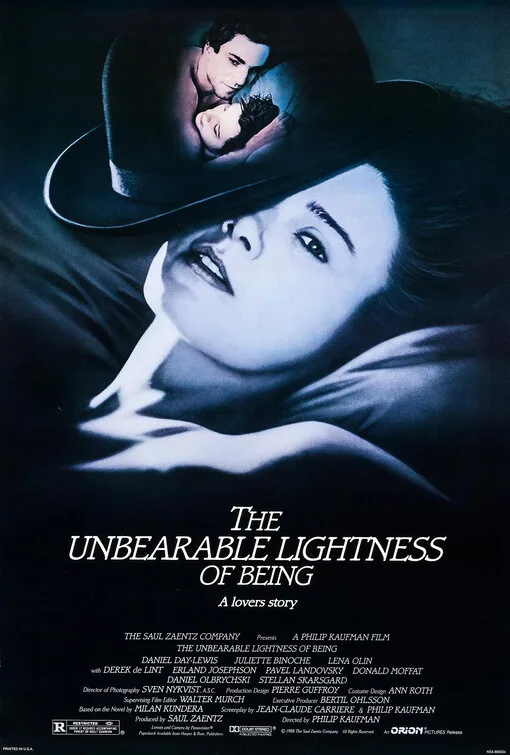
Tomas, a Prague surgeon who resists attachment, moves among his lover Sabina and his increasingly devoted wife Tereza as political upheaval transforms private life. During the 1968 Soviet invasion of Czechoslovakia, Tereza photographs the occupation and the couple flee to Switzerland, where exile does not resolve their competing desires. Sabina also encounters Franz, whose idealism cannot provide the freedom she needs. The film follows the four across relationships, migration and changing political conditions, testing the difference between lightness and responsibility through choices whose emotional consequences persist.
What drives the story
Tomas’s defense of freedom clashes with Tereza’s need for fidelity; Sabina treats independence as a protection against attachment.
The people at its centre
Tereza and Sabina form an unexpected bond even as each loves Tomas; Franz mistakes his own idealism for a shared future with Sabina.
What it feels like
The film places erotic choice beside occupation and exile, asking how private freedom changes when history makes ordinary life precarious.
Worth knowing
A romantic political drama about desire, exile and the weight of choosing.