A day's conversation shifts the apparent history of a couple, turning judgments about art's authenticity into uncertainty about intimacy and performed identity.
What should feel similar?
Find your next favourite
9 of 18 films · Closest overall matches
Hide films you’ve seen or don’t want. Saved on this device.
No matches for this combination yet.
Try another option or reset your choices to see more films.
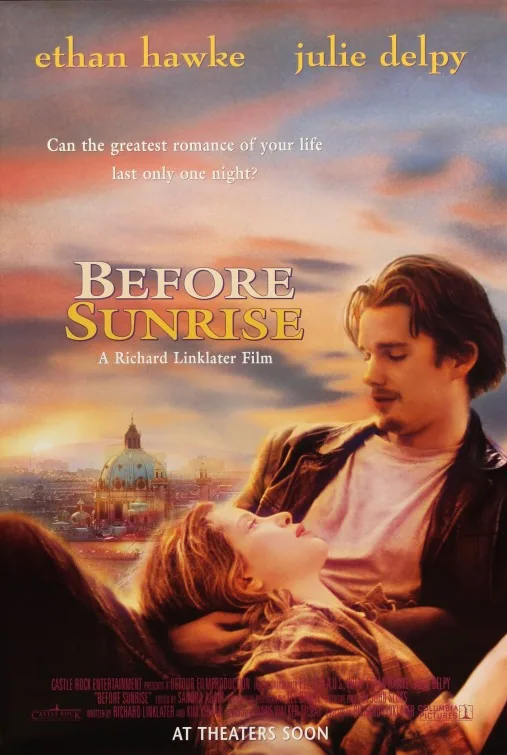
A voluntary interruption to two journeys creates a brief interval in which strangers can test connection without knowing its eventual cost.
Why this matches +
These films share important themes, atmosphere or storytelling interests with this selection.
Genres: Drama / Romance
Shared film traits
Based on recorded story, mood and style. Your preferences can change the order.
What changes Its own story: A voluntary interruption to two journeys creates a brief interval in which strangers can test connection without knowing its eventual cost.
An American traveller persuades a French student he meets on a train to spend an evening walking with him through Vienna before his departure. With no shared past and little immediate accountability, conversation moves quickly between flirtation, embarrassment and competing ideas about adulthood. The approaching train gives ordinary encounters and pauses a temporary intensity, making the possibility of intimacy inseparable from the knowledge that the meeting may not become a continuing life.
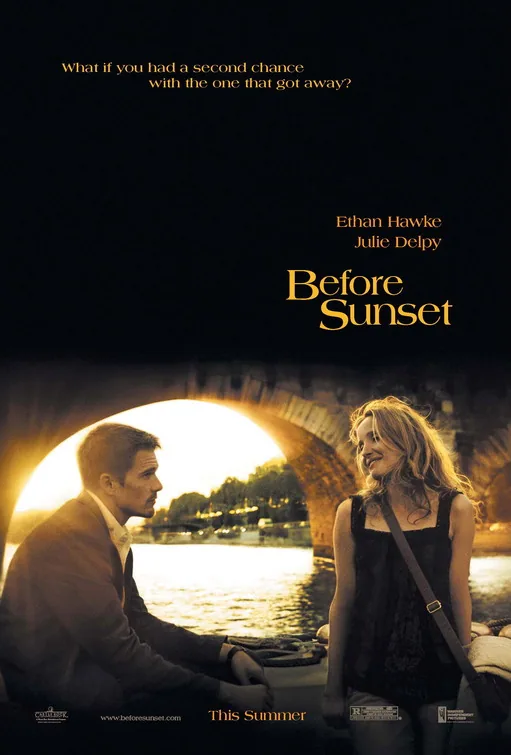
A brief reunion creates a deadline for Jesse and Celine to decide what their shared past means now.
Why this matches +
These films share important themes, atmosphere or storytelling interests with this selection.
Genres: Drama / Romance
Shared film traits
Based on recorded story, mood and style. Your preferences can change the order.
Memory and identity
What changes Its own story: A brief reunion creates a deadline for Jesse and Celine to decide what their shared past means now.
Nine years after meeting as young travelers, Jesse and Celine unexpectedly reunite in Paris and spend the afternoon walking and talking before his departure. Their conversation revisits the intimacy and choices that shaped their separate lives, revealing attraction alongside regret and responsibility. The film lets time, dialogue and a real-time deadline carry the drama, asking whether recognition can change the direction of adulthood.
A long-term couple's Greek holiday turns into a searching argument about work, family and the future.
Why this matches +
These films share important themes, atmosphere or storytelling interests with this selection.
Genres: Drama / Romance
Shared film traits
Based on recorded story, mood and style. Your preferences can change the order.
Memory and identity
What changes Its own story: A long-term couple's Greek holiday turns into a searching argument about work, family and the future.
Nearly two decades after meeting on a train, Jesse and Céline are living in Greece with their twin daughters and negotiating the practical pressures of a long relationship. A holiday with friends gives them time alone, but a disagreement over work, family and the future becomes difficult to contain. Richard Linklater's drama lets conversation expose both the durability and vulnerability of their partnership.
The unnamed man keeps trying to convert his account of a prior meeting into a present obligation. The film’s loops do not establish whether he remembers, invents or imposes the story.
Why this matches +
These films share important themes, atmosphere or storytelling interests with this selection.
Genres: Drama / Mystery
Shared film traits
Based on recorded story, mood and style. Your preferences can change the order.
Memory and identity
What changes Its own story: The unnamed man keeps trying to convert his account of a prior meeting into a present obligation. The film’s loops do not establish whether he remembers, invents or imposes the story.
At an ornate European resort, a man insists that a woman met him the previous year and agreed to leave with him. She resists his version, while their conversations return to rooms, gardens and events that seem familiar but never settle into one chronology. A second man’s presence turns their exchange into a contest over memory and authority as much as a possible romance. Alain Resnais’s film withholds the evidence that would make the story a conventional mystery; its repeated spaces and contradictory statements keep the viewer inside a struggle over what may have happened. Ambiguity does not make the woman’s resistance incidental. The film’s formal puzzle and the pressure exerted by the man’s insistence need to be held together rather than resolved into a single secret answer.
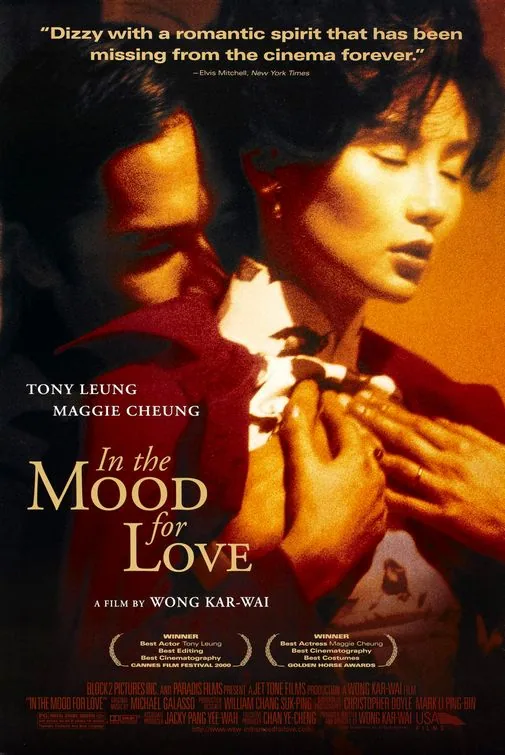
Shared suspicion creates intimacy that remains constrained by social scrutiny and the characters' own moral boundaries.
Why this matches +
These films share important themes, atmosphere or storytelling interests with this selection.
Genres: Romance / Drama
Shared film traits
Based on recorded story, mood and style. Your preferences can change the order.
What changes Its own story: Shared suspicion creates intimacy that remains constrained by social scrutiny and the characters' own moral boundaries.
Neighbours in a crowded Hong Kong apartment building discover that their spouses may be having an affair with each other. Seeking to understand that betrayal, they begin rehearsing conversations and spending time together while insisting their own relationship will be different. Repetition, proximity and fear of gossip make a growing attachment both intensely felt and difficult to acknowledge.
An intimate encounter prompts the actress to recount a suppressed wartime love, while her lover challenges the certainty with which she can claim to remember Hiroshima. The architect can challenge the actress’s certainty without becoming a spokesperson for everyone in Hiroshima.
Why this matches +
These films share important themes, atmosphere or storytelling interests with this selection.
Genres: Drama / Romance
Shared film traits
Based on recorded story, mood and style. Your preferences can change the order.
Memory and identity
What changes Its own story: An intimate encounter prompts the actress to recount a suppressed wartime love, while her lover challenges the certainty with which she can claim to remember Hiroshima. The architect can challenge the actress’s certainty without becoming a spokesperson for everyone in Hiroshima.
A French actress and a Japanese architect begin an affair in postwar Hiroshima, where her film work about peace does not grant her full access to the city’s history. Their conversations open onto her earlier love affair in occupied Nevers and the punishment that followed its loss. Repetition, fragmented images and documentary traces let one memory interrupt another without making the woman’s private suffering equivalent to the atomic bombing. The architect can ask her to remember, but cannot turn memory into shared ownership. The film’s formal argument lies in that unfinished encounter between personal recollection, public catastrophe and the limits of witnessing.
A woman’s unexplained disappearance begins a search that gradually exposes uncertainty in the relationships around her.
Why this matches +
These films share important themes, atmosphere or storytelling interests with this selection.
Genres: Drama / Mystery
Shared film traits
Based on recorded story, mood and style. Your preferences can change the order.
What changes Its own story: A woman’s unexplained disappearance begins a search that gradually exposes uncertainty in the relationships around her.
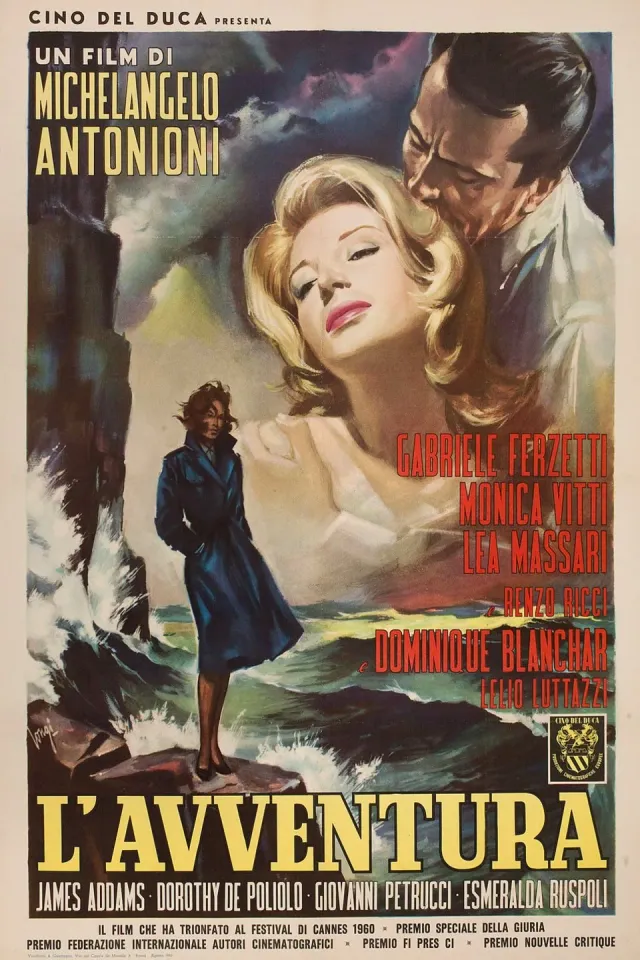
Anna joins her lover Sandro, her close friend Claudia and a group of wealthy acquaintances on a boating trip among rocky Mediterranean islands. When Anna disappears, the others begin to search, but certainty proves elusive. Claudia and Sandro grow closer as the investigation continues, leaving their attraction entangled with guilt, Anna’s absence and the fragile loyalties of their social circle.
Shared characteristics
Genre: Drama
Poster: Film rights holders; original film promotional poster from the identified source · Image source
A death in Poland leaves Véronique with a sense that part of her life has ended without knowing why.
Why this matches +
These films share important themes, atmosphere or storytelling interests with this selection.
Genres: Drama / Fantasy
Shared film traits
Based on recorded story, mood and style. Your preferences can change the order.
Memory and identity
What changes Its own story: A death in Poland leaves Véronique with a sense that part of her life has ended without knowing why.
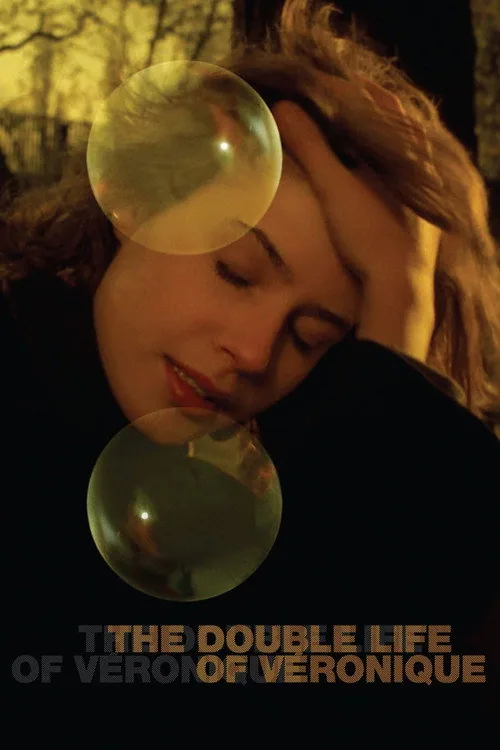
Weronika, a Polish singer with a fragile heart, feels an unexplained connection to another young woman living in France. After Weronika dies during a performance, Véronique experiences a grief she cannot explain and gradually becomes aware of a mysterious link between them. Her relationship with a puppeteer deepens the film's questions about intuition, art, and an unseen double. Krzysztof Kieślowski's drama moves between Poland and France through recurring colors, music, and gestures rather than a fully explained supernatural plot.
A letter about her husband's long-lost first love unsettles a wife as their anniversary approaches.
Why this matches +
These films share important themes, atmosphere or storytelling interests with this selection.
Genres: Drama / Romance
Shared film traits
Based on recorded story, mood and style. Your preferences can change the order.
Memory and identity
What changes Its own story: A letter about her husband's long-lost first love unsettles a wife as their anniversary approaches.
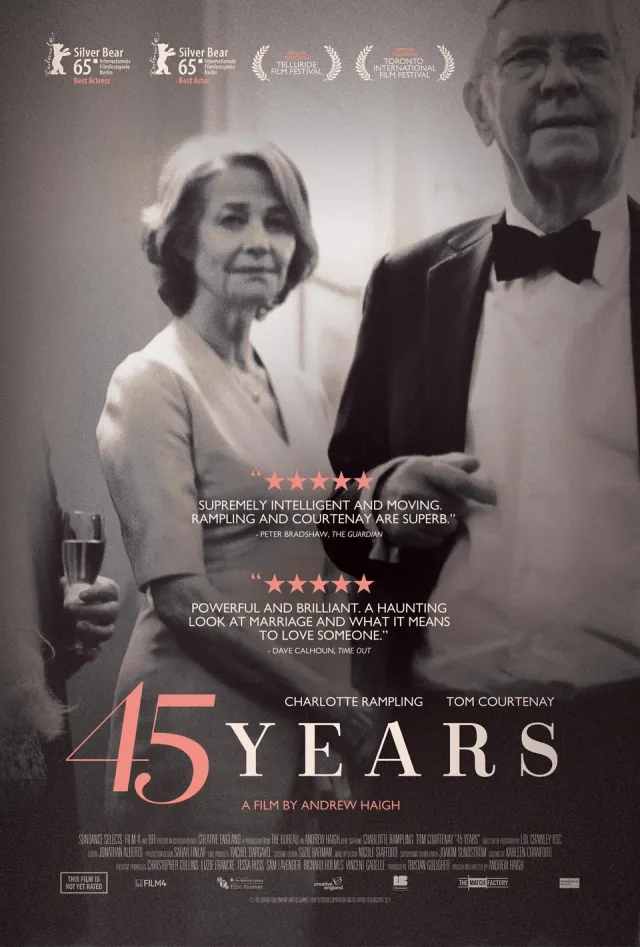
As Kate and Geoff prepare for their forty-fifth wedding anniversary, a letter arrives with news about the body of Geoff's first love, preserved in a Swiss glacier since her disappearance decades earlier. The discovery unsettles the couple's shared history and changes the emotional atmosphere of their preparations. Andrew Haigh's restrained drama follows how a long marriage responds when an old story returns with new force.
Repeated encounters between bereaved parents make new attraction possible while remembered love complicates emotional availability.
Why this matches +
These films explore a related idea in a different setting, genre or style.
An adjacent discovery: a related idea with a different viewing experience.
Genres: Romance / Drama
Shared film traits
Based on recorded story, mood and style. Your preferences can change the order.
What changes Its own story: Repeated encounters between bereaved parents make new attraction possible while remembered love complicates emotional availability.
A widowed race driver and a woman raising her daughter after her husband's death meet through their children's boarding school. Shared trips and conversations develop into attraction, but memories of their earlier marriages shape how each approaches a new relationship. The film moves between present encounters and remembered intimacy, allowing hesitation and emotional association to matter as much as a conventional sequence of romantic milestones.
A temporary stay abroad creates an emotional interval in which two dissatisfied people can recognise feelings their ordinary routines conceal.
Why this matches +
These films explore a related idea in a different setting, genre or style.
An adjacent discovery: a related idea with a different viewing experience.
Genres: Drama / Romance
Shared film traits
Based on recorded story, mood and style. Your preferences can change the order.
What changes Its own story: A temporary stay abroad creates an emotional interval in which two dissatisfied people can recognise feelings their ordinary routines conceal.
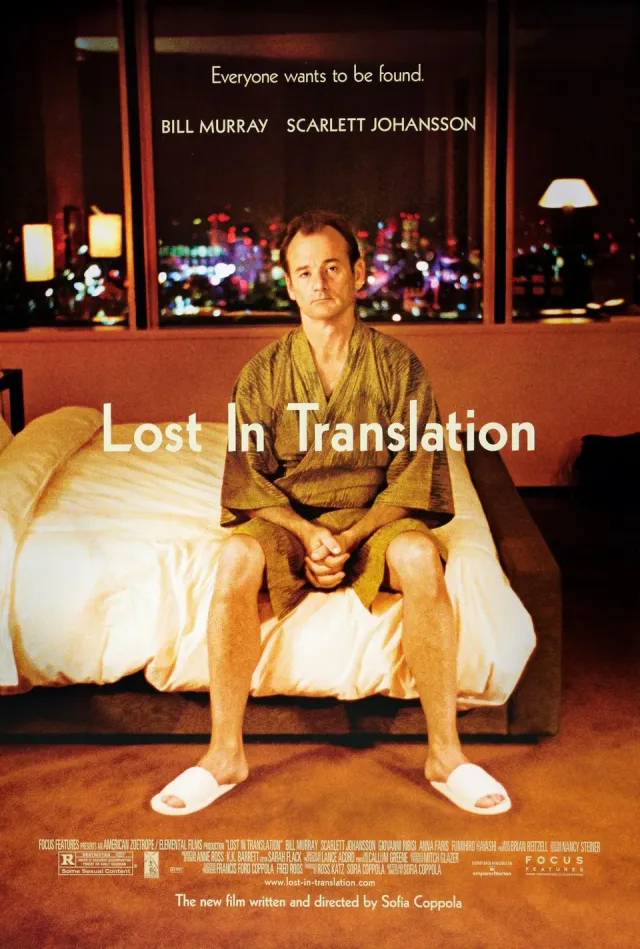
An American actor working on an advertisement in Tokyo meets a young woman accompanying a husband whose work leaves her largely alone. Dislocation, insomnia and uncertainty about their marriages create a companionship neither expected to find. Their shared movement through the city offers temporary relief from the roles awaiting them elsewhere, while the knowledge that the encounter is brief keeps affection poised between possibility and restraint.
Delphine is neither content with isolation nor willing to accept companionship simply to satisfy convention.
Why this matches +
These films explore a related idea in a different setting, genre or style.
An adjacent discovery: a related idea with a different viewing experience.
Genres: Drama / Romance
Shared film traits
Based on recorded story, mood and style. Your preferences can change the order.
Romance and intimacy · Memory and identity
What changes Its own story: Delphine is neither content with isolation nor willing to accept companionship simply to satisfy convention.
After a relationship ends and her planned holiday falls apart, Delphine spends the summer moving between possible destinations without finding a place where she feels comfortable. Friends invite her into group vacations, family members offer alternatives and strangers try to draw her into casual romance, but she resists each arrangement. Her loneliness is real, yet she cannot make herself perform the easy sociability expected of a single traveler. In Biarritz, a conversation about Jules Verne’s green ray gives her a reason to keep watching the sunset. A chance meeting near the end of her wandering offers a different kind of company, while the film stays close to hesitation, small gestures and uncertain hope.
A series of career and relationship choices tests Julie’s belief that she can keep changing without paying a cost in intimacy or time.
Why this matches +
These films explore a related idea in a different setting, genre or style.
An adjacent discovery: a related idea with a different viewing experience.
Genres: Drama / Romance
Shared film traits
Based on recorded story, mood and style. Your preferences can change the order.
What changes Its own story: A series of career and relationship choices tests Julie’s belief that she can keep changing without paying a cost in intimacy or time.
Over four years in Oslo, Julie changes direction from medical studies to psychology and then photography, while trying to understand what kind of work and relationship she wants. She begins a life with the older comic-book artist Aksel, whose readiness for commitment does not settle her uncertainty. At a party, she meets Eivind, who is also involved with someone else, and their impulsive attraction opens a different possibility. The film moves through chapter-like episodes, fantasies and time shifts as Julie confronts how choices affect other people and how time limits the promise of reinvention. One chapter interrupts ordinary time as Julie moves toward a man already committed elsewhere, making choice itself visible.
Three widely separated periods of contact turn reunion into an encounter with alternative lives rather than a simple opportunity to resume a childhood romance.
Why this matches +
These films explore a related idea in a different setting, genre or style.
An adjacent discovery: a related idea with a different viewing experience.
Genres: Drama / Romance
Shared film traits
Based on recorded story, mood and style. Your preferences can change the order.
What changes Its own story: Three widely separated periods of contact turn reunion into an encounter with alternative lives rather than a simple opportunity to resume a childhood romance.
Two childhood friends separated when one family leaves South Korea reconnect years later across video calls and another long interval of separate lives. When they finally meet in New York, she is married and has built a language, career and identity that her old friend only partly knows. Their time together brings affection for an unrealised future into contact with responsibility toward the present they have actually chosen.
A bus driver and poet notices his city while sharing a home with an aspiring artist. His routine shifts after a small loss and an encounter.
Why this matches +
These films explore a related idea in a different setting, genre or style.
An adjacent discovery: a related idea with a different viewing experience.
Genres: Drama / Comedy
Shared film traits
Based on recorded story, mood and style. Your preferences can change the order.
What changes Its own story: A bus driver and poet notices his city while sharing a home with an aspiring artist. His routine shifts after a small loss and an encounter.
Paterson, a bus driver in Paterson, New Jersey, follows a steady routine of work, walks with his dog, and quiet conversations at a local bar. He writes poems in a notebook, drawing on passenger conversations and daily details, while his wife Laura pursues creative ambitions at home. The film observes ordinary days without a crisis-driven plot. Jim Jarmusch’s drama finds variation in repetition, private art, neighborhood encounters, and the way a small loss interrupts a familiar rhythm.
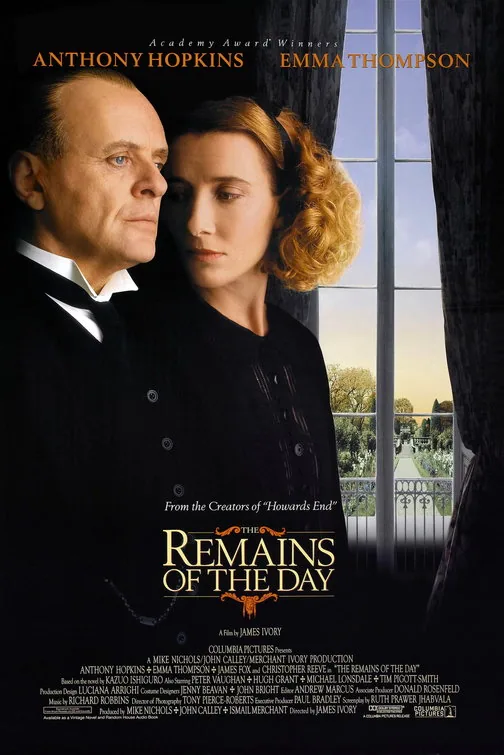
A present-day visit to a former colleague opens memories of the household and of the choices Stevens made in the name of service.
Why this matches +
These films explore a related idea in a different setting, genre or style.
An adjacent discovery: a related idea with a different viewing experience.
Genres: Drama
Shared film traits
Based on recorded story, mood and style. Your preferences can change the order.
What changes Its own story: A present-day visit to a former colleague opens memories of the household and of the choices Stevens made in the name of service.
In postwar Britain, butler James Stevens drives across the West Country to visit Miss Kenton, the former housekeeper at Darlington Hall. Their journey is intercut with memories of the years they served Lord Darlington, a gentleman whose prewar political associations later stain his reputation. Stevens prides himself on emotional restraint and professional dignity, while Kenton challenges his loyalty to the household and invites him to acknowledge their personal attachment. He repeatedly subordinates private feeling to service, even as the political choices made at the estate reveal how professionalism can become complicity. The return trip gives Stevens time to reconsider what he has preserved and what he has lost. James Ivory's adaptation builds its drama from manners, omissions and the distance between public conduct and private regret.
Alma’s confidences create the intimacy and imbalance that propel the story, while Elisabet’s silence prevents a stable account of what she wants.
Why this matches +
These films explore a related idea in a different setting, genre or style.
An adjacent discovery: a related idea with a different viewing experience.
Genres: Drama / Psychological
Shared film traits
Based on recorded story, mood and style. Your preferences can change the order.
Memory and identity
What changes Its own story: Alma’s confidences create the intimacy and imbalance that propel the story, while Elisabet’s silence prevents a stable account of what she wants.
Stage actress Elisabet Vogler stops speaking during a performance and is sent to recover at a seaside cottage with nurse Alma. As Alma talks through memories and private anxieties, Elisabet listens without offering the reassurance Alma expects. Their closeness becomes increasingly uneasy: Alma feels exposed, the actress appears to observe her, and scenes begin to unsettle the boundary between the women’s identities. The film returns to Elisabet’s motherhood and her rejection of her son, but it does not settle whether the women merge, mirror one another or remain in a painful struggle for control. Its broken framing keeps the act of watching visible.
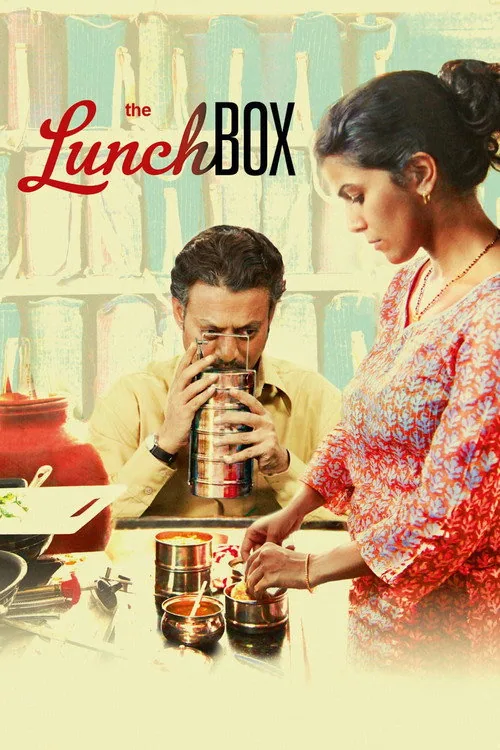
The misdelivered meal gives Ila and Saajan a private channel through which ordinary routines turn into personal conversation.
Why this matches +
These films explore a related idea in a different setting, genre or style.
An adjacent discovery: a related idea with a different viewing experience.
Genres: Drama / Romance
Shared film traits
Based on recorded story, mood and style. Your preferences can change the order.
What changes Its own story: The misdelivered meal gives Ila and Saajan a private channel through which ordinary routines turn into personal conversation.
A meal prepared by Ila for her inattentive husband is mistakenly delivered to Saajan, a lonely widower nearing retirement in Mumbai. When the error goes unnoticed, Ila and Saajan begin exchanging notes through the lunchbox, sharing disappointments and hopes that they rarely express to people around them. Ritesh Batra’s Hindi-language drama follows this correspondence alongside the rhythms of the city’s delivery system, finding intimacy in food, routine, and small acts of attention. Its emotional movement is quiet and open-ended rather than driven by a conventional romantic resolution.
At a book event in Tuscany, writer James Miller meets a French antiques dealer who has brought her son and several copies of his book about authenticity in art. After a strained first exchange, they spend an afternoon driving, walking through town and debating originals, reproductions and intimate relationships. Their conversation gradually takes on the rhythms of a long-established couple, though the film leaves the status of their roles unsettled. The encounter tests whether an experience can gain meaning regardless of its origin.
What drives the story
A discussion about originals and copies follows James and the unnamed dealer through a day that changes the apparent terms of their relationship.
The people at its centre
The pair alternate between intellectual debate and familiar irritation, with her son’s presence adding a family dimension to their exchange.
What it feels like
The film invites close attention to tone and gesture as a conversation changes meaning without settling every question it raises.
Worth knowing
Its relationship drama is built around philosophical role-play and the ambiguity of a single afternoon, not a conventional courtship arc.