Based on recorded story, mood and style. Your preferences can change the order.
Memory and identity · Music and performance
What changes That Obscure Object of Desire: episodic, repetitive and unsettling. Nine: song-led and fragmented.
Film director Guido Contini tries to make a new movie while facing a creative crisis and reflecting on the women whose affection and expectations shape his life. Rehearsals, memories and fantasy sequences overlap as he struggles to turn experience into art. The musical adapts a stage tradition of inward performance, making artistic ambition and romantic confusion part of the same elaborately staged problem.
Based on recorded story, mood and style. Your preferences can change the order.
Romance and intimacy · Memory and identity
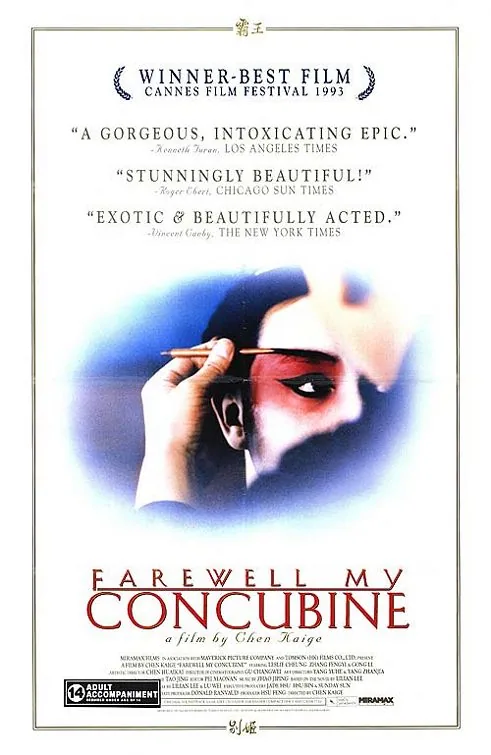
What changes That Obscure Object of Desire: episodic, repetitive and unsettling. Farewell My Concubine: decades of personal change and national history circle back to the performers’ signature opera.
Beginning in 1920s Peking, the film follows Douzi and Shitou, two boys trained in a Peking opera troupe who grow into performers Cheng Dieyi and Duan Xiaolou. Dieyi specializes in the female role in Farewell My Concubine, while Xiaolou plays the king. Their artistic partnership and personal attachment are tested when Xiaolou marries Juxian and when political upheavals repeatedly reshape public life. Across decades of war, revolution and ideological campaigns, the performers return to the opera that made them famous. Their changing loyalties and memories show how private relationships and an art form are pressured by forces beyond the stage.
Both share themes of desire, plus a provocative atmosphere.
Why this matches +
Genres: Romance / Drama
Shared film traits
Based on recorded story, mood and style. Your preferences can change the order.
What changes That Obscure Object of Desire: episodic, repetitive and unsettling. 365 Days: melodramatic and set-piece driven.
Laura’s vacation in Italy takes a disturbing turn when Massimo, the head of a Sicilian crime family, kidnaps her and gives her a year to fall in love with him. Their relationship is framed through luxury, erotic spectacle and criminal power, with the premise drawing a sharp line between fantasy romance conventions and coercion. Barbara Białowąs and Tomasz Mandes make an adult melodrama whose central conflict is inseparable from captivity and unequal control.
Both share themes of desire and control, plus a provocative atmosphere.
Why this matches +
Genres: Drama / Erotic drama
Shared film traits
Based on recorded story, mood and style. Your preferences can change the order.
Romance and intimacy
Expect provocative and claustrophobic, with repetitive and escalating pacing.
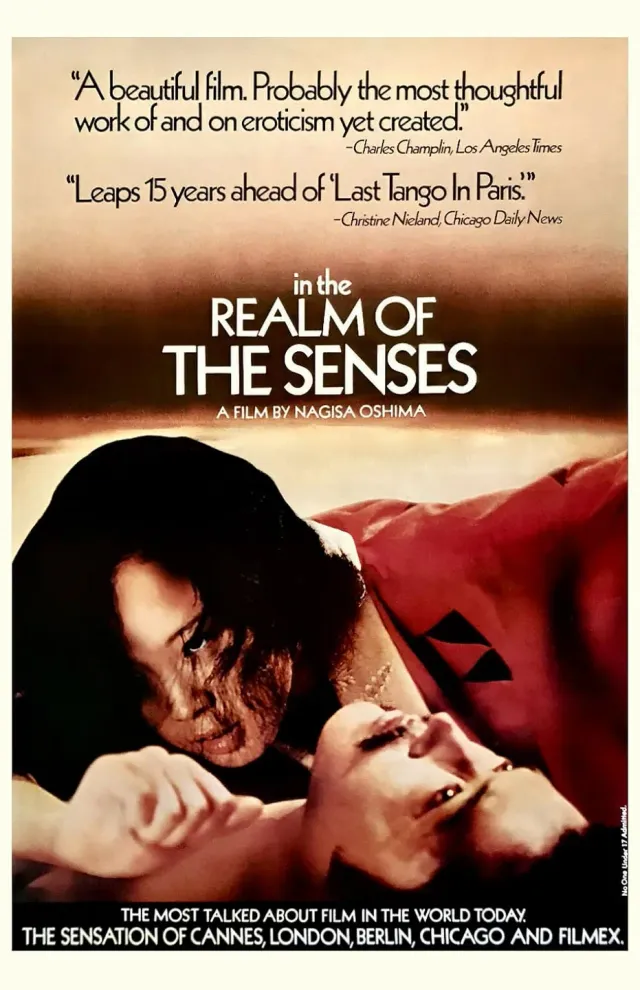
In 1936 Tokyo, former sex worker Sada Abe begins a volatile affair with hotel owner Kichizo Ishida. Their private relationship grows more exclusive as they withdraw from everyday life and repeatedly test the limits of desire, control and mutual dependence. The film follows this escalating obsession with stark intimacy and historical detail, culminating in a fatal act that has made the work one of cinema's most controversial examinations of erotic attachment.
Based on recorded story, mood and style. Your preferences can change the order.
What changes That Obscure Object of Desire: episodic, repetitive and unsettling. Anna Karenina: measured.
In nineteenth-century Russia, Anna's affair with the cavalry officer Vronsky ruptures the marriage and social standing that have defined her public life. Their attraction offers an apparent alternative, but the social costs fall most heavily on Anna and make private desire a public spectacle. A parallel story follows Levin's slower courtship and marriage to Kitty, providing a contrasting account of work, faith and commitment. Joe Wright stages much of the film as if it unfolds inside a theater, turning class performance into both setting and visual argument.
Based on recorded story, mood and style. Your preferences can change the order.
Romance and intimacy · Memory and identity
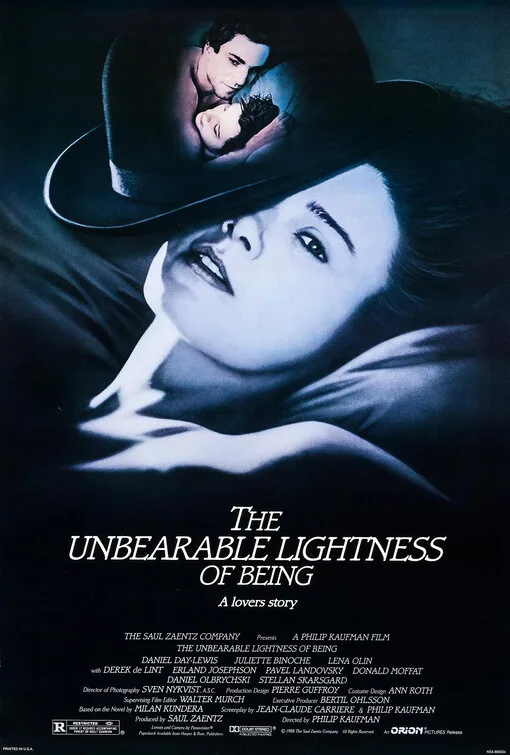
What changes That Obscure Object of Desire: episodic, repetitive and unsettling. The Unbearable Lightness of Being: interwoven romantic arcs, historical turning point and episodic movement between prague and exile.
Tomas, a Prague surgeon who resists attachment, moves among his lover Sabina and his increasingly devoted wife Tereza as political upheaval transforms private life. During the 1968 Soviet invasion of Czechoslovakia, Tereza photographs the occupation and the couple flee to Switzerland, where exile does not resolve their competing desires. Sabina also encounters Franz, whose idealism cannot provide the freedom she needs. The film follows the four across relationships, migration and changing political conditions, testing the difference between lightness and responsibility through choices whose emotional consequences persist.
Based on recorded story, mood and style. Your preferences can change the order.
Memory and identity
What changes That Obscure Object of Desire: episodic, repetitive and unsettling. Matchstick Men: measured and reversal-driven.
A meticulous con artist whose routines help manage anxiety prepares a fraud when an unexpected development brings a daughter into his life. Their relationship disrupts his controlled schedule and raises questions about what is genuine in a world built on deception. This crime comedy pairs a con’s mechanics with an intimate story about trust, vulnerability and misreading events.
Based on recorded story, mood and style. Your preferences can change the order.
Memory and identity · Political resistance
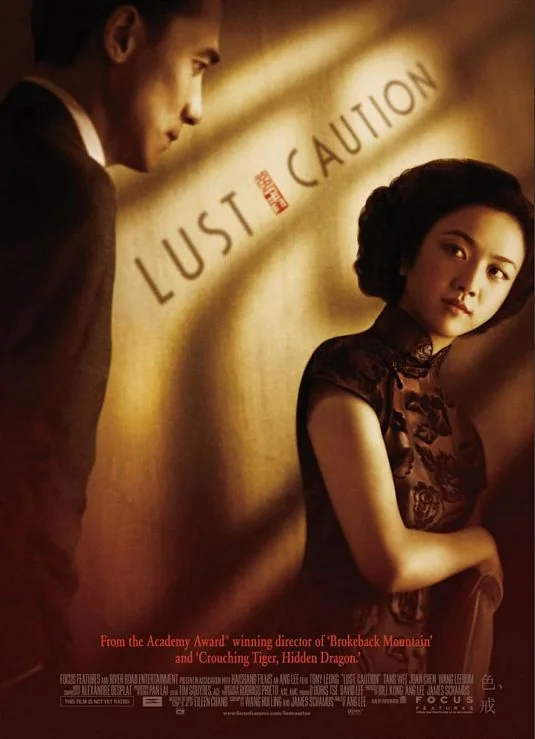
What changes That Obscure Object of Desire: episodic, repetitive and unsettling. Lust, Caution: slow-burn and intensifying.
During wartime Shanghai, a young woman becomes involved in a resistance plan that requires her to approach a powerful official under an assumed identity. Their relationship grows into a dangerous entanglement that complicates the mission and her sense of agency. The period drama combines political espionage with intimate, adult material, examining how performance and desire can become tools of survival while leaving the participants vulnerable to betrayal.
Based on recorded story, mood and style. Your preferences can change the order.
Memory and identity
What changes That Obscure Object of Desire: episodic, repetitive and unsettling. Much Ado About Nothing: ensemble courtship setup, comic deception and wedding crisis and reconciliation.
At a country estate in Messina, soldiers return from war and are welcomed by Leonato and his household. Claudio falls for Hero, while his friend Benedick and Hero's cousin Beatrice resume a sharp verbal rivalry that others try to turn into love. A villainous scheme then plants suspicion about Hero and threatens her marriage before the truth can emerge. Kenneth Branagh's film adapts Shakespeare's comedy through lively outdoor settings, ensemble performance, mistaken appearances, and a restoration of trust after public humiliation.
On a train from Seville to Paris, wealthy middle-aged Mathieu recounts his turbulent relationship with Conchita, a young dancer who repeatedly draws him close and then frustrates his desire for control. Two different actresses portray Conchita, sometimes within the same sequence, giving the romance a disorienting quality. Their encounters involve flirtation, money, jealousy, and reversals, while political bombings form an unsettling background to Mathieu's unreliable account.
What drives the story
A wealthy man's attempt to narrate and possess a younger woman becomes an unstable chain of memories.
The people at its centre
Mathieu insists on control, while Conchita's shifting boundaries resist his efforts to define her.
What it feels like
The story loops through repeated encounters, mixing erotic provocation, dry humor, and political unease.
Worth knowing
This surreal adult romance uses fragmented narration rather than a straightforward courtship structure.
DesireControlClass
Mood
Surreal · Provocative · Wry
Pacing
Episodic · Repetitive · Unsettling
Visual style
Surreal staging · Abrupt tonal shifts · European locations