Explore films connected to Shine through art and family control, mental illness and recovery, talent and identity. Choose the qualities you want to carry into your next watch.
What should feel similar?
Find your next favourite
9 films · Closest overall matches
Hide films you’ve seen or don’t want. Saved on this device.
No matches for this combination yet.
Try another option or reset your choices to see more films.
Based on recorded story, mood and style. Your preferences can change the order.
Music and performance
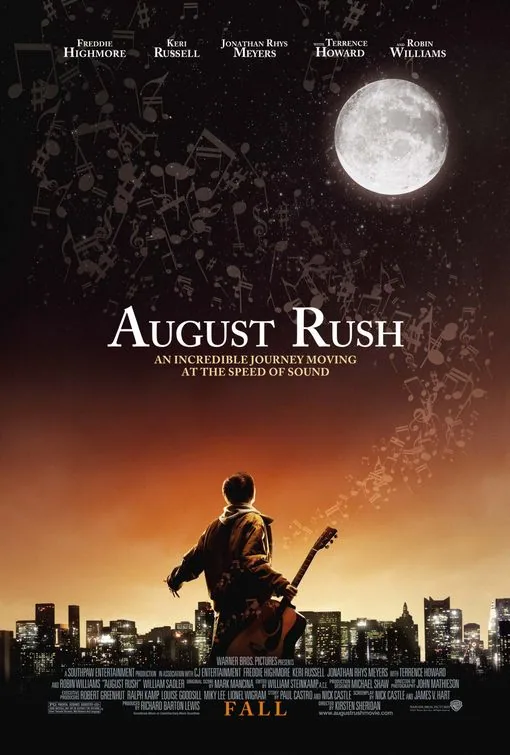
What changes Shine: life-stage progression, concert performance peaks and gentle recovery arc. August Rush: building and musical.
A gifted young musician grows up in an institution and believes that music may help him find the parents he has never known. His path brings him to New York, where a street performer and a music teacher shape his development. The family drama links several musical lives through performance, coincidence and the hope that a shared language can overcome separation.
Based on recorded story, mood and style. Your preferences can change the order.
Music and performance
What changes Shine: life-stage progression, concert performance peaks and gentle recovery arc. The Soloist: gradual and character-led.
A newspaper columnist meets a gifted musician living without stable housing and begins writing about his life. Their connection grows through conversations and music, but the columnist’s desire to help does not erase the musician’s independence or the complexity of his mental illness. The biographical drama examines friendship across unequal circumstances, showing how attention can create recognition while also making a person’s life into a public story.
Based on recorded story, mood and style. Your preferences can change the order.
Music and performance
What changes Shine: life-stage progression, concert performance peaks and gentle recovery arc. Unsung Hero: steady, family-centered and inspirational.
David Smallbone moves his family from Australia to Nashville believing a music career can give them a new start, but financial strain quickly deepens. His wife Helen and their children adjust to a city where opportunity and instability arrive together. The faith-based biographical drama draws on the family history behind the careers of Rebecca St. James and For King & Country, focusing on persistence, belief and shared support.
Based on recorded story, mood and style. Your preferences can change the order.
What changes Shine: life-stage progression, concert performance peaks and gentle recovery arc. Gentle Monster: measured.
Lucy, a concert pianist, has moved to the country with her husband Philip and their son while Philip recovers from burnout. A police search disrupts their apparent refuge, and an investigator brings a serious allegation against him. Lucy must reconsider the person she thought she knew as her loyalties as a partner and a parent come under pressure.
Based on recorded story, mood and style. Your preferences can change the order.
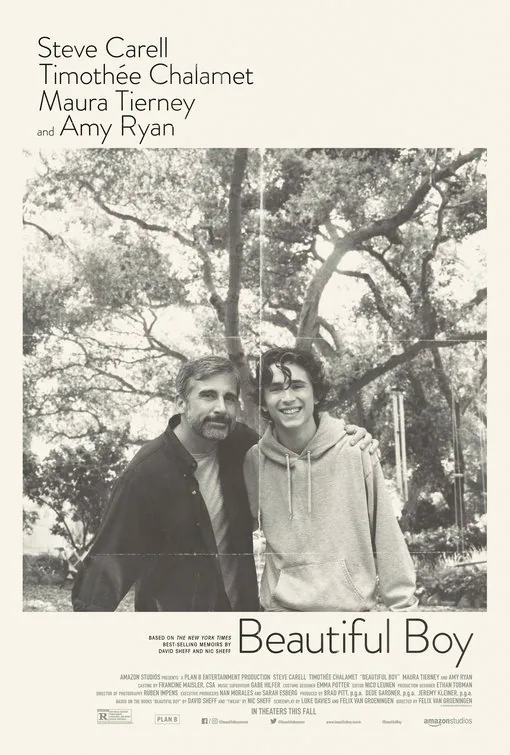
What changes Shine: life-stage progression, concert performance peaks and gentle recovery arc. Beautiful Boy: fragmented and recurrent.
Journalist David Sheff tries to understand and help his teenage son Nic through repeated cycles of drug use, treatment and relapse. The story shifts between the father's perspective and Nic's experience, showing how affection can persist alongside exhaustion and uncertainty. Felix van Groeningen adapts a family memoir into an intimate drama about addiction that avoids a simple recovery arc, focusing instead on care, fear and the limits of control.
Based on recorded story, mood and style. Your preferences can change the order.
Music and performance · Memory and identity
What changes Shine: life-stage progression, concert performance peaks and gentle recovery arc. Get on Up: nonlinear life episodes build toward legacy.
A musical biopic follows James Brown from a difficult childhood through the rise of a singular stage performer whose discipline and ambition reshape popular music. The narrative moves across time rather than offering a simple rise-and-fall sequence, connecting performance to family wounds, business power and the cost of control. Its energy comes from music and Brown’s forceful presence, alongside a frank look at the damage behind his success.
Based on recorded story, mood and style. Your preferences can change the order.
Music and performance · Memory and identity
What changes Shine: life-stage progression, concert performance peaks and gentle recovery arc. Chaplin: decades-spanning biography, framed recollection and episodic career milestones.
An elderly Charlie Chaplin looks back on his life during a conversation in Switzerland, recalling a poor childhood in South London and his rise through the music halls to international fame. The film follows the creation of his silent-screen persona, his creative control, personal relationships, political scrutiny, and eventual exile from the United States. Richard Attenborough frames a broad biographical sweep around the tension between the vulnerable man and the comic figure audiences adored. Robert Downey Jr.'s performance anchors a story about art, fame, and the cost of being watched.
Based on recorded story, mood and style. Your preferences can change the order.
Memory and identity
What changes Shine: life-stage progression, concert performance peaks and gentle recovery arc. Lion: two-part and measured.
A small boy becomes separated from his brother and travels so far by train that the words he knows cannot guide him home. After danger and institutional care, adoption gives him a secure life in Australia, but remembered sensations later reopen the absence of the family who never learned where he went. Digital maps provide a means of searching without making memory precise. The biographical drama holds two forms of belonging together, making reunion an expansion of attachment rather than proof that one family was only a substitute.
Based on recorded story, mood and style. Your preferences can change the order.
Music and performance · Memory and identity
What changes Shine: life-stage progression, concert performance peaks and gentle recovery arc. The History of Sound: measured, episodic and reflective.
In the early twentieth century, music students Lionel and David travel through rural New England to record folk songs before the people who perform them disappear. Their work brings them into close contact with communities and with each other, beginning a relationship shaped by music, distance and historical change. Oliver Hermanus adapts Ben Shattuck's story as a romance about what can be preserved through sound and what remains private.
Pianist David Helfgott grows up in Adelaide under a father whose demanding approach to music is bound up with pride, control, and family history. David's talent takes him from local performances to advanced study abroad, but the pressure and his father's refusal to let him go contribute to a psychological breakdown. Years later, David returns to public life and begins playing again with help from people he meets. The biographical drama contrasts a gifted childhood with an adult search for music and connection.
What drives the story
David's musical rise is interrupted by a breakdown before he slowly reconnects with public performance as an adult.
The people at its centre
His controlling father shapes both the drive and the fear that surround music, while later relationships give David room to return.
What it feels like
A biographical drama uses piano performance and a shifting timeline to portray talent, illness, and recovery.
Worth knowing
It dramatizes David Helfgott's life with acknowledged fictional changes, rather than serving as a complete factual record.
art and family controlmental illness and recoverytalent and identity
Mood
moving · intense · redemptive
Pacing
life-stage progression · concert performance peaks · gentle recovery arc
Visual style
piano-centered performance scenes · suburban Australian settings · contrasting childhood and adult imagery
Storytelling
young pianist faces paternal pressure · study abroad separates son from family · adult return to performance rebuilds identity