McNamara’s explanations reveal both his willingness to criticize past decisions and his limits in accounting for them.
Why this matches +
Veterans reconstruct a little-known special operations history through testimony and personal wartime archives.
Genres: Documentary / History
Shared film traits
Based on recorded story, mood and style. Your preferences can change the order.
War and civilian life
What changes A senior policymaker's strategic responsibility replaces a special operations team's lived experience and racial inequality.
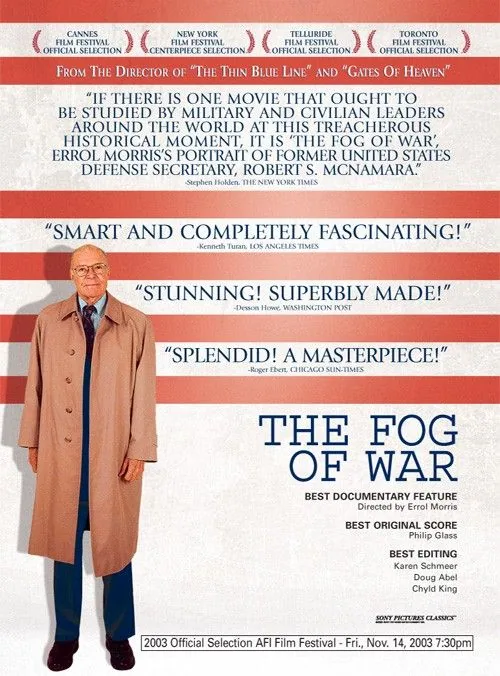
Director Errol Morris interviews former U.S. Secretary of Defense Robert McNamara, pairing his recollections with archival footage and recordings from government discussions. Structured around eleven lessons, the documentary follows McNamara’s life and examines his role in the bombing campaigns of World War II, the Cuban Missile Crisis and the escalation of the Vietnam War. He reflects on how leaders make decisions with incomplete information and sometimes speaks critically about his own actions. The film leaves viewers weighing the distance between strategic reasoning and human consequences.
The search for a missing memory becomes an inquiry into what the witnesses saw and what they could bear to remember.
Why this matches +
Veterans reconstruct a little-known special operations history through testimony and personal wartime archives.
Genres: Documentary / War
Shared film traits
Based on recorded story, mood and style. Your preferences can change the order.
War and civilian life
What changes Animated reconstruction of Israeli service in Lebanon replaces Black American veterans' Vietnam archives.
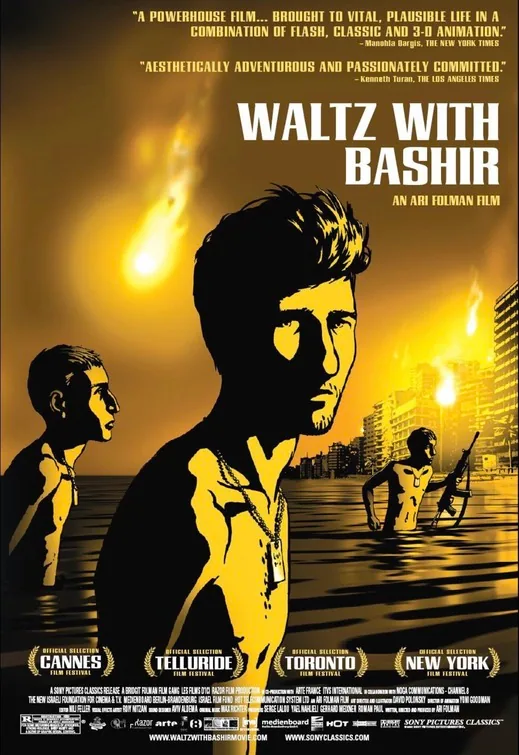
An Israeli veteran tries to recover memories of his service during the 1982 Lebanon War after a former comrade describes a recurring nightmare. Conversations with other veterans lead toward the events surrounding the Sabra and Shatila massacre and the narrator’s own missing recollections. The animated documentary combines testimony, dream imagery and uncertain memory to explore responsibility, trauma and the difficulty of witnessing violence one has helped enable.
A mission to retrieve their fallen leader and hidden gold forces the veterans back through places tied to their wartime past.
Why this matches +
These selections share a specific story or viewing dimension; the recorded differences explain the limits of each comparison.
An adjacent discovery: a related idea with a different viewing experience.
Genres: Drama / War
The approach A dramatic feature rather than documentary footage.
Shared film traits
Based on recorded story, mood and style. Your preferences can change the order.
War and civilian life
What changes A fictional return-to-Vietnam treasure plot replaces documentary testimony and personal archives.
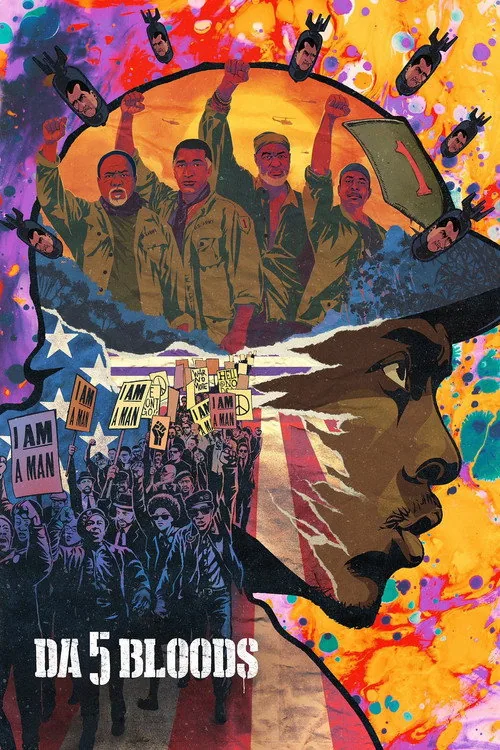
Four Black Vietnam War veterans return to the country decades after combat to recover the remains of their squad leader and locate a cache of gold they buried. Paul, Otis, Eddie, and Melvin travel with Paul's son David, whose presence raises old questions about family and responsibility. The search brings the men through landscapes shaped by war, tourism, and unresolved memory. Spike Lee's drama shifts between past and present, linking the veterans' mission to Black history, trauma, and the costs of American intervention.
The interview frame gives Amin space to narrate a refugee journey whose undisclosed details still affect his plans for the future.
Why this matches +
These selections share a specific story or viewing dimension; the recorded differences explain the limits of each comparison.
An adjacent discovery: a related idea with a different viewing experience.
Genres: Documentary / Animation
Shared film traits
Based on recorded story, mood and style. Your preferences can change the order.
War and civilian life
What changes A refugee's concealed life replaces a collective reunion of military veterans.
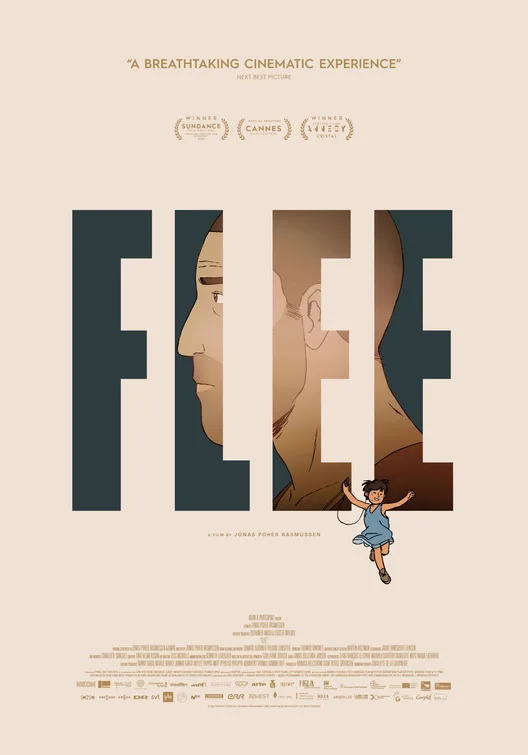
In animated documentary form, Amin tells director Jonas Poher Rasmussen the story of his childhood in Afghanistan and the flight that eventually brought him to Denmark. Amin has not shared every part of this history, even with his partner, and the interviews unfold alongside memories, archival material and animated reconstructions. The film connects displacement to trust, intimacy and the possibility of building a home.
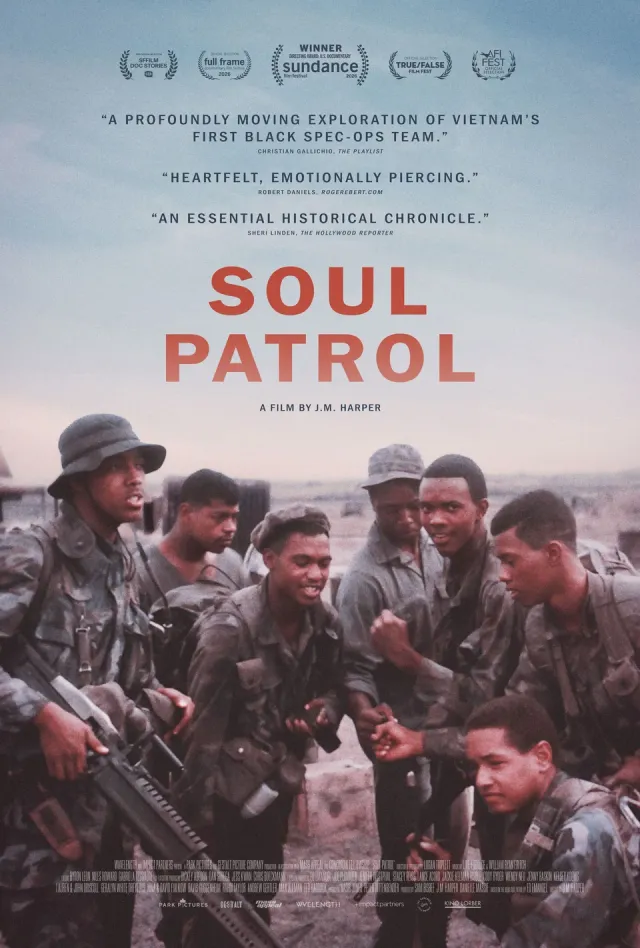
Surviving members of a pioneering Black special operations team revisit their service in Vietnam and its long aftermath. J.M. Harper brings their testimony together with photographs, recordings and personal film archives. The documentary considers the bond formed by dangerous missions alongside the contradiction of fighting for American freedom while facing racial inequality, making memory and life after combat as significant as battlefield history.
What drives the story
Veterans reconstruct a little-known special operations history through testimony and personal wartime archives.
The people at its centre
The team's shared service creates bonds that coexist with individual trauma and racial inequality.
What it feels like
The documentary asks viewers to listen to remembered experience rather than treating war as spectacle.
Worth knowing
These are real veterans reflecting on service; fictional combat stories are only adjacent comparisons.