2015 · Chad Villella & David Bruckner & Justin Martinez & Matt Bettinelli-Olpin & Patrick Horvath & Radio Silence Productions & Roxanne Benjamin & Tyler Gillett
Runtime: 1h 29mMPA rating: R
Explore films connected to Southbound through guilt, consequence, fate. Choose the qualities you want to carry into your next watch.
What should feel similar?
Find your next favourite
9 films · Closest overall matches
Hide films you’ve seen or don’t want. Saved on this device.
No matches for this combination yet.
Try another option or reset your choices to see more films.
Based on recorded story, mood and style. Your preferences can change the order.
Escape and pursuit · Survival
What changes Southbound: episodic, uneven and cumulatively tense. The Hills Have Eyes: relentless and escalating.
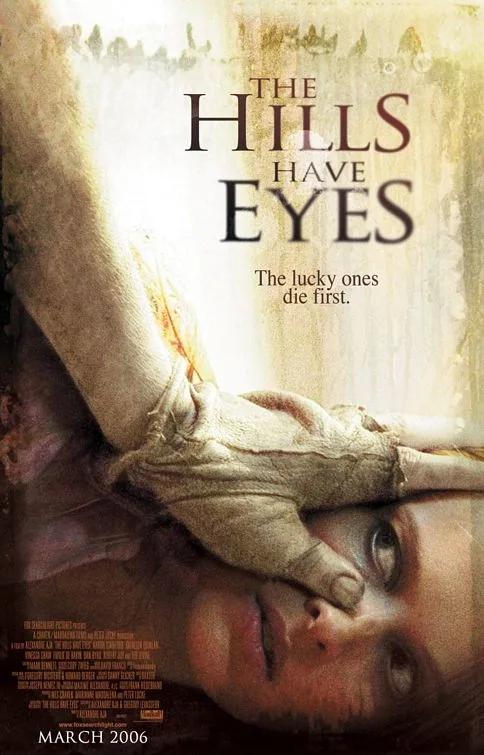
A family traveling through the desert becomes stranded after taking a route that leaves them far from help. They discover they are being watched and hunted by violent inhabitants of the surrounding hills. This horror remake turns a family road trip into siege and survival, using harsh terrain and bodily danger to strip away ordinary security.
Based on recorded story, mood and style. Your preferences can change the order.
Survival
What changes Southbound: episodic, uneven and cumulatively tense. Wrong Turn: fast and continuous chase.
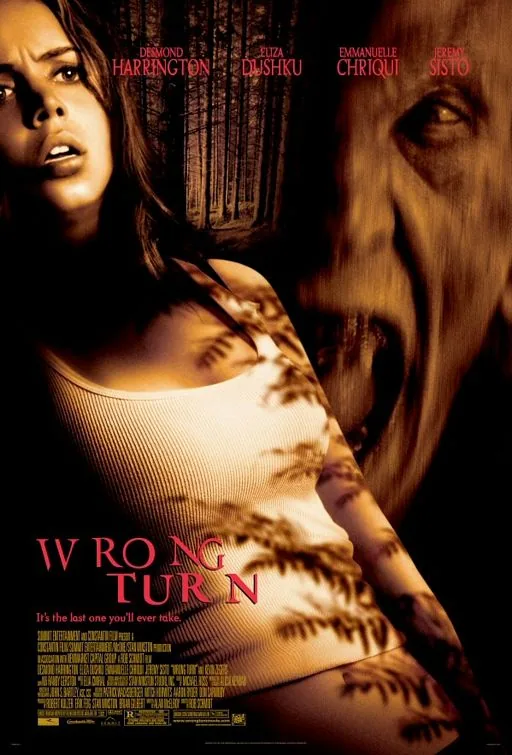
After taking an isolated road through the Appalachian hills of West Virginia, a group of young travelers become stranded and realize they are being hunted by violent men who live in the surrounding woods. With their vehicle unusable and rescue unlikely, the survivors must move through unfamiliar terrain while trying to stay quiet and protect one another. The film’s short running time and remote setting keep the threat close, using the fear of being watched and pursued to drive its slasher structure. Limited visibility and uncertain routes keep escape attempts from feeling safe. The strangers' cooperation shifts between concealment and sudden flight as the hunters close in.
Based on recorded story, mood and style. Your preferences can change the order.
Escape and pursuit · Survival
What changes Southbound: episodic, uneven and cumulatively tense. Joy Ride: escalating chase, set-piece driven and tight suspense.
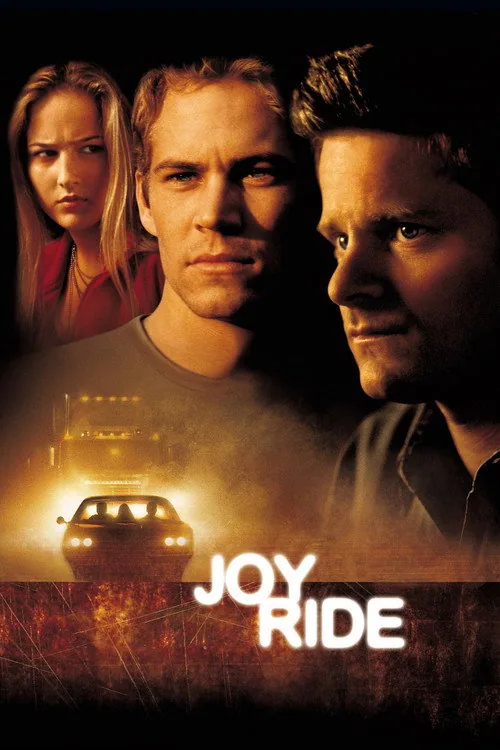
On a cross-country drive, brothers Lewis and Fuller install a CB radio and play a prank on a trucker they know only as Rusty Nail. Their joke triggers a series of increasingly dangerous encounters, and the trucker’s pursuit intensifies after Lewis’s friend Venna joins them. As the travelers follow clues and try to reach the police, the open highway becomes a maze with few safe exits. This road thriller builds suspense around mistaken identity, radio communication, and the consequences of treating a stranger as entertainment.
Based on recorded story, mood and style. Your preferences can change the order.
Survival
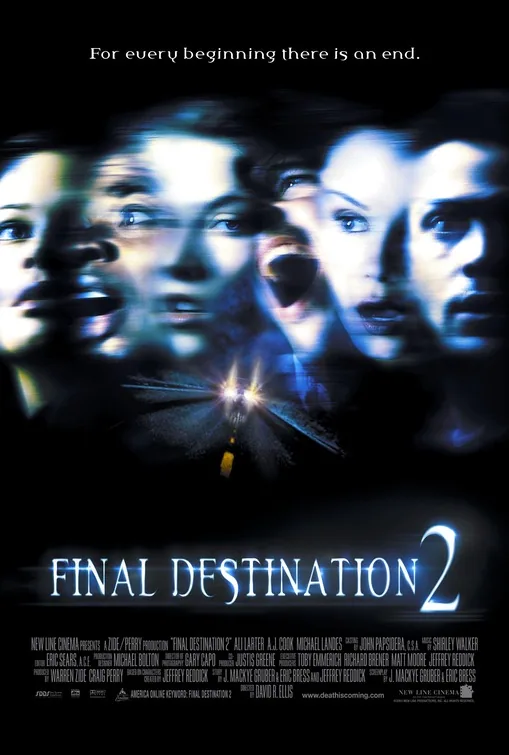
What changes Southbound: episodic, uneven and cumulatively tense. Final Destination 2: escalating.
A young woman foresees a highway pile-up and blocks an entrance ramp, keeping strangers from entering the destruction she has seen. Their survival produces a pattern of later accidents that links the new group to an earlier catastrophe. Seeking someone who has lived through that pattern turns fragments of advice and ominous everyday details into possible defenses, though the belief that a loophole can be identified remains dangerously different from controlling what it means.
Both share themes of violence, plus a surreal atmosphere.
Why this matches +
Genres: Comedy / Horror
Shared film traits
Based on recorded story, mood and style. Your preferences can change the order.
Dream worlds
Expect deadpan and surreal, with episodic and deliberately uneven pacing.
A tire named Robert wakes in a California desert and discovers that he can move on his own and destroy objects through psychokinesis. He rolls through the landscape and begins targeting people, while a parallel group of spectators watches the events as if they were a movie. Sheriff Chad moves between investigating the deaths and commenting on the story’s logic. Quentin Dupieux’s absurdist horror-comedy turns a simple killer-object premise into an experiment about audience expectations and the demand that every event have a reason.
Based on recorded story, mood and style. Your preferences can change the order.
Escape and pursuit · Survival
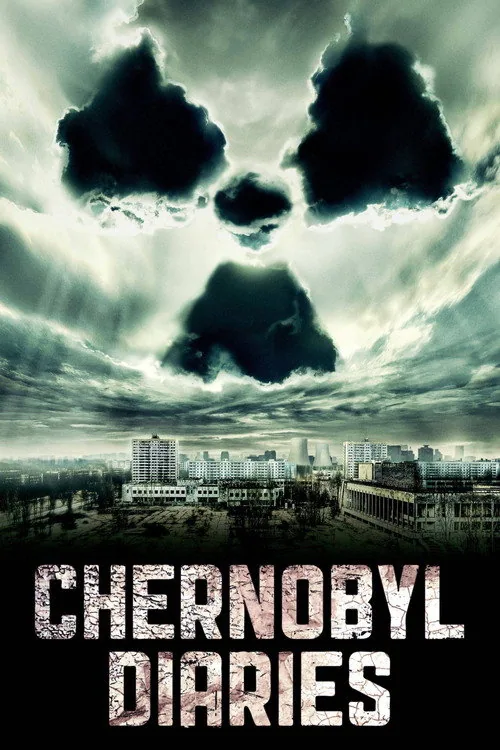
What changes Southbound: episodic, uneven and cumulatively tense. Chernobyl Diaries: gradual build and pursuit-driven escalation.
A group of young travelers seeking an unusual excursion hire a guide to take them into Pripyat, the abandoned city once built for workers at the Chernobyl nuclear plant. After exploring its empty buildings, they discover their transport is gone and that something else is moving through the deserted place. Bradley Parker’s supernatural horror film uses restricted spaces, darkness, and the group’s dwindling options to build a survival story in a real-world location, while its characters try to determine what is hunting them.
Based on recorded story, mood and style. Your preferences can change the order.
Escape and pursuit · Survival
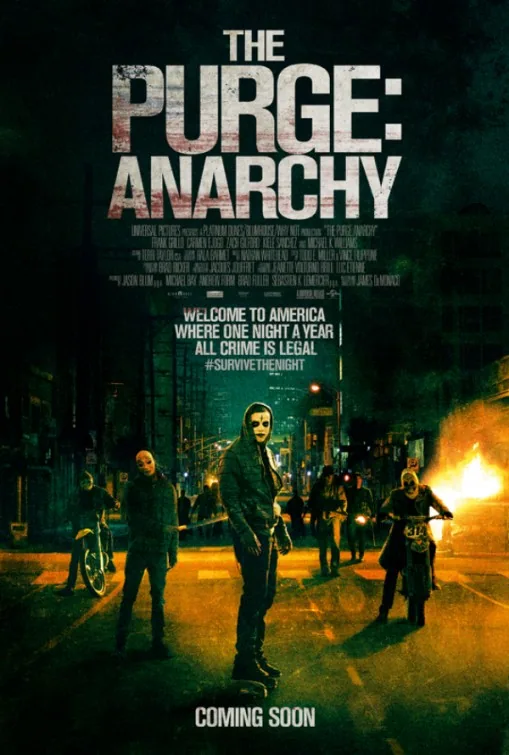
What changes Southbound: episodic, uneven and cumulatively tense. The Purge: Anarchy: relentless and encounter-driven.
On the annual night when crime is permitted, several people are stranded in Los Angeles beyond the protection of locked homes. An armed man with a private revenge mission becomes their reluctant guide through streets where wealth and vulnerability determine who is hunted. Their effort to survive exposes organized violence beneath the event's promise of personal freedom and asks whether retaliation must take priority over protecting strangers.
Based on recorded story, mood and style. Your preferences can change the order.
Escape and pursuit · Survival
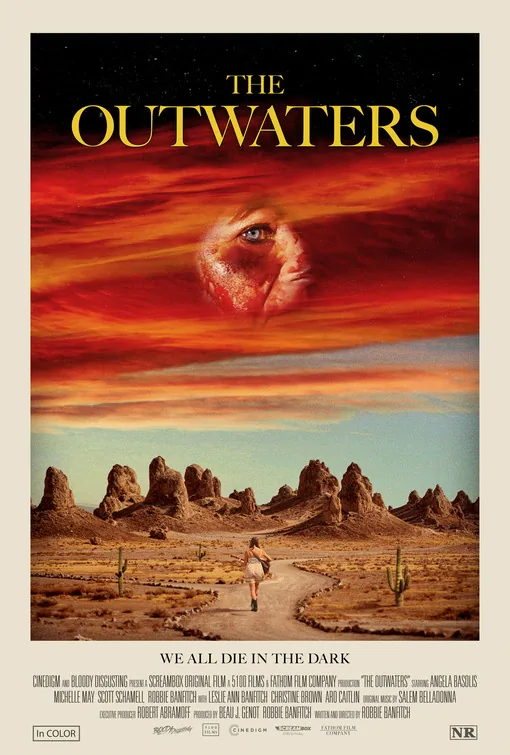
What changes Southbound: episodic, uneven and cumulatively tense. The Outwaters: slow-building, fragmented, disorienting and intensifying.
Filmmaker Robbie travels into the Mojave Desert with his brother Scott and friends Angela and Michelle to shoot a music video. Footage recovered from memory cards first frames the trip as a disappearance case, then records earthquakes, strange lights and increasingly impossible events that fracture the group’s sense of time and safety. Robbie Banfitch’s experimental found-footage horror uses rough image and sound to make the desert itself feel hostile and unknowable.
Based on recorded story, mood and style. Your preferences can change the order.
Escape and pursuit · Survival
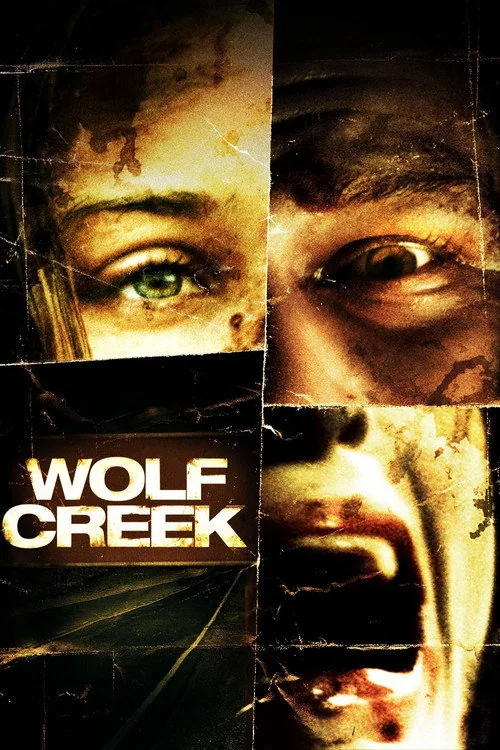
What changes Southbound: episodic, uneven and cumulatively tense. Wolf Creek: slow unease into violence, cat-and-mouse pursuit and harsh escalation.
Three young travelers—two British women and their Australian companion—are stranded after their car fails near a remote crater in the Australian outback. A local man, Mick Taylor, offers to help and takes them to an isolated mining site, where his friendliness gives way to captivity and a brutal hunt. The survivors try to escape across an immense, unforgiving landscape while the film shifts between their ordeal and the search for help. Inspired by several real crimes but fictionalized, this Australian horror film is known for severe violence and sustained menace.
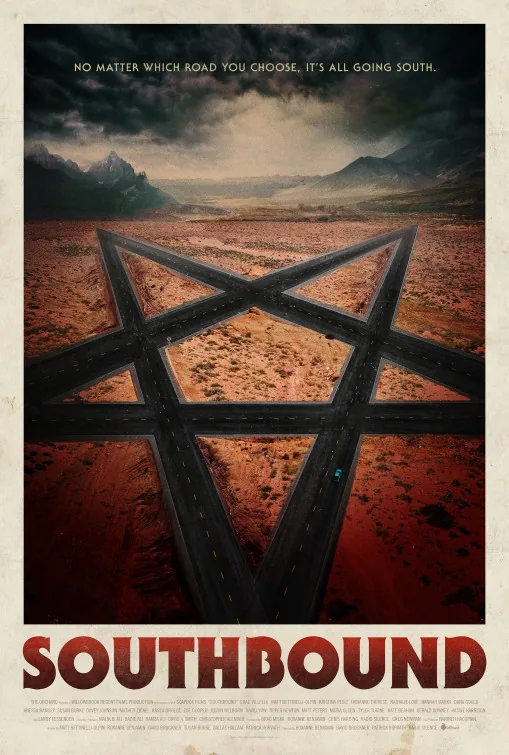
On a lonely stretch of desert highway, travelers encounter a series of unsettling roadside events that connect across five stories. Two men flee a persistent presence, a group of musicians face a stranger in need, a driver tries to save an injured woman, and others become caught in increasingly strange situations. The anthology uses repeated locations and recurring figures to suggest that the highway has its own rules, and that escape may not mean leaving the road behind.
What drives the story
Travelers move through connected encounters on a highway where past actions and present dangers seem to converge.
The people at its centre
Each segment introduces people with different histories, while repeated faces and locations gradually reveal how their stories overlap.
What it feels like
The film builds an eerie, dreamlike road journey from short stories whose links become clearer as the night continues.
Worth knowing
Its desert setting and intersecting episodes make it a road-horror anthology rather than a collection of unrelated ghost stories.