Explore films connected to The 9th Company through Comradeship, Military duty, Attrition and loss. Choose the qualities you want to carry into your next watch.
What should feel similar?
Find your next favourite
9 films · Closest overall matches
Hide films you’ve seen or don’t want. Saved on this device.
No matches for this combination yet.
Try another option or reset your choices to see more films.
Based on recorded story, mood and style. Your preferences can change the order.
War and civilian life · Survival
What changes The 9th Company: training-to-battle arc and siege climax. Hamburger Hill: attritional battle with periods of preparation.
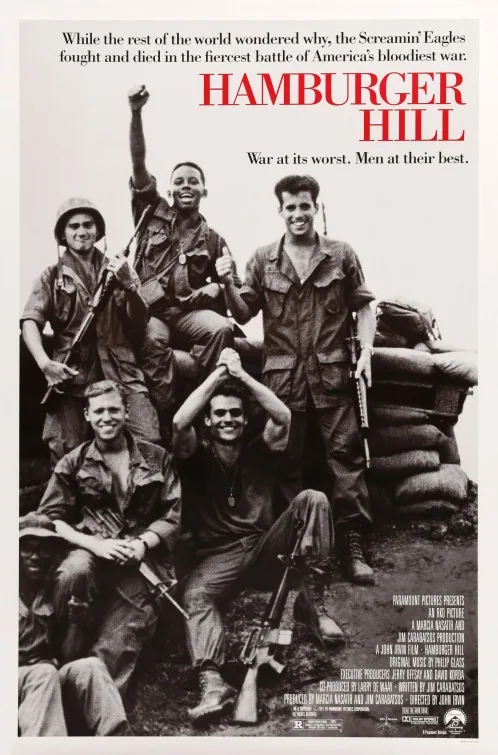
A platoon of American soldiers arrives in Vietnam in 1969 with inexperienced replacements and a battle-weary leadership. Their mission is to seize Hill 937, a steep and fortified position that becomes the focus of repeated assaults. The film follows the physical cost of attritional combat and the tensions among soldiers, including racial inequities, as the unit struggles to understand what its repeated sacrifices will accomplish.
Both centre on attritional warfare and military counterattack.
Why this matches +
Genres: War / Action
Shared film traits
Based on recorded story, mood and style. Your preferences can change the order.
War and civilian life
What changes The 9th Company: training-to-battle arc and siege climax. 12 Strong: mission-based escalation.
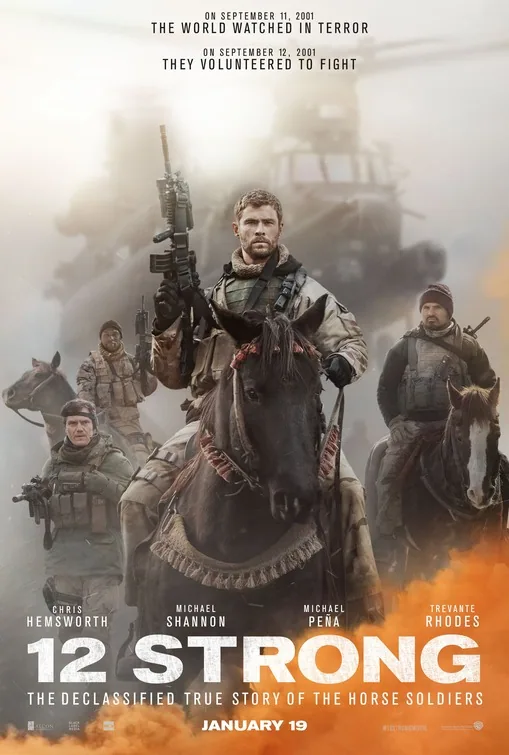
Following the September 11 attacks, a small U.S. Army Special Forces team deploys to Afghanistan and partners with local commander Abdul Rashid Dostum. The soldiers move across difficult terrain on horseback while trying to coordinate against Taliban forces and gain control of strategic locations. The war film frames the operation through unit discipline and alliance, while showing how unfamiliar tactics and trust shape a dangerous early mission.
Based on recorded story, mood and style. Your preferences can change the order.
War and civilian life · Survival
What changes The 9th Company: training-to-battle arc and siege climax. Lone Survivor: relentless and attritional.
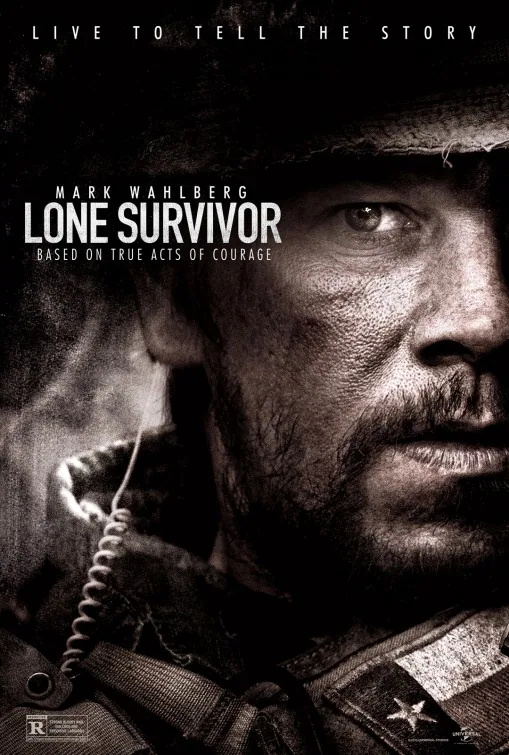
In 2005, a small Navy SEAL team enters Afghanistan's Korangal Valley on a mission to locate Taliban leader Ahmad Shah. Their position is compromised after they encounter local shepherds, and the team has to make a consequential decision with limited time and uncertain information. The operation becomes a fight to survive mountainous terrain and hostile pursuit, while the film follows the bonds and sacrifices that shape the soldiers' response to overwhelming losses.
Both centre on attritional warfare and military counterattack.
Why this matches +
Genres: Drama / Action
Shared film traits
Based on recorded story, mood and style. Your preferences can change the order.
War and civilian life
What changes The 9th Company: training-to-battle arc and siege climax. The Longest Day: intercut preparation and battle and ensemble progression.
On June 6, 1944, Allied forces launch the D-Day invasion of German-occupied Normandy. The film follows the operation across several locations and perspectives: commanders planning the assault, paratroopers scattered inland, French resistance members aiding the effort and soldiers confronting the beach landings. Rather than following one protagonist, it builds a large-scale account from linked episodes of preparation, confusion and combat. Adapted from Cornelius Ryan’s nonfiction book, it dramatizes a historic military operation through a 1960s international ensemble.
Both centre on attritional warfare and civilian protection.
Why this matches +
Genres: War / Drama
Shared film traits
Based on recorded story, mood and style. Your preferences can change the order.
War and civilian life · Survival
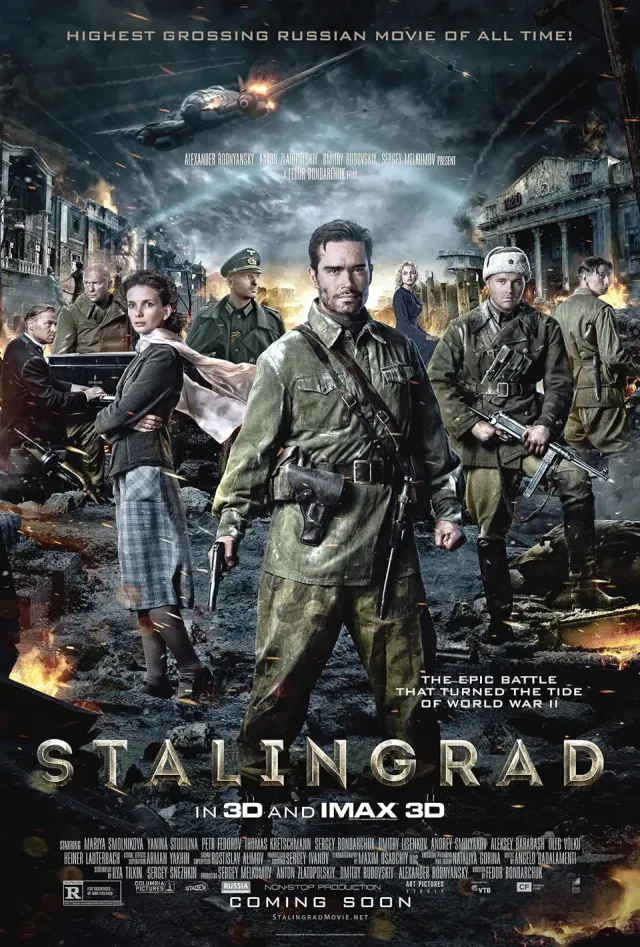
What changes The 9th Company: training-to-battle arc and siege climax. Stalingrad: battle-driven and interwoven.
After a rescue effort in 2011, a Russian emergency worker recounts a family story set during the Battle of Stalingrad. In 1942, a group of Soviet soldiers occupy a damaged building and protect a young woman amid the city’s destruction. Fyodor Bondarchuk combines large-scale war spectacle with a melodramatic account of survival, memory and attachment, using the building as a temporary refuge within a battlefield that keeps closing in.
Both centre on attritional warfare and military counterattack.
Why this matches +
Genres: Action / Science Fiction
Shared film traits
Based on recorded story, mood and style. Your preferences can change the order.
War and civilian life · Survival
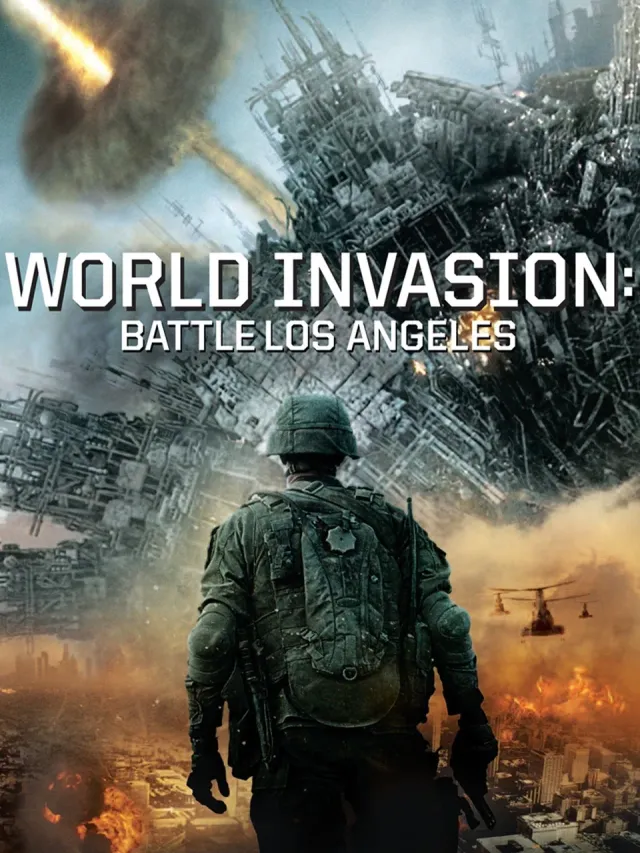
What changes The 9th Company: training-to-battle arc and siege climax. Battle: Los Angeles: continuous and combat-driven.
A veteran Marine staff sergeant leads a mixed group of soldiers and civilians through a city under alien attack. The mission begins as an evacuation and narrows into an attempt to reach trapped survivors while an apparently unstoppable enemy controls the streets. The film treats invasion as a ground-level military emergency, focusing on unit cohesion, civilian protection and exhausted people making decisions under fire.
Both centre on attritional warfare and civilian protection.
Why this matches +
Genres: Action / Drama
Shared film traits
Based on recorded story, mood and style. Your preferences can change the order.
War and civilian life · Survival
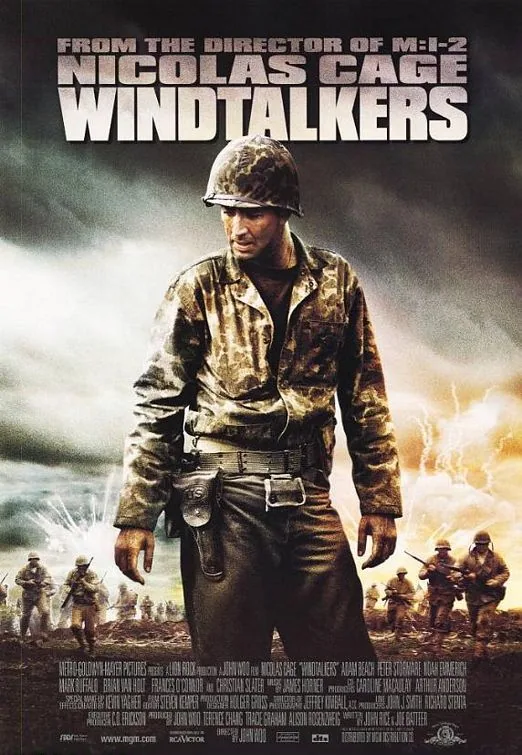
What changes The 9th Company: training-to-battle arc and siege climax. Windtalkers: relentless and set-piece driven.
During the Pacific campaign of the Second World War, a Marine is assigned to protect a Navajo code talker whose language supports secure military communications. The mission places survival beside an order to keep the code from enemy hands. The war drama follows men under combat pressure while raising the moral cost of treating a fellow soldier as both person and military asset.
Based on recorded story, mood and style. Your preferences can change the order.
War and civilian life · Survival
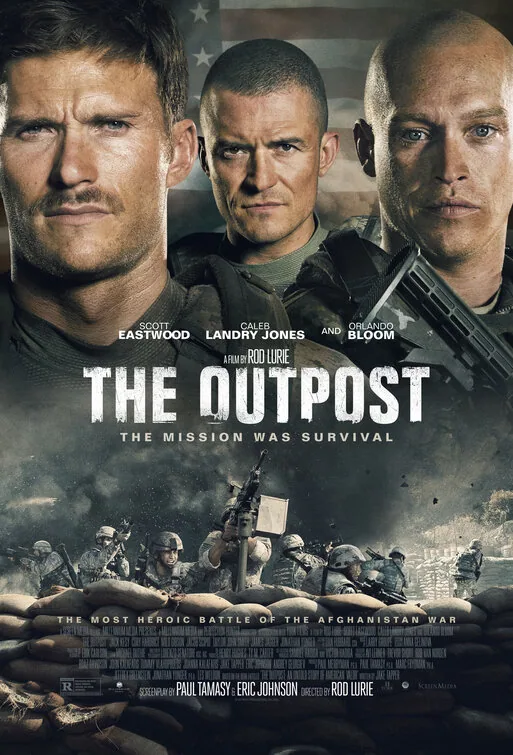
What changes The 9th Company: training-to-battle arc and siege climax. The Outpost: base routines and patrols, attacks escalate, battle geography narrows options and collective defense climax.
U.S. soldiers stationed at Combat Outpost Keating in Afghanistan face repeated attacks from Taliban fighters and the dangers of holding an exposed base in a remote mountain valley. Captain Keating and later Staff Sergeant Clint Romesha lead a unit whose daily routines, patrols, and relationships unfold under sustained pressure. When a major assault overwhelms the position, the soldiers must defend one another and find a way to survive. Rod Lurie’s war film adapts Jake Tapper’s account of the Battle of Kamdesh as an ensemble story of isolation, leadership, and combat duty.
Both centre on attritional warfare and military counterattack.
Why this matches +
Genres: Action / War
Shared film traits
Based on recorded story, mood and style. Your preferences can change the order.
War and civilian life · Survival
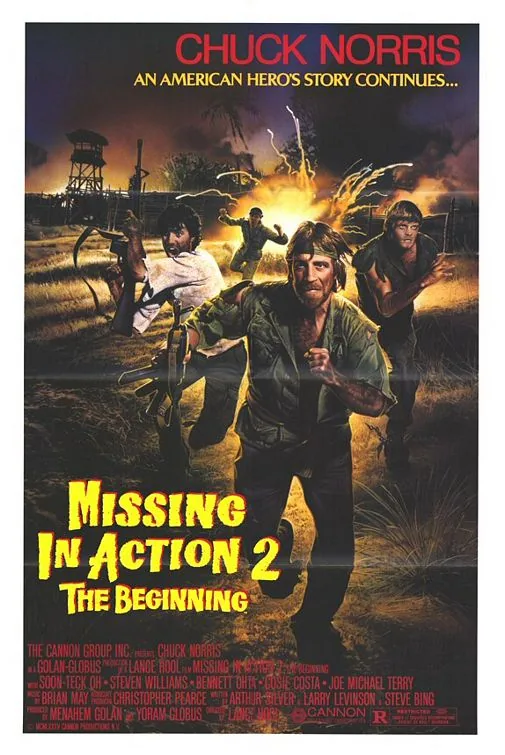
What changes The 9th Company: training-to-battle arc and siege climax. Missing in Action 2: The Beginning: captivity escalates toward a violent rescue and escape.
During the Vietnam War, Colonel James Braddock and fellow American prisoners endure forced labor in a camp run by Colonel Yin. Yin seeks to make Braddock sign a false confession about American war crimes, while also using the prisoners to cultivate opium. Braddock resists, protects the other captives and plans an escape, turning the film into a direct action story about coercion, endurance and rescue.
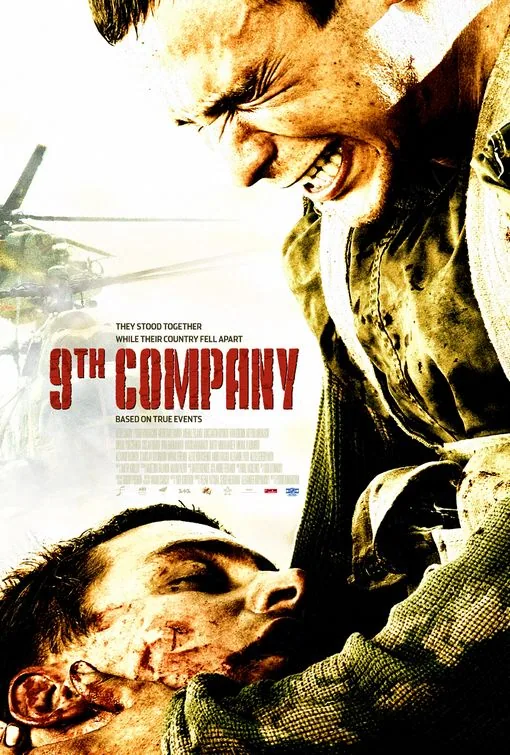
A group of Soviet conscripts train in Central Asia before being sent to Afghanistan near the end of the Soviet-Afghan War. Their severe instructor Dygalo, himself shaped by combat, pushes the recruits through harsh preparation, and the men form close bonds before deployment. The film culminates in a fictionalized defense of a remote hill position based on the 1988 Battle of Hill 3234, where it portrays the company as nearly wiped out. The actual 39-man Soviet defense lost six soldiers, with 28 wounded; the film is an intense dramatization, not a reliable record of the battle or the wider war.
What drives the story
Training binds the conscripts before a remote defensive assignment exposes the gap between a unit's personal victory and the larger political futility of the war.
The people at its centre
Dygalo's abrasive instruction is linked to his own combat experience, while the recruits' friendship gives individual shape to a group story.
What it feels like
Long boot-camp passages build familiarity before the film shifts to a sustained siege, contrasting barracks camaraderie with sudden battlefield loss.
Worth knowing
A fit for intense military drama centered on Soviet conscripts in Afghanistan; its siege is a heavily dramatized adaptation of Hill 3234 (six of the actual 39 defenders were killed), and the film’s national perspective is not a complete history of the conflict.
ComradeshipMilitary dutyAttrition and loss
Mood
Harsh · Immersive · Somber
Pacing
Training-to-battle arc · Siege climax
Visual style
Ground-level combat · Dusty mountain terrain
Storytelling
Recruit training · Afghan deployment · Isolated outpost