The road trip keeps changing meaning as the friends’ bravado meets an adult traveler’s more complicated circumstances.
Why this matches +
Selected for the central appeal: A young outsider enters an erotic, cinephile triangle whose private games collide with political change.
Genres: Drama / Romance
Shared film traits
Based on recorded story, mood and style. Your preferences can change the order.
Coming of age
What changes Sexual exploration among three young companions exposes privilege and the political world beyond their self-absorption; a Mexican road trip replaces the Paris apartment and explicit cinephilia.
Two teenage friends take a road trip with an older woman who is dealing with a private loss, and their shifting trio turns a carefree journey into a reckoning with desire, class and growing up. A candid voice-over widens the story beyond the travelers’ self-image. The film’s erotic humor sits beside an attentive portrait of Mexican places and inequalities.
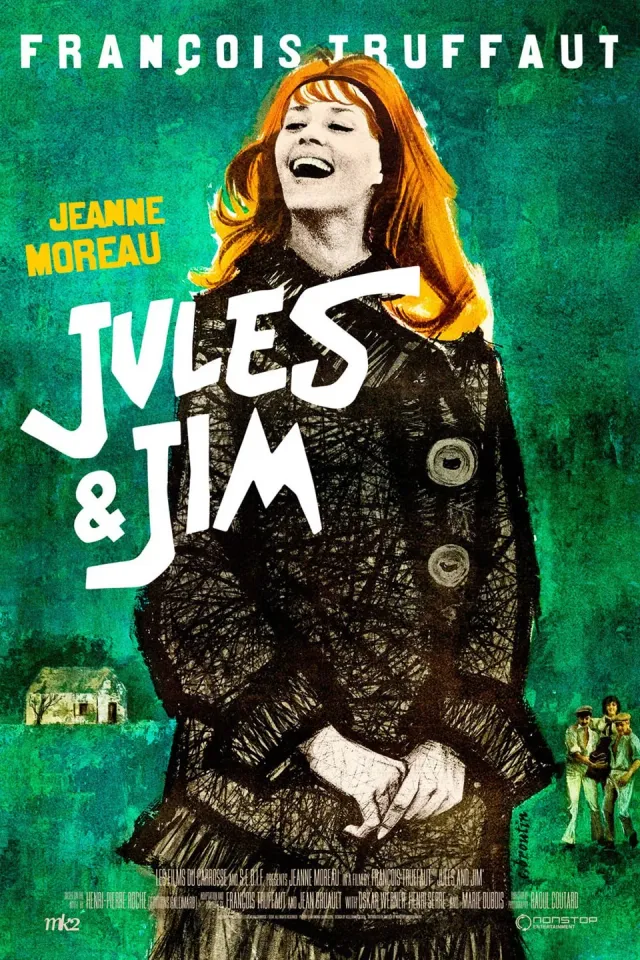
The trio’s shared domestic experiment tries to hold friendship and desire together, but Catherine’s changing choices expose the difference between an arrangement the men can narrate and a life she can actually inhabit.
Why this matches +
Selected for the central appeal: A young outsider enters an erotic, cinephile triangle whose private games collide with political change.
Genres: Drama / Romance
Shared film traits
Based on recorded story, mood and style. Your preferences can change the order.
What changes An intense bohemian triangle tests whether friendship and erotic freedom can survive unequal attachment; a longer historical trajectory replaces the twins’ enclosed cinema games during 1968.
Before the First World War, Austrian Jules and Frenchman Jim share an artistic life and become fascinated by Catherine, whose independence unsettles the image of love they have built around her. War places the friends in opposing armies; their later reunion permits a household that appears to preserve every attachment. Yet Catherine’s desires do not settle into the men’s arrangement, and Jim’s hopes for a stable future collide with her fear of being abandoned or possessed. Truffaut’s adaptation of Henri-Pierre Roché’s novel moves across years with breathless speed, making the early play of possibility feel increasingly fragile. Its romantic freedom is neither a simple endorsement of non-monogamy nor a reason to romanticize the violence and devastation that follow.
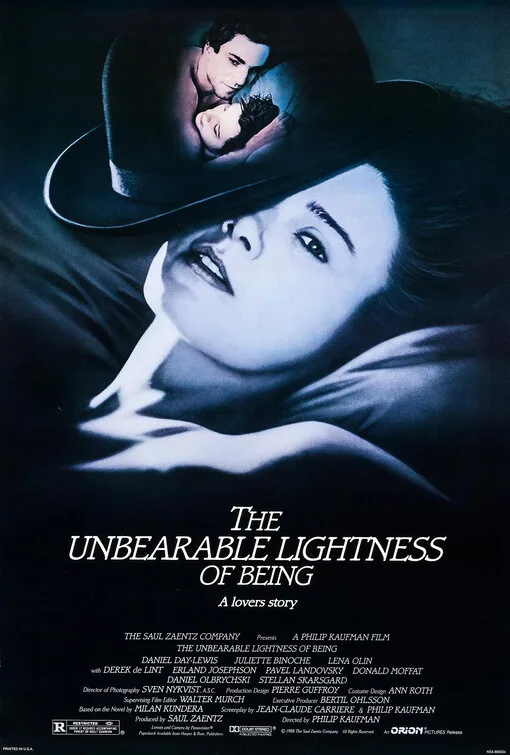
Tomas’s defense of freedom clashes with Tereza’s need for fidelity; Sabina treats independence as a protection against attachment.
Why this matches +
Related viewing experiences with the specific differences recorded for each pair.
An adjacent discovery: a related idea with a different viewing experience.
Genres: Drama / Romance
Shared film traits
Based on recorded story, mood and style. Your preferences can change the order.
What changes Erotic freedom and unstable relationships unfold beside the upheaval of 1968; adult lives in Czechoslovakia extend beyond the source’s short, sheltered adolescent experiment.
Tomas, a Prague surgeon who resists attachment, moves among his lover Sabina and his increasingly devoted wife Tereza as political upheaval transforms private life. During the 1968 Soviet invasion of Czechoslovakia, Tereza photographs the occupation and the couple flee to Switzerland, where exile does not resolve their competing desires. Sabina also encounters Franz, whose idealism cannot provide the freedom she needs. The film follows the four across relationships, migration and changing political conditions, testing the difference between lightness and responsibility through choices whose emotional consequences persist.
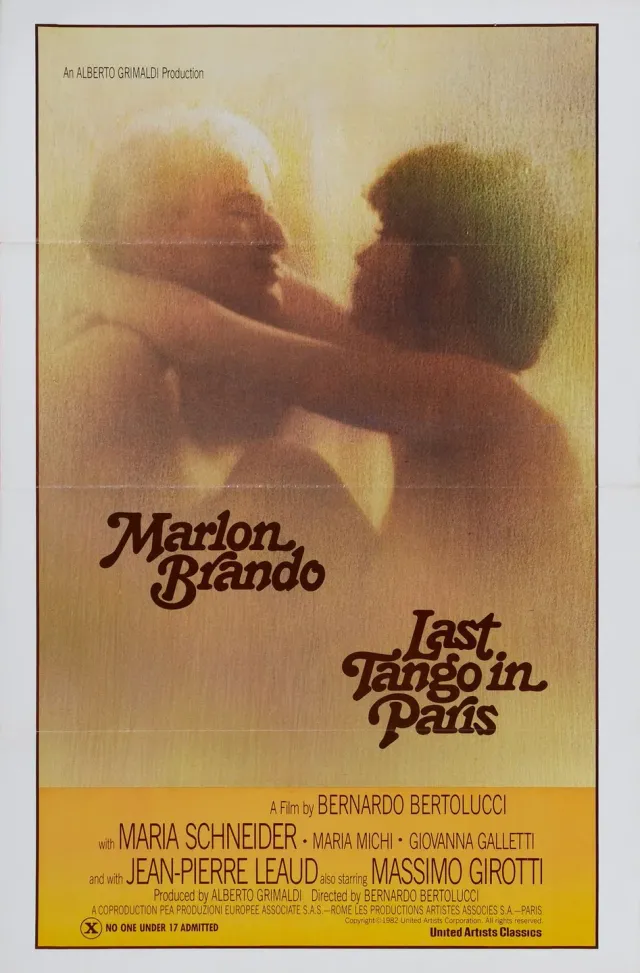
The apartment agreement suppresses names and biography, but its apparent symmetry breaks as Paul uses grief and intensity to set the conditions. The public lives outside the room continue to shape the encounters he wants to treat as separate.
Why this matches +
Related viewing experiences with the specific differences recorded for each pair.
An adjacent discovery: a related idea with a different viewing experience.
Genres: Drama
Shared film traits
Based on recorded story, mood and style. Your preferences can change the order.
What changes An enclosed Parisian sexual relationship uses improvised roles to suspend ordinary identities; adult grief and much harsher coercion replace the young trio’s cinephile performances.
In 1970s Paris, Paul and Jeanne begin an anonymous sexual arrangement inside an apartment while each keeps a life outside it. Their pact promises intimacy without names or personal histories, but Paul’s grief and Jeanne’s engagement make its terms increasingly unequal. The film depicts rape and emotional coercion as part of their encounters; its transgressive style does not make those acts consensual. Production history adds a separate, carefully bounded issue: Bertolucci later said Schneider had not been told about the butter element before filming, while the scene’s simulated assault was scripted. The distinction between what occurs on screen and how the scene was made matters. Neither the film’s aesthetic reputation nor the director’s later account should romanticize the violence or overstate the production facts.
Early in 1968, American exchange student Matthew meets French twins Théo and Isabelle during protests over the removal of Henri Langlois from the Cinémathèque Française. Their shared cinephilia becomes an intense friendship, and the twins invite Matthew to stay in their family apartment while their parents are away. The trio reenacts movie scenes, tests one another with games and negotiates an intimate household dynamic that Matthew does not fully understand. As the film moves toward the May 1968 demonstrations and strikes, their sealed-off world becomes harder to sustain. When the parents return, the friends must decide whether to remain spectators or join the upheaval beyond their window. The private story is a cinephile drama set against political events, not a broad account of the protests.
What drives the story
The twins’ film games keep Matthew enclosed in their private world, while the political events outside gradually demand a response. The Langlois affair that brings them together occurred earlier in 1968; it is distinct from the May demonstrations the film later evokes.
The people at its centre
Matthew values restraint and connection, while Théo and Isabelle use provocation to test his limits and each other’s inseparable bond.
What it feels like
An erotic, cinephile coming-of-age drama that quotes and reenacts film history. Its long interior passages contrast with the brief, turbulent scenes of street protest.
Worth knowing
A fit for intimate, politically charged stories about young adults and cinema. It contains explicit sexual material, and the apartment plot should not be mistaken for a history of either the Cinémathèque protests or May 1968.
IntimacyArtistic fascinationPolitical change
Mood
Sensual · Enclosed · Restless
Pacing
Apartment interludes · Political interruption
Visual style
Cinephile quotation · Erotic chamber drama
Storytelling
Film-obsessed siblings · Shared apartment · May 1968 unrest