Interwoven affairs, career uncertainty and existential panic repeatedly rearrange a family's alliances between recurring holiday gatherings.
Why this matches +
These offer a related experience with a meaningful difference in story, tone, or presentation.
An adjacent discovery: a related idea with a different viewing experience.
Genres: Comedy / Drama
Shared film traits
Based on recorded story, mood and style. Your preferences can change the order.
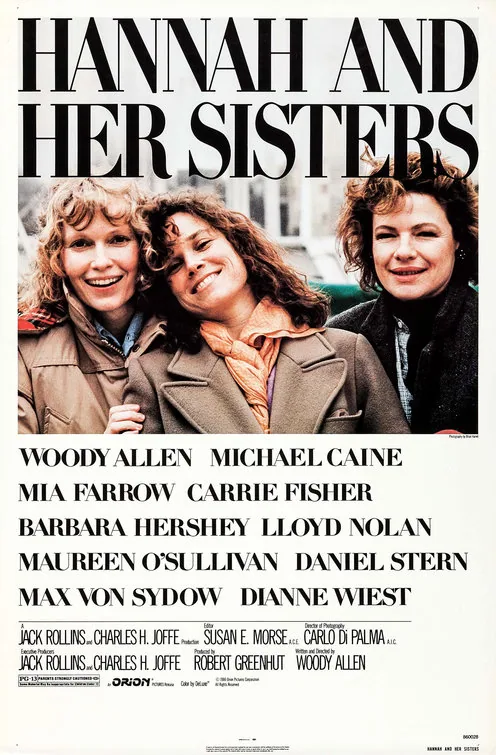
What changes Hannah and Her Sisters follows intertwined lovers and family members as attachments shift over time, using contemporary ensemble comedy-drama rather than Truffaut's tragic triangle.
Family gatherings frame two years in which three sisters and their partners seek reassurance through work, affairs, borrowed money and explanations for mortality. The sister who appears most stable becomes the object around which other people's resentment and dependency circulate. Elsewhere, a former husband's health anxiety leads into a search for meaning that alternates panic with comic discovery. The ensemble comedy makes intimacy difficult to separate from self-justification, allowing genuine attachment to coexist with betrayals that the family never fully names.
A wartime loss fractures a family's loyalties and redirects a shared romantic attachment, with successive returns reopening conflicts that distance has not resolved.
Why this matches +
These offer a related experience with a meaningful difference in story, tone, or presentation.
An adjacent discovery: a related idea with a different viewing experience.
Genres: Drama / Romance
Shared film traits
Based on recorded story, mood and style. Your preferences can change the order.
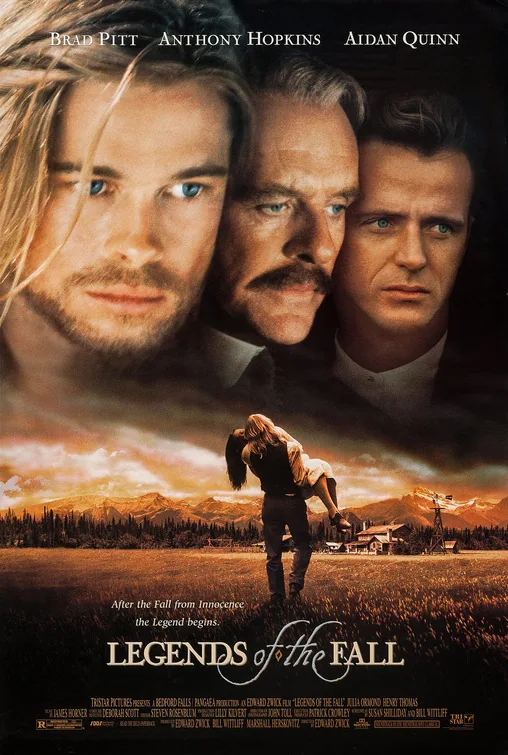
What changes Legends of the Fall follows close brothers whose attachments to the same woman alter their lives across years and war, using an American family epic rather than New Wave intimacy.
Three brothers raised on a Montana ranch enter the First World War with different expectations of duty and belonging. One death reorganizes their relationships with their father and the woman whose engagement linked her to the family. The returning brother's grief turns into absence, renewed attachments and violence that cannot remain a private condition. The multigenerational melodrama makes landscape and family myth large enough to contain longing without making them reliable shelter from rivalry, political compromise or the consequences of idealizing an untamable man.
An intimate encounter prompts the actress to recount a suppressed wartime love, while her lover challenges the certainty with which she can claim to remember Hiroshima. The architect can challenge the actress’s certainty without becoming a spokesperson for everyone in Hiroshima.
Why this matches +
These offer a related experience with a meaningful difference in story, tone, or presentation.
An adjacent discovery: a related idea with a different viewing experience.
Genres: Drama / Romance
Shared film traits
Based on recorded story, mood and style. Your preferences can change the order.
What changes Hiroshima mon amour connects an intense relationship with memory and the lasting effects of war, focusing on two lovers rather than three friends.
A French actress and a Japanese architect begin an affair in postwar Hiroshima, where her film work about peace does not grant her full access to the city’s history. Their conversations open onto her earlier love affair in occupied Nevers and the punishment that followed its loss. Repetition, fragmented images and documentary traces let one memory interrupt another without making the woman’s private suffering equivalent to the atomic bombing. The architect can ask her to remember, but cannot turn memory into shared ownership. The film’s formal argument lies in that unfinished encounter between personal recollection, public catastrophe and the limits of witnessing.
The couple’s flight keeps changing genre and direction, because Marianne and Ferdinand imagine freedom in incompatible ways.
Why this matches +
These offer a related experience with a meaningful difference in story, tone, or presentation.
An adjacent discovery: a related idea with a different viewing experience.
Genres: Drama / Crime
Shared film traits
Based on recorded story, mood and style. Your preferences can change the order.
What changes Pierrot le Fou uses playful French New Wave form to follow lovers toward escalating instability and violence, with a fugitive couple rather than a long-lived friendship triangle.
Ferdinand Griffon leaves his marriage and a dull advertising job to escape with Marianne Renoir, a former lover pursued by gangsters. They drive from Paris toward the Mediterranean in a stolen car, leaving behind bodies and fragments of the life Ferdinand once considered secure. Marianne calls him Pierrot, a nickname he rejects, while the pair drift between crime, argument, romance and fantasy. Their attempt at freedom never settles into a shared purpose: Marianne wants action and escape, while Ferdinand turns increasingly toward writing and self-conscious performance. Godard’s road story fractures into digressions before the lovers’ pursuit ends in violence.
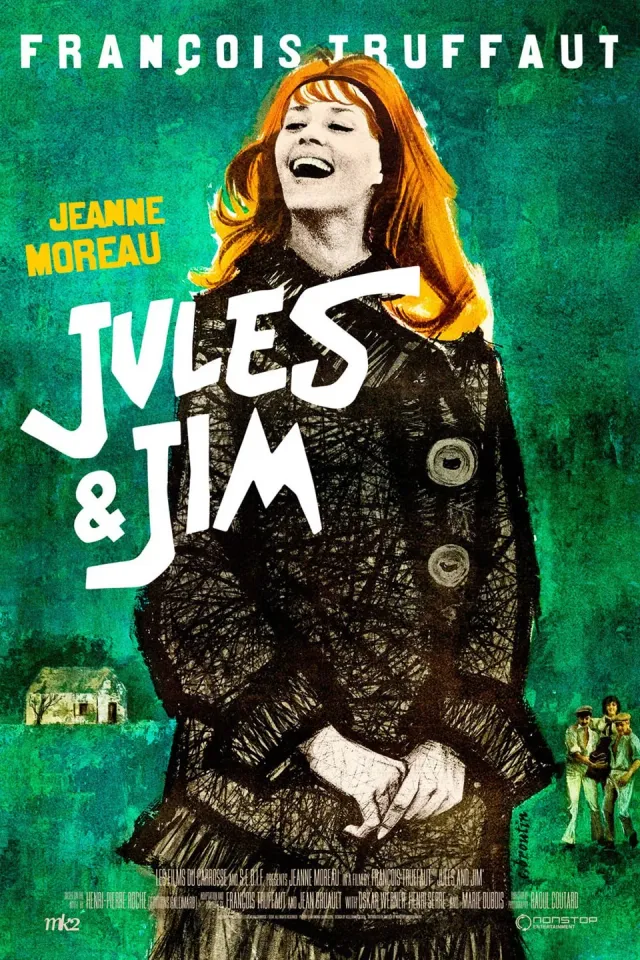
Before the First World War, Austrian Jules and Frenchman Jim share an artistic life and become fascinated by Catherine, whose independence unsettles the image of love they have built around her. War places the friends in opposing armies; their later reunion permits a household that appears to preserve every attachment. Yet Catherine’s desires do not settle into the men’s arrangement, and Jim’s hopes for a stable future collide with her fear of being abandoned or possessed. Truffaut’s adaptation of Henri-Pierre Roché’s novel moves across years with breathless speed, making the early play of possibility feel increasingly fragile. Its romantic freedom is neither a simple endorsement of non-monogamy nor a reason to romanticize the violence and devastation that follow.
What drives the story
The trio’s shared domestic experiment tries to hold friendship and desire together, but Catherine’s changing choices expose the difference between an arrangement the men can narrate and a life she can actually inhabit.
The people at its centre
Jules accepts forms of closeness that Jim cannot sustain, while both men first approach Catherine through idealized images. Her agency resists their ownership, though agency alone does not make her later actions harmless or emancipatory.
What it feels like
Voiceover, freeze frames, rapid montage and camera play make the early years feel buoyant and compressed. That speed later measures what cannot be recovered, as the film shifts from youthful possibility to irreversible loss.
Worth knowing
The film can match stories of friendship, desire and unstable domestic arrangements, but it should not be flattened into a celebratory love-triangle template. Its men’s idealization, Catherine’s resistance and the coercive outcome remain in tension.