Explore films connected to The Rose through Fame and labor, Loneliness, Art and performance. Choose the qualities you want to carry into your next watch.
What should feel similar?
Find your next favourite
9 films · Closest overall matches
Hide films you’ve seen or don’t want. Saved on this device.
No matches for this combination yet.
Try another option or reset your choices to see more films.
Based on recorded story, mood and style. Your preferences can change the order.
Music and performance
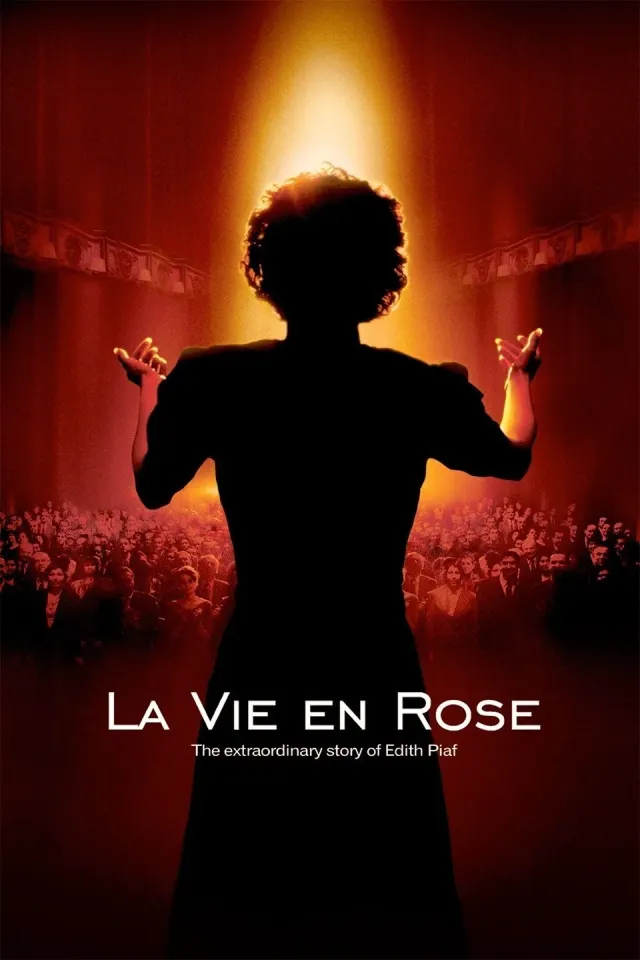
What changes The Rose: performance-led, emotional swings, touring episodic and tragic crescendo. La Vie en Rose: nonlinear and episodic.
A singer's public force emerges from an unstable childhood of poverty, illness and dependence on people whose care is unevenly available. Success brings technical discipline, fame and passionate attachment without providing reliable safety from bodily decline or loss. The narrative moves among periods rather than allowing each triumph to cancel what preceded it. The biographical drama makes performance a way of commanding attention that private life cannot sustain, while refusing to keep the celebrated voice separate from the vulnerable person through whom it is produced.
Based on recorded story, mood and style. Your preferences can change the order.
What changes The Rose: performance-led, emotional swings, touring episodic and tragic crescendo. Annie: song-driven and steady.
A spirited foster child in contemporary New York crosses paths with a wealthy political candidate whose public image needs warmth and votes. Their arrangement begins as a campaign opportunity but grows into a relationship that unsettles both of their expectations. Songs and city movement carry Annie’s hope for a permanent home, while the comedy asks whether a family can form beyond the terms of a publicity plan.
Based on recorded story, mood and style. Your preferences can change the order.
Memory and identity
What changes The Rose: performance-led, emotional swings, touring episodic and tragic crescendo. The Color Purple: decades-spanning and song-led.
Celie grows up under abuse and separation from her younger sister Nettie, then is forced into a marriage that leaves her isolated in rural Georgia. Over decades, friendships with Sofia and Shug Avery help her find confidence, economic independence and a path back toward family. This musical adaptation follows the story through song and ensemble performance, emphasizing endurance, chosen solidarity and the difficult recovery of a voice.
Based on recorded story, mood and style. Your preferences can change the order.
Music and performance · Work and ambition
What changes The Rose: performance-led, emotional swings, touring episodic and tragic crescendo. The High Note: work routine establishes hierarchy, new production project begins, career choices collide and performance-centered resolution.
Maggie Sherwoode has spent years managing the daily needs of legendary R&B singer Grace Davis while privately hoping to become a music producer. When she meets singer David Cliff, she claims experience she has not yet earned and offers to help him make an album. Grace’s manager wants her to accept a Las Vegas residency rather than record new music, leaving Maggie caught between serving an established artist and building a career of her own. Nisha Ganatra’s music-centered comedy-drama follows ambition, mentorship, and changing opportunities in Los Angeles.
Based on recorded story, mood and style. Your preferences can change the order.
Music and performance
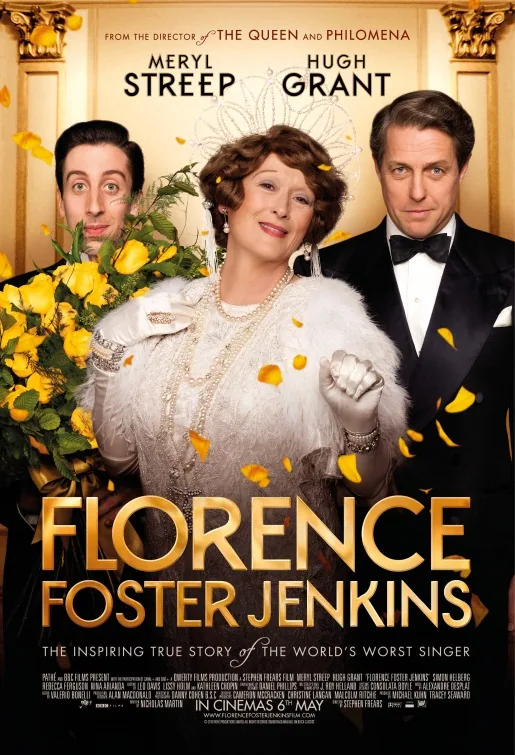
What changes The Rose: performance-led, emotional swings, touring episodic and tragic crescendo. Florence Foster Jenkins: gentle and character-led.
New York socialite Florence Foster Jenkins loves music and performs despite having little vocal ability. Her husband and manager St. Clair Bayfield carefully manages what she hears about her singing, while pianist Cosmé McMoon tries to support her without abandoning his own judgment. Stephen Frears's period comedy-drama treats Florence's ambition with affection, exploring how performance, devotion, illness, and the protection of a cherished dream can coexist uneasily.
Based on recorded story, mood and style. Your preferences can change the order.
Music and performance · Memory and identity
What changes The Rose: performance-led, emotional swings, touring episodic and tragic crescendo. Mamma Mia! Here We Go Again: brisk and parallel.
A year after Donna's death, Sophie prepares to reopen the Greek island hotel while learning more about the summer her mother first arrived there. In parallel, young Donna leaves home, reaches Kalokairi and meets Harry, Bill and Sam, whose separate courtships shape the family history Sophie is trying to understand. Storm damage and an unexpected pregnancy complicate the present celebration; the young and older generations gradually converge around the people Donna chose to keep close. The sequel alternates two timelines, making inherited stories and chosen family as central as its returning pop songs.
Based on recorded story, mood and style. Your preferences can change the order.
Music and performance
What changes The Rose: performance-led, emotional swings, touring episodic and tragic crescendo. La La Land: measured.
An aspiring actress and a jazz pianist meet while navigating service work, failed opportunities and incompatible ideas of artistic success in Los Angeles. Their romance gives each the encouragement to continue, but the work that moves them forward also creates distance. Seasonal shifts, songs and imagined possibilities follow the changing relationship between devotion to another person and the identities they hope to build through art.
Based on recorded story, mood and style. Your preferences can change the order.
Memory and identity
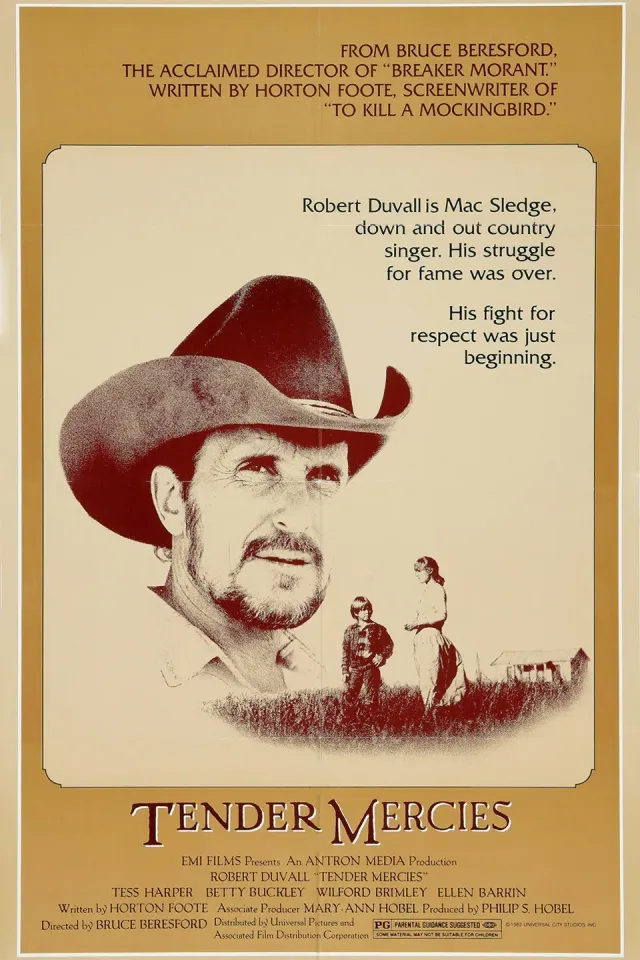
What changes The Rose: performance-led, emotional swings, touring episodic and tragic crescendo. Tender Mercies: patient domestic scenes reveal a life rebuilt through routine.
Washed-up country singer Mac Sledge wakes after a drinking binge at a rural Texas motel run by Rosa Lee, a young widow raising her son. He trades maintenance work for a room and begins a sober life, gradually building trust with Rosa Lee and Sonny. His past fame and estranged family remain present, but the drama follows recovery through ordinary work, care and music.
Based on recorded story, mood and style. Your preferences can change the order.
Memory and identity
What changes The Rose: performance-led, emotional swings, touring episodic and tragic crescendo. Stay: disorienting, recursive and slow-building.
Psychiatrist Sam Foster takes on Henry Letham, a college student who warns that he will die by suicide at midnight on his twenty-first birthday. As Sam investigates Henry’s past and tries to keep him safe, familiar people and places behave in impossible, repeated ways. Sam’s fiancée Lila understands the seriousness of Henry’s crisis, while Sam becomes increasingly uncertain about what he sees. Marc Forster’s thriller builds a puzzle from unstable perception, grief, and the effort to reach someone in danger.
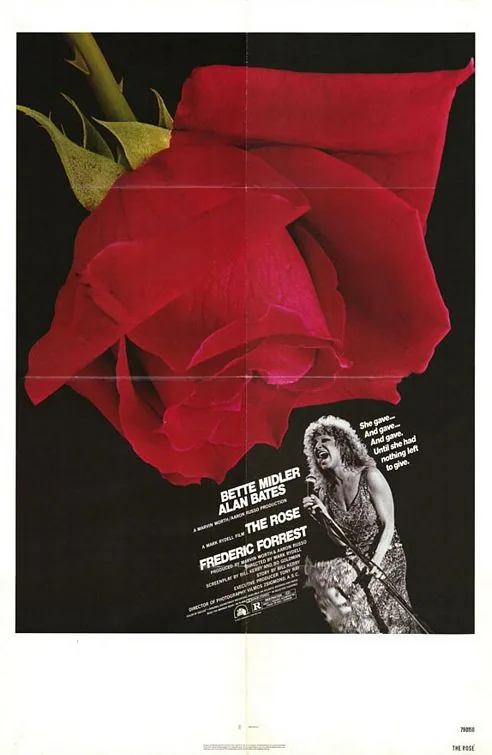
Mary Rose Foster, known to her fans simply as the Rose, is an acclaimed singer whose packed touring schedule and demanding manager leave her exhausted and lonely. She wants to return to her Florida hometown as a star, but fame keeps her moving and makes ordinary relationships difficult. After a humiliating encounter with a country singer she admires, she leaves with chauffeur Huston Dyer, and the two begin an intense romance. Their connection is tested by touring, old attachments, alcohol, and the pressure to keep performing. The story follows a gifted artist as the stage persona begins to crowd out her private life.
What drives the story
Rose’s voice brings professional success, but the schedule and management around it leave her little space to control her own life.
The people at its centre
Huston offers companionship and a possible return to home, while both partners bring histories and habits that make stability difficult.
What it feels like
Live performances provide release and spectacle, then contrast with the exhaustion and bargaining that shape Rose’s private relationships.
Worth knowing
This is a fictional rock-star character drama with a performance focus, not a factual account of any single musician’s life.