Both share themes of family, plus an inspiring atmosphere.
Why this matches +
Genres: Drama / Sport
Shared film traits
Based on recorded story, mood and style. Your preferences can change the order.
Coming of age · Sport and competition
What changes The Swimmers: episodic, propulsive, emotionally direct and building. Young Woman and the Sea: training-to-event, steadily building and climactic.
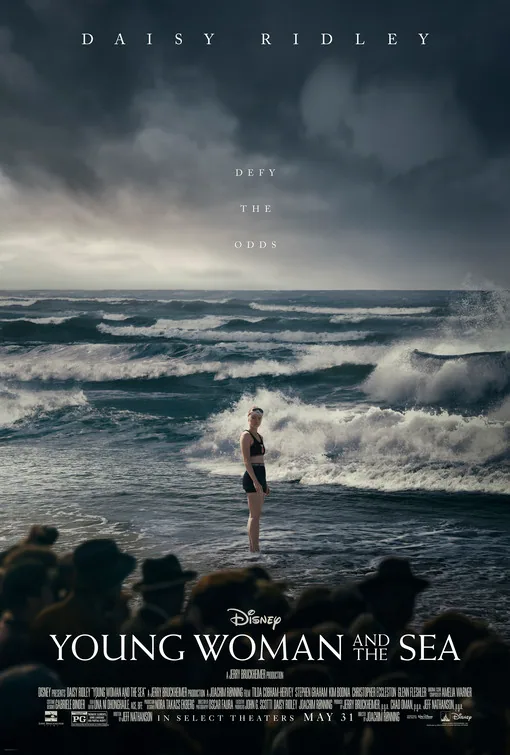
Trudy Ederle grows up in a family uncertain whether competitive swimming is an appropriate future for a young woman. With determined coaching and her own endurance, she becomes an Olympic swimmer and sets her sights on crossing the English Channel. The biographical drama follows the training, public scrutiny and logistical barriers surrounding her attempt, framing the swim as an achievement earned through skill and persistence rather than a simple inspirational symbol.
Based on recorded story, mood and style. Your preferences can change the order.
Survival · Sport and competition
Expect determined and tense, with training-focused and survival-driven pacing.
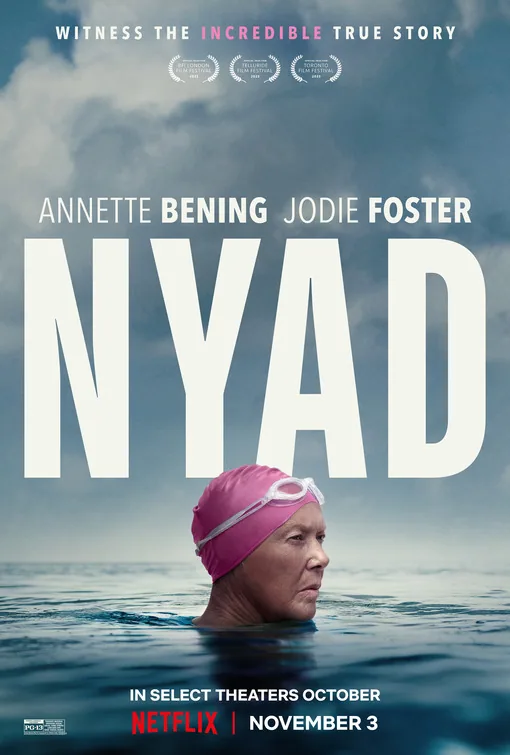
At sixty, long-distance swimmer Diana Nyad returns to an ambition she has pursued for decades: a nonstop journey from Cuba to Florida. She asks close friend and former partner Bonnie Stoll to train and support her, assembling a crew whose skills become essential during repeated attempts through currents, fatigue and marine hazards. The sports drama focuses on persistence and friendship while adapting a contested real-world achievement through a character-centered account.
Based on recorded story, mood and style. Your preferences can change the order.
War and civilian life · Family and care
What changes The Swimmers: episodic, propulsive, emotionally direct and building. Vermiglio: patient, seasonal and ensemble-led.
In the final winter of the Second World War, a Sicilian soldier arrives in the alpine village of Vermiglio and is taken in by a local family. His presence changes the lives of the household's daughters, especially Lucia, and draws private desires into the rhythms of village life. Maura Delpero observes the family across seasons as war, religion, work and social expectations shape what each generation can say aloud and what futures remain possible.
Based on recorded story, mood and style. Your preferences can change the order.
Coming of age · Survival
What changes The Swimmers: episodic, propulsive, emotionally direct and building. Farha: slow-building, contained and tension through waiting.
In 1948, fourteen-year-old Palestinian Farha hopes to continue her education in the city, while her father expects her to marry. When violence reaches their village, he locks her in a storage room for safety and promises to return. From that confined space, Farha hears and witnesses the danger around her as hours pass without news. Darin J. Sallam’s historical drama focuses on a young person’s experience of the Nakba through a restricted viewpoint and a true-story inspiration.
Both share themes of family, plus an urgent atmosphere.
Why this matches +
Genres: Drama
Shared film traits
Based on recorded story, mood and style. Your preferences can change the order.
Survival · Family and care
What changes The Swimmers: episodic, propulsive, emotionally direct and building. Rosetta: rosetta moves between job searches and conflict at home and an uneasy friendship before a job offer tests her loyalty.
After losing a temporary job, Rosetta returns to the caravan park where she lives with her alcoholic mother and begins an exhausting search for steady work. She rejects welfare and charity, tries to keep food on the table, and befriends Riquet, a young waffle-stand worker who offers her a possible opening. Their fragile friendship is tested when Rosetta learns she can take his job after he is dismissed. The chance to escape poverty forces her to weigh survival against a loyalty neither of them can afford to take for granted.
Based on recorded story, mood and style. Your preferences can change the order.
Coming of age · Sport and competition
What changes The Swimmers: episodic, propulsive, emotionally direct and building. McFarland, USA: measured preparation rises into race-day payoff.
A teacher and coach arrives in a predominantly Latino agricultural community and begins building a cross-country team from students whose daily labor has already developed their endurance. Training creates new possibilities for the runners, but success depends on trust between the coach, families and the town. The sports drama frames competition as a shared opportunity shaped by migration, work and belonging.
Based on recorded story, mood and style. Your preferences can change the order.
War and civilian life
What changes The Swimmers: episodic, propulsive, emotionally direct and building. The Woman King: training arc into large-scale battles.
In the 1820s Kingdom of Dahomey, General Nanisca trains a new group of women warriors as the Agojie face conflict with the Oyo Empire and the expanding slave trade. Recruit Nawi resists the role expected of her and gradually finds a place among the soldiers. The historical action drama centers women’s military skill and solidarity while dramatizing political choices and a violent period of West African history.
Both share competitive swimming, plus an intimate atmosphere.
Why this matches +
Genres: Drama / Biography
Shared film traits
Based on recorded story, mood and style. Your preferences can change the order.
Sport and competition
Expect intimate and raw, with episodic and associative pacing.
Adapted from Lidia Yuknavitch’s memoir, the film follows Lidia from a difficult childhood into adulthood, where competitive swimming, intimate relationships, addiction, and writing become entwined with her effort to understand her past. Kristen Stewart shapes the story through a nonlinear, sensory approach that treats memory as something revisited and rewritten. Water becomes both a physical discipline and a recurring image for survival and self-expression.
Based on recorded story, mood and style. Your preferences can change the order.
Coming of age
What changes The Swimmers: episodic, propulsive, emotionally direct and building. Mustang: ensemble and building pressure.
Five sisters in a rural Turkish town are punished after playful contact with boys is interpreted as scandalous behavior. Their guardian responds with increasing restrictions and plans for marriage, pushing the girls to find ways to protect one another and imagine different futures. Deniz Gamze Ergüven follows the sisters' changing strategies through a close-knit family setting, balancing youthful energy with the pressures of gender expectations and confinement.
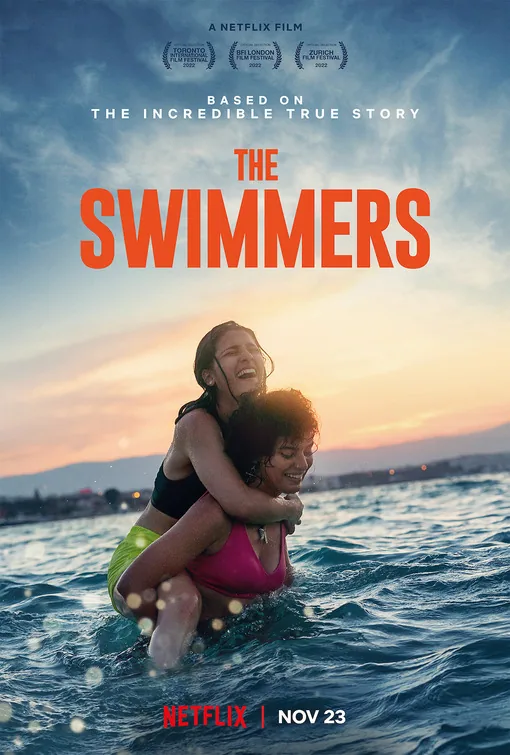
Sisters Yusra and Sara Mardini train as swimmers in Damascus as civil war closes in around them. After leaving Syria, their dangerous journey across the Aegean becomes a test of their athletic skill and their bond with the people traveling beside them. The story follows their passage toward Europe and Yusra’s effort to continue swimming, placing one family’s displacement alongside the persistence required to build a future after flight.
What drives the story
The sisters leave a war zone and rely on swimming, teamwork and persistence to keep moving toward safety and opportunity.
The people at its centre
Yusra and Sara respond differently to the dangers of flight, while Yusra holds onto an athletic goal through displacement.
What it feels like
Competitive swimming connects the sisters’ earlier life to a migration story grounded in a specific family’s choices.
Worth knowing
An accessible sports and migration drama for viewers interested in sisterhood, endurance and a refugee journey.
sisterhooddisplacementperseverance
Mood
urgent · hopeful · intimate · inspiring
Pacing
episodic · propulsive · emotionally direct · building
Visual style
open-water imagery · handheld travel scenes · contrasting city and sea · athletic movement