Explore films connected to White Sun of the Desert through duty, war aftermath, protection. Choose the qualities you want to carry into your next watch.
What should feel similar?
Find your next favourite
9 films · Closest overall matches
Hide films you’ve seen or don’t want. Saved on this device.
No matches for this combination yet.
Try another option or reset your choices to see more films.
Based on recorded story, mood and style. Your preferences can change the order.
War and civilian life
What changes White Sun of the Desert: episodic adventure and action climax. Hostiles: slow journey punctuated by sudden violence.
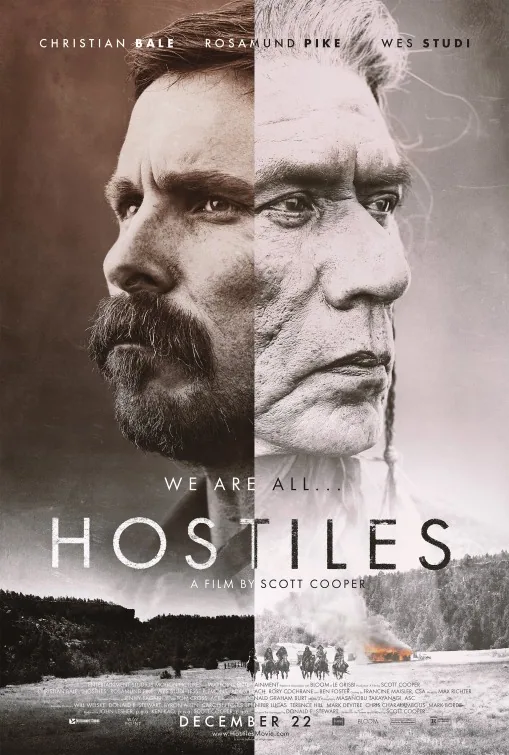
A U.S. Army captain is ordered to escort a Cheyenne chief and his family across dangerous territory to their homeland. The mission forces a group shaped by years of violence to travel together while facing threats from the surrounding frontier. The Western drama examines grief, racism and the possibility of limited cooperation without treating reconciliation as easy or complete.
Based on recorded story, mood and style. Your preferences can change the order.
War and civilian life
What changes White Sun of the Desert: episodic adventure and action climax. Whiskey Tango Foxtrot: episodic reporting life, comic social turns and war-zone action interruptions.
Frustrated television journalist Kim Baker accepts a short assignment in Afghanistan and arrives expecting a temporary change from her routine. She adapts to the Kabul press corps with help from fellow correspondents and an Afghan fixer, then begins taking greater risks to get stories and maintain her standing. Her career develops alongside complicated friendships, romantic entanglements, and the reality of reporting in a war zone. The comedy-drama draws loosely from Kim Barker's memoir and follows a correspondent discovering both the rush and the cost of conflict journalism.
Based on recorded story, mood and style. Your preferences can change the order.
What changes White Sun of the Desert: episodic adventure and action climax. Cowboys & Aliens: action-led and escalating pursuit.
A wounded stranger arrives in a frontier town with no memory and an unexplained weapon attached to his wrist. When alien raiders abduct local people, an uneasy posse follows them into the desert. The search forces an outlaw, a powerful cattleman and other antagonistic residents to cooperate while the stranger's returning memories connect the invasion to losses he cannot initially understand.
Based on recorded story, mood and style. Your preferences can change the order.
War and civilian life
What changes White Sun of the Desert: episodic adventure and action climax. Dances with Wolves: measured and epic.
A Union officer posted to a remote frontier position begins contact with a nearby Lakota community and gradually learns to communicate beyond the assumptions of his original assignment. Hospitality, work and a developing attachment give him a place whose significance cannot be reduced to observation. The return of organised military authority makes his loyalties visible, forcing him to confront the violence carried by an institution he once served without imagining an alternative.
Based on recorded story, mood and style. Your preferences can change the order.
War and civilian life
What changes White Sun of the Desert: episodic adventure and action climax. The Way Back: the escape gives way to a series of environmental ordeals across changing terrain..
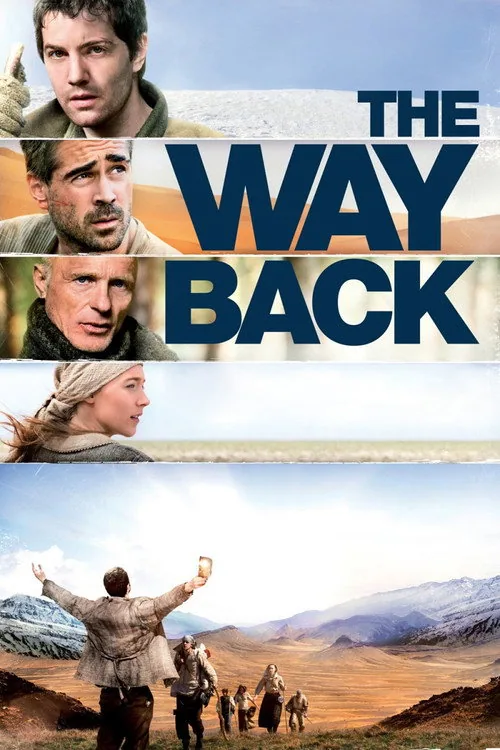
During the Second World War, a Polish prisoner escapes a Soviet labor camp with a small group of men. They travel south across Siberia, the Gobi Desert, and the Himalayas, relying on one another through hunger, weather, and exhaustion. Their route leads toward British India, but the long journey repeatedly tests the group’s capacity to keep moving and to care for its weakest members. Peter Weir’s survival drama follows the trek in stark landscapes and is based on a disputed memoir.
Both centre on civilian protection and constrained rescue.
Why this matches +
Genres: Action / Drama
Shared film traits
Based on recorded story, mood and style. Your preferences can change the order.
War and civilian life
What changes White Sun of the Desert: episodic adventure and action climax. Warfare: a near-continuous combat sequence follows a unit’s attempt to evacuate casualties.
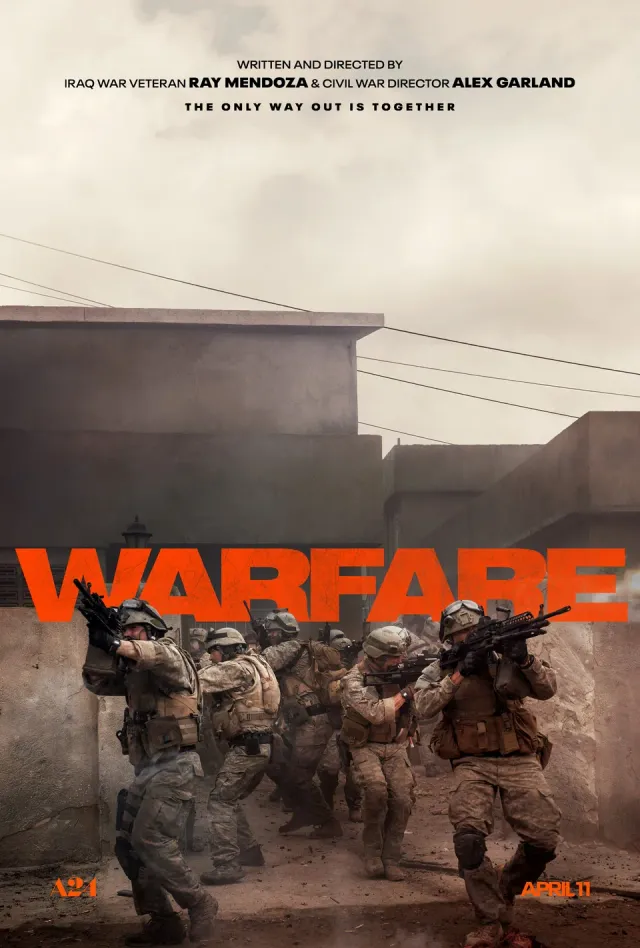
During the Iraq War, a Navy SEAL platoon occupies a house in Ramadi to monitor enemy activity and support a larger operation. When an explosion and ambush leave several men wounded, the group must coordinate evacuation under fire. Based on Ray Mendoza’s experience, the film focuses on the immediate confusion of combat, presenting battlefield survival through communication, interdependence, and the physical limits of those trying to protect one another.
Based on recorded story, mood and style. Your preferences can change the order.
What changes White Sun of the Desert: episodic adventure and action climax. Diary of a Mad Black Woman: escalating and melodramatic.
A woman is forced out of her home after her husband ends their marriage, leaving her to rebuild with support from family and faith. The story follows her movement from shock and humiliation toward a more self-directed life, while the husband’s choices bring consequences of their own. It combines broad comic turns with melodrama, centering recovery and self-respect rather than treating reconciliation as the only possible ending.
Based on recorded story, mood and style. Your preferences can change the order.
War and civilian life
What changes White Sun of the Desert: episodic adventure and action climax. The Three Musketeers: Milady: continuous action, interwoven missions, court intrigue and climactic.
Beginning immediately after the first film, D’Artagnan escapes captivity and returns to the search for Constance as France approaches war. His path crosses again with Milady de Winter, whose loyalties and history complicate the mission, while Athos and the other musketeers face dangers tied to their own pasts. Martin Bourboulon’s second half deepens the ensemble’s court and battlefield conflicts, giving Milady a central role in a story about secrecy, survival and political power.
Based on recorded story, mood and style. Your preferences can change the order.
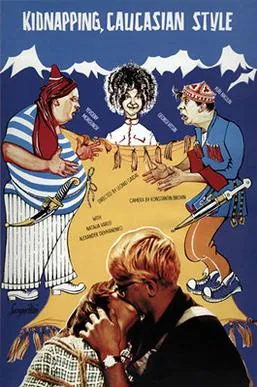
What changes White Sun of the Desert: episodic adventure and action climax. Kidnapping, Caucasian Style: brisk.
Folklore student Shurik arrives in the Caucasus and becomes fascinated with Nina, a lively young woman who refuses to be treated as a prize. Local official Saakhov tries to arrange a marriage by abducting her, while the plot initially presents the crime through the conventions of farce and Shurik’s misplaced belief that he is helping a local custom. Once he understands the coercion, he joins Nina’s effort to resist it. The film’s physical comedy, mistaken identities and comic trio keep the pace buoyant, but its ethnic caricatures and treatment of kidnapping reflect the Russian imperial folklore tradition surrounding the region. Nina’s resistance matters; neither the comedy nor the period setting should validate forced marriage as a cultural norm.
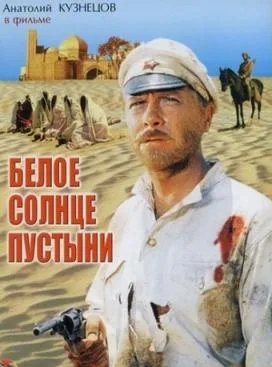
After the Russian Civil War, demobilized Red Army soldier Fyodor Sukhov is trying to travel home through the sands of Turkestan when he is asked to guard the wives abandoned by the fleeing bandit Abdullah. Sukhov’s sense of duty keeps delaying his return, and he is joined by the inexperienced Petrukha and the more complicated local ally Said as Abdullah’s pursuit draws closer. The film combines a desert adventure with comic exchanges and a western-like frontier structure. Its historical frame and portrayal of local women require context beyond a simple heroic-journey label. The comedy of delayed homecoming sits alongside the threat to the women Sukhov is assigned to guard. Each encounter postpones his travel and tests his sense of duty.
What drives the story
A homeward journey is repeatedly interrupted by a duty Sukhov accepts, so the adventure depends on his refusal to leave vulnerable people unprotected.
The people at its centre
Sukhov’s disciplined decency contrasts with Petrukha’s eagerness and Said’s private code; the women’s constrained position remains central to a rescue plot filtered through a Russian protagonist.
What it feels like
Long desert vistas, episodic encounters and a dry comic rhythm give this Soviet Ostern a western-like shape.
Worth knowing
A fit for viewers curious about Soviet frontier adventure and its mix of action, comedy and postwar duty. Its Russian-led rescue narrative frames Central Asia through a Soviet imperial gaze; it is not an ethnography or neutral regional history.