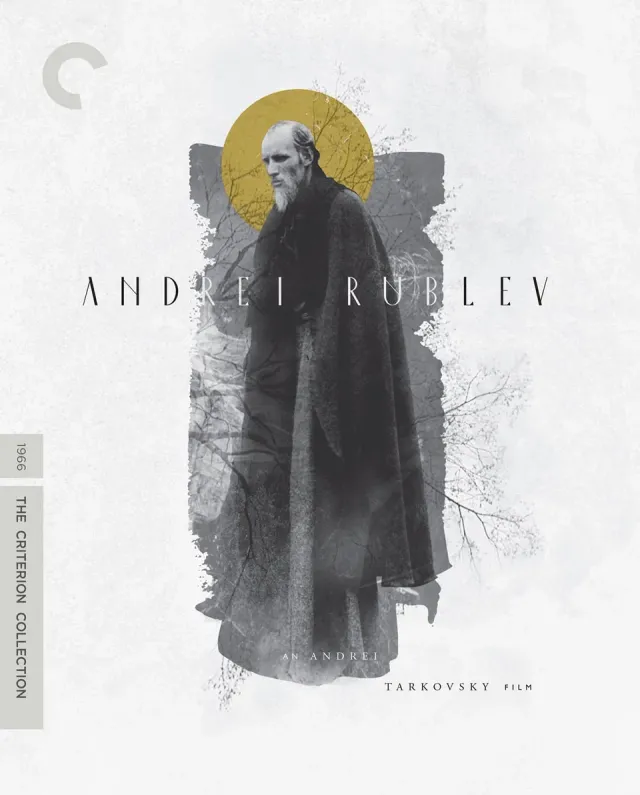
Linked episodes test whether an artist can make sacred images amid violence and failed authority. Rublev's silence is one response; the bell episode changes the question from whether a master can transmit a secret to whether collective labor and trust can produce something worthy without certainty.
Why this matches +
These offer a related experience with a meaningful difference in story, tone, or presentation.
An adjacent discovery: a related idea with a different viewing experience.
Genres: Drama / History
Shared film traits
Based on recorded story, mood and style. Your preferences can change the order.
What changes Andrei Rublev follows an artist and spiritual thinker amid violence and political turmoil, shifting from ancient Alexandria and astronomy to medieval Russia and religious art.
In Tarkovsky's director-preferred 183-minute cut, Andrei Rublev moves through a series of episodes in fifteenth-century Russia, where an icon painter encounters invasion, religious authority, famine and ordinary cruelty. His commitment to painting falters as he questions whether sacred work can survive a violent world. A young bellmaker, Boriska, claims he knows his late father's casting secret and is entrusted with a major bell; after it rings, he confesses that he had been bluffing. Rublev comforts him, and the episode becomes a counter-image of art emerging through risk, labor and trust. The film is a constructed meditation on artistic responsibility, not a continuous biography.
The treaty puts the mission’s survival at stake; the clergy and community must decide how to respond before Portuguese forces arrive.
Why this matches +
These offer a related experience with a meaningful difference in story, tone, or presentation.
An adjacent discovery: a related idea with a different viewing experience.
Genres: Drama / Historical
Shared film traits
Based on recorded story, mood and style. Your preferences can change the order.
Political resistance
What changes The Mission places religious conviction and competing political powers in violent historical conflict, moving to colonial South America and a Jesuit mission rather than an Alexandrian school.
In eighteenth-century South America, mercenary and slave trader Rodrigo Mendoza enters Jesuit territory after a personal tragedy and eventually seeks atonement among the Guaraní people he once exploited. Jesuit Father Gabriel has built a mission where the community lives under growing threat from colonial authorities. When a treaty transfers the territory from Spain to Portugal, both the missionaries and Guaraní face the prospect of enslavement or expulsion. Mendoza and Gabriel disagree over whether to defend the mission through force or spiritual resistance. Roland Joffé’s drama turns a colonial political crisis into a moral conflict between two forms of action.
More uses resignation and legally guarded silence to avoid endorsing royal supremacy, but a state demanding explicit assent turns his refusal into a prosecution sustained by purchased testimony.
Why this matches +
These offer a related experience with a meaningful difference in story, tone, or presentation.
An adjacent discovery: a related idea with a different viewing experience.
Genres: Drama / History
Shared film traits
Based on recorded story, mood and style. Your preferences can change the order.
Political resistance
What changes A Man for All Seasons follows a public intellectual whose conscience collides with political and religious authority, focusing on Tudor state power rather than ancient Alexandria.
Thomas More tries to retain both his conscience and legal safety as Henry VIII demands support for a new marriage and royal supremacy over the Church. Resigning and refusing to explain himself seem to preserve a narrow space in which he need not openly defy the king. As allies seek compromise and ambitious officials manufacture a case, silence becomes a test of whether law can protect private conviction when political authority requires a public declaration of loyalty.
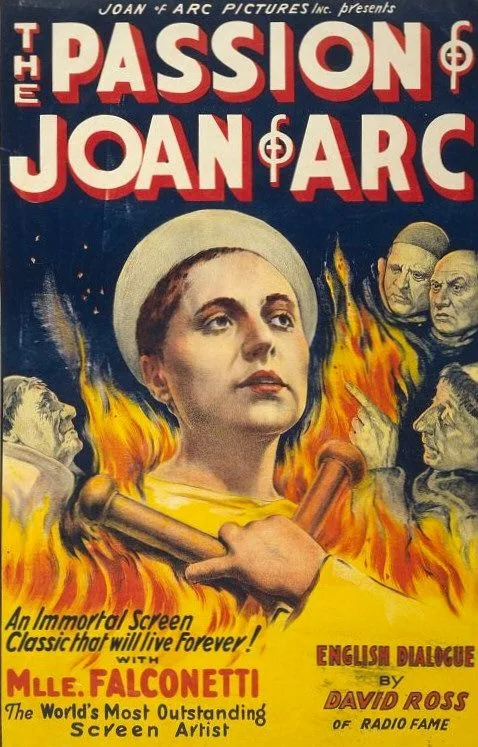
The court uses questioning, deception and threat to make Joan renounce her mission; her recantation and withdrawal shape the movement toward execution.
Why this matches +
These offer a related experience with a meaningful difference in story, tone, or presentation.
An adjacent discovery: a related idea with a different viewing experience.
Genres: Drama / Silent
Shared film traits
Based on recorded story, mood and style. Your preferences can change the order.
What changes The Passion of Joan of Arc depicts a woman confronting a religious tribunal's coercive authority, with a concentrated trial instead of Hypatia's teaching and a city's conflicts.
Captured near Compiègne, Joan of Arc is brought before a clerical court in Rouen, where judges loyal to the English seek to discredit her claim that God called her to drive the occupiers from France. Their questions move from doctrine to her visions, clothing and authority, turning the trial into a battle over who has the right to define her. Deception and threats of torture pressure Joan to sign a confession, but she later withdraws it and faces execution. Carl Theodor Dreyer compresses the historical proceedings into an intensely immediate ordeal, focusing on Joan's face and the reactions of the men judging her rather than recreating her military campaign. The film's emotional force comes from the conflict between institutional power and private conviction.
In late-fourth-century Alexandria, the philosopher and astronomer Hypatia teaches while the city's competing religious and political groups struggle for authority. Her students, including the enslaved Davus, are drawn into shifting loyalties as public violence changes who can speak, worship or govern. Hypatia's astronomical inquiry supplies a parallel search for order, but the film does not present its version of her discoveries or relationships as settled history. Its spectacle links the danger of independent thought to a city where communal power is being remade by force.
What drives the story
Political change turns Hypatia's intellectual independence into a public liability. The plot links the institutional struggle over Alexandria to her continuing effort to understand celestial motion, without making one a simple allegory for the other.
The people at its centre
Davus's position as an enslaved man and his attachment to Hypatia create an unequal relationship that affection cannot erase. Her students' religious commitments also show how intellectual loyalty can fracture under pressure from a mass movement.
What it feels like
Crowded streets and civic violence contrast with quiet lessons and images of the night sky. The visual alternation gives inquiry a contemplative space, then shows how quickly that space can be overwhelmed by political force.
Worth knowing
Compare historical dramas about knowledge, civic power and factional conflict, but do not use this film as a neutral account of late antique Alexandria or Hypatia's astronomy. Davus and Orestes's romantic entanglements are inventions, and the compressed conflict should not be reduced to a timeless science-versus-religion contest.
KnowledgeFaithPower
Mood
Solemn · Tense · Contemplative
Pacing
Measured · Epic
Visual style
Expansive · Period spectacle
Storytelling
Political conflict · Intellectual inquiry · Religious persecution