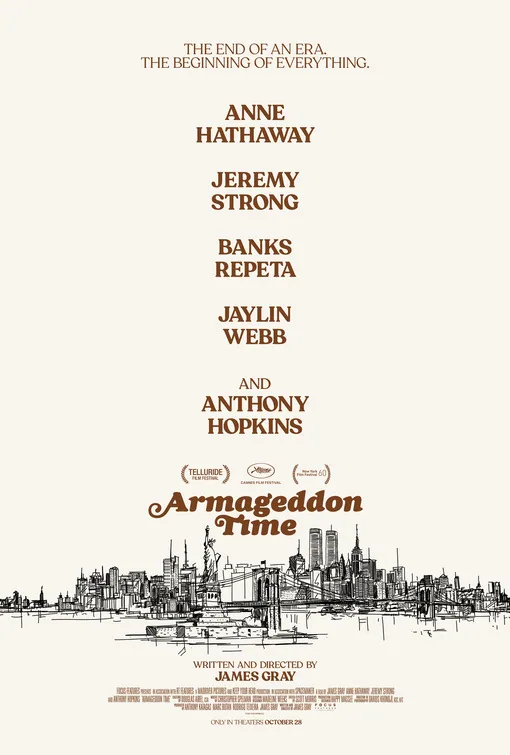
In 1980 Queens, a Jewish schoolboy’s friendship with a Black classmate exposes unequal treatment, family expectations and the privilege that shapes his choices.
What should feel similar?
Find your next favourite
5 films · Closest overall matches
Hide films you’ve seen or don’t want. Saved on this device.
No matches for this combination yet.
Try another option or reset your choices to see more films.
Communal violence and economic pressure make a family's local belonging harder to sustain, turning migration into a decision whose costs cannot be shared evenly.
Why this matches +
In 1980 Queens, a Jewish schoolboy’s friendship with a Black classmate exposes unequal treatment, family expectations and the privilege that shapes his choices.
Genres: Drama
Shared film traits
Based on recorded story, mood and style. Your preferences can change the order.
What changes A working-class Belfast boy faces sectarian conflict and possible emigration in a warmer, more nostalgic portrait.
Buddy grows up in a working-class Belfast neighborhood at the start of the Troubles, where play, family routines and moviegoing continue alongside sectarian intimidation. His parents disagree about whether to stay, and employment, safety and attachment to the street make leaving a practical as well as emotional question. Buddy sees events partially, through the adults he loves and the films he watches, so the black-and-white images create a remembered childhood viewpoint rather than an exhaustive political history. The film's warmth does not erase the coercion that narrows the family's choices.
Sammy’s camera shifts from toy to instrument of understanding; filming lets him notice family tensions he is too young to interpret directly.
Why this matches +
Pair notes distinguish story, form and intensity.
An adjacent discovery: a related idea with a different viewing experience.
Genres: Drama / Coming-of-age
Shared film traits
Based on recorded story, mood and style. Your preferences can change the order.
Memory and identity
What changes A filmmaker’s autobiographical family saga follows a longer period and filmmaking ambition rather than a cross-racial friendship in 1980 Queens.
Young Sammy Fabelman becomes fascinated with filmmaking after seeing a train crash in a movie and recreates it with his toy set and camera. As his family moves from New Jersey to Arizona and later California, the hobby grows into a way to understand what he sees at home. Sammy’s mother Mitzi is an expressive pianist; his father Burt is a practical engineer, and the household’s closeness is strained by changes neither parent can easily explain to their children. Sammy discovers that his camera can preserve details adults would rather avoid, placing him in a painful position between them. The coming-of-age story follows how making films becomes both an artistic calling and a way to process family fracture.
Repeated transitions in home, school and relationships accumulate into an emerging adult perspective.
Why this matches +
Pair notes distinguish story, form and intensity.
An adjacent discovery: a related idea with a different viewing experience.
Genres: Drama / Coming-of-age
Shared film traits
Based on recorded story, mood and style. Your preferences can change the order.
Coming of age
What changes A twelve-year Texas coming-of-age portrait is broader and less directly centered on racial inequality and privilege.
A Texas boy grows from early childhood towards college while his family moves, changes partners and adapts to financial and emotional pressures. Ordinary conversations, sibling conflicts and shifting friendships accumulate without a single governing crisis. As the years pass, the adults' unfinished lives remain visible alongside his developing sense of identity, making growing up a process of observation as much as decisive action.
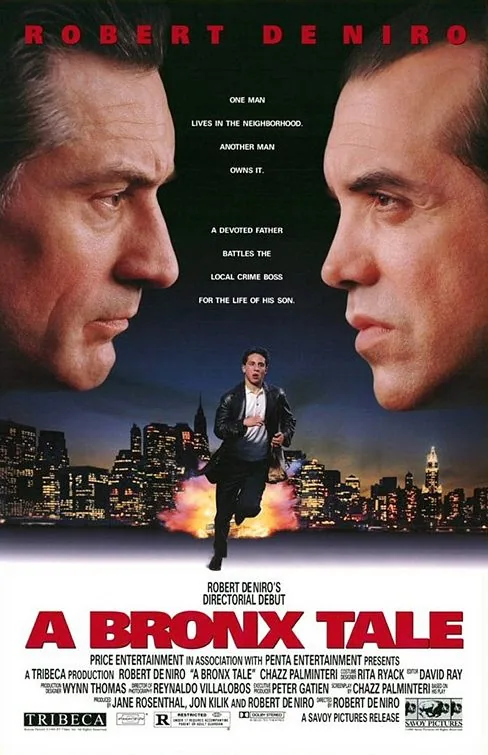
A childhood act of silence creates a criminal mentorship that competes with a father's ordinary moral example.
Why this matches +
Pair notes distinguish story, form and intensity.
An adjacent discovery: a related idea with a different viewing experience.
Genres: Crime / Drama
Shared film traits
Based on recorded story, mood and style. Your preferences can change the order.
Coming of age
What changes A neighborhood gangster becomes the boy’s mentor, and organized-crime violence replaces school privilege and family expectations.
A boy in an Italian American neighborhood witnesses a killing and wins a local gangster's favor by refusing to identify him. As he grows up, he moves between the gangster's seductive authority and his bus driver father's insistence on honest work. An interracial romance and his friends' escalating racism make the choice between these models of adulthood increasingly urgent.
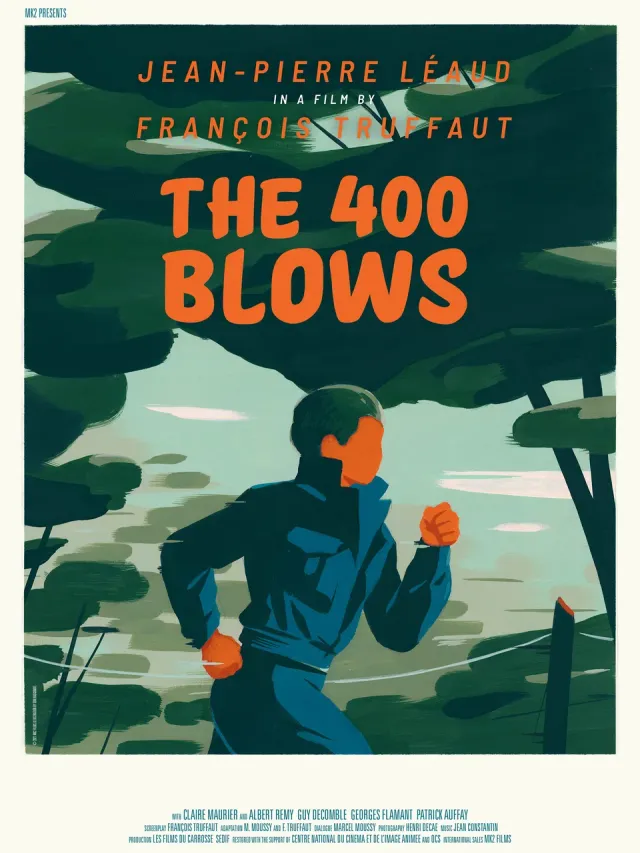
Each attempt Antoine makes to escape school or home brings a stronger institutional response, until running toward the sea becomes the only freedom he can claim.
Why this matches +
Pair notes distinguish story, form and intensity.
An adjacent discovery: a related idea with a different viewing experience.
Genres: Drama / Coming-of-age
Shared film traits
Based on recorded story, mood and style. Your preferences can change the order.
Coming of age
What changes A French child’s escape and institutional punishment are starker and lack the source’s specific cross-racial friendship and 1980 politics.
Antoine Doinel grows up in Paris feeling unwanted at home and misunderstood at school. Small acts of defiance, including truancy and a failed attempt to sell a stolen typewriter, draw him deeper into conflict with the adults who supervise him. His parents send him to a youth observation center, where a rare interview lets him speak about his life without interruption. Antoine escapes and runs toward the sea he has never seen, ending the film alone at the shoreline. The story follows a child's search for space and recognition rather than a neat reform narrative.
Paul Graff begins sixth grade in 1980 Queens, where his friendship with classmate Johnny grows alongside trouble at school. Paul’s family hopes to secure his future, while his grandfather encourages his artistic ambitions and offers a different account of the family’s past. When Paul is sent to a private school, the differences in opportunity and treatment between the boys become harder to ignore, turning an autobiographical coming-of-age story into a portrait of family, class and race.
What drives the story
Paul’s school misbehavior leads his parents to send him to a private academy, changing the conditions of his friendship with Johnny.
The people at its centre
Paul begins to recognize how his family’s expectations and resources shape his choices and his view of another boy’s prospects.
What it feels like
The intimate family portrait is set beside a clear account of how race and class shape apparently ordinary childhood decisions.
Worth knowing
A personal 1980s coming-of-age drama that reflects on privilege and memory rather than offering a broad period panorama.