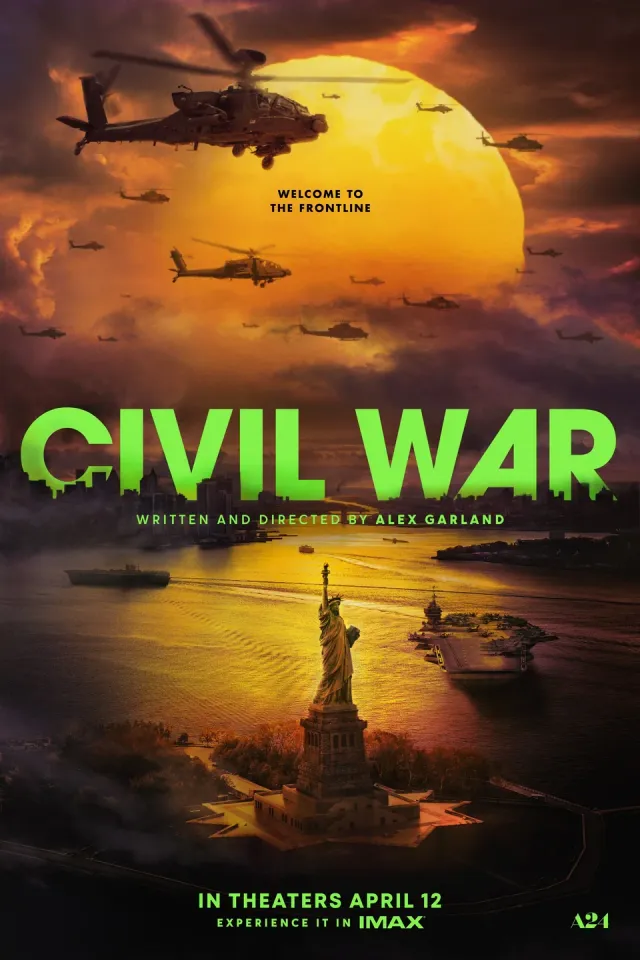
A veteran photographer and aspiring colleague travel through a fractured America, witnessing brutal conflict while the job of recording it tests their detachment and survival.
What should feel similar?
Find your next favourite
7 films · Closest overall matches
Hide films you’ve seen or don’t want. Saved on this device.
No matches for this combination yet.
Try another option or reset your choices to see more films.
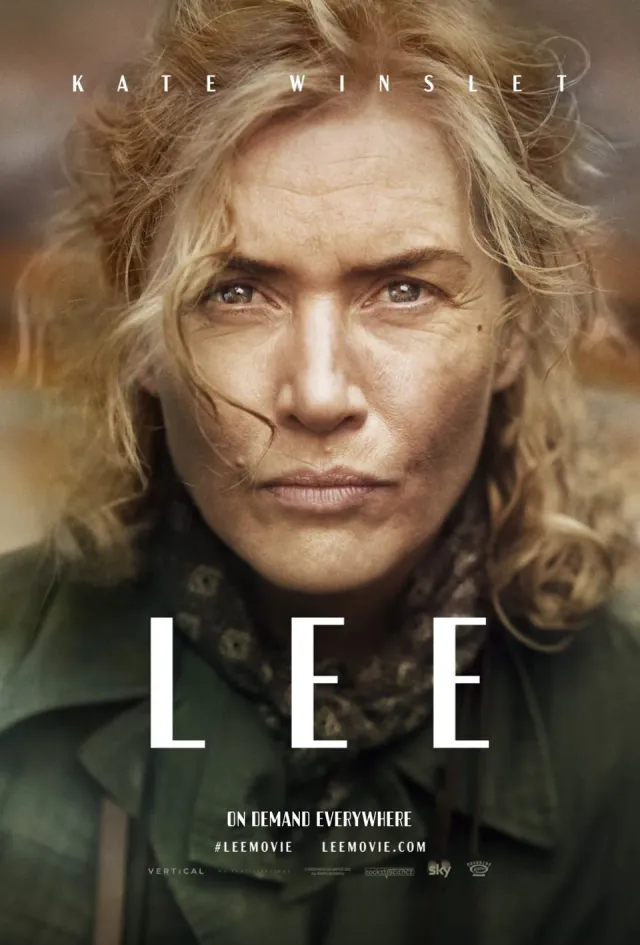
Lee Miller becomes a war correspondent and documents the consequences of battle and liberation.
Why this matches +
Related viewing experiences with the specific differences recorded for each pair.
An adjacent discovery: a related idea with a different viewing experience.
Genres: Biographical / Drama
Shared film traits
Based on recorded story, mood and style. Your preferences can change the order.
War and civilian life
What changes A woman war photographer records conflict and its human aftermath, exposing the personal cost of witnessing atrocity. Lee Miller's historical biography spans the Second World War and uses a retrospective frame rather than following a near-future civil-war road trip.
After finding a new purpose in photography, Lee Miller moves from modeling and artistic circles into the work of documenting the Second World War. As a correspondent, she travels with the Allied forces and records the human consequences of combat and liberation, including images that challenge the distance between observer and subject. The film frames this public work through an older Miller recalling her life, giving attention to the choices, relationships and personal cost behind a body of war photography.
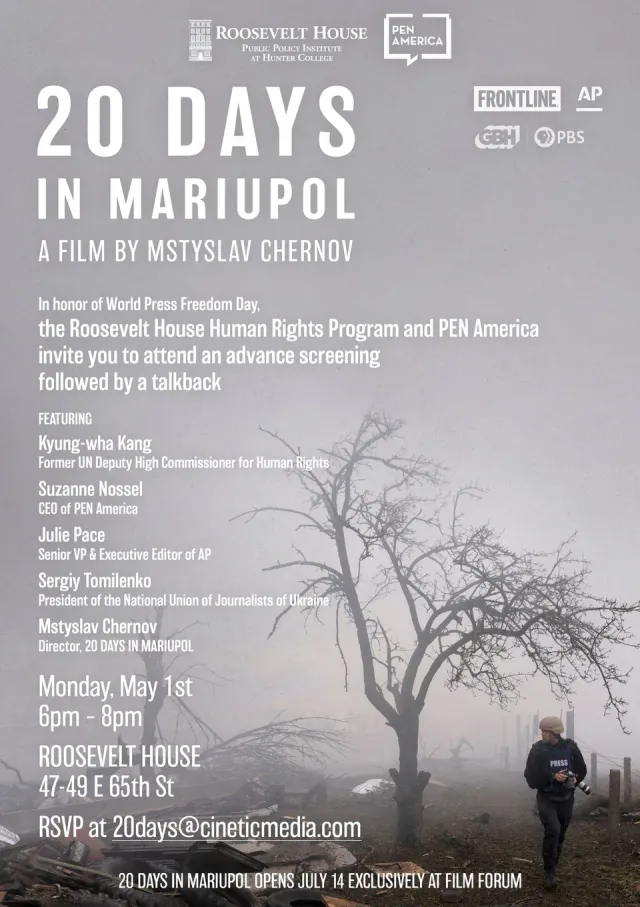
A siege progressively removes communication and escape options, so filming civilian suffering and finding a way to transmit the evidence become inseparable parts of the journalists' work.
Why this matches +
Related viewing experiences with the specific differences recorded for each pair.
An adjacent discovery: a related idea with a different viewing experience.
Genres: Documentary / War
The approach A documentary treatment rather than a dramatic feature.
Shared film traits
Based on recorded story, mood and style. Your preferences can change the order.
War and civilian life
What changes Journalists document civilians under bombardment while facing danger and the responsibility of making evidence visible. This is a documentary of an actual siege, with sustained real suffering and the problem of transmitting footage, not a fictional journey to a president.
During the opening weeks of Russia's full scale invasion of Ukraine, an Associated Press team remains in Mariupol as bombardment destroys civilian life and communications fail. Recording emergency medicine, bereavement and displacement is only part of their work: getting the images out becomes an urgent struggle of its own. The documentary follows both the people enduring the siege and the practical, ethical burden of making evidence of their suffering visible beyond an increasingly isolated city.
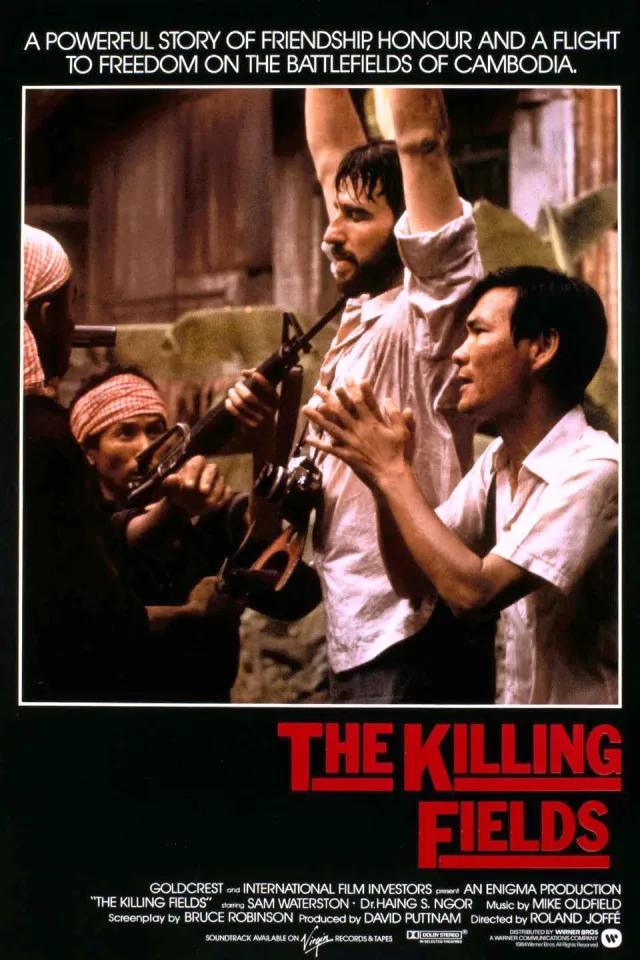
The decision to stay with his family in Cambodia separates Pran from Schanberg; the parallel storylines keep their friendship present across years and radically different circumstances.
Why this matches +
Related viewing experiences with the specific differences recorded for each pair.
An adjacent discovery: a related idea with a different viewing experience.
Genres: Drama / Biography
Shared film traits
Based on recorded story, mood and style. Your preferences can change the order.
War and civilian life
What changes Journalists risk their lives documenting a civil war, and their professional bonds and guilt give the violence a human cost. The historical Cambodian story follows Dith Pran's captivity and the friendship across separation, rather than a fictional American road journey.
New York Times reporter Sydney Schanberg and Cambodian journalist and interpreter Dith Pran work together as Cambodia’s civil war intensifies. When the Khmer Rouge take Phnom Penh, Schanberg helps Pran’s family leave, but Pran stays and is captured. Schanberg and photographer Al Rockoff struggle to survive the immediate upheaval and later try to secure Pran’s release. The film follows the friends on separate paths: Schanberg returns to the United States carrying guilt over his colleague’s disappearance, while Pran endures forced labor and attempts to escape. Their eventual reunion joins a personal story of loyalty to a depiction of the Khmer Rouge period, which the feature dramatizes rather than comprehensively documents.
An escort assignment becomes a fragile protection mission when a vulnerable traveller's body acquires enormous political value.
Why this matches +
Related viewing experiences with the specific differences recorded for each pair.
An adjacent discovery: a related idea with a different viewing experience.
Genres: Science fiction / Drama
Shared film traits
Based on recorded story, mood and style. Your preferences can change the order.
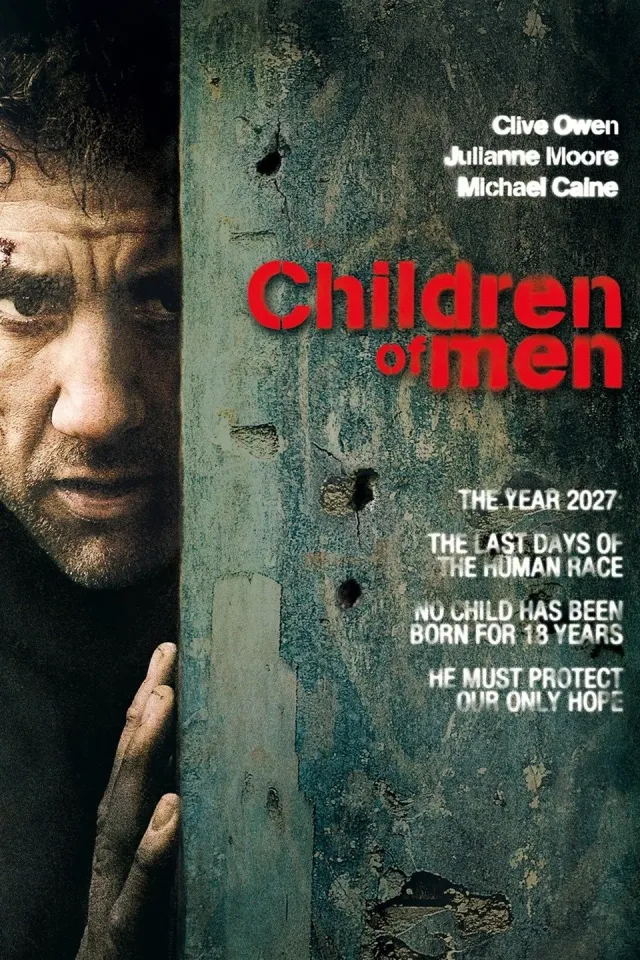
What changes A dangerous road journey crosses a recognizably near-future country fractured by violence, using immersive combat and frightened civilians to make social collapse immediate. Its escort mission protects a pregnant refugee through an infertility crisis rather than following journalists gathering evidence.
In a near future where no children are being born, an exhausted former activist is asked to help a young woman cross a heavily controlled Britain. Discovering that her situation may alter humanity's future makes the journey vulnerable to competing political claims. Protecting one person from both state violence and opportunistic allies gradually revives responsibilities he believed had ended with his own private losses.
A foreign reporter’s pursuit of access and a breakthrough story becomes entangled with the lives and risks of local contacts during political upheaval.
Why this matches +
Related viewing experiences with the specific differences recorded for each pair.
An adjacent discovery: a related idea with a different viewing experience.
Genres: Drama / Romance
Shared film traits
Based on recorded story, mood and style. Your preferences can change the order.
War and civilian life
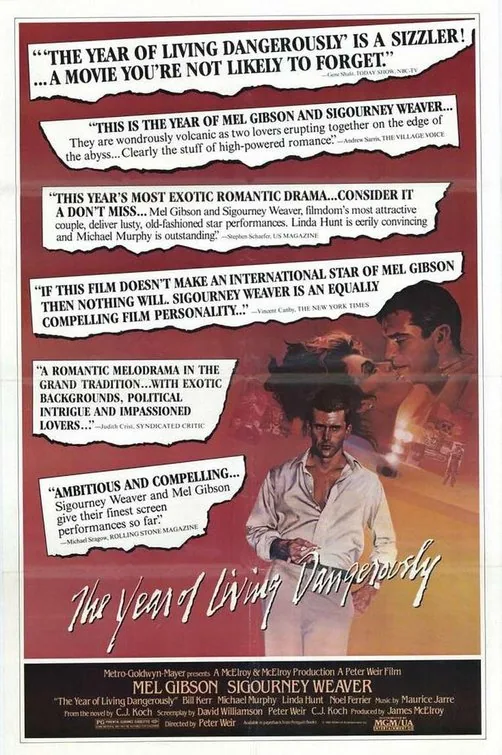
What changes A reporter and photographer pursue stories amid violent political upheaval, raising questions about outsiders' ambition and the people exposed to its consequences. Its historical Jakarta setting, romance and expatriate perspective differ from the American convoy and its succession of combat encounters.
Australian journalist Guy Hamilton arrives in Jakarta in 1965 to report on political unrest and scarcity. He gains access through Billy Kwan, a Chinese-Australian male photographer played by Linda Hunt, whose work and personal ties connect him with sources in the city. British embassy employee Jill Bryant becomes important to both men, while Guy’s ambition to break a major story draws him toward events local people will bear the consequences of. As the failed coup and its aftermath transform Jakarta, the film follows the limits of a foreign correspondent’s access. Its perspective remains largely expatriate and Western, not a comprehensive account of Indonesian lives or history.
Kim's short assignment in Afghanistan becomes a career-changing immersion as she pursues stories in a dangerous environment.
Why this matches +
Related viewing experiences with the specific differences recorded for each pair.
An adjacent discovery: a related idea with a different viewing experience.
Genres: Comedy / Drama
Shared film traits
Based on recorded story, mood and style. Your preferences can change the order.
War and civilian life
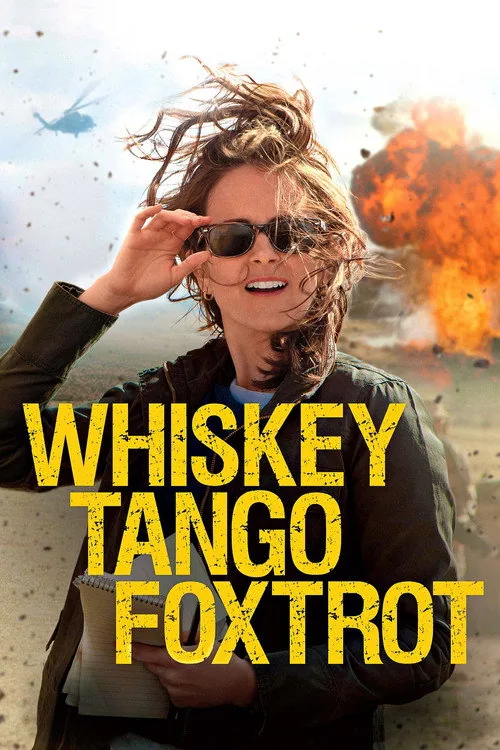
What changes A journalist becomes accustomed to the danger and professional rush of reporting from a war zone, with colleagues shaping the experience. Its Kabul press-corps comedy-drama and romantic entanglements are much lighter than the fictional American journey's sustained dread.
Frustrated television journalist Kim Baker accepts a short assignment in Afghanistan and arrives expecting a temporary change from her routine. She adapts to the Kabul press corps with help from fellow correspondents and an Afghan fixer, then begins taking greater risks to get stories and maintain her standing. Her career develops alongside complicated friendships, romantic entanglements, and the reality of reporting in a war zone. The comedy-drama draws loosely from Kim Barker's memoir and follows a correspondent discovering both the rush and the cost of conflict journalism.
A photojournalist escorts his employer's daughter through a growing alien-infected border zone.
Why this matches +
Related viewing experiences with the specific differences recorded for each pair.
An adjacent discovery: a related idea with a different viewing experience.
Genres: drama / science fiction
Shared film traits
Based on recorded story, mood and style. Your preferences can change the order.
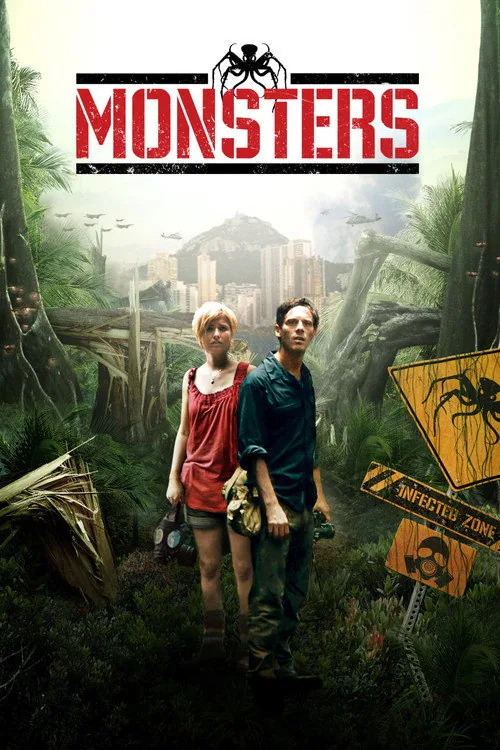
What changes A photojournalist crosses an altered landscape on a hazardous road journey where encounters and human relationships matter as much as spectacle. Alien life and a quiet escort relationship replace the press team's attempt to document a human civil war.
When a NASA probe crashes in Mexico carrying extraterrestrial life, an expanding infected zone divides the region from the United States. Photojournalist Andrew is asked to escort his employer's daughter Samantha across the dangerous border and toward a route home. The pair travel through the altered landscape, where abandoned towns and enormous alien forms become part of everyday navigation. Their journey mixes science-fiction threat with a quiet relationship shaped by responsibility and uncertainty.
In a near-future America divided by an unexplained civil conflict, veteran photographer Lee leads a small press group toward Washington to interview the president. Young Jessie joins them, eager to make images and increasingly exposed to the cost of that ambition. Their journey tests the idea that a camera guarantees neutrality: documenting violence can preserve evidence, but the photographer remains physically present and emotionally changed by what she sees. The film leaves the coalitions and causes largely undefined, directing attention toward witnessing and professional detachment rather than a predictive political map. Lee's group crosses the country toward a president who has not spoken publicly in months.
What drives the story
A dangerous reporting trip becomes an apprenticeship in war photography, while the group's route toward a political center never supplies a complete explanation for the fictional conflict.
The people at its centre
Lee's experience and emotional distance meet Jessie's appetite for images; mentorship shifts as each woman responds differently to risk and the people encountered.
What it feels like
Road-movie stretches are interrupted by sudden violence and the shutter's point of view, making spectator distance feel unstable and morally consequential.
Worth knowing
Match on image-making under conflict and the limits of detachment, not on a specific prediction about U.S. coalitions or political causes the film deliberately leaves unexplained.