The auditor’s effort to find the narrator turns a literary device into a practical investigation of his own agency.
Why this matches +
A comic speculative situation asks an ordinary adult to reassess fear, intimacy and the life they are choosing to live.
Genres: Comedy / Drama
Shared film traits
Based on recorded story, mood and style. Your preferences can change the order.
What changes Defending Your Life: episodic testimony and gentle emotional progression. Stranger than Fiction: measured and conversational.
An IRS auditor begins hearing a narrator describe his actions and becomes convinced that his life is being written toward an ending. He seeks help from a literary scholar while his routines bring him into contact with a baker he is auditing. The comedy uses a self-aware premise to ask whether a person can alter a story without losing the relationships and responsibilities that give life meaning.
A repeating day removes ordinary consequences while leaving the protagonist with the accumulated emotional cost of how he chooses to spend unlimited attempts.
Why this matches +
A comic speculative situation asks an ordinary adult to reassess fear, intimacy and the life they are choosing to live.
Genres: Science fiction / Fantasy
Shared film traits
Based on recorded story, mood and style. Your preferences can change the order.
What changes Defending Your Life: episodic testimony and gentle emotional progression. Groundhog Day: steady.
A television weather presenter sent to cover a small-town ritual finds himself repeating the same day while everyone around him begins each morning without remembering the previous one. Attempts to exploit the situation expose the limits of pleasure, manipulation and private knowledge as answers to an apparently endless life. Attention gradually shifts from finding the right technique for escape towards developing forms of care and skill whose value does not depend on the other people knowing how many attempts preceded them.
Time travel begins as a means of improving dates and mistakes, but its family consequences place limits on what Tim can revise without changing the people he loves. The film favors emotional consequence over a fully consistent mechanics puzzle.
Why this matches +
A comic speculative situation asks an ordinary adult to reassess fear, intimacy and the life they are choosing to live.
Genres: Comedy / Drama
Shared film traits
Based on recorded story, mood and style. Your preferences can change the order.
What changes Defending Your Life: episodic testimony and gentle emotional progression. About Time: measured.
On his twenty-first birthday, Tim learns from his father that the men in their family can travel back through their own lives by entering a dark place and concentrating on a moment. He first uses the ability to repair awkward encounters, then pursues Mary while concealing how much he can revise their shared past. Family life makes the power harder to treat as a private advantage: changes can alter who is born, and returning to earlier moments cannot restore every later attachment. The romantic comedy gradually becomes a story about accepting ordinary days and the grief no perfect revision can remove.
Small disruptions in a controlled daily routine create a search for evidence that the people offering reassurance have reasons to conceal.
Why this matches +
A comic speculative situation asks an ordinary adult to reassess fear, intimacy and the life they are choosing to live.
Genres: Drama / Comedy
Shared film traits
Based on recorded story, mood and style. Your preferences can change the order.
What changes Defending Your Life: episodic testimony and gentle emotional progression. The Truman Show: steady.
An insurance salesman has unknowingly spent his entire life inside a television production, with actors playing his neighbors and loved ones. Small disruptions make him question his seemingly perfect town, while the producer controlling it tries to stop him discovering the outside world. Social satire and an unsettling search for freedom share a hopeful emotional core.
A movie character leaves his film for a spectator, bringing the studio, the actor and the stalled picture into Cecilia's private life.
Why this matches +
A comic speculative situation asks an ordinary adult to reassess fear, intimacy and the life they are choosing to live.
Genres: Fantasy / Romance
Shared film traits
Based on recorded story, mood and style. Your preferences can change the order.
What changes Defending Your Life: episodic testimony and gentle emotional progression. The Purple Rose of Cairo: measured and metafictional.
During the Depression, New Jersey waitress Cecilia escapes an abusive marriage and an exhausting job by returning to the cinema. A character in her favorite picture, archaeologist Tom Baxter, notices her and steps out of the screen, leaving the other film characters unable to continue. The studio sends Tom's actor, Gil Shepherd, to bring him back, and Cecilia becomes the focus of competing affections from the fictional adventurer and the man who portrays him. As the movie's producer threatens to destroy copies unless Tom returns, Cecilia must decide whether she wants a life with someone who belongs to fantasy or with someone who can move through the real world. The story's play with cinema is also a melancholic account of how little escape can change material circumstances.
Two modern siblings enter a fictional television town whose routines start to shift around them.
Why this matches +
A comic speculative situation asks an ordinary adult to reassess fear, intimacy and the life they are choosing to live.
Genres: Comedy / Drama
Shared film traits
Based on recorded story, mood and style. Your preferences can change the order.
Coming of age
What changes Defending Your Life: episodic testimony and gentle emotional progression. Pleasantville: gradual and escalating.
Siblings David and Jennifer are drawn into a black-and-white television sitcom world where life follows a tidy set of rules. Their arrival brings small changes that begin to alter both the people and the images around them, unsettling the town's expectations of gender, race, art, and desire. As the residents encounter choices beyond the program's script, the siblings discover how difficult it is to change a world that depends on keeping everyone predictable.
Stéphane’s elaborate dreams keep intruding into his attempts to work, communicate, and build a relationship with Stéphanie.
Why this matches +
A comic speculative situation asks an ordinary adult to reassess fear, intimacy and the life they are choosing to live.
Genres: Fantasy / Comedy
Shared film traits
Based on recorded story, mood and style. Your preferences can change the order.
Memory and identity
What changes Defending Your Life: episodic testimony and gentle emotional progression. The Science of Sleep: dreamlike episodic structure, romantic hesitation and handmade fantasy interludes.
After his father’s death, Stéphane returns to Paris and takes an unsatisfying job, where he meets his neighbor Stéphanie. His dreams are vivid, handmade worlds that increasingly spill into his waking life, making it hard to know whether a conversation, invention, or romantic gesture has actually happened. Michel Gondry’s French-language comedy blends fantasy, romance, and surreal craft imagery to follow a shy man whose imagination both connects him with another person and complicates ordinary intimacy.
A deliberate erasure process becomes an internal attempt to preserve the relationship it was meant to remove.
Why this matches +
A comic speculative situation asks an ordinary adult to reassess fear, intimacy and the life they are choosing to live.
Genres: Science fiction / Romance
Shared film traits
Based on recorded story, mood and style. Your preferences can change the order.
Memory and identity
What changes More melancholy and fractured in form; speculative memory makes ordinary adult intimacy a moral choice.
A withdrawn man discovers that his former partner has undergone a procedure erasing their relationship and elects to do the same. While the treatment moves through his memories, moments he wanted to escape become experiences he tries to protect. Their intimacy is revisited in unstable order, exposing both the pain of incompatibility and the attachments that cannot be reduced to a clean decision to forget.
Darius’s reporting brings her into Kenneth’s preparations and makes the question of whether to believe him emotionally consequential.
Why this matches +
An adult's performed identity is disrupted by a wish, relationship or imaginative framework that exposes ordinary self-interest.
An adjacent discovery: a related idea with a different viewing experience.
Genres: Comedy / Drama
Shared film traits
Based on recorded story, mood and style. Your preferences can change the order.
Memory and identity
What changes Defending Your Life: episodic testimony and gentle emotional progression. Safety Not Guaranteed: a low-key investigation gradually becomes a personal partnership.
Magazine intern Darius joins two reporters investigating a classified ad from a man who says he needs a partner for time travel. Their assignment leads them to Kenneth, an isolated supermarket employee whose preparation for the trip seems increasingly sincere, and Darius begins to form a connection with him. Colin Trevorrow’s comedy-drama balances skepticism, loneliness, and possibility, allowing the investigation to become a personal encounter rather than treating the unusual claim as a simple joke.
The repeating wedding day protects Nyles from ordinary consequences until Sarah experiences it with him and insists on treating their choices as real.
Why this matches +
An adult's performed identity is disrupted by a wish, relationship or imaginative framework that exposes ordinary self-interest.
An adjacent discovery: a related idea with a different viewing experience.
Genres: Science fiction / Romance
Shared film traits
Based on recorded story, mood and style. Your preferences can change the order.
What changes More sexually frank and irreverent; a comic speculative trap still tests commitment and emotional maturity.
At a wedding in Palm Springs, carefree guest Nyles meets Sarah, the bride’s sister, during a tense family event. When she follows him into a mysterious cave, she becomes trapped in the same day he has been repeating for an unknown length of time. Sarah first rejects the loop, then experiments with its freedom and studies physics for a way out. Nyles has learned to treat repetition as consequence-free, but Sarah’s arrival makes his past choices newly visible. Their relationship forces both to consider whether escape matters if they cannot accept responsibility for one another.
An emotionally sustaining relationship becomes unstable as its participants develop at different speeds and scales.
Why this matches +
An adult's performed identity is disrupted by a wish, relationship or imaginative framework that exposes ordinary self-interest.
An adjacent discovery: a related idea with a different viewing experience.
Genres: Science fiction / Romance
Shared film traits
Based on recorded story, mood and style. Your preferences can change the order.
What changes More sexually frank and melancholy; mediated love questions the autonomy of an idealized partner.
A lonely letter writer going through divorce begins speaking with an adaptive operating system whose attention develops into an intimate relationship. The new connection gives him confidence while exposing assumptions about availability, embodiment and emotional exclusivity. As both participants change, comfort becomes inseparable from the uncertainty of loving someone whose experience cannot remain organised around one person's needs.
A writer's inability to adapt a book becomes the film's plot; his effort to resist conventional story machinery eventually gives way to conspicuously conventional devices. The turn is both narrative event and self-critique.
Why this matches +
An adult's performed identity is disrupted by a wish, relationship or imaginative framework that exposes ordinary self-interest.
An adjacent discovery: a related idea with a different viewing experience.
Genres: Comedy / Drama
Shared film traits
Based on recorded story, mood and style. Your preferences can change the order.
What changes More anxious and formally self-reflexive; creative self-assessment replaces an afterlife moral framework.
Screenwriter Charlie Kaufman struggles to adapt Susan Orlean's nonfiction book about orchid poacher John Laroche while feeling unable to write the kind of movie he thinks Hollywood expects. His confident twin brother Donald embraces conventional screenwriting lessons, and Charlie's fascination with Orlean makes research increasingly entangled with fantasy. The film eventually turns its own resistance to formula into a story that uses formula, crime and melodrama. By folding the writer, his brother and Orlean into a fiction that announces its inventions, it makes adaptation itself the subject and the joke.
Will's investigation into Edward's tall tales becomes a last attempt to know his father, but each factual check raises a deeper question about what a story can communicate.
Why this matches +
An adult's performed identity is disrupted by a wish, relationship or imaginative framework that exposes ordinary self-interest.
An adjacent discovery: a related idea with a different viewing experience.
Genres: Drama / Fantasy
Shared film traits
Based on recorded story, mood and style. Your preferences can change the order.
What changes Defending Your Life: episodic testimony and gentle emotional progression. Big Fish: measured.
Will Bloom returns to Alabama when his father Edward is dying, still frustrated that the man tells extravagant stories instead of speaking plainly about their relationship. He investigates the people and places behind those tales, hoping to separate verifiable fact from performance before it is too late. The stories make Edward's life larger but also conceal disappointments and private choices. As father and son approach a final conversation, Will must consider whether accepting a story means abandoning truth or recognizing the kind of intimacy Edward knew how to offer. The fantasy remains an emotional language, not a verified history.
A commercialized portal into Malkovich's mind shifts from brief visits to an attempt at permanent occupation. The rules make access literal, but the ethical conflict concerns who can claim control over a body.
Why this matches +
An adult's performed identity is disrupted by a wish, relationship or imaginative framework that exposes ordinary self-interest.
An adjacent discovery: a related idea with a different viewing experience.
Genres: Comedy / Drama
Shared film traits
Based on recorded story, mood and style. Your preferences can change the order.
Memory and identity
What changes More sexually frank and grotesque; a fantastical identity premise exposes ordinary adult self-interest.
Craig Schwartz, a frustrated puppeteer, takes an office job on the unusually low seventh-and-a-half floor and discovers a portal into actor John Malkovich's consciousness. He and colleague Maxine turn the access into a paid attraction, but Craig's wife Lotte experiences it as an opening onto desires her husband has not taken seriously. What starts as an absurd business opportunity becomes a struggle over who may occupy another person's body and direct its future. Spike Jonze's comedy treats imaginative access as both intimacy and appropriation, not as harmless empathy.
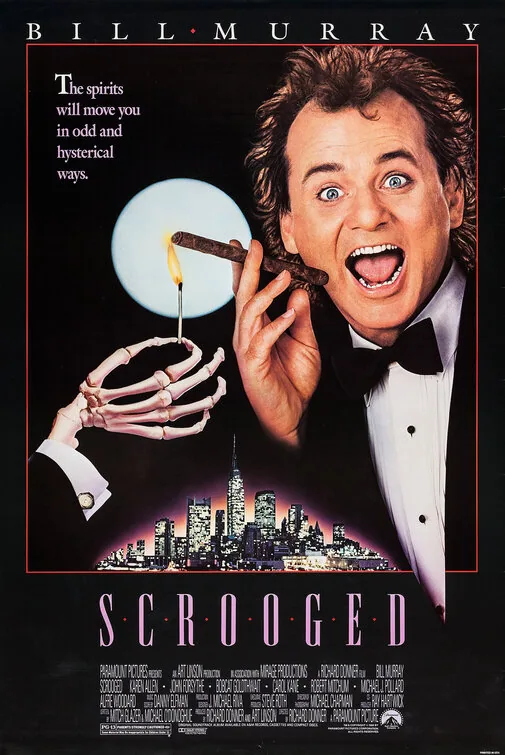
A cynical executive's live holiday broadcast becomes a night of supernatural confrontations that puts his choices and relationships on trial.
Why this matches +
An adult's performed identity is disrupted by a wish, relationship or imaginative framework that exposes ordinary self-interest.
An adjacent discovery: a related idea with a different viewing experience.
Genres: Comedy / Fantasy
Shared film traits
Based on recorded story, mood and style. Your preferences can change the order.
What changes Defending Your Life: episodic testimony and gentle emotional progression. Scrooged: escalating and high-energy.
Frank Cross has climbed from the mailroom to the presidency of a television network by becoming ruthless, impatient and indifferent to the people around him. On Christmas Eve, while producing a live version of A Christmas Carol, he is visited by a series of spirits who force him to confront parts of his past, present and possible future. The familiar redemption structure is pushed through an abrasive contemporary comedy about television spectacle and the cost of treating everyone as disposable.
Lars’s introduction of Bianca prompts the community to meet his emotional needs on terms he can tolerate.
Why this matches +
An adult's performed identity is disrupted by a wish, relationship or imaginative framework that exposes ordinary self-interest.
An adjacent discovery: a related idea with a different viewing experience.
Genres: Comedy / Drama
Shared film traits
Based on recorded story, mood and style. Your preferences can change the order.
Memory and identity · Coming of age
What changes Defending Your Life: episodic testimony and gentle emotional progression. Lars and the Real Girl: patient and gradual character change.
Lars Lindstrom lives in a small Wisconsin town and finds ordinary closeness difficult after a childhood marked by loss and emotional distance. When he introduces a life-size doll named Bianca as his girlfriend, his brother and sister-in-law seek help from the community rather than humiliating him. The gentle comedy follows the town’s effort to support Lars while he works through his attachment and gradually becomes more open to other people.
Eva’s new friendship and romance overlap, making private judgments increasingly difficult to separate from direct experience.
Why this matches +
An adult's performed identity is disrupted by a wish, relationship or imaginative framework that exposes ordinary self-interest.
An adjacent discovery: a related idea with a different viewing experience.
Genres: Romance / Comedy
Shared film traits
Based on recorded story, mood and style. Your preferences can change the order.
What changes Defending Your Life: episodic testimony and gentle emotional progression. Enough Said: conversational and gradual relationship development.
Eva, a divorced massage therapist and mother, begins a tentative relationship with Albert, a warm, soft-spoken father whose daughter is about to leave for college. At the same time, Eva becomes friends with a new client, Marianne, who talks openly about her former husband without Eva realizing that he is Albert. Secondhand stories begin to color Eva’s view of the man she is getting to know. Nicole Holofcener’s romantic comedy-drama follows adults navigating intimacy, insecurity, and parenting with gentle humor and careful attention to everyday conversation.
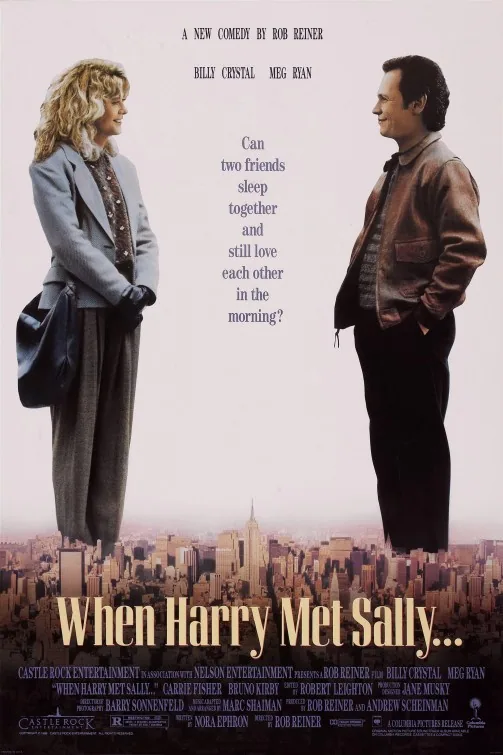
A long friendship changes as repeated encounters and failed relationships challenge two people's theories about intimacy.
Why this matches +
An adult's performed identity is disrupted by a wish, relationship or imaginative framework that exposes ordinary self-interest.
An adjacent discovery: a related idea with a different viewing experience.
Genres: Romance / Comedy
Shared film traits
Based on recorded story, mood and style. Your preferences can change the order.
What changes Defending Your Life: episodic testimony and gentle emotional progression. When Harry Met Sally: measured.
Two people who initially dislike each other repeatedly cross paths over the years and eventually become close friends. Their arguments about attraction, compatibility and whether friendship can remain separate from sex are tested by changing relationships and shared vulnerability. Familiarity gradually makes their connection harder to categorise, placing the safety of friendship against the risk of asking for more.
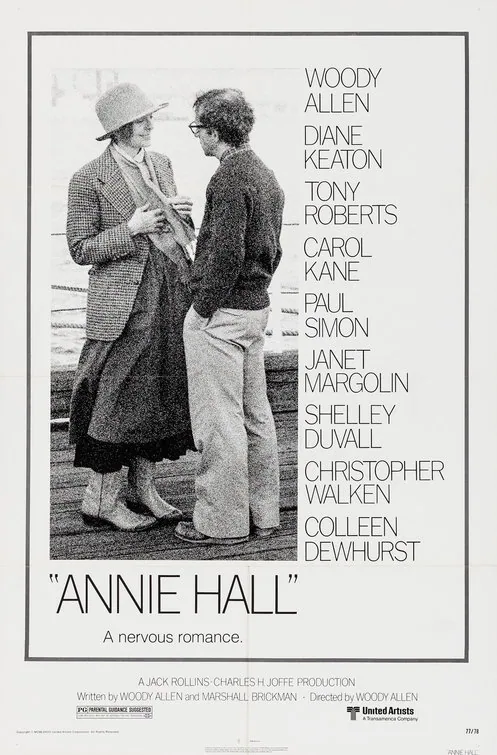
Retrospective narration revisits a romance through a self-questioning performance that can explain a relationship more easily than recover it.
Why this matches +
An adult's performed identity is disrupted by a wish, relationship or imaginative framework that exposes ordinary self-interest.
An adjacent discovery: a related idea with a different viewing experience.
Genres: Drama / Romance
Shared film traits
Based on recorded story, mood and style. Your preferences can change the order.
What changes Defending Your Life: episodic testimony and gentle emotional progression. Annie Hall: measured.
A New York comedian looks back over a failed relationship with a woman whose interests and confidence changed during their time together. Shared routines, sexual anxiety and professional opportunity become material for an account that repeatedly interrupts itself to argue with memory and the audience. His attempt to explain the breakup exposes both affection and the limits of a personality more practised at analysing dissatisfaction than making room for another person's independence.
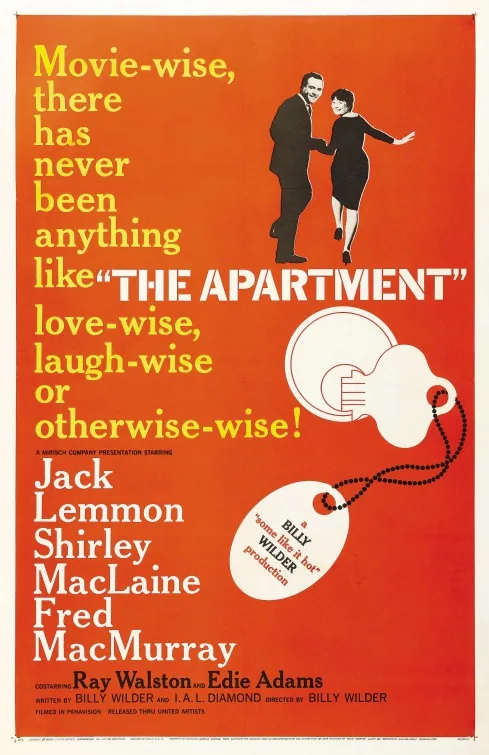
A workplace favour system turns private space into a career resource until a personal crisis exposes the moral and emotional cost of advancement.
Why this matches +
An adult's performed identity is disrupted by a wish, relationship or imaginative framework that exposes ordinary self-interest.
An adjacent discovery: a related idea with a different viewing experience.
Genres: Drama / Romance
Shared film traits
Based on recorded story, mood and style. Your preferences can change the order.
What changes Grounded workplace romantic comedy replaces the speculative premise while retaining an ordinary man's moral reassessment.
An insurance clerk improves his prospects by lending senior colleagues his apartment for extramarital affairs, leaving himself increasingly displaced from his own home. A promotion binds him more closely to an executive whose mistress is the elevator operator he quietly admires. When the arrangement's emotional harm becomes impossible to ignore, career compliance and romantic hope depend on whether he will continue making himself useful to people exploiting his discretion.
Advertising executive Daniel Miller dies in Los Angeles and arrives in Judgment City, a comfortable afterlife where clerks review whether people have overcome their fears. As his hearings replay choices from his life, Daniel meets Julia, another newcomer who seems braver and more open than he is. Their developing romance gives his bureaucratic trial a personal stake in what it means to move forward.
What drives the story
Daniel's case before an afterlife court tests whether fear has governed his choices.
The people at its centre
Julia's ease with risk unsettles Daniel's cautious habits while his lawyer reframes ordinary memories.
What it feels like
The comedy uses a calm, orderly fantasy setting to invite reflection on courage and intimacy.
Worth knowing
Its afterlife is a comic civic system rather than a religious ordeal or action-driven fantasy quest.
FearCourageLove
Mood
Wry · Thoughtful · Romantic
Pacing
Episodic testimony and gentle emotional progression
Visual style
Pastel civic fantasy · Everyday afterlife bureaucracy