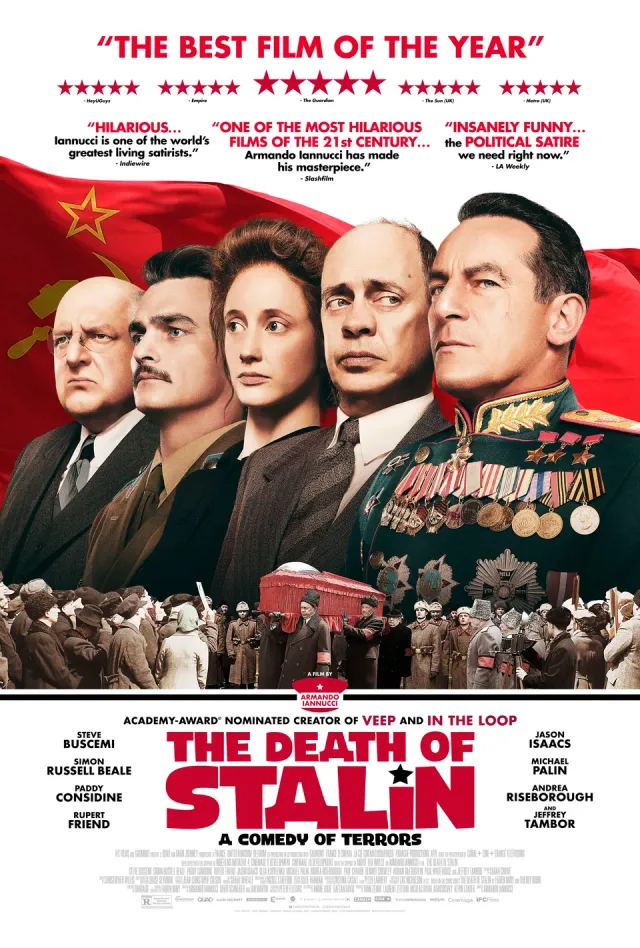
Stalin’s death leaves control of the police, party and public mourning contested. The film compresses months of political maneuvering into a farcical sprint, so its reversals serve comic timing rather than a reliable event-by-event chronology.
Why this matches +
These offer a related experience with a meaningful difference in story, tone, or presentation.
An adjacent discovery: a related idea with a different viewing experience.
Genres: Drama / Comedy
Shared film traits
Based on recorded story, mood and style. Your preferences can change the order.
What changes Leaders compete to control appearances and authority during a crisis, with black comedy exposing institutional self-interest.
Joseph Stalin’s death in 1953 opens a struggle among the Soviet leaders who had served his regime. Lavrentiy Beria uses the security apparatus, Nikita Khrushchev builds support among colleagues, and Georgy Malenkov is named head of government as officials compete to control the party and state. Public mourning, arrests and displays of loyalty reveal a system built on fear. The film compresses events that unfolded over months into a brisk ensemble farce, inventing and rearranging scenes for comic effect. It uses historical figures to satirize the absurdity and brutality of authoritarian power, but its rapid succession plot is not a literal chronology of the succession crisis.
A political biography tracks Cheney's path into the vice presidency and the expansion of executive authority.
Why this matches +
These offer a related experience with a meaningful difference in story, tone, or presentation.
An adjacent discovery: a related idea with a different viewing experience.
Genres: Drama / Comedy
Shared film traits
Based on recorded story, mood and style. Your preferences can change the order.
What changes Political ambition and public image obscure the consequences of powerful people's decisions in a satirical portrait of leadership.
Dick Cheney moves from a troubled early adulthood into a career of political influence, working through presidential administrations and eventually becoming vice president under George W. Bush. The film follows his rise alongside the expansion of executive power and decisions surrounding the Iraq War. Its satirical narration and formal tricks interrupt the biography to question how ambition, institutional systems and public fear can change a government.
Removing Aladeen’s public identity lets Tamir stage a constitutional transfer; the former ruler must find his way back to the UN before the substitute signs it.
Why this matches +
These offer a related experience with a meaningful difference in story, tone, or presentation.
An adjacent discovery: a related idea with a different viewing experience.
Genres: Comedy
Shared film traits
Based on recorded story, mood and style. Your preferences can change the order.
What changes A self-important ruler tries to protect his image and power amid public turmoil in an exaggerated political satire.
Admiral-General Aladeen, the authoritarian ruler of fictional Wadiya, travels to New York to address the United Nations about his country’s nuclear program. His uncle Tamir has him kidnapped, replaces him with a dim-witted lookalike and expects the substitute to sign away control of Wadiya’s oil. Shorn of his beard and status, Aladeen is left in the city and taken in by Zoey, who runs an egalitarian food cooperative. He tries to get back to the UN while learning how ordinary people see him, and Zoey tries to keep his arrogance from undoing their uneasy alliance. The satire follows his struggle to reclaim political power and decide what kind of leader he wants to be.
A senator who expects to die speaks freely and discovers a reason to change course.
Why this matches +
These offer a related experience with a meaningful difference in story, tone, or presentation.
An adjacent discovery: a related idea with a different viewing experience.
Genres: Comedy / Drama
Shared film traits
Based on recorded story, mood and style. Your preferences can change the order.
What changes A politician's public persona breaks down amid a crisis, prompting satire about power, messaging and self-preservation.
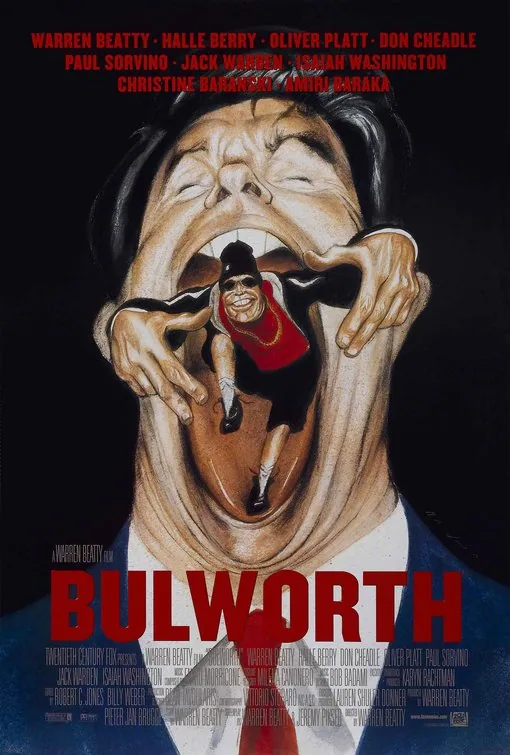
A disillusioned California senator hires a hitman to kill him, then abandons his usual campaign language and begins delivering blunt, rhythmic speeches about race, poverty and politics. His sudden candor attracts public attention and a connection with a young activist, forcing him to reconsider the fatalistic plan he set in motion. Warren Beatty mixes political satire with musicalized rhetoric and a late-career crisis.
Chance’s literal gardening remarks are repeatedly interpreted as metaphor by people eager to find wisdom and leadership in him.
Why this matches +
These offer a related experience with a meaningful difference in story, tone, or presentation.
An adjacent discovery: a related idea with a different viewing experience.
Genres: Comedy / Drama
Shared film traits
Based on recorded story, mood and style. Your preferences can change the order.
What changes A public figure's perceived wisdom is constructed by others, exposing the gap between reputation and the reality of leadership.
Chance is a sheltered gardener whose knowledge of the outside world comes largely from television and the routines of the wealthy household where he lives. After he is forced to leave, a series of coincidences brings him into contact with influential people who interpret his simple observations as political wisdom. As Chance moves through elite social circles, the gap between what he means and what others hear becomes the film’s central comic device. Hal Ashby’s satire examines media, class, celebrity, and the appetite for meaning in public life.
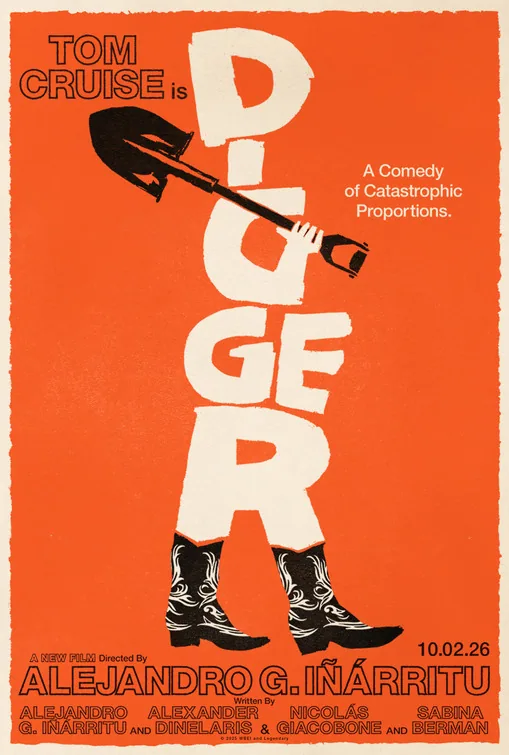
A powerful man sets out to cast himself as humanity's rescuer after a disaster linked to his own decisions threatens far more than his reputation. The crisis draws private ambition into public view, turning damage control into an increasingly unstable performance of leadership. As the scale of the emergency grows, the gap between his self-image and the consequences he must face becomes the film's comic and dramatic pressure point.
What drives the story
A powerful figure tries to control the story of a disaster he helped cause while insisting that he is the person best equipped to solve it.
The people at its centre
The central character's need to dominate the public narrative collides with the people and institutions that must live with the consequences of his choices.
What it feels like
The escalating crisis gives the satire momentum, while its scale and absurdity keep the focus on self-preservation and spectacle.
Worth knowing
It is a character-driven crisis satire about image and accountability, not a procedural disaster film whose main pleasure is technical problem solving.