A new leader's refusal to negotiate faces internal threats to his authority as military deterioration makes maintaining a governing coalition increasingly urgent.
Why this matches +
These offer a related experience with a meaningful difference in story, tone, or presentation.
An adjacent discovery: a related idea with a different viewing experience.
Genres: Drama / Historical
Shared film traits
Based on recorded story, mood and style. Your preferences can change the order.
War and civilian life
What changes A wartime leader and close advisers make consequential decisions in confined government rooms as military disaster approaches.
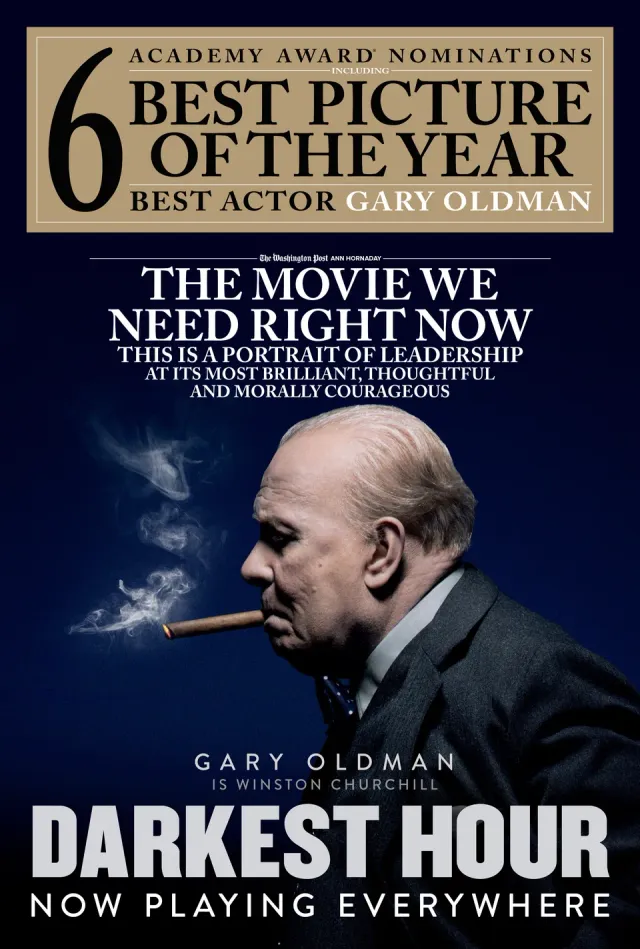
Newly appointed British prime minister as German forces advance in 1940, Winston Churchill must persuade colleagues who distrust his judgment to support continued resistance. Reports from France and the peril of trapped troops make each public statement a gamble over more than morale. The film concentrates political history into pressured conversations, private doubts and acts of persuasion, portraying leadership as an effort to secure room for a decision whose consequences others will bear.
An opportunist's factory operation becomes a rescue effort as escalating persecution turns employment, paperwork and money into fragile instruments of survival.
Why this matches +
These offer a related experience with a meaningful difference in story, tone, or presentation.
An adjacent discovery: a related idea with a different viewing experience.
Genres: Drama / Biography
Shared film traits
Based on recorded story, mood and style. Your preferences can change the order.
War and civilian life
What changes A historical drama examines Nazi power and the choices of people working within institutions responsible for mass violence.
A businessman joins the Nazi occupation economy in Kraków intending to profit from factories staffed by exploited Jewish workers. His dependence on a Jewish accountant brings practical contact with lives that the regime treats as disposable. As ghetto clearance and camp violence expose the machinery of extermination, his priorities change, and commercial access becomes a precarious means of protecting workers from deportation and death.
A battlefield specialist becomes a propaganda figure, turning an individual pursuit into a contest both commands expect to carry public meaning. Danilov promotes Vassili as a morale symbol, turning an individual marksman into an instrument of wartime messaging.
Why this matches +
These offer a related experience with a meaningful difference in story, tone, or presentation.
An adjacent discovery: a related idea with a different viewing experience.
Genres: War / Drama
Shared film traits
Based on recorded story, mood and style. Your preferences can change the order.
War and civilian life
What changes The battle for a devastated city exposes the personal costs of political and military leadership under extreme pressure.
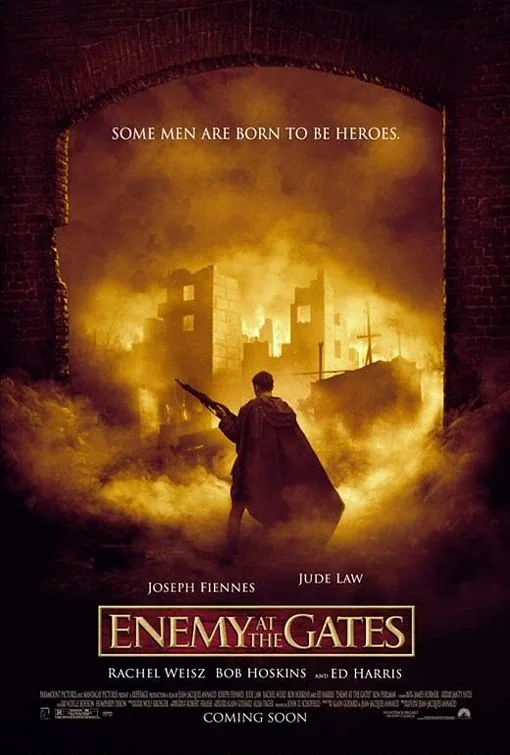
A Soviet soldier's skill as a sniper makes him valuable to a political officer seeking a figure who can restore morale in besieged Stalingrad. Public elevation draws an opposing marksman into a duel whose symbolic meaning exceeds the two men's immediate task. Friendship and romantic rivalry intersect with the machinery promoting the hero, making survival depend on seeing both an enemy's position and the expectations created by one's own side. A sniper duel narrows Stalingrad into personal suspense, subordinating the battle’s scale to a media and rivalry plot.
A scientific mobilisation and a later security inquiry unfold in interlocking timelines, making the consequences of a successful project part of the story of its creation.
Why this matches +
These offer a related experience with a meaningful difference in story, tone, or presentation.
An adjacent discovery: a related idea with a different viewing experience.
Genres: Drama / Thriller
Shared film traits
Based on recorded story, mood and style. Your preferences can change the order.
War and civilian life
What changes A historical drama follows powerful officials whose decisions have catastrophic consequences, exploring loyalty and moral responsibility.
A theoretical physicist is asked to organise a secret wartime programme whose success could transform both military power and the future of civilisation. The collective urgency of building the weapon sits beside later hearings that reconstruct his associations and challenge his place in the state he served. Moving between scientific ambition, political rivalry and personal compromise, the film asks what responsibility remains after technical achievement passes into other people's control.
incomplete intelligence and a deadline narrowing political choices. This pressure determines what the protagonist must do next and which risks become unavoidable.
Why this matches +
These offer a related experience with a meaningful difference in story, tone, or presentation.
An adjacent discovery: a related idea with a different viewing experience.
Genres: Drama / History
Shared film traits
Based on recorded story, mood and style. Your preferences can change the order.
What changes Political leaders and advisers weigh military orders and the risk of catastrophe during a tense crisis inside government.
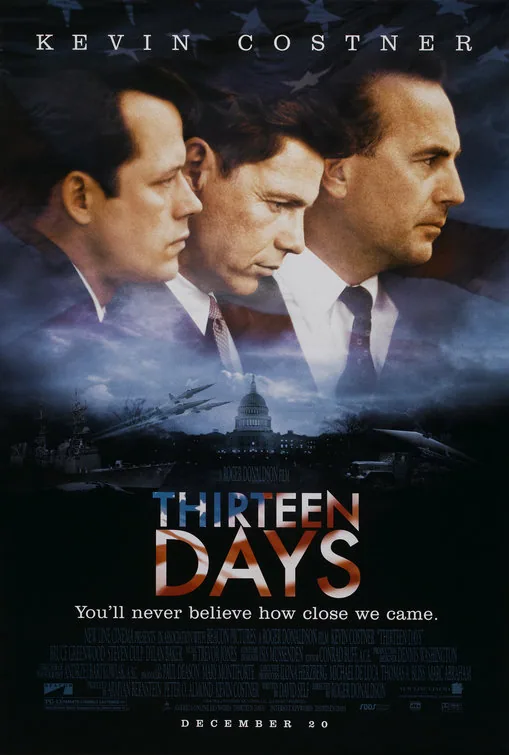
During the Cuban Missile Crisis, President Kennedy and his advisers confront evidence that Soviet missiles are being installed in Cuba. Meetings, intelligence reports and military recommendations make the danger immediate as the White House weighs a response that could trigger wider war. This historical drama concentrates on deliberation and communication, showing how uncertainty shapes decisions under an unforgiving deadline.
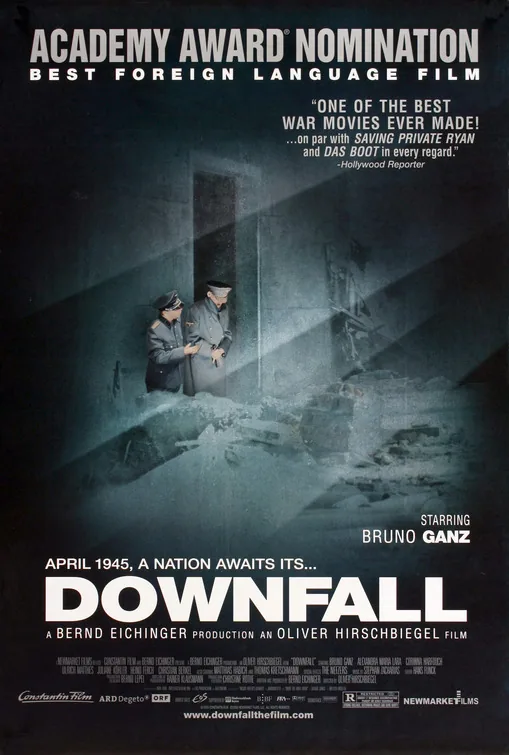
As Soviet forces close on Berlin, the German leadership and its staff remain inside a bunker where official orders increasingly contradict the military reality outside. A secretary's proximity offers access to routines, loyalties and private exchanges that coexist with the regime's continuing destruction. Responses to collapse range from practical attempts to leave to fanatical insistence on obligations whose human cost has long exceeded any plausible strategic purpose.
What drives the story
An authoritarian command system reaches its end while continuing to issue demands that expose the gap between personal loyalty and factual reality.
The people at its centre
Staff, officers and families respond differently to a leader whose diminishing power does not remove his ability to dictate catastrophic choices.
What it feels like
Confined exchanges and abrupt glimpses of devastated streets create an oppressive account of ideological persistence under terminal collapse.
Worth knowing
Its intimate access to perpetrators is not an exoneration, and the film includes suicide and violence against children rather than a conventional military-defeat spectacle.