Spurlock follows a month of fast-food meals while recording health indicators and interviewing experts.
Why this matches +
These films share important themes, atmosphere or storytelling interests with this selection.
Genres: Documentary
Shared film traits
Based on recorded story, mood and style. Your preferences can change the order.
Investigation
What changes Its own story: Spurlock follows a month of fast-food meals while recording health indicators and interviewing experts.
Filmmaker Morgan Spurlock sets himself a month-long experiment: eat only food from McDonald’s, accept the chain’s largest size when offered, and track the physical effects. He also consults physicians and nutrition specialists and examines marketing, school meals, and the growth of fast-food culture in the United States. The documentary uses a personal test and an advocacy-driven argument to make its point, mixing interviews, travel, and comic stunts. Its conclusions belong to the film’s self-experiment and should be read as the documentary’s case rather than a controlled nutrition study.
The documentary traces how regulatory choices and financial practices helped generate the crisis, then examines who benefited and who faced consequences.
Why this matches +
These films share important themes, atmosphere or storytelling interests with this selection.
Genres: Documentary / History
Shared film traits
Based on recorded story, mood and style. Your preferences can change the order.
Political resistance · Investigation
What changes Its own story: The documentary traces how regulatory choices and financial practices helped generate the crisis, then examines who benefited and who faced consequences.
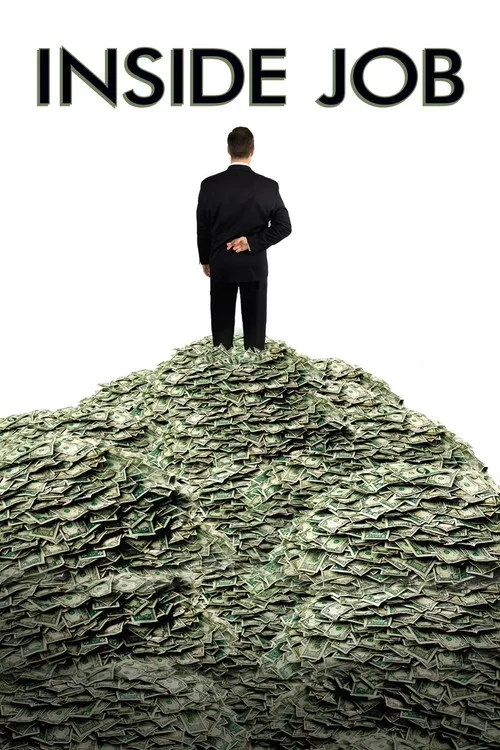
Charles Ferguson’s documentary investigates the 2008 global financial crisis and the decisions that helped create it. Organized in five parts, it moves from deregulation and financial innovation through the housing bubble, institutional collapse, bailouts, and questions of accountability. Interviews with officials, executives, economists, and journalists are combined with narration and data to explain complex systems in accessible terms. Rather than focusing on one household or firm, the film argues that conflicts of interest and policy choices across an interconnected industry had consequences for workers, borrowers, and national economies.
Personal stories of denied care are set against other national systems to challenge what Americans accept as inevitable.
Why this matches +
These films share important themes, atmosphere or storytelling interests with this selection.
Genres: Documentary
Shared film traits
Based on recorded story, mood and style. Your preferences can change the order.
Political resistance · Investigation
What changes Its own story: Personal stories of denied care are set against other national systems to challenge what Americans accept as inevitable.
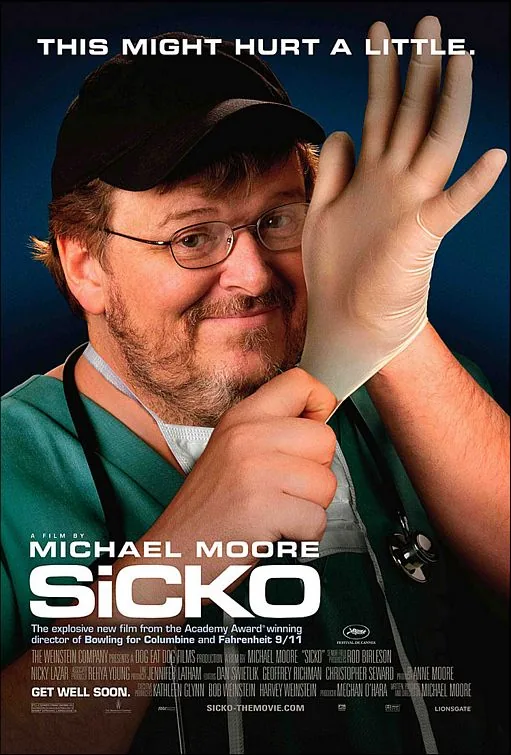
Michael Moore examines the American health-care system by comparing personal accounts of denied treatment and financial hardship with systems in other countries. The documentary follows patients, workers and institutions to make access to care a public question rather than a private misfortune. Its arguments are presented through interviews, staged visits and pointed contrasts, blending advocacy with humor while asking who bears responsibility when illness meets bureaucracy.
O'Barry and the activist team work around local surveillance and restricted access to capture evidence of the dolphin hunt.
Why this matches +
These films share important themes, atmosphere or storytelling interests with this selection.
Genres: Documentary
Shared film traits
Based on recorded story, mood and style. Your preferences can change the order.
Political resistance · Investigation
What changes Its own story: O'Barry and the activist team work around local surveillance and restricted access to capture evidence of the dolphin hunt.
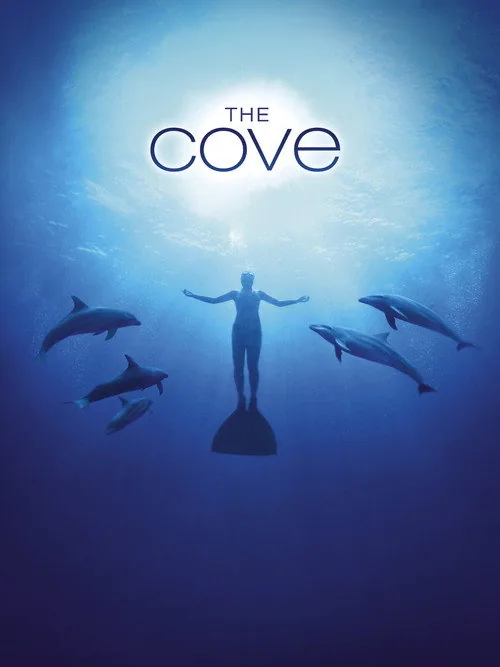
Former dolphin trainer Ric O'Barry joins a team of activists and filmmakers to document the dolphin drive hunt in Taiji, Japan. Because local authorities restrict access to the cove where the animals are captured, the team secretly installs cameras and recording equipment to film what happens out of public view. Their investigation connects the hunt to dolphin performance industries, international policy, and concerns about contaminated meat. The documentary turns covert footage into a campaign for public awareness while examining the risks and ethics of exposing hidden practices.
Former technology insiders describe how platforms capture attention and predict behavior; a fictional family illustrates possible effects on users.
Why this matches +
These films share important themes, atmosphere or storytelling interests with this selection.
Genres: Documentary / Drama
Shared film traits
Based on recorded story, mood and style. Your preferences can change the order.
What changes Its own story: Former technology insiders describe how platforms capture attention and predict behavior; a fictional family illustrates possible effects on users.
This documentary combines interviews with former technology employees and researchers with a fictional story about a family shaped by social media. Interviewees discuss persuasive design, behavioral data, recommendation systems, advertising, misinformation, and platform incentives. The dramatized family illustrates how a teenager’s engagement can affect attention, mood, and political beliefs. Jeff Orlowski’s film makes a case about technology’s social costs, using testimony and scripted scenes to present its argument.
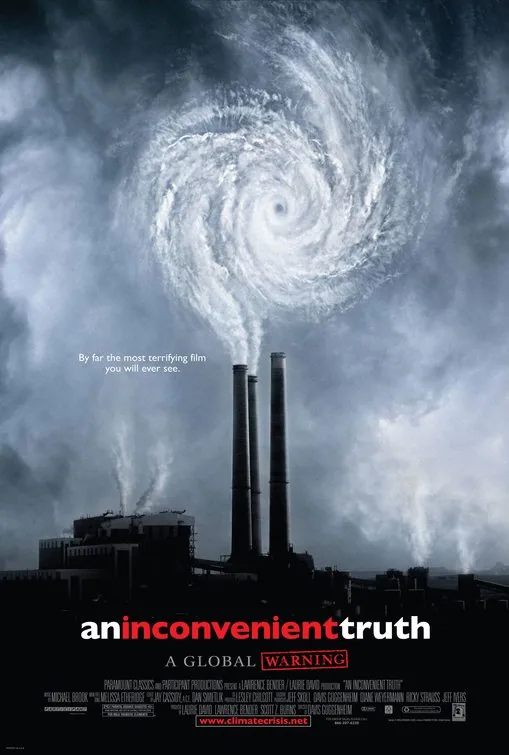
A structured public presentation moves from climate evidence to consequences and a call for action, while personal and political recollections explain why Gore has taken up the campaign. The lecture is the film's main organizing device.
Why this matches +
These films share important themes, atmosphere or storytelling interests with this selection.
Genres: Documentary
Shared film traits
Based on recorded story, mood and style. Your preferences can change the order.
What changes Its own story: A structured public presentation moves from climate evidence to consequences and a call for action, while personal and political recollections explain why Gore has taken up the campaign. The lecture is the film's main organizing device.
Al Gore presents a lecture on climate change, explaining the evidence for human-caused warming through charts, photographs and projections while the film places the presentation alongside episodes from his political and personal life. The lecture's visual explanations are designed to make a large-scale, long-term problem legible to an audience, and its campaigning form makes persuasion part of the documentary's subject. Its 2006 claims should be read as a dated intervention in climate communication, not as the latest scientific assessment. The film asks viewers to connect evidence with civic responsibility, while leaving the limits of individual action in view.
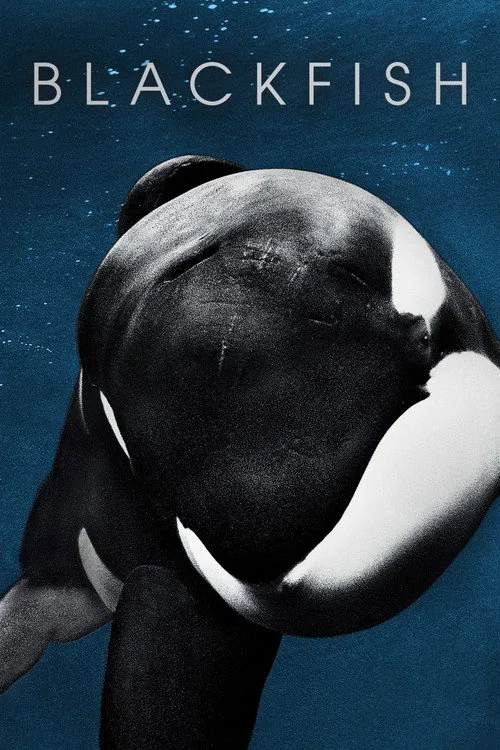
The film assembles Tilikum’s history and trainer testimony to question whether captive conditions create avoidable danger.
Why this matches +
These films share important themes, atmosphere or storytelling interests with this selection.
Genres: Documentary / Biography
Shared film traits
Based on recorded story, mood and style. Your preferences can change the order.
Investigation
What changes Its own story: The film assembles Tilikum’s history and trainer testimony to question whether captive conditions create avoidable danger.
Gabriela Cowperthwaite’s documentary examines Tilikum, an orca kept in captivity by marine parks, and the deaths of trainers associated with him. Through interviews, archival footage, and expert testimony, it traces the animal’s capture, conditions in captivity, and the practices used in public performances. The film argues that captivity and management decisions shaped the risks faced by both animals and people, inviting viewers to reconsider the ethics of keeping large marine mammals for entertainment.
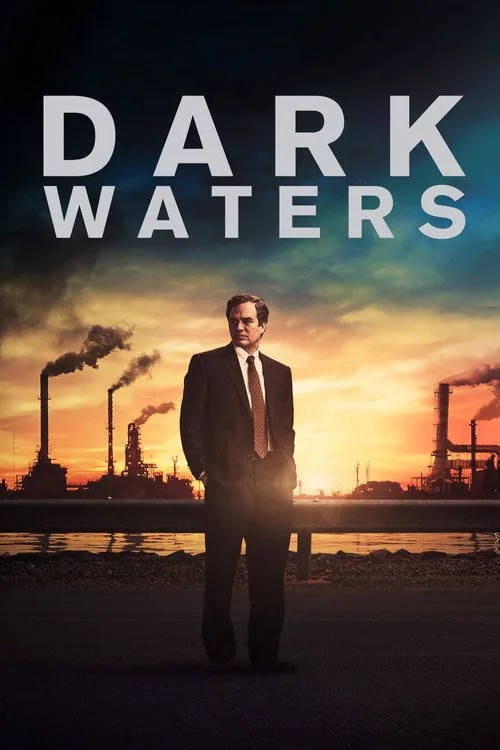
A farmer's evidence leads a corporate lawyer into a long legal challenge over chemical contamination.
Why this matches +
These films explore a related idea in a different setting, genre or style.
An adjacent discovery: a related idea with a different viewing experience.
Genres: biography / drama
The approach A dramatic feature rather than documentary footage.
Shared film traits
Based on recorded story, mood and style. Your preferences can change the order.
Investigation
What changes Its own story: A farmer's evidence leads a corporate lawyer into a long legal challenge over chemical contamination.
Corporate defense lawyer Robert Bilott is asked by West Virginia farmer Wilbur Tennant to investigate unexplained animal deaths near a DuPont chemical operation. His research connects the farm's contamination to a persistent compound used in making Teflon, and a local dispute grows into a decades-long legal and public-health fight. Bilott's pursuit strains his work and family life as corporate resistance makes evidence, time, and accountability central obstacles.
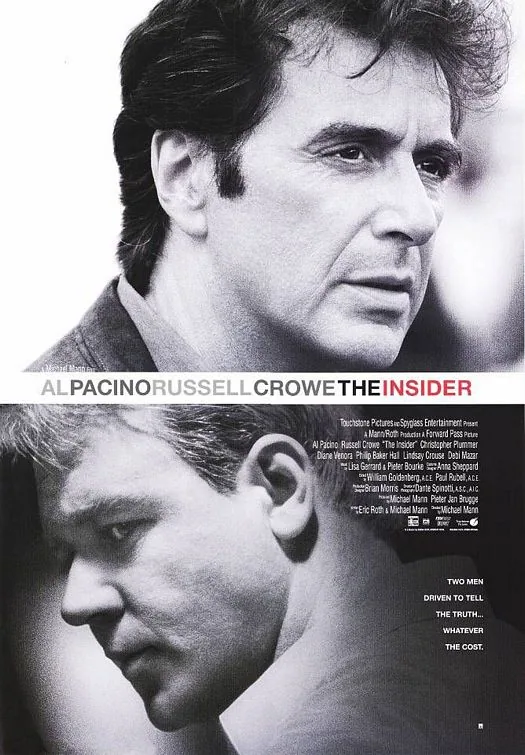
The threat of publication links two risks: Wigand may lose his safety and livelihood, while CBS may suppress the interview to protect itself.
Why this matches +
These films explore a related idea in a different setting, genre or style.
An adjacent discovery: a related idea with a different viewing experience.
Genres: Drama / Thriller
The approach A dramatic feature rather than documentary footage.
Shared film traits
Based on recorded story, mood and style. Your preferences can change the order.
Investigation
What changes Its own story: The threat of publication links two risks: Wigand may lose his safety and livelihood, while CBS may suppress the interview to protect itself.
CBS producer Lowell Bergman persuades former tobacco executive Jeffrey Wigand to explain what he knows about Brown & Williamson’s practices for a 60 Minutes investigation. Wigand’s confidentiality agreement, threats and family pressures make cooperation dangerous, while CBS executives worry about legal and financial exposure. As the broadcast is delayed and edited, Bergman must decide whether protecting the story means confronting the network that employs him. The film turns investigative reporting into a battle over sources, corporate pressure and newsroom independence, dramatizing real events without serving as a transcript of every participant’s perspective.
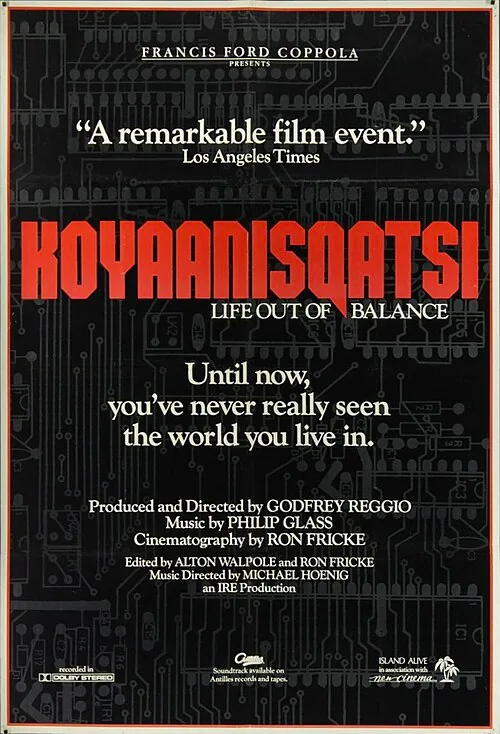
The film’s engine is a progression of visual relations rather than a plot: landscape, construction, machines and human crowds are placed in sequence so viewers form the argument themselves.
Why this matches +
These films explore a related idea in a different setting, genre or style.
An adjacent discovery: a related idea with a different viewing experience.
Genres: Documentary / Experimental
Shared film traits
Based on recorded story, mood and style. Your preferences can change the order.
What changes Its own story: The film’s engine is a progression of visual relations rather than a plot: landscape, construction, machines and human crowds are placed in sequence so viewers form the argument themselves.
Without conventional dialogue or a central character, Koyaanisqatsi moves from deserts, clouds and geological formations to cities, factories, traffic and crowds. Philip Glass’s repeating score turns time-lapse images into mounting rhythms, while slow motion makes ordinary movement strange. The juxtaposition invites viewers to connect industrial speed and environmental change, but the film does not state one simple thesis through narration. Its title comes from a Hopi word translated in the film as life out of balance; that use should not be mistaken for a complete or neutral account of Hopi philosophy. The experience is an audiovisual essay whose sequence and music guide interpretation even as its nonverbal form leaves room for disagreement about what the images prove.
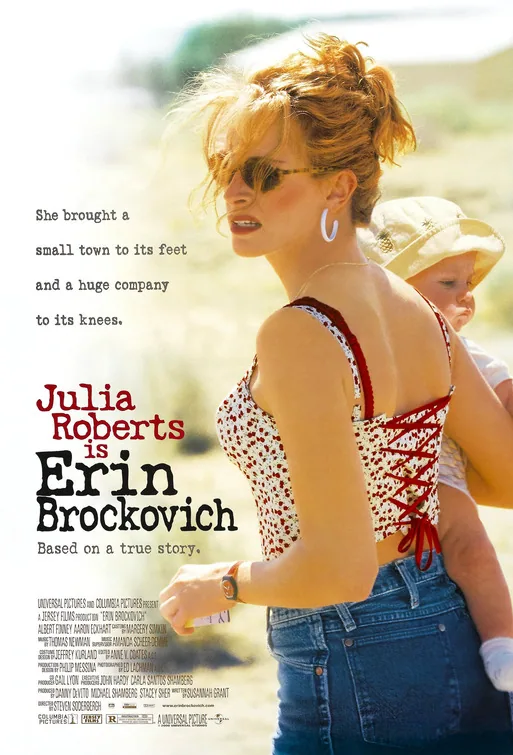
An overlooked employee turns a paperwork anomaly into an investigation whose strength depends on linking personal testimony with evidence of corporate knowledge.
Why this matches +
These films explore a related idea in a different setting, genre or style.
An adjacent discovery: a related idea with a different viewing experience.
Genres: Drama / Biography
The approach A dramatic feature rather than documentary footage.
Shared film traits
Based on recorded story, mood and style. Your preferences can change the order.
Investigation
What changes Its own story: An overlooked employee turns a paperwork anomaly into an investigation whose strength depends on linking personal testimony with evidence of corporate knowledge.
A single mother with limited formal qualifications obtains work in a small law office and follows inconsistencies in a property file towards evidence of contaminated water. Listening to affected residents supplies connections that an apparently routine transaction has obscured, but building a case requires records, trust and time she also owes her children. Her insistence on being taken seriously becomes inseparable from recognising the households whose experiences have been discounted by a much more powerful company.
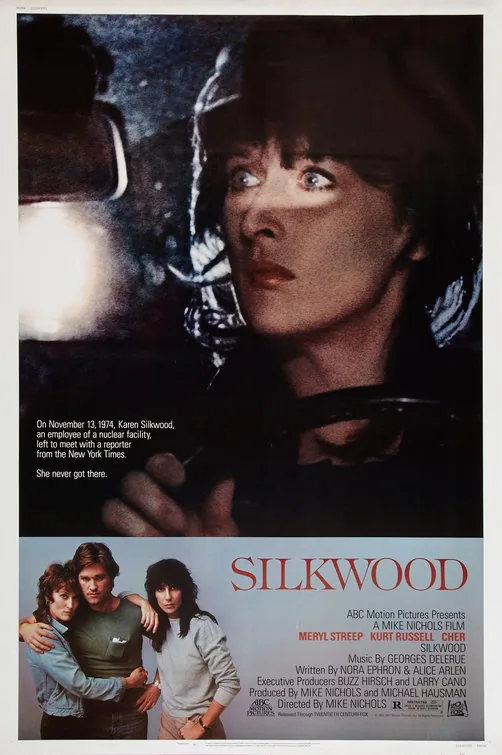
Karen's safety concerns lead her from workplace organizing toward a public effort to expose hazardous practices.
Why this matches +
These films explore a related idea in a different setting, genre or style.
An adjacent discovery: a related idea with a different viewing experience.
Genres: Drama / History
The approach A dramatic feature rather than documentary footage.
Shared film traits
Based on recorded story, mood and style. Your preferences can change the order.
Political resistance · Investigation
What changes Its own story: Karen's safety concerns lead her from workplace organizing toward a public effort to expose hazardous practices.
Working at a plutonium-processing plant in Oklahoma, Karen Silkwood becomes increasingly concerned about safety practices and the treatment of workers. Her union activity draws attention to possible contamination and management failures, placing her health, job, and relationships under mounting pressure as she gathers information for a public complaint; the film follows an ordinary employee trying to make institutional evidence matter against an organization with greater power.
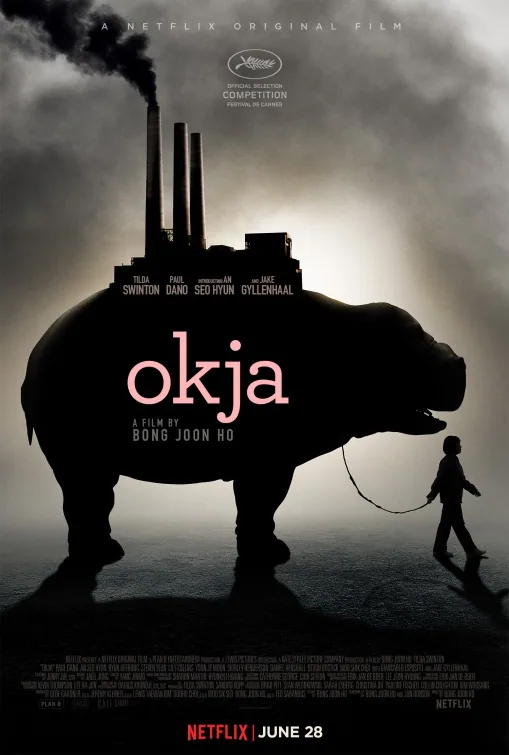
A girl's bond with an engineered animal becomes a rescue mission against a corporation.
Why this matches +
These films explore a related idea in a different setting, genre or style.
An adjacent discovery: a related idea with a different viewing experience.
Genres: Adventure / Drama
The approach A dramatic feature rather than documentary footage.
Shared film traits
Based on recorded story, mood and style. Your preferences can change the order.
What changes A fictional animal-rescue satire replaces journalistic reporting and includes distressing slaughterhouse imagery.
A girl in rural South Korea has grown up caring for a gentle genetically engineered animal called Okja. When a multinational corporation takes the creature away for its own public spectacle, the girl pursues it with help from animal-rights activists. Bong Joon-ho shifts from affectionate companionship to corporate satire and action, asking how personal care survives when animals, media and ethics become products.
An executive offers evidence of corporate wrongdoing, but investigators find that the informant’s own story is difficult to trust.
Why this matches +
These films explore a related idea in a different setting, genre or style.
An adjacent discovery: a related idea with a different viewing experience.
Genres: Comedy / Crime
The approach A dramatic feature rather than documentary footage.
Shared film traits
Based on recorded story, mood and style. Your preferences can change the order.
Investigation
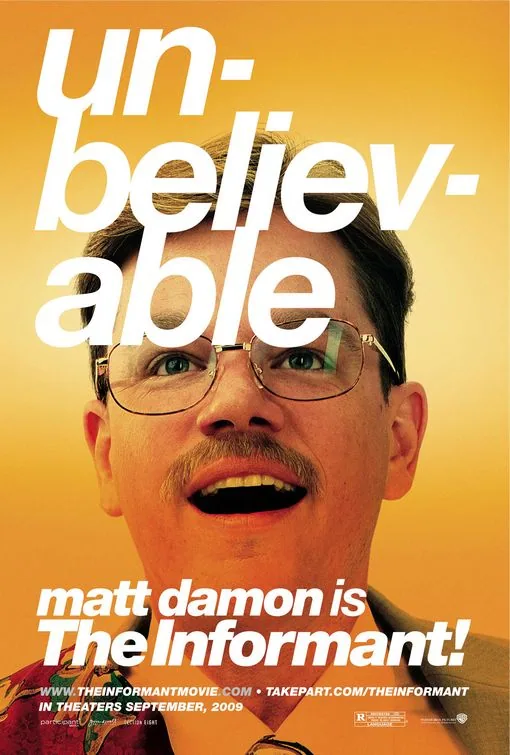
What changes Its own story: An executive offers evidence of corporate wrongdoing, but investigators find that the informant’s own story is difficult to trust.
A mid-level executive approaches federal investigators claiming that his company is involved in price-fixing, positioning himself as a valuable insider. The inquiry grows more complicated as his accounts shift and his own conduct becomes a subject of scrutiny. The film uses deadpan humor and an unreliable central perspective to explore self-justification, corporate misconduct and the gap between a person’s public explanation and private motives.
An undercover investigator gains access to a radical group and must report on its escalating attacks while questioning her employer's ethics.
Why this matches +
These films explore a related idea in a different setting, genre or style.
An adjacent discovery: a related idea with a different viewing experience.
Genres: Thriller / Drama
The approach A dramatic feature rather than documentary footage.
Shared film traits
Based on recorded story, mood and style. Your preferences can change the order.
Political resistance
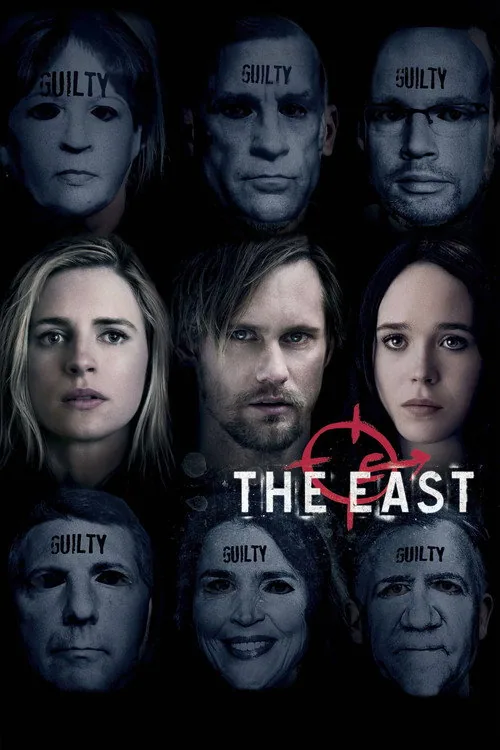
What changes Its own story: An undercover investigator gains access to a radical group and must report on its escalating attacks while questioning her employer's ethics.
Jane, a former FBI agent working for a private intelligence firm, assumes the identity Sarah and infiltrates The East, a clandestine group that retaliates against corporations accused of environmental and public-health abuses. As she joins their disruptive operations, she encounters members whose lives were damaged by the companies they target and grows close to the group's charismatic Benji. Her assignment becomes harder to separate from her conscience as the activists' tactics escalate and personal loyalties shift.
A routine containment assignment becomes a test of whether an institutional fixer will expose the interests employing him.
Why this matches +
These films explore a related idea in a different setting, genre or style.
An adjacent discovery: a related idea with a different viewing experience.
Genres: Drama / Thriller
The approach A dramatic feature rather than documentary footage.
Shared film traits
Based on recorded story, mood and style. Your preferences can change the order.
Investigation
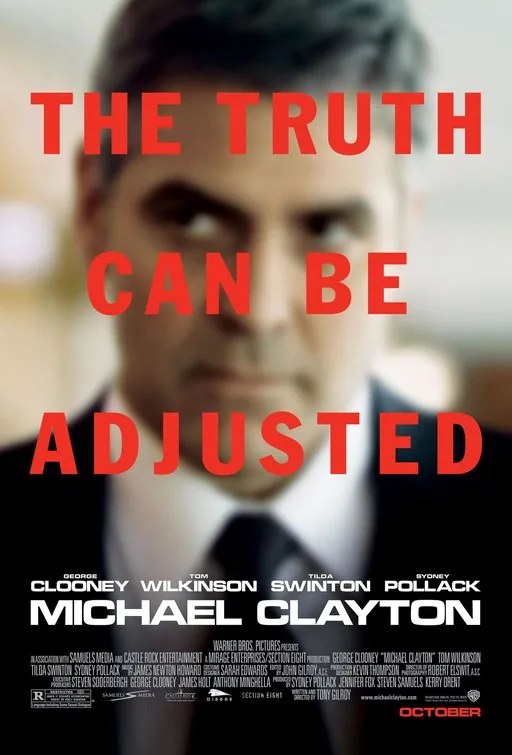
What changes Its own story: A routine containment assignment becomes a test of whether an institutional fixer will expose the interests employing him.
A law firm's fixer is called in after a senior attorney suffers a public breakdown during a major corporate case. What first appears to be professional damage control becomes entangled with evidence that the client wants suppressed. Personal debt and exhaustion make the fixer vulnerable, while his colleague's crisis forces him to confront what years of solving other people's problems have required him to ignore.
The short bet requires the investors to pay for a collapse everyone else dismisses, so rising premiums and public denial become sustained sources of tension.
Why this matches +
These films explore a related idea in a different setting, genre or style.
An adjacent discovery: a related idea with a different viewing experience.
Genres: Crime / Drama
The approach A dramatic feature rather than documentary footage.
Shared film traits
Based on recorded story, mood and style. Your preferences can change the order.
Investigation
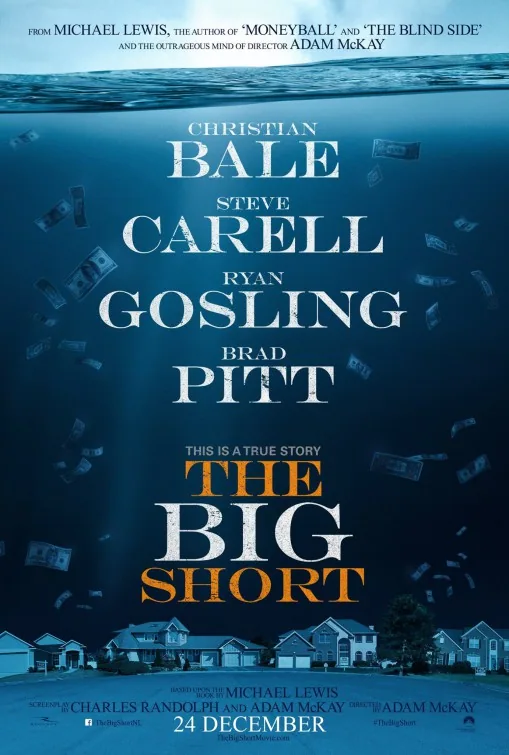
What changes Its own story: The short bet requires the investors to pay for a collapse everyone else dismisses, so rising premiums and public denial become sustained sources of tension.
In the mid-2000s, hedge-fund manager Michael Burry concludes that risky mortgage loans are hidden inside bonds treated as safe investments. Jared Vennett tries to sell credit-default swaps to investors, including Mark Baum and his skeptical team, who travel to Florida and inspect the housing boom firsthand. Younger traders Charlie Geller and Jamie Shipley reach the same bet from another direction. As the market keeps rising, each investor must withstand pressure from clients and colleagues who believe the collapse cannot happen. The financial crisis eventually vindicates their analysis but leaves them uneasy about profiting from disaster.
Tessa's report about a clinical trial gives Justin a trail to follow after her death; institutional complicity makes each new disclosure more dangerous.
Why this matches +
These films explore a related idea in a different setting, genre or style.
An adjacent discovery: a related idea with a different viewing experience.
Genres: Drama / Thriller
The approach A dramatic feature rather than documentary footage.
Shared film traits
Based on recorded story, mood and style. Your preferences can change the order.
Political resistance · Investigation
What changes Its own story: Tessa's report about a clinical trial gives Justin a trail to follow after her death; institutional complicity makes each new disclosure more dangerous.
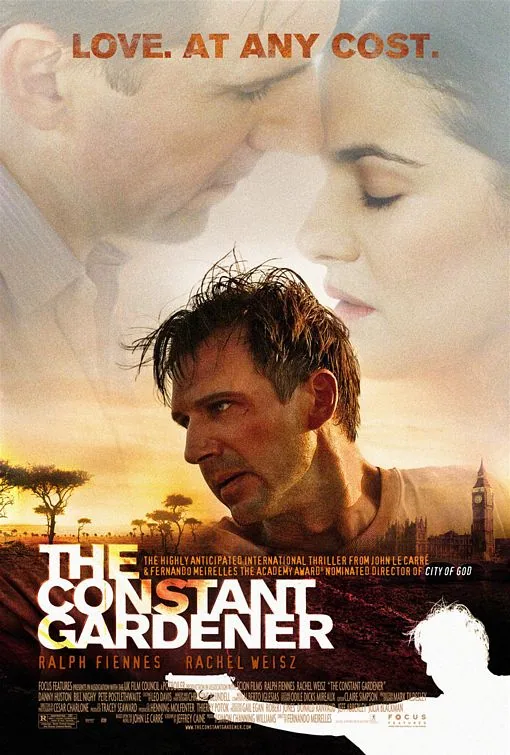
British diplomat Justin Quayle meets activist Tessa, marries her and follows her to a posting in Kenya. Tessa and doctor Arnold Bluhm investigate deaths they connect to drug trials by the pharmaceutical company Three Bees, but their report threatens powerful corporate and government interests. After Tessa is murdered, Justin follows the evidence she left behind, moving through official files, colleagues' memories and the places where she worked. His private grief becomes a public investigation that reveals the cost of protecting a profitable drug program.
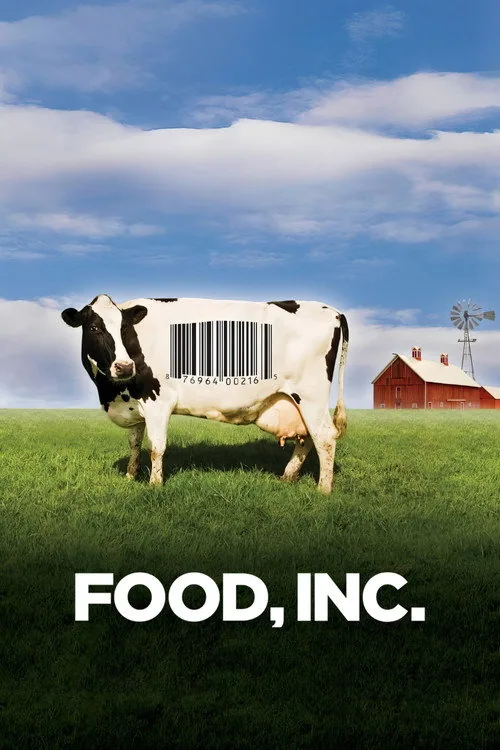
This documentary examines the industrial food system in the United States, moving from large-scale meat production to grain and vegetable farming and the companies that control much of the supply chain. Interviews with writers, farmers, workers, and advocates consider how corporate efficiency affects food quality, animal welfare, labor, the environment, and consumer choice. The film links everyday supermarket products to hidden production practices and asks viewers to consider how regulation, purchasing habits, and concentrated corporate power shape what people eat.
What drives the story
The documentary traces common food products through industrial production systems and asks how corporate practices affect workers, consumers, and the environment.
The people at its centre
Farmers, employees, executives, and advocates describe conflicting interests within an industry where a small number of companies control much of the market.
What it feels like
A reportorial documentary combines interviews and production footage to make opaque supply chains visible to everyday shoppers.
Worth knowing
Its central subject is the structure of American agribusiness and food production, not an individual farmer's biography or cooking culture.
food systems and corporate poweranimal welfare and laborconsumer knowledge and responsibility
Mood
investigative · sobering · provocative
Pacing
industry overview · case studies and expert testimony · consumer and policy implications
Visual style
factory-farm footage · interview-led documentary imagery · contrasts between branded packaging and production sites
Storytelling
examines industrial meat and crop production · interviews connect farms to supermarket shelves · corporate consolidation framed as civic issue