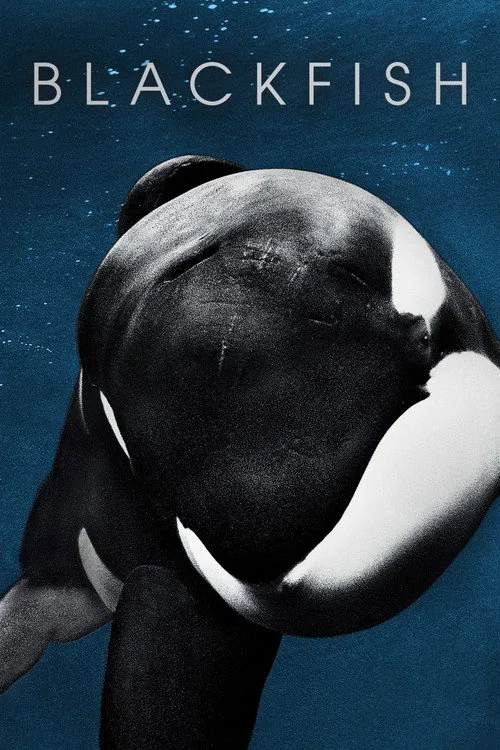
The film assembles Tilikum’s history and trainer testimony to question whether captive conditions create avoidable danger.
Why this matches +
Recording events makes an accepted public account of expertise and responsibility difficult to sustain.
Genres: Documentary / Biography
Shared film traits
Based on recorded story, mood and style. Your preferences can change the order.
Investigation
What changes The Cove: mission and restricted access, covert preparation and surveillance and footage revealed to public audience. Blackfish: evidence-led documentary build, interview and archive alternation and argumentative escalation.
Gabriela Cowperthwaite’s documentary examines Tilikum, an orca kept in captivity by marine parks, and the deaths of trainers associated with him. Through interviews, archival footage, and expert testimony, it traces the animal’s capture, conditions in captivity, and the practices used in public performances. The film argues that captivity and management decisions shaped the risks faced by both animals and people, inviting viewers to reconsider the ethics of keeping large marine mammals for entertainment.
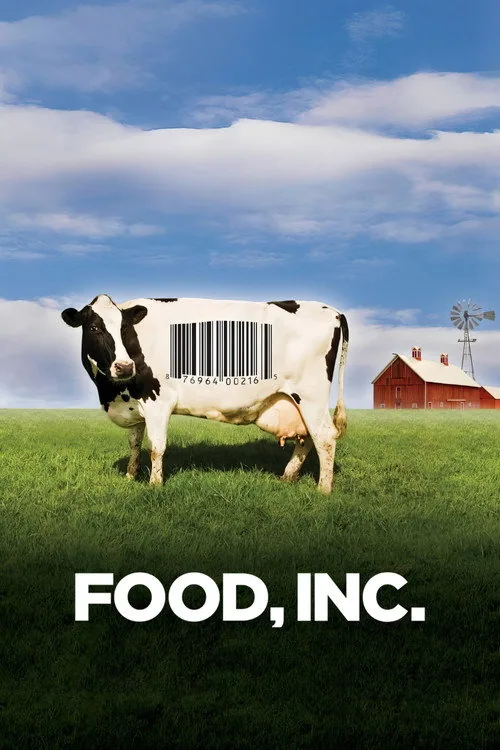
The documentary traces common food products through industrial production systems and asks how corporate practices affect workers, consumers, and the environment.
Why this matches +
Recording events makes an accepted public account of expertise and responsibility difficult to sustain.
Genres: Documentary
Shared film traits
Based on recorded story, mood and style. Your preferences can change the order.
Political resistance · Investigation
What changes The Cove: mission and restricted access, covert preparation and surveillance and footage revealed to public audience. Food, Inc.: industry overview, case studies and expert testimony and consumer and policy implications.
This documentary examines the industrial food system in the United States, moving from large-scale meat production to grain and vegetable farming and the companies that control much of the supply chain. Interviews with writers, farmers, workers, and advocates consider how corporate efficiency affects food quality, animal welfare, labor, the environment, and consumer choice. The film links everyday supermarket products to hidden production practices and asks viewers to consider how regulation, purchasing habits, and concentrated corporate power shape what people eat.
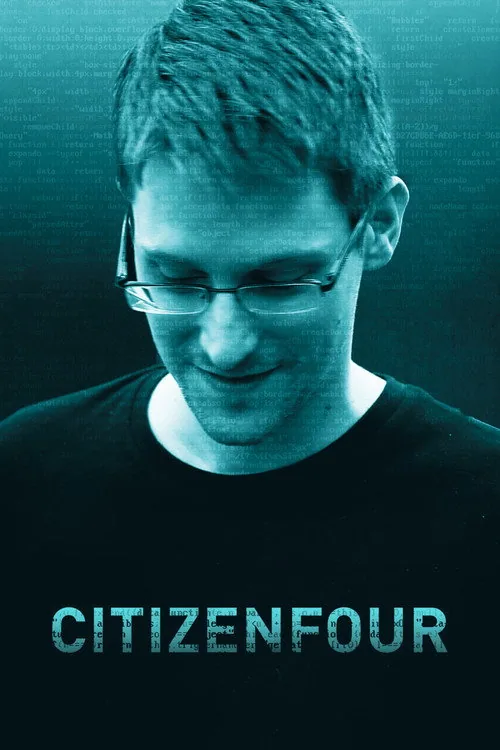
Poitras documents the meeting in which Snowden discloses NSA surveillance evidence to journalists and prepares to go public.
Why this matches +
Recording events makes an accepted public account of expertise and responsibility difficult to sustain.
Genres: Documentary / History
Shared film traits
Based on recorded story, mood and style. Your preferences can change the order.
Political resistance · Investigation
What changes The Cove: mission and restricted access, covert preparation and surveillance and footage revealed to public audience. Citizenfour: real-time hotel conversations, reporting milestones and news-event escalation.
Documentarian Laura Poitras receives encrypted messages from someone using the name Citizen Four and travels to Hong Kong with journalists Glenn Greenwald and Ewen MacAskill. There they meet Edward Snowden, who reveals classified information about government surveillance programs while protecting his identity inside a hotel room. The film records the disclosures as they unfold, including the reporters' decisions, Snowden's anxiety, and the public consequences that begin to follow. Its immediacy comes from watching an international news story develop in real time.
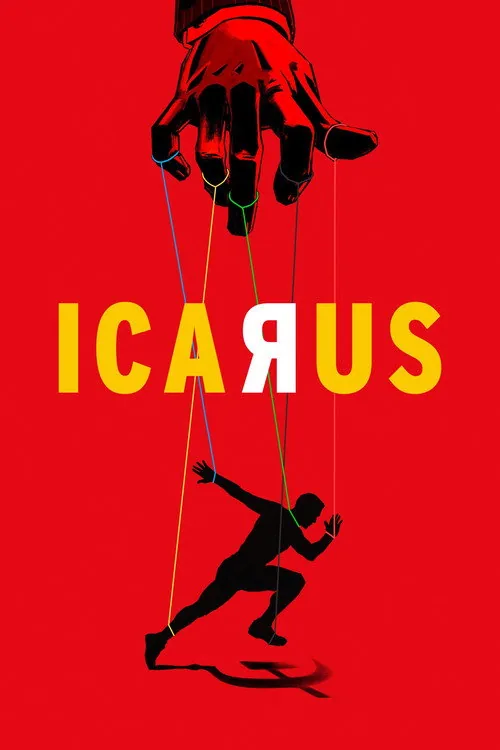
Fogel's attempt to test anti-doping methods leads him to investigate a far larger program after his scientific adviser becomes a whistleblower.
Why this matches +
Recording events makes an accepted public account of expertise and responsibility difficult to sustain.
Genres: Documentary / Sport
Shared film traits
Based on recorded story, mood and style. Your preferences can change the order.
Investigation
What changes The Cove: mission and restricted access, covert preparation and surveillance and footage revealed to public audience. Icarus: experiment-led beginning, rapid investigative turn and high-stakes testimony.
Filmmaker and amateur cyclist Bryan Fogel begins an experiment to test how an athlete might evade drug testing, consulting Russian scientist Grigory Rodchenkov about performance-enhancing substances. As allegations of a state-backed Russian doping program emerge, the project changes from a personal investigation into an account of a major sports scandal. Rodchenkov becomes a whistleblower and flees to the United States, bringing evidence and personal danger with him. The documentary follows both the investigation and the uncertain cost of speaking publicly.
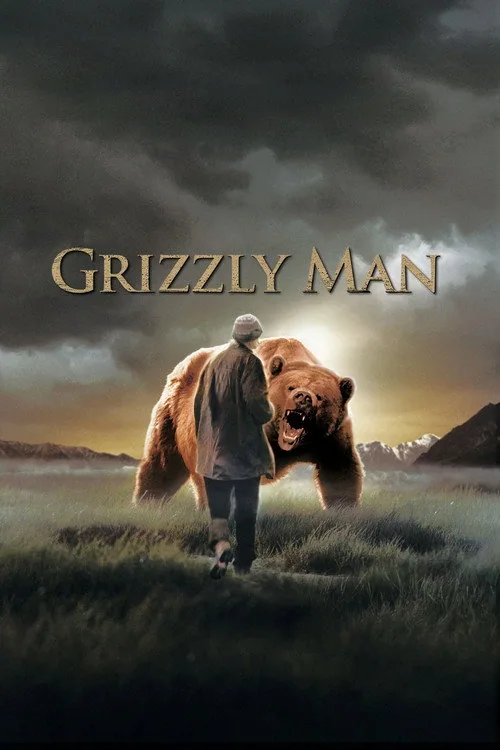
The documentary pieces together Treadwell’s motivations and final years through his own footage and other people’s accounts.
Why this matches +
Recording events makes an accepted public account of expertise and responsibility difficult to sustain.
Genres: Documentary / Biography
Shared film traits
Based on recorded story, mood and style. Your preferences can change the order.
What changes The Cove: mission and restricted access, covert preparation and surveillance and footage revealed to public audience. Grizzly Man: essay-like documentary flow and alternates field footage and reflection.
Werner Herzog assembles footage shot by Timothy Treadwell during summers spent living near grizzly bears in Alaska, along with interviews with people who knew him and experts familiar with the animals. The documentary considers Treadwell’s devotion to bear conservation, his charismatic public persona, and the risks of his chosen way of life, while Herzog’s narration brings a contrasting perspective on wilderness and human desire. Rather than offering a simple verdict, the film explores the tension between Treadwell’s intimate images and the dangers they cannot fully control.
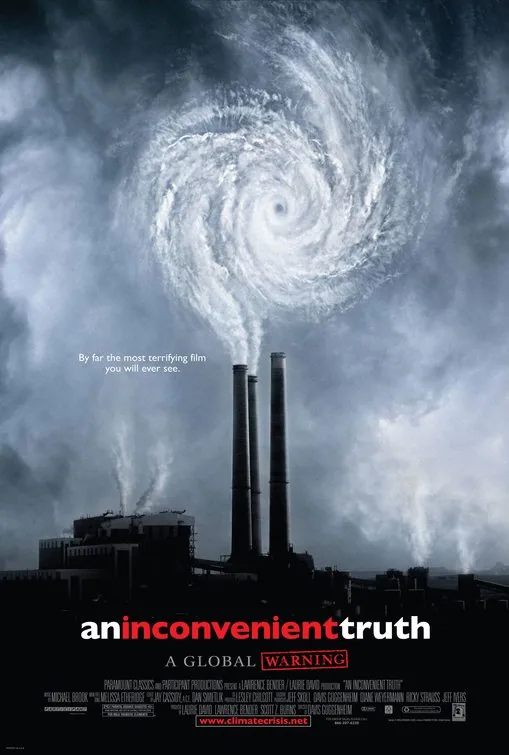
A structured public presentation moves from climate evidence to consequences and a call for action, while personal and political recollections explain why Gore has taken up the campaign. The lecture is the film's main organizing device.
Why this matches +
Recording events makes an accepted public account of expertise and responsibility difficult to sustain.
Genres: Documentary
Shared film traits
Based on recorded story, mood and style. Your preferences can change the order.
What changes The Cove: mission and restricted access, covert preparation and surveillance and footage revealed to public audience. An Inconvenient Truth: measured.
Al Gore presents a lecture on climate change, explaining the evidence for human-caused warming through charts, photographs and projections while the film places the presentation alongside episodes from his political and personal life. The lecture's visual explanations are designed to make a large-scale, long-term problem legible to an audience, and its campaigning form makes persuasion part of the documentary's subject. Its 2006 claims should be read as a dated intervention in climate communication, not as the latest scientific assessment. The film asks viewers to connect evidence with civic responsibility, while leaving the limits of individual action in view.
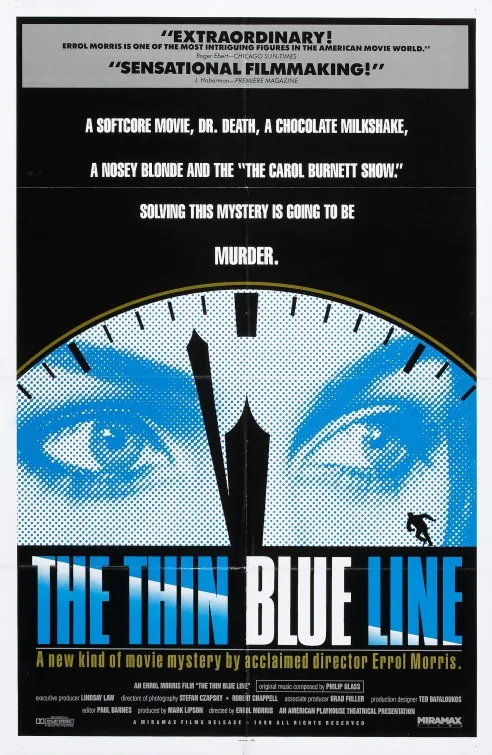
Adams’s account is weighed against Harris’s changing statements and the memories of people involved in the investigation.
Why this matches +
Recording events makes an accepted public account of expertise and responsibility difficult to sustain.
Genres: Documentary / Crime
Shared film traits
Based on recorded story, mood and style. Your preferences can change the order.
Investigation
What changes The Cove: mission and restricted access, covert preparation and surveillance and footage revealed to public audience. The Thin Blue Line: interview-driven inquiry, repeated reconstruction, accumulating contradictions and open evidentiary question.
Errol Morris reexamines the 1976 murder of Dallas police officer Robert Wood and the conviction of Randall Adams, a man sentenced to death for the crime. Through interviews with Adams, David Harris, police officers, lawyers and witnesses, the documentary tests how testimony and memory shaped the case. Stylized reenactments return to key moments from different angles, exposing contradictions without presenting a conventional omniscient reconstruction. Rather than relying on a narrator to settle every uncertainty, the film makes the viewer compare claims, motives and visual evidence. Its investigation asks how an official story becomes accepted and what can happen when courts, police and witnesses fail to question it. The result is both a true-crime inquiry and a study of the power of representation in the justice system.
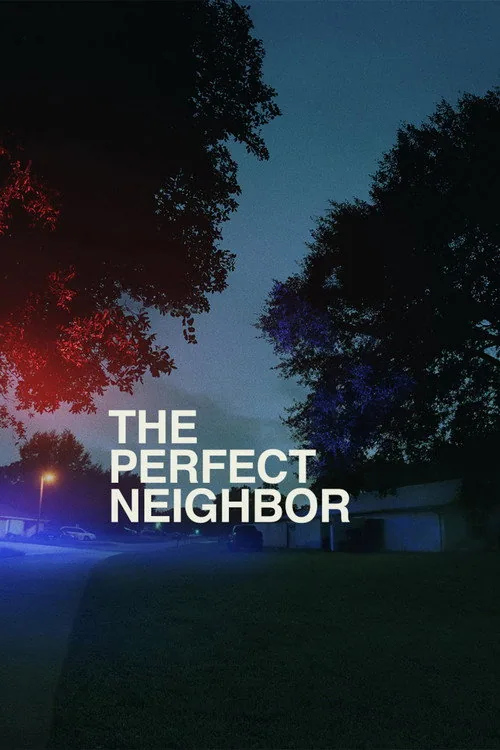
Body-camera recordings and emergency calls trace how a series of neighbor disputes preceded Ajike Owens's fatal shooting.
Why this matches +
Access to vulnerable people or a natural environment complicates easy assumptions about institutional care and the limits of human control.
An adjacent discovery: a related idea with a different viewing experience.
Genres: Crime / Documentary
Shared film traits
Based on recorded story, mood and style. Your preferences can change the order.
Investigation
What changes The Cove: mission and restricted access, covert preparation and surveillance and footage revealed to public audience. The Perfect Neighbor: earlier calls reveal a growing dispute, recorded encounters accumulate context and fatal incident and investigation force reassessment.
This documentary reconstructs disputes between neighbors in Ocala, Florida, that preceded the 2023 killing of Ajike Owens by Susan Lorincz. It uses body-camera footage from repeated sheriff's-office responses, 911 calls, and interviews to show how complaints escalated and how local authorities encountered the conflict. The film asks viewers to assess what the recorded interactions reveal about race, neighbor relations, and institutional response before the fatal shooting. Its evidence-led structure turns public records into a tense account of a preventable neighborhood tragedy.
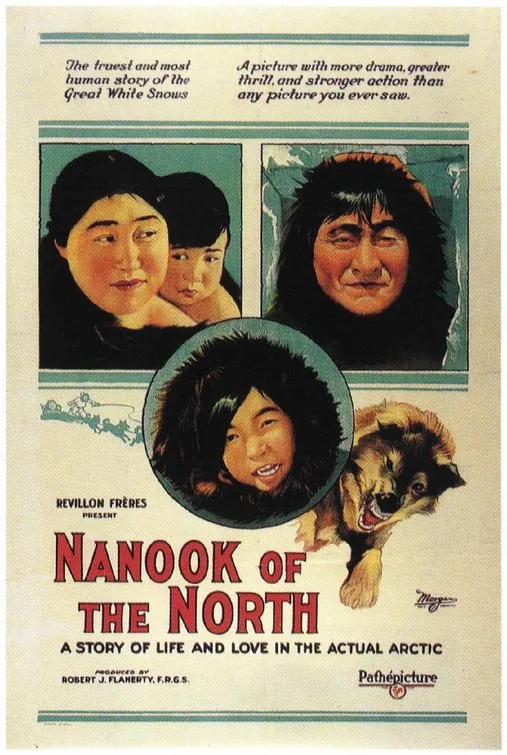
The episodic structure observes practical activities and turns them into a survival narrative, with the camera deciding which labor becomes spectacle.
Why this matches +
Access to vulnerable people or a natural environment complicates easy assumptions about institutional care and the limits of human control.
An adjacent discovery: a related idea with a different viewing experience.
Genres: Documentary / Silent
Shared film traits
Based on recorded story, mood and style. Your preferences can change the order.
What changes The Cove: mission and restricted access, covert preparation and surveillance and footage revealed to public audience. Nanook of the North: measured and episodic.
The silent film follows Inuk hunter Nanook, his wife Nyla and their family as they travel through the Ungava Peninsula in search of food and trade. It shows hunting, shelter-building and other daily tasks as tests of endurance in the Arctic. Inuit participants helped stage hunting and igloo-building scenes, repair the camera and review footage, so the film's documentary appearance contains both collaboration and reconstruction. Its images preserve a particular cinematic encounter shaped by Flaherty's outsider expectations, not an untouched record of Inuit life.
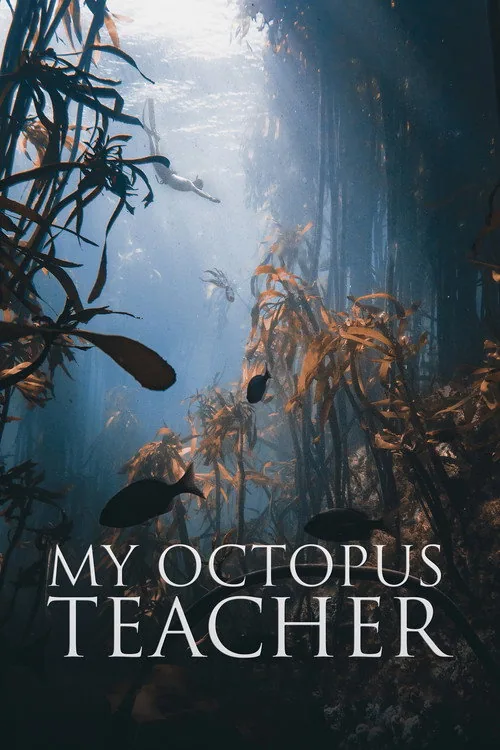
Foster returns to the same kelp forest to observe an octopus, building a documentary from repeated encounters and changing seasons.
Why this matches +
Access to vulnerable people or a natural environment complicates easy assumptions about institutional care and the limits of human control.
An adjacent discovery: a related idea with a different viewing experience.
Genres: Documentary / Nature
Shared film traits
Based on recorded story, mood and style. Your preferences can change the order.
What changes The Cove: mission and restricted access, covert preparation and surveillance and footage revealed to public audience. My Octopus Teacher: seasonal observation, underwater encounters and reflective narration.
Filmmaker Craig Foster begins diving regularly in a kelp forest near Cape Town and gradually forms a close observational relationship with a wild octopus. Over months, he records the animal’s behavior, hunting, camouflage, and encounters with predators while reflecting on his own attention to the natural world. Pippa Ehrlich and James Reed’s documentary uses intimate underwater footage to consider curiosity, animal intelligence, and connection. It also shows the octopus facing natural dangers and does not treat its life as a human-style friendship in every respect.
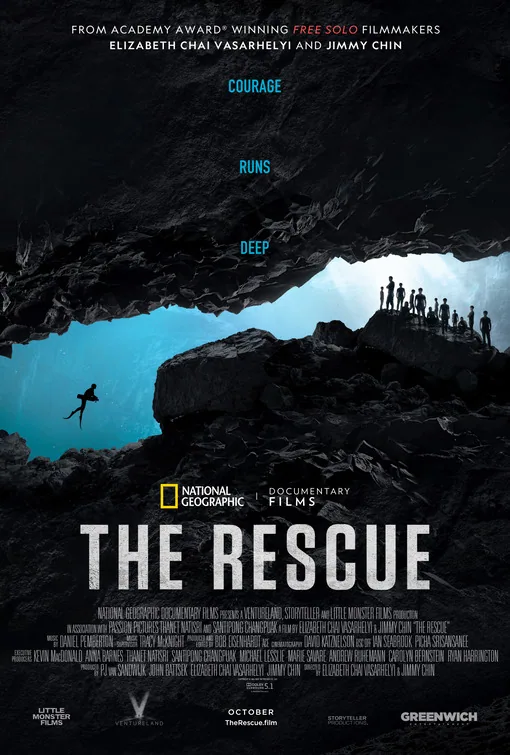
Each new discovery creates a practical problem for divers, families and officials trying to bring the team out safely.
Why this matches +
Access to vulnerable people or a natural environment complicates easy assumptions about institutional care and the limits of human control.
An adjacent discovery: a related idea with a different viewing experience.
Genres: Documentary
Shared film traits
Based on recorded story, mood and style. Your preferences can change the order.
What changes The Cove: mission and restricted access, covert preparation and surveillance and footage revealed to public audience. The Rescue: the search locates the trapped group, the rescuers assess a dangerous route and and a complex plan must move children and divers through flooded passages..
When a Thai junior football team and its coach become trapped by floodwater in the Tham Luang cave system, an international rescue operation races against rising water and limited time. Interviews, archival images and carefully staged sequences follow the divers, planners and local volunteers confronting a route that is narrow, submerged and difficult to navigate. The documentary makes teamwork and logistics central to the suspense.
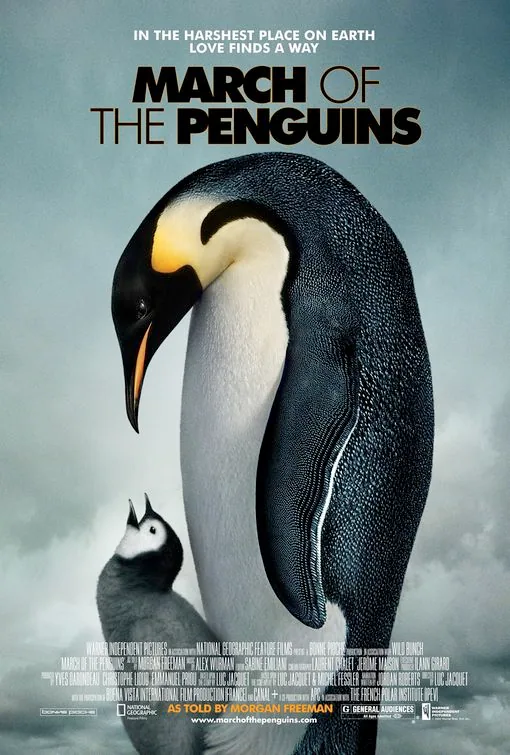
The reproductive cycle requires long journeys, an egg handoff and coordinated feeding trips that expose adults and chicks to cold, hunger and predation.
Why this matches +
Access to vulnerable people or a natural environment complicates easy assumptions about institutional care and the limits of human control.
An adjacent discovery: a related idea with a different viewing experience.
Genres: Documentary
Shared film traits
Based on recorded story, mood and style. Your preferences can change the order.
What changes The Cove: mission and restricted access, covert preparation and surveillance and footage revealed to public audience. March of the Penguins: measured.
The documentary follows emperor penguins through the annual breeding cycle in Antarctica. Adults leave the ocean and travel inland to mate, then the female lays an egg and passes it to the male before returning to sea to feed. The male keeps the egg warm through the polar winter while the colony endures severe cold and predators; the returning females and hungry chicks depend on timing and cooperation. The film alternates the vast migration with close views of individual birds, while its narration gives animal behavior a human family vocabulary that remains the film's interpretive frame.
Spurlock follows a month of fast-food meals while recording health indicators and interviewing experts.
Why this matches +
Access to vulnerable people or a natural environment complicates easy assumptions about institutional care and the limits of human control.
An adjacent discovery: a related idea with a different viewing experience.
Genres: Documentary
Shared film traits
Based on recorded story, mood and style. Your preferences can change the order.
Investigation
What changes The Cove: mission and restricted access, covert preparation and surveillance and footage revealed to public audience. Super Size Me: a personal dietary challenge expands into a wider investigation of the food environment..
Filmmaker Morgan Spurlock sets himself a month-long experiment: eat only food from McDonald’s, accept the chain’s largest size when offered, and track the physical effects. He also consults physicians and nutrition specialists and examines marketing, school meals, and the growth of fast-food culture in the United States. The documentary uses a personal test and an advocacy-driven argument to make its point, mixing interviews, travel, and comic stunts. Its conclusions belong to the film’s self-experiment and should be read as the documentary’s case rather than a controlled nutrition study.
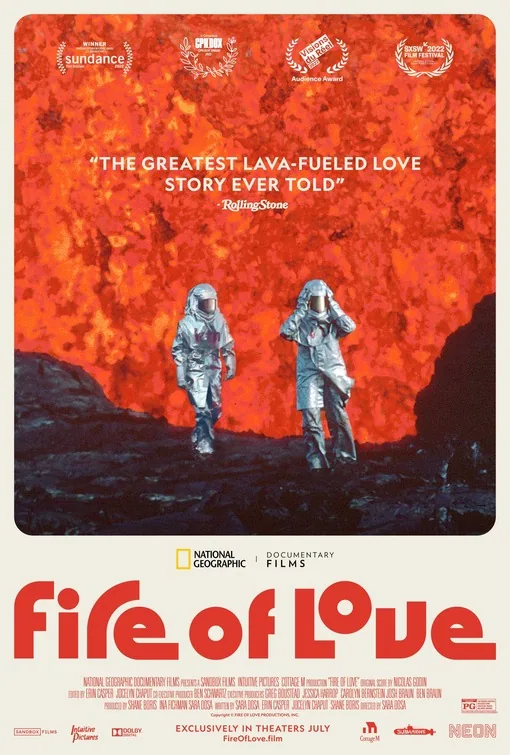
Footage of the Kraffts’ fieldwork and relationship traces a shared pursuit of volcanic knowledge toward their final expedition.
Why this matches +
Access to vulnerable people or a natural environment complicates easy assumptions about institutional care and the limits of human control.
An adjacent discovery: a related idea with a different viewing experience.
Genres: Documentary
Shared film traits
Based on recorded story, mood and style. Your preferences can change the order.
What changes The Cove: mission and restricted access, covert preparation and surveillance and footage revealed to public audience. Fire of Love: reflective, adventure-like, escalating and elegiac.
French volcanologists Katia and Maurice Krafft devoted their lives to documenting active volcanoes, travelling together with cameras and scientific equipment toward eruptions few people could safely approach. Sara Dosa’s documentary builds their story from extraordinary archival footage, recordings and interviews, pairing their intimate partnership with the scale and danger of their work. Their pursuit of images and knowledge ultimately leads them to Mount Unzen in 1991.
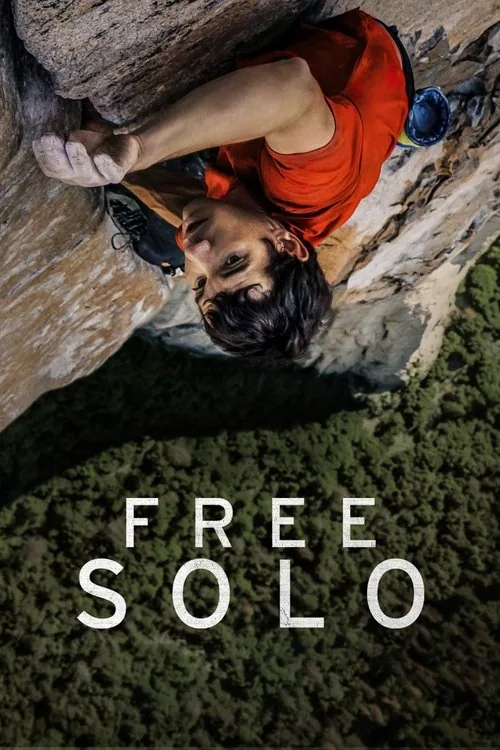
The documentary builds toward Honnold’s free solo ascent by showing the preparation and route decisions that precede it.
Why this matches +
Access to vulnerable people or a natural environment complicates easy assumptions about institutional care and the limits of human control.
An adjacent discovery: a related idea with a different viewing experience.
Genres: Documentary / Sport
Shared film traits
Based on recorded story, mood and style. Your preferences can change the order.
What changes The Cove: mission and restricted access, covert preparation and surveillance and footage revealed to public audience. Free Solo: anticipatory, process-driven and climactic ascent.
Free Solo follows climber Alex Honnold as he prepares to climb El Capitan in Yosemite without ropes or protective equipment. The documentary tracks route practice, physical training, conversations with his partner and fellow climbers, and the filmmaking team’s own response to recording a potentially fatal attempt. The ascent becomes both a technical challenge and a test of how ambition affects relationships and risk. Elizabeth Chai Vasarhelyi and Jimmy Chin combine climbing footage with an intimate portrait of preparation and concentration.
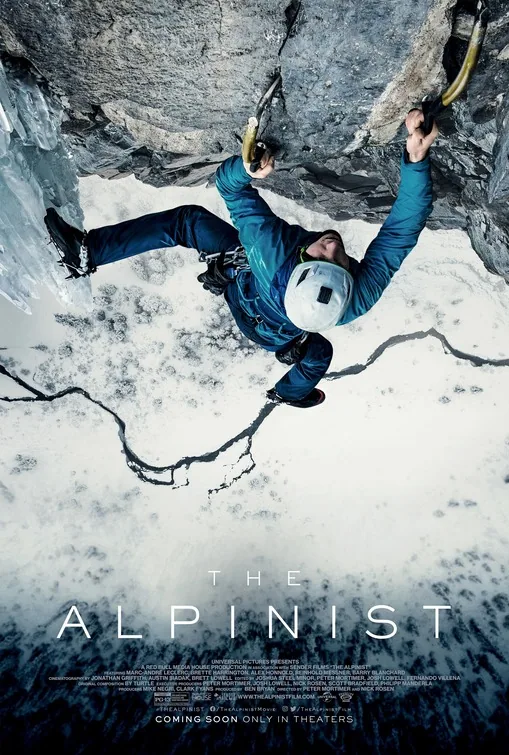
The documentary follows Leclerc’s solo climbing while trying to understand a motivation that does not depend on fame or records.
Why this matches +
Access to vulnerable people or a natural environment complicates easy assumptions about institutional care and the limits of human control.
An adjacent discovery: a related idea with a different viewing experience.
Genres: Documentary
Shared film traits
Based on recorded story, mood and style. Your preferences can change the order.
What changes The Cove: mission and restricted access, covert preparation and surveillance and footage revealed to public audience. The Alpinist: a meeting with leclerc leads the crew into different climbing environments and where each ascent tests both his ability and the filmmakers’ access to his process..
The filmmakers follow Canadian climber Marc-André Leclerc as he pursues difficult solo ascents on rock, ice and remote alpine routes. Leclerc’s low-profile approach resists the attention the camera brings, leaving the crew to document a climber who often prefers to move without an audience. The resulting portrait combines the practical danger of mountaineering with questions about solitude, risk and why he climbs.
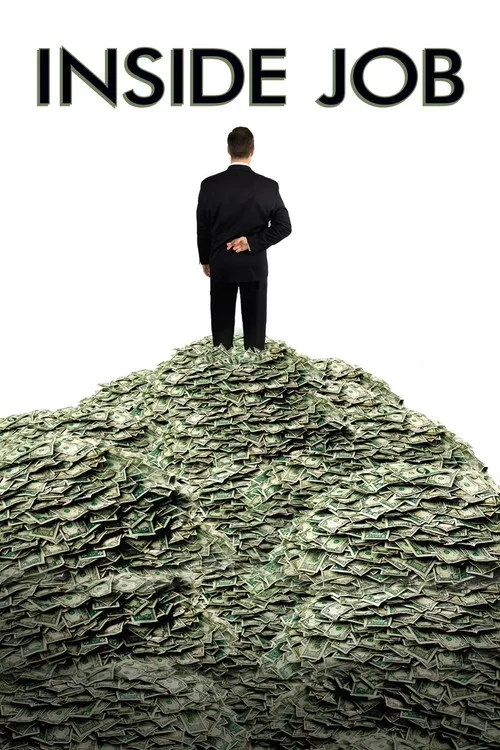
The documentary traces how regulatory choices and financial practices helped generate the crisis, then examines who benefited and who faced consequences.
Why this matches +
Access to vulnerable people or a natural environment complicates easy assumptions about institutional care and the limits of human control.
An adjacent discovery: a related idea with a different viewing experience.
Genres: Documentary / History
Shared film traits
Based on recorded story, mood and style. Your preferences can change the order.
Political resistance · Investigation
What changes The Cove: mission and restricted access, covert preparation and surveillance and footage revealed to public audience. Inside Job: structured by argument, information-dense and cumulative.
Charles Ferguson’s documentary investigates the 2008 global financial crisis and the decisions that helped create it. Organized in five parts, it moves from deregulation and financial innovation through the housing bubble, institutional collapse, bailouts, and questions of accountability. Interviews with officials, executives, economists, and journalists are combined with narration and data to explain complex systems in accessible terms. Rather than focusing on one household or firm, the film argues that conflicts of interest and policy choices across an interconnected industry had consequences for workers, borrowers, and national economies.
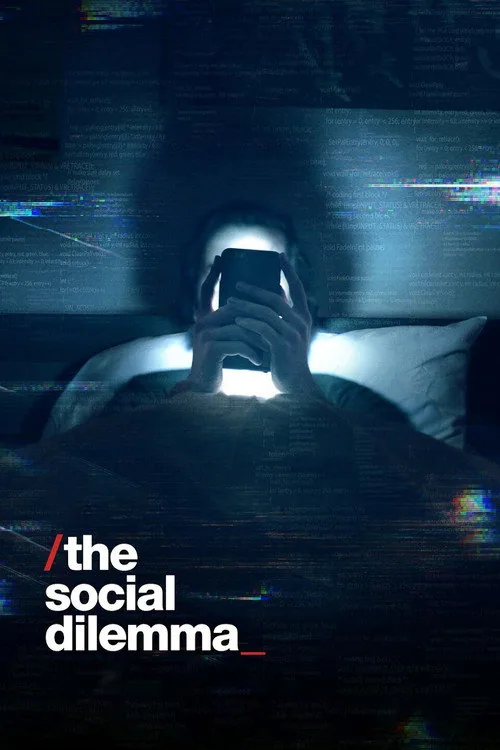
Former technology insiders describe how platforms capture attention and predict behavior; a fictional family illustrates possible effects on users.
Why this matches +
Access to vulnerable people or a natural environment complicates easy assumptions about institutional care and the limits of human control.
An adjacent discovery: a related idea with a different viewing experience.
Genres: Documentary / Drama
Shared film traits
Based on recorded story, mood and style. Your preferences can change the order.
What changes The Cove: mission and restricted access, covert preparation and surveillance and footage revealed to public audience. The Social Dilemma: alternating, expository and argument-driven.
This documentary combines interviews with former technology employees and researchers with a fictional story about a family shaped by social media. Interviewees discuss persuasive design, behavioral data, recommendation systems, advertising, misinformation, and platform incentives. The dramatized family illustrates how a teenager’s engagement can affect attention, mood, and political beliefs. Jeff Orlowski’s film makes a case about technology’s social costs, using testimony and scripted scenes to present its argument.
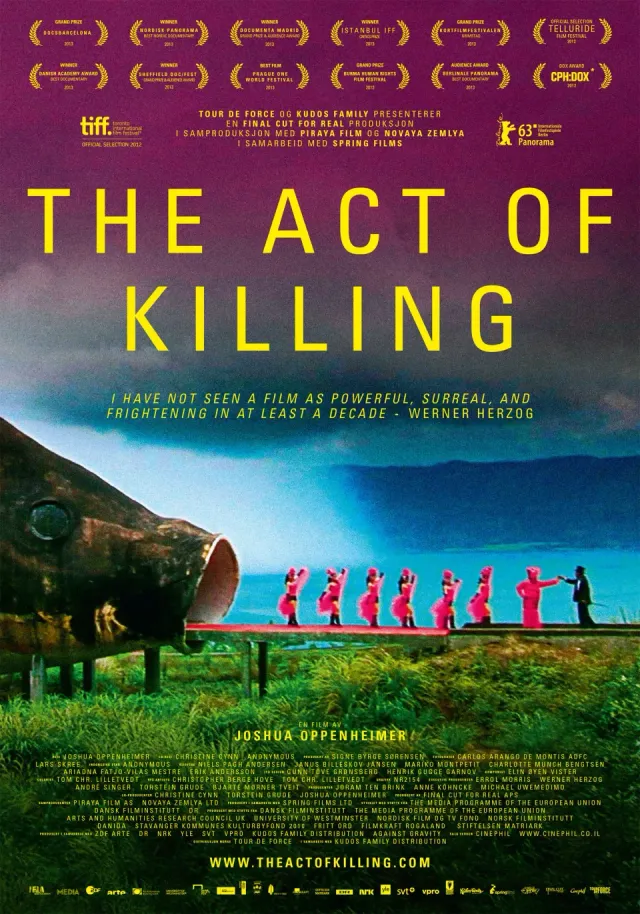
Former perpetrators devise cinematic scenes about their actions, and the filmmaking process brings their accounts into view alongside the human consequences they avoid.
Why this matches +
Access to vulnerable people or a natural environment complicates easy assumptions about institutional care and the limits of human control.
An adjacent discovery: a related idea with a different viewing experience.
Genres: Documentary / History
Shared film traits
Based on recorded story, mood and style. Your preferences can change the order.
Political resistance
What changes The Cove: mission and restricted access, covert preparation and surveillance and footage revealed to public audience. The Act of Killing: patient, episodic and cumulatively revealing.
Documentarians give former Indonesian death-squad leader Anwar Congo and other men involved in the 1965–66 killings the freedom to stage scenes from their past in styles drawn from the movies they admire. The participants move between reenactment, interviews and everyday life, performing versions of their own histories while discussing how they understand them. Their choices expose the distance between public self-image and the violence remembered by victims and survivors.
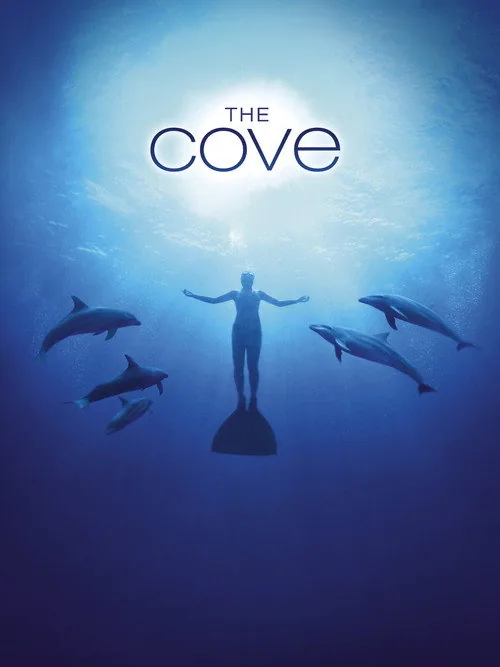
Former dolphin trainer Ric O'Barry joins a team of activists and filmmakers to document the dolphin drive hunt in Taiji, Japan. Because local authorities restrict access to the cove where the animals are captured, the team secretly installs cameras and recording equipment to film what happens out of public view. Their investigation connects the hunt to dolphin performance industries, international policy, and concerns about contaminated meat. The documentary turns covert footage into a campaign for public awareness while examining the risks and ethics of exposing hidden practices.
What drives the story
O'Barry and the activist team work around local surveillance and restricted access to capture evidence of the dolphin hunt.
The people at its centre
A former trainer's personal history motivates a campaign in which activists, filmmakers, and local officials occupy sharply opposed roles.
What it feels like
A tense advocacy documentary builds toward the moment hidden-camera footage makes an unseen practice visible to viewers.
Worth knowing
Its covert filming mission and focus on dolphin captures distinguish it from a broader ocean-conservation survey.
animal welfare and spectaclecovert activismpublic knowledge and policy
Mood
urgent · investigative · disturbing
Pacing
mission and restricted access · covert preparation and surveillance · footage revealed to public audience
Visual style
hidden-camera documentation · underwater and coastal imagery · contrast between tourist spectacle and concealed hunt
Storytelling
activists secretly film a restricted cove · former trainer leads exposure campaign · dolphin trade linked to entertainment and contamination