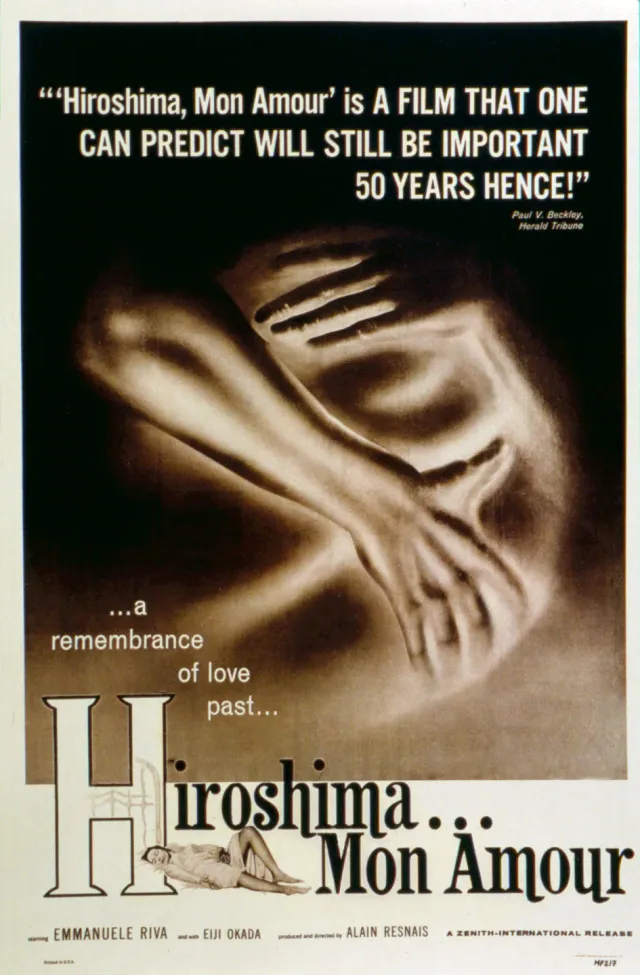
An intimate encounter prompts the actress to recount a suppressed wartime love, while her lover challenges the certainty with which she can claim to remember Hiroshima. The architect can challenge the actress’s certainty without becoming a spokesperson for everyone in Hiroshima.
Why this matches +
These offer a related experience with a meaningful difference in story, tone, or presentation.
An adjacent discovery: a related idea with a different viewing experience.
Genres: Drama / Romance
Shared film traits
Based on recorded story, mood and style. Your preferences can change the order.
Memory and identity
What changes Hiroshima mon amour explores how intimate relationships bring traumatic historical memory into the present, using a romance and fragmented recollection rather than a family investigation.
A French actress and a Japanese architect begin an affair in postwar Hiroshima, where her film work about peace does not grant her full access to the city’s history. Their conversations open onto her earlier love affair in occupied Nevers and the punishment that followed its loss. Repetition, fragmented images and documentary traces let one memory interrupt another without making the woman’s private suffering equivalent to the atomic bombing. The architect can ask her to remember, but cannot turn memory into shared ownership. The film’s formal argument lies in that unfinished encounter between personal recollection, public catastrophe and the limits of witnessing.
The legal case turns a private family loss into a public question about ownership and historical responsibility.
Why this matches +
These offer a related experience with a meaningful difference in story, tone, or presentation.
An adjacent discovery: a related idea with a different viewing experience.
Genres: Biography / Drama
Shared film traits
Based on recorded story, mood and style. Your preferences can change the order.
Memory and identity · Investigation
What changes The Woman in Gold follows a Jewish woman's effort to reclaim family history and property taken under Nazi persecution, with a legal restitution case rather than a novice's search in Poland.
An older Austrian-American woman takes the Austrian government to court over a Gustav Klimt portrait stolen from her family during the Nazi era. With a young lawyer, she pursues restitution while revisiting the history of displacement and loss that shaped her life. The legal drama links a public property dispute to memory, cultural inheritance and the difficulty of asking institutions to recognize past injustice.
Maria’s efforts to survive become increasingly entangled with the economic recovery around her, so success carries both agency and moral cost.
Why this matches +
These offer a related experience with a meaningful difference in story, tone, or presentation.
An adjacent discovery: a related idea with a different viewing experience.
Genres: Drama / Art
Shared film traits
Based on recorded story, mood and style. Your preferences can change the order.
What changes The Marriage of Maria Braun follows a woman's efforts to rebuild life in postwar Germany, examining survival and the legacy of war through a different national and personal perspective.
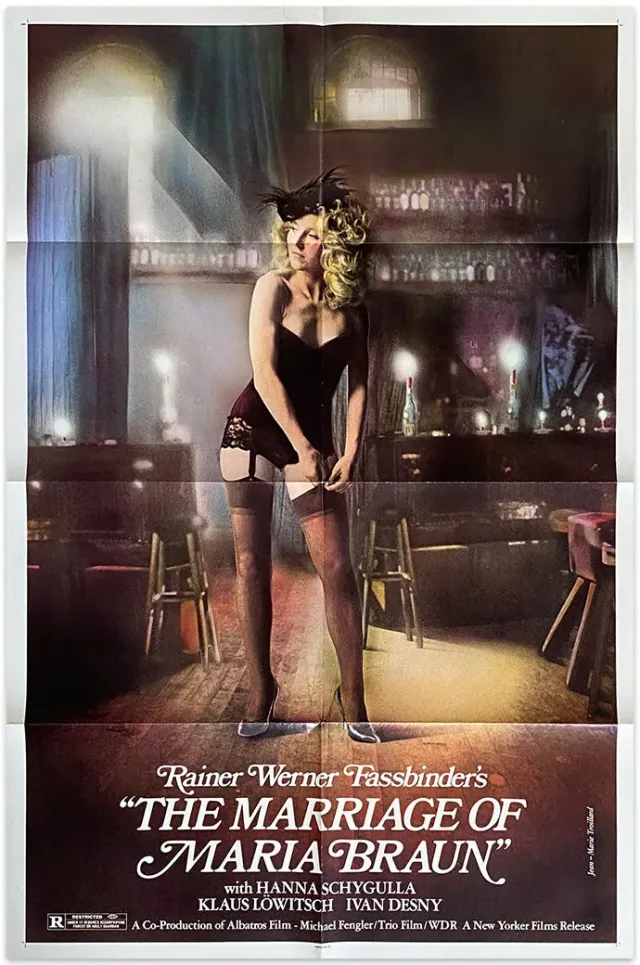
Maria Berger marries Hermann Braun during a wartime air raid, then loses him to the front and the uncertainty of Germany’s defeat. Believing him dead, she finds work in the unstable postwar economy and uses her intelligence and charm to secure a future for herself and her family. A relationship with American soldier Bill brings affection as well as practical support, while Maria continues to hold onto the idea of Hermann. As she rises from precarious survival into financial success, the film links her private compromises to a country rebuilding itself and postponing its reckoning with the past.
An accidental childhood displacement is followed years later by a map-based search whose evidence comes from incomplete spatial and sensory memory.
Why this matches +
These offer a related experience with a meaningful difference in story, tone, or presentation.
An adjacent discovery: a related idea with a different viewing experience.
Genres: Drama / Biography
Shared film traits
Based on recorded story, mood and style. Your preferences can change the order.
Memory and identity · Investigation
What changes Lion follows a person tracing lost family connections to understand his origins, addressing childhood separation across continents rather than concealed Jewish identity after the Holocaust.
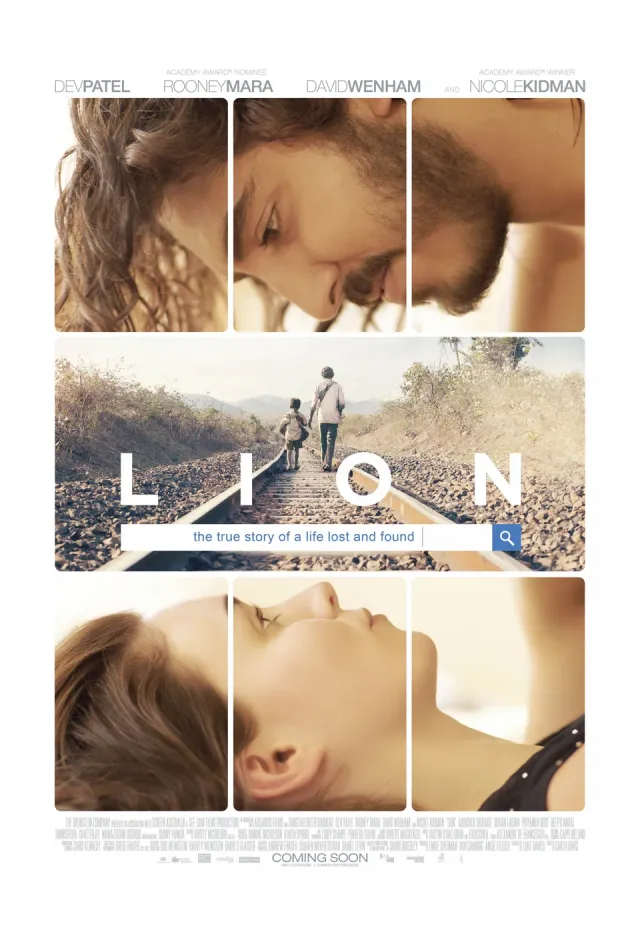
A small boy becomes separated from his brother and travels so far by train that the words he knows cannot guide him home. After danger and institutional care, adoption gives him a secure life in Australia, but remembered sensations later reopen the absence of the family who never learned where he went. Digital maps provide a means of searching without making memory precise. The biographical drama holds two forms of belonging together, making reunion an expansion of attachment rather than proof that one family was only a substitute.
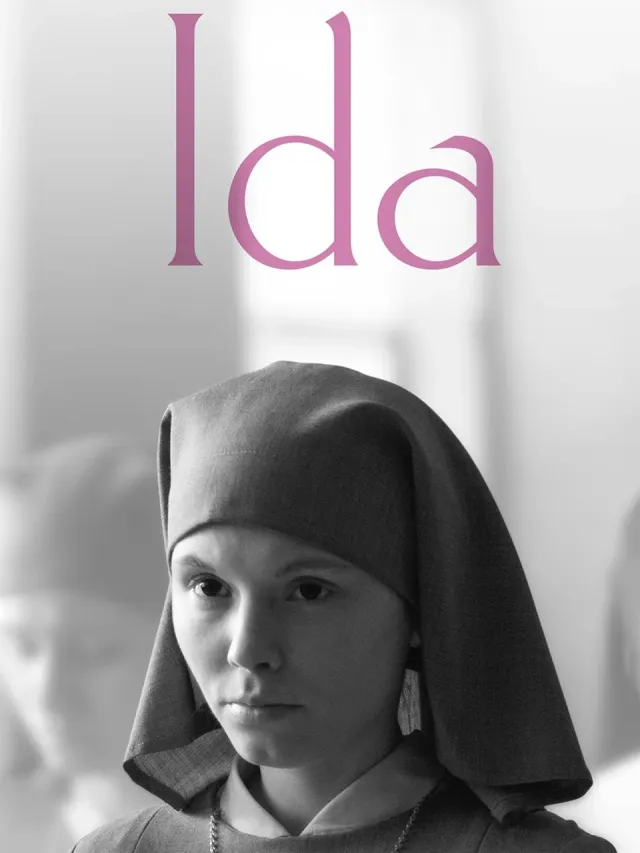
Before taking religious vows, novice Anna visits her only surviving relative, Wanda, and learns that she was born Jewish and given a different name. Their journey to locate the remains of family members killed during the occupation leads to difficult questions about local violence, survival and what can be recovered from silence. Wanda’s political past and grief shape one response; Ida’s quiet discipline and uncertainty shape another. Their discoveries do not produce a simple replacement identity or a single verdict on Poland. The film’s black-and-white, nearly square compositions make its sparse spaces and withheld information part of the historical tension, not merely an elegant style.
What drives the story
A pre-vow family visit becomes a search for concealed wartime deaths, unsettling two women’s different ways of living with history and choosing a future. Wanda’s investigation and Ida’s vocation meet at family graves but lead to different future choices.
The people at its centre
Ida’s reserve meets Wanda’s political experience and destructive grief; their kinship enables a shared search without making either woman a moral lesson for the other. Discovering Jewish ancestry changes Ida’s knowledge without prescribing a replacement identity.
What it feels like
Black-and-white academy-ratio frames, high empty space and sparse dialogue create a severe rhythm punctuated by revelations that remain emotionally unresolved. The empty upper frame and withheld dialogue make uncertainty part of the film’s historical form.
Worth knowing
Compare with films about ancestry, memory and vocation, while locating its Polish Jewish history specifically and distinguishing personal discovery from a complete account of local culpability. Its Polish setting matters; do not generalize one story into an account of all local conduct.
IdentityHistorical guiltFaith
Mood
Austere · Somber · Reflective
Pacing
Measured
Visual style
Black-and-white academy ratio · High empty framing
Storytelling
Novice discovers ancestry · Concealed family burial · Uncertain vocation