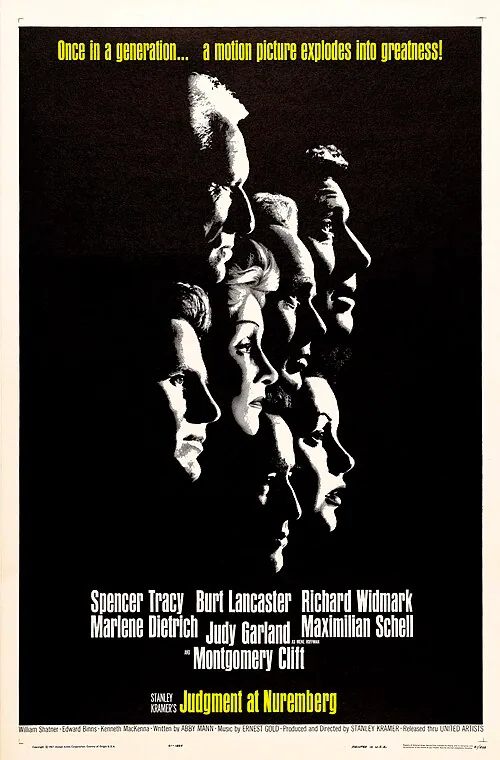
The prosecution asks when legal professionals become responsible for the uses of law they administer. The case is about judges and judicial systems, not only a courtroom debate over whether individual officials were personally cruel.
Why this matches +
These offer a related experience with a meaningful difference in story, tone, or presentation.
An adjacent discovery: a related idea with a different viewing experience.
Genres: Drama / History
Shared film traits
Based on recorded story, mood and style. Your preferences can change the order.
What changes Judgment at Nuremberg examines political persecution and responsibility through multiple perspectives.
An American tribunal tries four German judges for helping make Nazi persecution appear lawful. The defendants describe their work through professional duty, political pressure and the conditions of wartime Germany; testimony from victims forces the court to confront what procedure concealed. Judge Haywood’s conversations beyond the courtroom show a country seeking to resume ordinary life even as Cold War priorities make a severe judgment less convenient. The film draws on the real Judges’ Trial but reshapes the tribunal and participants into dramatic composites. Its characters’ defenses are arguments to examine, not neutral statements of history, and the film’s willingness to consider national context does not erase the personal and institutional responsibility at issue.
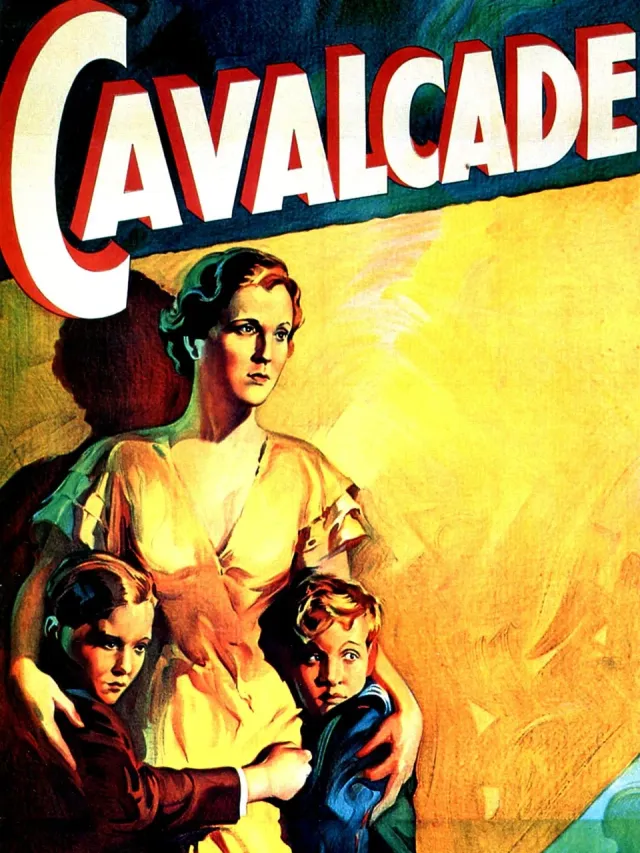
A generational panorama links private loss and marriage to national events, but organizes public history around one well-to-do household and its servants. The pageant turns large events into family memory.
Why this matches +
These offer a related experience with a meaningful difference in story, tone, or presentation.
An adjacent discovery: a related idea with a different viewing experience.
Genres: Drama
Shared film traits
Based on recorded story, mood and style. Your preferences can change the order.
What changes Cavalcade interweaves a family's personal history with major events across several decades.
Cavalcade follows the affluent Marryot household and its servants from New Year's Eve 1899 through three decades of public change. The Boer War, the Titanic, World War I, deaths and new generations enter the family pageant, while the Bridges household supplies a parallel view of domestic labor and class aspiration. Cross-class affection does not dissolve that hierarchy, and imperial and national ceremonies shape what history means to the film's central family. Its sweeping sentiment is a perspective on the past, not a neutral survey of it.
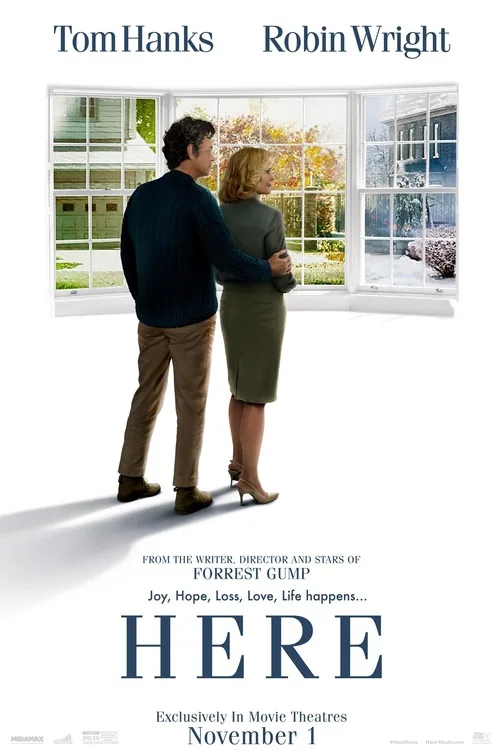
The fixed viewpoint makes viewers notice how the same space changes across generations.
Why this matches +
These offer a related experience with a meaningful difference in story, tone, or presentation.
An adjacent discovery: a related idea with a different viewing experience.
Genres: Drama
Shared film traits
Based on recorded story, mood and style. Your preferences can change the order.
What changes Here connects lives across generations through a shared place and changing historical circumstances.
The film remains anchored to one location while moving across different periods and generations of people who live in or pass through it. Domestic routines, relationships, and historical change become visible through the space itself, making the room a witness to lives it cannot control. The drama adapts a graphic-novel structure into a meditation on memory, time, family, and the meanings that accumulate around an ordinary place.
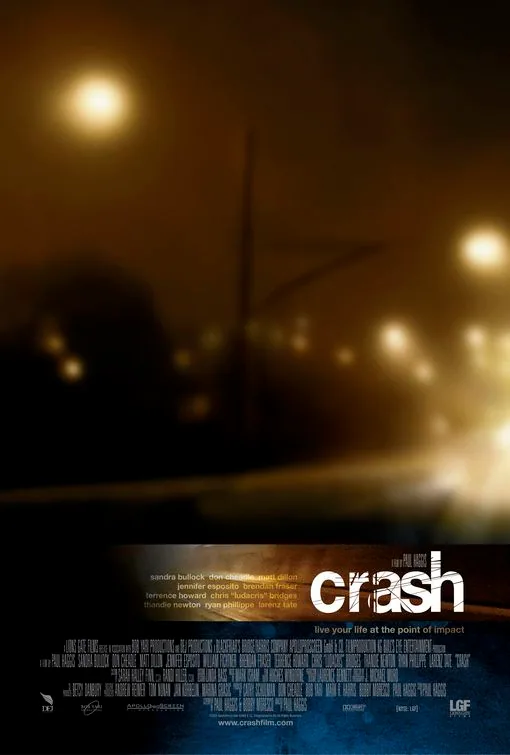
Linked encounters and delayed revelations force characters to confront racial assumptions, while coincidence makes a city feel unusually compressed and morally interconnected.
Why this matches +
These offer a related experience with a meaningful difference in story, tone, or presentation.
An adjacent discovery: a related idea with a different viewing experience.
Genres: Drama
Shared film traits
Based on recorded story, mood and style. Your preferences can change the order.
What changes Crash links separate stories to examine prejudice and its consequences across a community.
A series of interwoven encounters in Los Angeles brings police, carjackers, a district attorney's household, a Persian shop owner and other residents into contact across one volatile period. Characters move between vulnerability and the exercise of power, but those positions are not interchangeable: a moment of kindness cannot cancel sexual abuse, racial harassment or the authority behind it. The film's coincidences and abrupt moral reversals organize a deliberately emphatic melodrama, not a sociological survey or a reliable account of how racism resolves itself. A snowfall and a car accident provide the film's first links among otherwise separate lives.
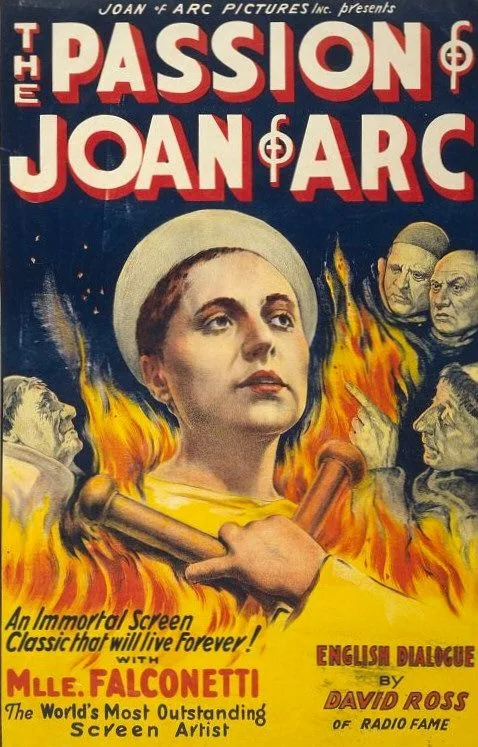
The court uses questioning, deception and threat to make Joan renounce her mission; her recantation and withdrawal shape the movement toward execution.
Why this matches +
These offer a related experience with a meaningful difference in story, tone, or presentation.
An adjacent discovery: a related idea with a different viewing experience.
Genres: Drama / Silent
Shared film traits
Based on recorded story, mood and style. Your preferences can change the order.
What changes The Passion of Joan of Arc focuses on a religious figure persecuted through a political trial.
Captured near Compiègne, Joan of Arc is brought before a clerical court in Rouen, where judges loyal to the English seek to discredit her claim that God called her to drive the occupiers from France. Their questions move from doctrine to her visions, clothing and authority, turning the trial into a battle over who has the right to define her. Deception and threats of torture pressure Joan to sign a confession, but she later withdraws it and faces execution. Carl Theodor Dreyer compresses the historical proceedings into an intensely immediate ordeal, focusing on Joan's face and the reactions of the men judging her rather than recreating her military campaign. The film's emotional force comes from the conflict between institutional power and private conviction.
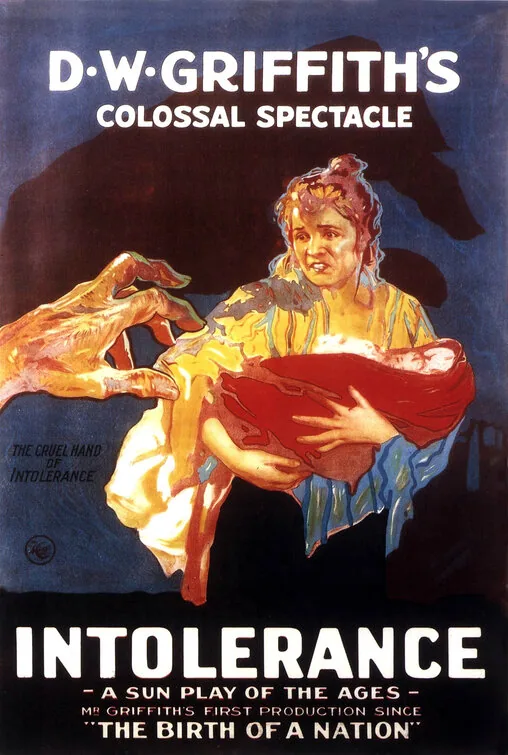
D. W. Griffith intercuts four stories of threatened love and political power: a modern American family endangered by moral reform, Babylon under siege, the persecution of Jesus and the massacre of French Protestants. The strands do not share characters or a single chain of cause and effect; parallel editing makes them into a historical argument about recurring intolerance. The modern rescue plot and the ancient spectacles reach different kinds of closure, so the montage’s emotional unity should not be mistaken for identical outcomes. Its technical ambition is inseparable from the 1915 controversy around Griffith’s racist The Birth of a Nation: the later film’s universal language neither names all of that earlier harm nor amounts to a retraction.
What drives the story
Four independent plots move toward crises at different speeds; the modern family’s threatened execution becomes the suspenseful anchor, while Babylon’s fall and the religious persecutions widen the historical scale without merging their causes.
The people at its centre
The film grants intimacy to lovers, parents and persecuted believers facing institutions that claim moral authority. These parallel vulnerabilities are shaped by Griffith’s choices about whose suffering is visible and whose political position remains outside the frame.
What it feels like
Tinted images, enormous sets, tableaux and increasingly rapid crosscutting turn a very long silent epic into an argument made through editing. The recurring cradle image links eras as a visual refrain, not as a literal narrator or neutral historical proof.
Worth knowing
The universal plea against intolerance can be discussed alongside Griffith’s racial politics and the backlash to Birth of a Nation. Formal influence is not absolution: treat the film as both a landmark in montage and a selective, politically situated claim about history.