The group’s growth protects more refugees but makes food, mobility, and defense increasingly difficult.
Why this matches +
Selected for the central appeal: Teenagers become guerrilla fighters after an invasion and struggle to survive an occupying force.
Genres: War / Drama
Shared film traits
Based on recorded story, mood and style. Your preferences can change the order.
War and civilian life · Survival
What changes A small group survives occupation by organizing resistance in the wilderness; a historical Jewish partisan story.
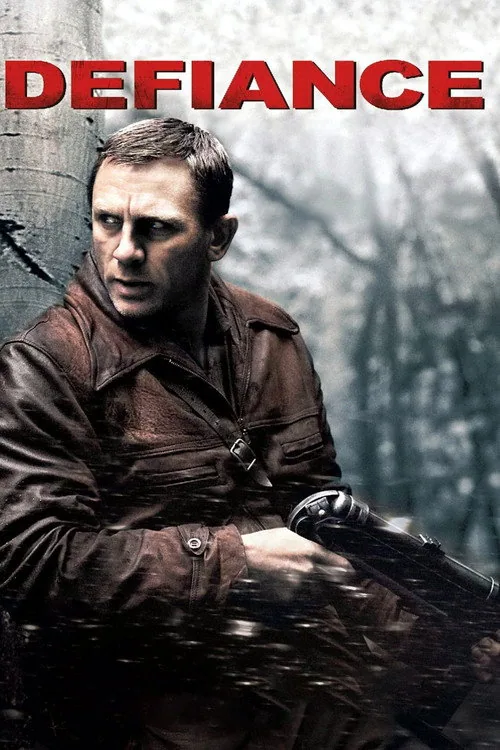
After Nazi forces and local collaborators kill their parents, the Bielski brothers flee into the forests of occupied Belarus and gather Jewish survivors around them. Tuvia prioritizes shelter and preservation of life, while Zus favors more aggressive resistance; the camp’s survival tests their leadership as winter, scarce food, internal conflict, and a German offensive close in. The war drama follows a refuge becoming a community, with armed resistance always tied to the vulnerable people it is meant to protect.
A Marine platoon pushes through occupied neighborhoods to retrieve civilians while trying to identify how the invaders can be stopped.
Why this matches +
These offer a related experience with a meaningful difference in story, tone, or presentation.
An adjacent discovery: a related idea with a different viewing experience.
Genres: Action / Science Fiction
Shared film traits
Based on recorded story, mood and style. Your preferences can change the order.
War and civilian life · Survival
What changes A sudden invasion turns an American city into a battlefield; follows professional Marines and extraterrestrial enemies.
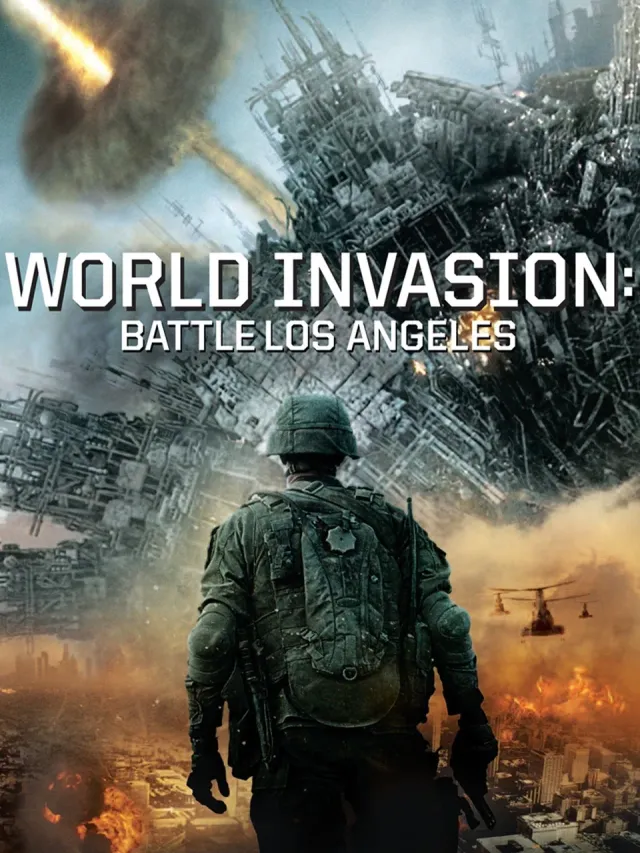
A veteran Marine staff sergeant leads a mixed group of soldiers and civilians through a city under alien attack. The mission begins as an evacuation and narrows into an attempt to reach trapped survivors while an apparently unstoppable enemy controls the streets. The film treats invasion as a ground-level military emergency, focusing on unit cohesion, civilian protection and exhausted people making decisions under fire.
A boy seeking to join the resistance is pulled into civilian extermination and the devastation of occupied Belarus, where each encounter removes another layer of childhood expectation. Flyora's changing face registers damage more than a conventional victory arc.
Why this matches +
These offer a related experience with a meaningful difference in story, tone, or presentation.
An adjacent discovery: a related idea with a different viewing experience.
Genres: War / Drama
Shared film traits
Based on recorded story, mood and style. Your preferences can change the order.
War and civilian life · Survival
What changes A young person experiences the devastating consequences of occupation and violence; much bleaker and historically grounded.
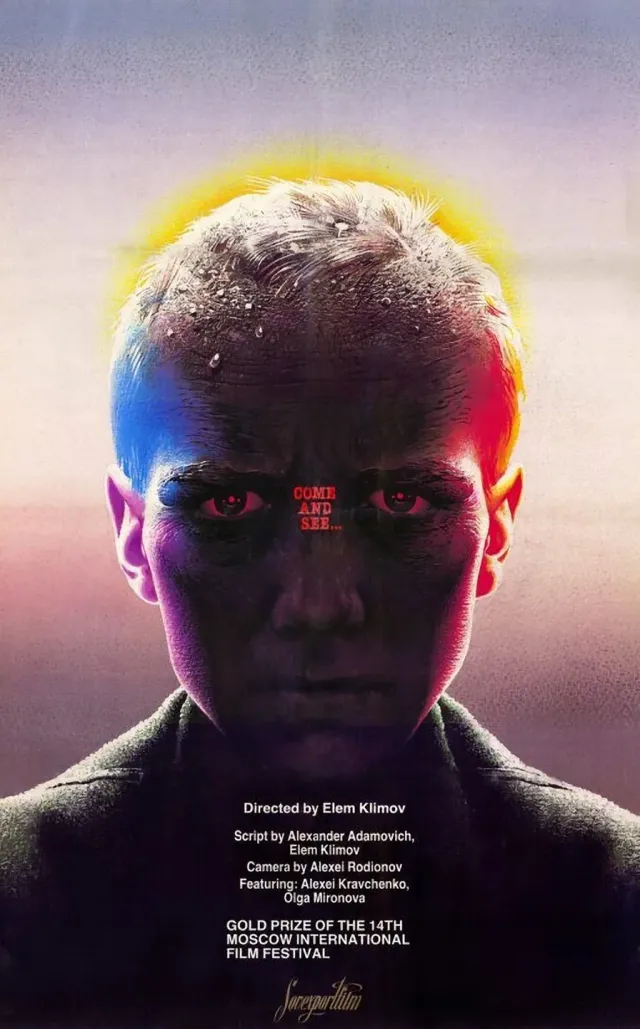
Teenager Flyora joins partisans in Nazi-occupied Belarus, expecting resistance to be a path into action. Instead, the film follows a child through the destruction of villages and the murder of civilians, making atrocity a lived sensory experience rather than an abstract lesson about war. His face, sound and shifting perception carry the cost of witnessing; the historical specificity of occupation and extermination should not be flattened into a claim that every conflict is equivalent. This is an exceptionally intense film, not a conventional battlefield adventure. The film's closing newsreel montage runs backward, refusing a comforting return to innocence.
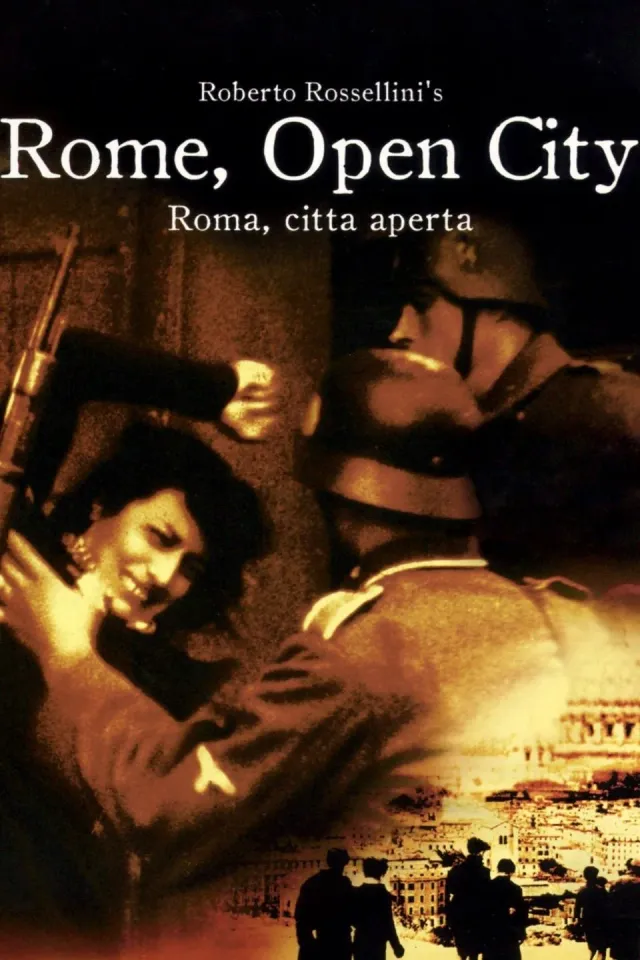
The effort to move messages and people through occupied Rome becomes more dangerous as the resistance network is exposed to raids and betrayal.
Why this matches +
These offer a related experience with a meaningful difference in story, tone, or presentation.
An adjacent discovery: a related idea with a different viewing experience.
Genres: Drama / War
Shared film traits
Based on recorded story, mood and style. Your preferences can change the order.
Political resistance · War and civilian life
What changes Civilians organize resistance under occupation while facing the costs of betrayal; an Italian wartime drama.
During the German occupation of Rome, resistance leader Giorgio Manfredi seeks refuge with fellow fighter Francesco and help from Francesco’s pregnant fiancée Pina. Catholic priest Don Pietro agrees to carry money and messages to the partisans. A Nazi raid captures Francesco, and Pina is shot while trying to reach him. The resistance group briefly reunites, but Manfredi’s former lover Marina betrays him and Francesco after being manipulated by a Gestapo agent. Manfredi is tortured and killed, and Don Pietro is executed the next morning as the altar boys watch from nearby.
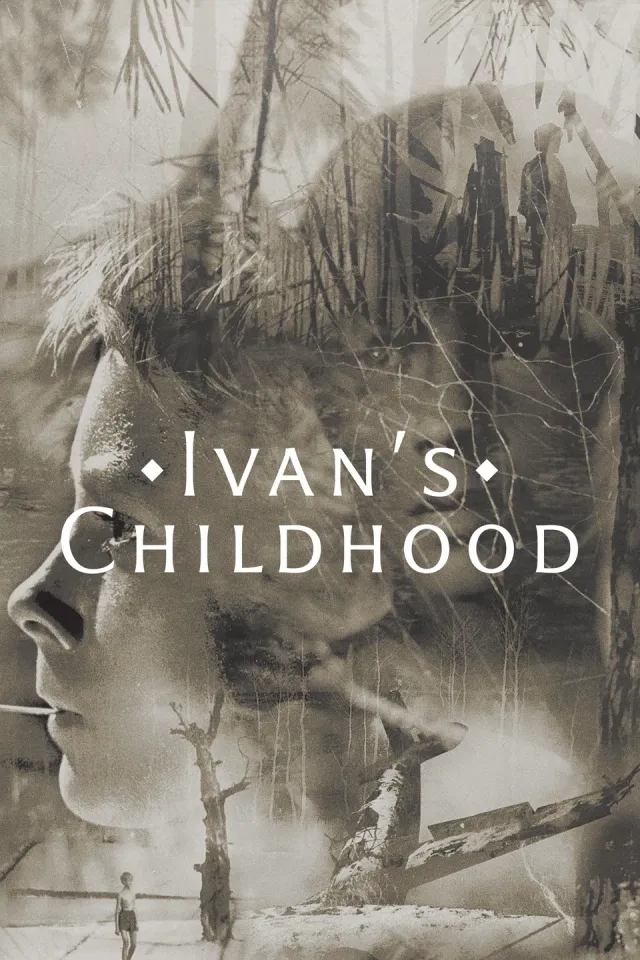
A traumatized child insists on continuing reconnaissance while adult attempts to protect him collide with his determination to remain inside the conflict that destroyed his family.
Why this matches +
These offer a related experience with a meaningful difference in story, tone, or presentation.
An adjacent discovery: a related idea with a different viewing experience.
Genres: War / Drama
Shared film traits
Based on recorded story, mood and style. Your preferences can change the order.
War and civilian life
What changes A child is caught up in a war against occupying forces; contemplative wartime drama rather than group action.
A boy whose family has been destroyed by war crosses dangerous territory to report intelligence to Soviet soldiers. Officers attempt to redirect him toward safety, but revenge and the disappearance of ordinary childhood make another life difficult for him to imagine. Dreams interrupt the military present with tactile images of affection and freedom. The film places a child's usefulness to war beside what that usefulness cannot restore, refusing to let competence in danger stand as proof that his damaged world has become acceptable.
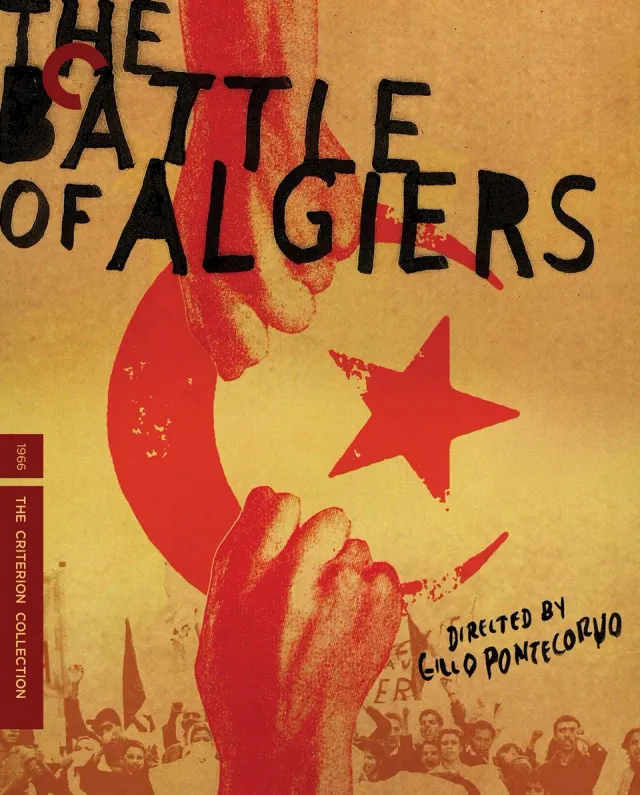
The story moves from cell-level resistance to counterinsurgency, showing how tactical victories fail to settle the political question of Algerian independence.
Why this matches +
These offer a related experience with a meaningful difference in story, tone, or presentation.
An adjacent discovery: a related idea with a different viewing experience.
Genres: Drama / Historical
Shared film traits
Based on recorded story, mood and style. Your preferences can change the order.
Political resistance · War and civilian life
What changes An organized resistance confronts military occupation; politically analytical urban warfare rather than teenage survival.
Beginning with French forces closing in on Ali la Pointe, the film flashes back to the growth of the National Liberation Front in the Casbah between 1954 and 1957. It follows urban resistance cells and the French paratroopers sent to dismantle them, showing both insurgent attacks and the military campaign of arrests and torture. The struggle escalates through bombings, reprisals and the destruction of FLN leadership, but nationalist demonstrations continue after the immediate battle is lost. The film frames the city as a contested political space and connects tactical victories to a wider movement for independence.
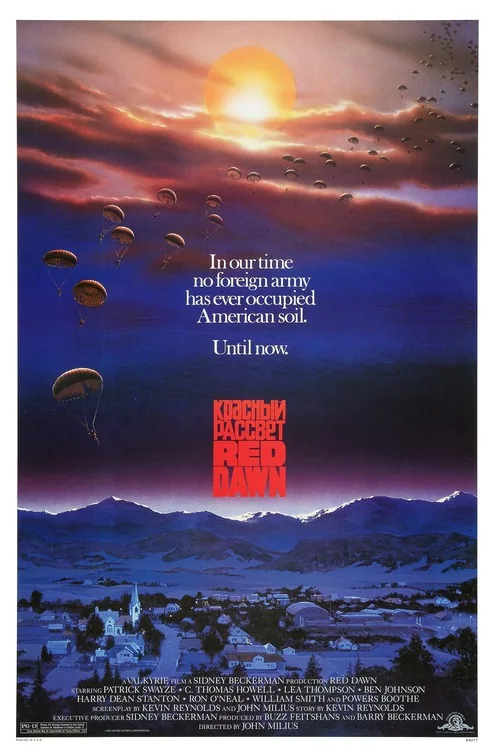
A surprise foreign invasion turns a Colorado high school into a battlefield, forcing a group of teenagers to escape into nearby mountains. Calling themselves the Wolverines, they form a resistance cell and struggle to survive as occupation forces pursue them. Their improvised campaign tests the bonds between friends and siblings, while the film follows how prolonged conflict changes youthful defiance into a heavy burden.
What drives the story
Teenagers escape an invasion and organize a guerrilla resistance against occupying forces in their hometown.
The people at its centre
The young fighters rely on shared loyalty, but leadership and fear expose different limits within their group.
What it feels like
Action set pieces give way to a somber view of endurance, sacrifice, and the personal cost of resistance.
Worth knowing
Its speculative invasion story is a partisan survival drama rather than a historically grounded account of war.