Explore films connected to The Ballad of Narayama through Aging and mortality, Family duty, Rural scarcity. Choose the qualities you want to carry into your next watch.
What should feel similar?
Find your next favourite
9 films · Closest overall matches
Hide films you’ve seen or don’t want. Saved on this device.
No matches for this combination yet.
Try another option or reset your choices to see more films.
Based on recorded story, mood and style. Your preferences can change the order.
Survival
What changes The Ballad of Narayama: deliberate, episodic, observational and seasonal rhythms. Dersu Uzala: measured.
A Russian surveying officer traveling through the Far East relies on Dersu, a hunter identified as Gold/Nanai in Arsenyev's account, whose knowledge of weather, tracks and reciprocal care repeatedly keeps the expedition alive. Their friendship continues across later journeys, but age and failing sight threaten the guide's ability to inhabit the forest on his own terms. An invitation into domestic comfort offers protection without necessarily supplying a livable replacement for the world in which his skills and habits make sense. Kurosawa’s friendship story mourns a specific way of living as surveying, settlement and age alter Dersu’s choices.
Based on recorded story, mood and style. Your preferences can change the order.
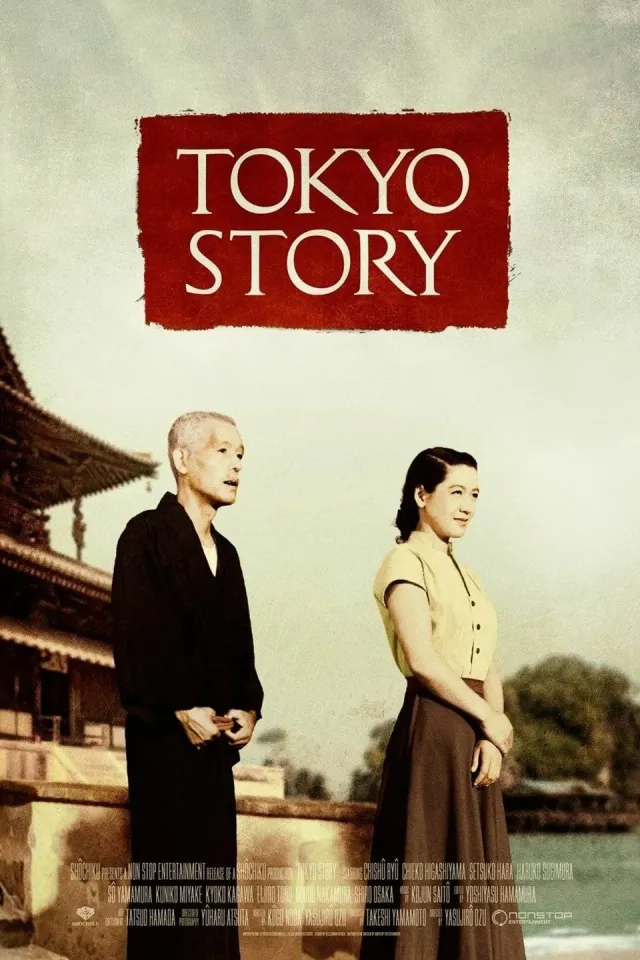
What changes The Ballad of Narayama: deliberate, episodic, observational and seasonal rhythms. Tokyo Story: slow and everyday episodes.
An aging couple, Shukichi and Tomi Hirayama, travel from their coastal town to Tokyo to visit their adult children and grandchildren. Their son and daughter are busy with work and family, and arrange a brief trip to a seaside resort rather than spending much time with them. Noriko, the widow of their deceased son, treats the couple with particular kindness despite her own modest life. When Tomi becomes ill, the family’s attentions reveal different forms of affection, duty and regret. Ozu follows these changes through small domestic gestures rather than dramatic confrontations. The visit’s short duration turns small family accommodations into signs of affection, impatience and regret.
Both share themes of family duty, plus a contemplative atmosphere.
Why this matches +
Genres: Drama
Shared film traits
Based on recorded story, mood and style. Your preferences can change the order.
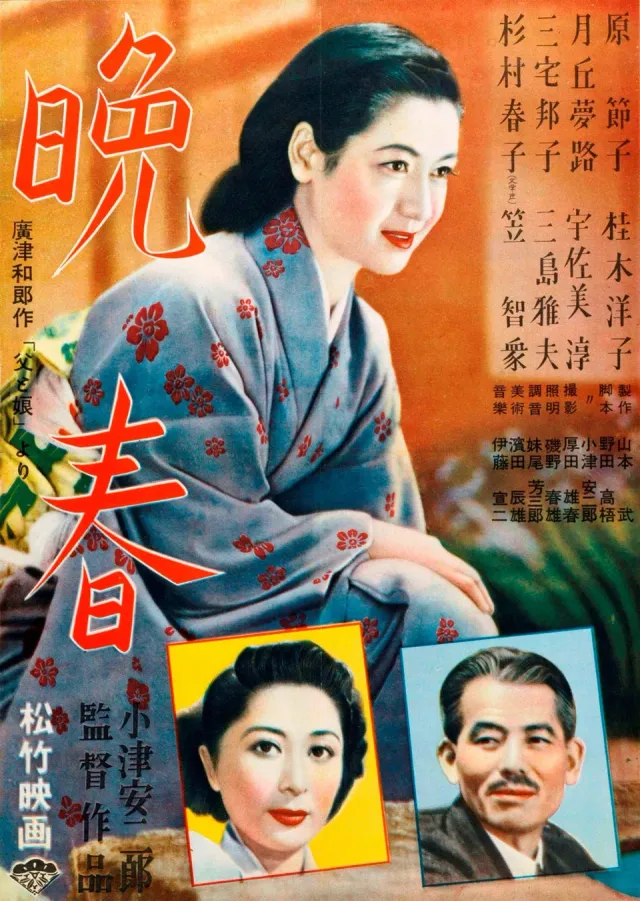
What changes The Ballad of Narayama: deliberate, episodic, observational and seasonal rhythms. Late Spring: measured and quiet.
Noriko lives with her widowed father, Professor Somiya, and is content with the closeness of their household. Relatives worry that she is delaying marriage and begin arranging a suitable match, while her father fears that his own comfort may limit her future. Their quiet negotiations over duty and affection reveal how a loving family can still struggle to let its members choose separate lives.
Shared characteristics
Mood: Contemplative
Theme: Family duty
Genre: Drama
Poster: Film rights holders; original film promotional poster from the identified source · Image source
Based on recorded story, mood and style. Your preferences can change the order.
Survival
What changes The Ballad of Narayama: deliberate, episodic, observational and seasonal rhythms. Pelle the Conqueror: measured.
In the late nineteenth century, elderly Lasse and his young son Pelle leave Sweden to seek work in Denmark. They find employment on a large farm, where harsh conditions and low status limit their choices even as Pelle begins to form a life beyond his father's reach. Through labor, illness, friendship, and disappointment, their migration becomes a quiet story of survival and a boy's gradual movement toward independence.
Based on recorded story, mood and style. Your preferences can change the order.
Family and care
What changes The Ballad of Narayama: deliberate, episodic, observational and seasonal rhythms. Yi Yi: interwoven stories follow each family member as separate events reveal overlapping questions about life and perspective.
Over the course of a year in Taipei, the middle-class Jian family faces a wedding, a grandmother’s stroke, business troubles and the strains of ordinary family life. Father NJ reconnects with a former love while negotiating a new business deal; his wife Min-Min leaves for a Buddhist retreat; daughter Ting-Ting navigates adolescent relationships; and young Yang-Yang observes the adults with unusual curiosity. Each family member sees only part of the whole, and the film follows how private choices ripple through the household and its wider community.
Based on recorded story, mood and style. Your preferences can change the order.
Survival
What changes The Ballad of Narayama: deliberate, episodic, observational and seasonal rhythms. Titanic: epic and intense.
A young woman travelling under the expectations of a wealthy family meets an itinerant artist aboard an ocean liner whose divisions reproduce the class order on land. Their growing attachment creates a possible escape from her arranged future just as the ship's collision turns social privilege into an immediate determinant of survival. A later act of recollection connects their brief relationship with the difficulty of deciding which parts of a life can be recovered through objects and public history.
Based on recorded story, mood and style. Your preferences can change the order.
Survival
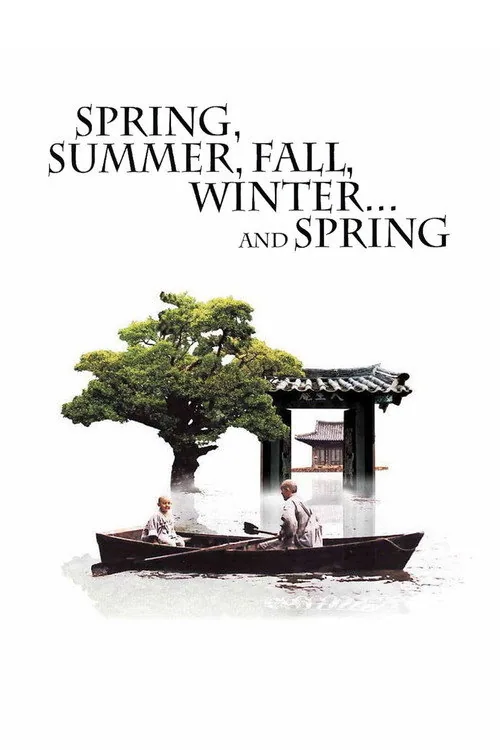
Expect contemplative and serene, with meditative and episodic pacing.
A Buddhist novice grows up with his teacher in a small monastery floating on a mountain lake. The film unfolds across five seasonal chapters, following the apprentice from childhood through desire, guilt, separation, and eventual return. His choices echo lessons taught through observation, discipline, and the rhythms of the natural world. Kim Ki-duk’s Korean drama relies on sparse dialogue, symbolic actions, and recurring images to examine the passage of time and the difficulty of living with consequences.
Based on recorded story, mood and style. Your preferences can change the order.
Family and care · Social hierarchy
What changes The Ballad of Narayama: deliberate, episodic, observational and seasonal rhythms. Nobody Knows: akira’s effort to preserve the hidden household grows more difficult as money and food run out.
A mother moves into a Tokyo apartment with her four children but hides the younger siblings from the landlord, leaving only eldest son Akira visible. When she leaves for months with little money, Akira takes responsibility for rent, food and his brothers’ and sister’s daily needs. The children have been kept out of school and away from public attention, so their shrinking resources make ordinary childhood harder to sustain. The film quietly follows the siblings’ improvised household as its fragile independence gives way to loss.
Based on recorded story, mood and style. Your preferences can change the order.
Family and care · Social hierarchy
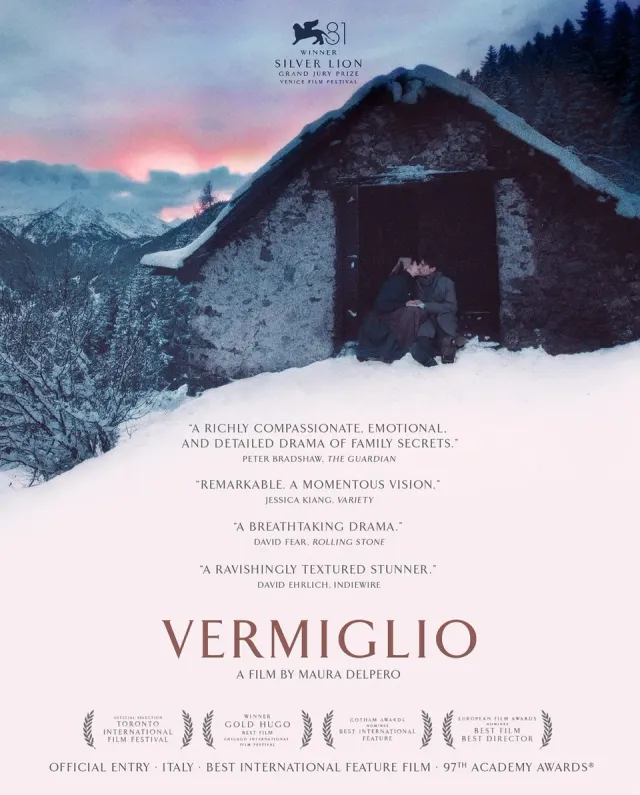
What changes The Ballad of Narayama: deliberate, episodic, observational and seasonal rhythms. Vermiglio: patient, seasonal and ensemble-led.
In the final winter of the Second World War, a Sicilian soldier arrives in the alpine village of Vermiglio and is taken in by a local family. His presence changes the lives of the household's daughters, especially Lucia, and draws private desires into the rhythms of village life. Maura Delpero observes the family across seasons as war, religion, work and social expectations shape what each generation can say aloud and what futures remain possible.
In a nineteenth-century Japanese village where tradition requires people to travel to a remote mountain at seventy, Orin is one year from the expected farewell. She is healthy, but a neighbor’s struggle to take his father away persuades her to face the custom without clinging to life. Over the coming year she puts her household and village affairs in order, confronts a family that hoards food, and attends to the future of her younger son. The village’s harsh material conditions are interwoven with brief observations of animals hunting, watching, calling and giving birth, placing human customs within a wider cycle of life.
What drives the story
Orin’s preparations make an inherited custom personal, while the village’s scarcity gives the ritual a concrete social cost.
The people at its centre
Her care for her household and younger son is set beside the community’s expectation that she accept a prescribed fate.
What it feels like
Patient observation and unsparing village detail are punctuated by images of animals living through their own cycles.
Worth knowing
This is a stark historical drama about age, family and custom, rather than a survival adventure organized around escape.