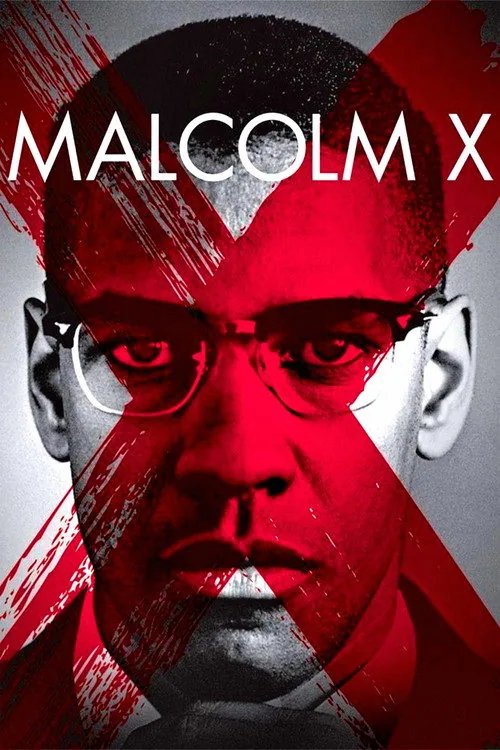
The film follows Malcolm’s life from childhood and incarceration through his activism and assassination.
Why this matches +
These offer a related experience with a meaningful difference in story, tone, or presentation.
An adjacent discovery: a related idea with a different viewing experience.
Genres: Biography / Drama
Shared film traits
Based on recorded story, mood and style. Your preferences can change the order.
Political resistance
What changes A biographical drama traces Black political awakening and activism across changing periods of American racial injustice.
Spike Lee’s biographical drama follows Malcolm Little from a childhood shaped by racial violence and family loss through his criminal years in Boston and Harlem. Imprisonment leads him to the Nation of Islam, where he becomes a prominent minister and adopts the name Malcolm X; later, a break with the organization and a pilgrimage to Mecca reshape his views. The film then follows his independent political work and assassination in 1965. Denzel Washington’s performance anchors a long, chaptered account based largely on The Autobiography of Malcolm X.
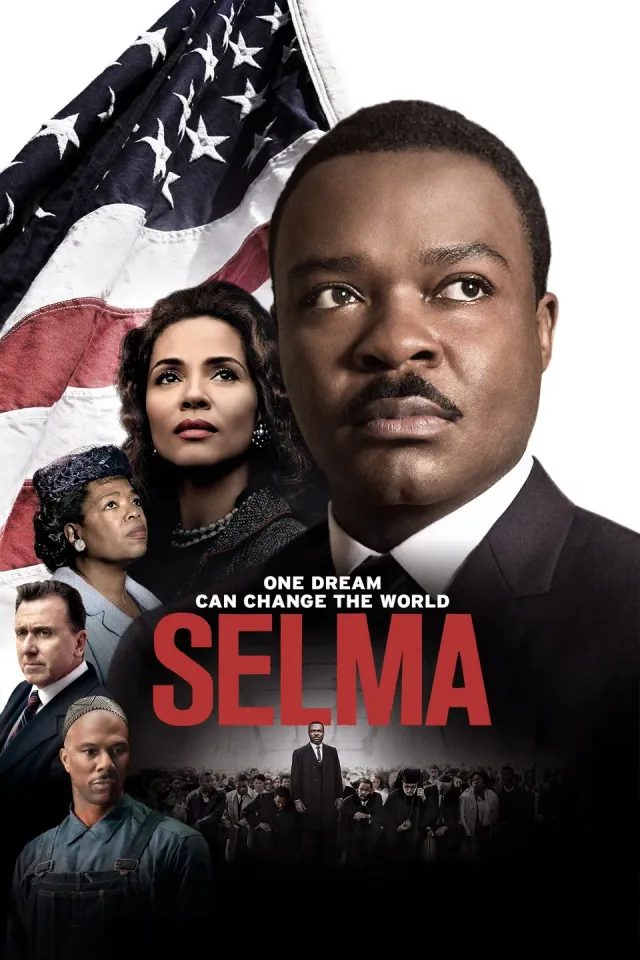
The campaign turns local voter suppression into a national political crisis through organizing, repeated marches and strategic negotiation rather than a single heroic action.
Why this matches +
These offer a related experience with a meaningful difference in story, tone, or presentation.
An adjacent discovery: a related idea with a different viewing experience.
Genres: Drama / Biography
Shared film traits
Based on recorded story, mood and style. Your preferences can change the order.
Political resistance
What changes The civil-rights movement challenges entrenched political power through activism, public leadership and difficult choices about social change.
In 1965, Martin Luther King Jr. and civil-rights organizers focus their campaign on Selma, Alabama, where Black residents face systematic barriers to voter registration. The film follows strategy meetings, local organizing, confrontations with Sheriff Jim Clark’s officers and the attacks on marchers that draw national attention. King negotiates with President Lyndon Johnson while activists disagree over timing, tactics and the risks borne by people on the ground. The planned march from Selma to Montgomery becomes a public test of federal responsibility, local courage and the meaning of political pressure, ending with a speech before the state capitol.
Ann Atwater and C. P. Ellis are asked to lead community meetings on school desegregation despite their opposing positions.
Why this matches +
These offer a related experience with a meaningful difference in story, tone, or presentation.
An adjacent discovery: a related idea with a different viewing experience.
Genres: Biography / Drama
Shared film traits
Based on recorded story, mood and style. Your preferences can change the order.
Political resistance
What changes People with opposing experiences of segregation face a changing civil-rights landscape and difficult questions about racial equality.
In 1971 Durham, North Carolina, civil-rights organizer Ann Atwater campaigns for better conditions for Black residents while segregation shapes the schools and public life. After a school fire intensifies local conflict, organizer Bill Riddick asks Ann and Ku Klux Klan leader C. P. Ellis to co-chair a series of community meetings about desegregation. The dramatized account follows their antagonism, the deliberations, and the personal and political pressures surrounding the vote.
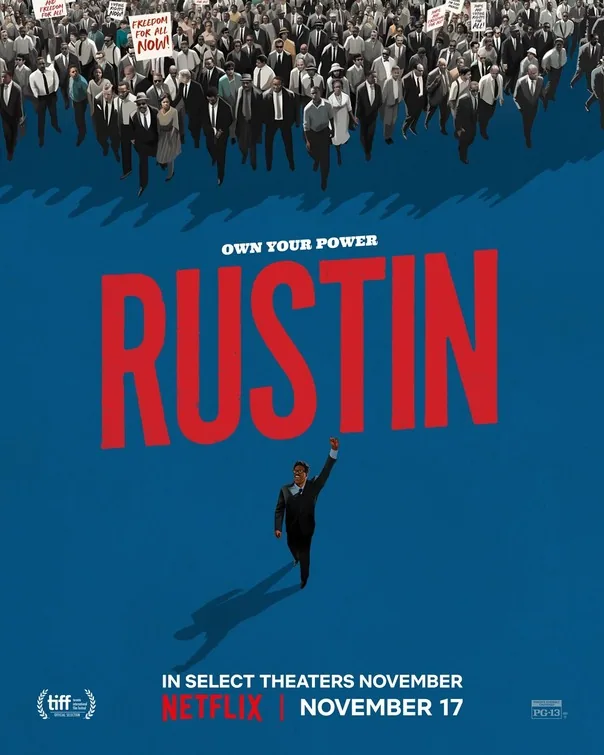
Rustin organizes a national march while negotiating with allies, political leaders and opponents who seek to limit his influence.
Why this matches +
These offer a related experience with a meaningful difference in story, tone, or presentation.
An adjacent discovery: a related idea with a different viewing experience.
Genres: Biography / Drama
Shared film traits
Based on recorded story, mood and style. Your preferences can change the order.
Political resistance
What changes A civil-rights organizer navigates political institutions and conflicting strategies while working to build a national movement.
Bayard Rustin is an experienced organizer whose commitment to nonviolent protest and racial equality shapes the planning of the 1963 March on Washington. Although his strategic ability is crucial, his sexuality and past political associations leave him vulnerable to attacks from opponents and uneasy allies. George C. Wolfe’s drama follows Rustin as he builds coalitions with A. Philip Randolph, Martin Luther King Jr. and a wide network of activists to turn an ambitious demonstration into a mass event.
The unfinished fence becomes a practical household project and a symbol of the limits Troy imposes around others.
Why this matches +
These offer a related experience with a meaningful difference in story, tone, or presentation.
An adjacent discovery: a related idea with a different viewing experience.
Genres: Drama
Shared film traits
Based on recorded story, mood and style. Your preferences can change the order.
Political resistance
What changes A Black father and son confront different expectations about work, opportunity and responsibility amid the constraints of mid-century America.
A sanitation worker in 1950s Pittsburgh tries to hold authority within his household while carrying anger from opportunities and racial barriers he believes were denied to him. His marriage and relationships with his sons reveal the consequences of treating protection as control. The adaptation of August Wilson’s play keeps its attention on language, family intimacy and the burden of history rather than broad external action.
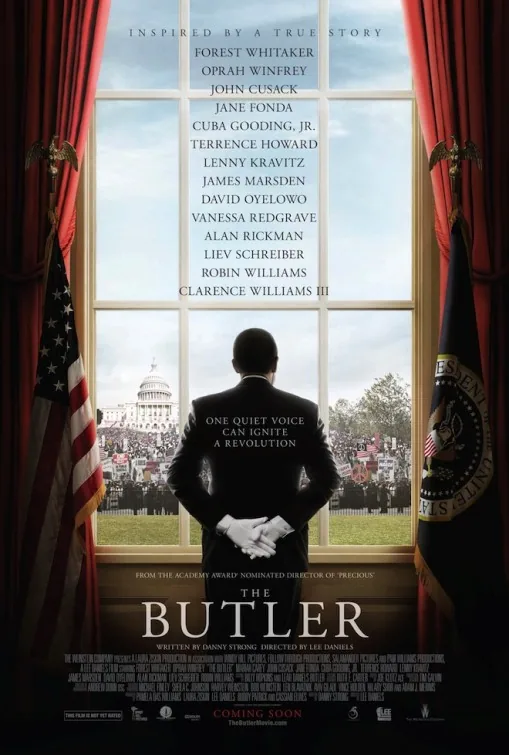
Cecil Gaines recounts a life spent working in the White House, moving from a childhood shaped by racial violence in the South to decades serving successive presidents. His private life and the civil-rights movement unfold alongside one another, sometimes placing his gradual approach to change beside the more direct activism of his son. Lee Daniels frames the period drama around family, service and competing ideas of political progress.
What drives the story
One man's career in presidential service spans changing approaches to civil rights.
The people at its centre
Cecil and his son care about justice but disagree about how change should be pursued.
What it feels like
The family story connects private choices to several decades of public history.
Worth knowing
Its historical sweep may appeal to viewers who enjoy ensemble period drama and political context.
FamilyHistoryService
Mood
Reflective · Emotional · Historical
Pacing
Chronological · Interwoven
Visual style
Period detail · Archival-style transitions · Domestic and civic spaces
Storytelling
White House service · Family generations · Political change