Based on recorded story, mood and style. Your preferences can change the order.
What changes The Club: deliberate, contained and pressure-building. Of Gods and Men: patient and accumulative.
A small community of French Trappist monks lives alongside Muslim neighbours in an Algerian village during the country's civil conflict. As threats against foreigners grow and armed violence reaches the region, the monks debate whether to leave or continue the work that binds them to local residents. Xavier Beauvois builds the drama through ritual, practical disagreement and quiet acts of care rather than conventional action scenes.
Based on recorded story, mood and style. Your preferences can change the order.
What changes The Club: deliberate, contained and pressure-building. Going My Way: episodic and measured.
A young priest arrives at an indebted New York parish with an informal style that unsettles its aging pastor. Rather than announce the authority he has been given, he works through neighborhood relationships, music and practical help, trying to preserve the older man's dignity while changing how the parish serves people. Everyday encounters gradually make institutional succession a question of care instead of victory. The episodic drama turns songs and modest acts of generosity into resources for sustaining a vulnerable community.
Based on recorded story, mood and style. Your preferences can change the order.
Social hierarchy · Family and care
What changes The Club: deliberate, contained and pressure-building. Nobody Knows: akira’s effort to preserve the hidden household grows more difficult as money and food run out.
A mother moves into a Tokyo apartment with her four children but hides the younger siblings from the landlord, leaving only eldest son Akira visible. When she leaves for months with little money, Akira takes responsibility for rent, food and his brothers’ and sister’s daily needs. The children have been kept out of school and away from public attention, so their shrinking resources make ordinary childhood harder to sustain. The film quietly follows the siblings’ improvised household as its fragile independence gives way to loss.
Based on recorded story, mood and style. Your preferences can change the order.
Power and authority · Social hierarchy
What changes The Club: deliberate, contained and pressure-building. The Magdalene Sisters: daily routines and punishments and escape attempts reveal how the institution maintains control over its inmates.
In 1960s Ireland, Margaret, Bernadette, Rose and Crispina are sent by family or caretakers to a Magdalene laundry, where religious authorities claim to reform women considered sinful. Their work is exhausting, their freedom is restricted and the women face humiliation and abuse from the institution’s leadership. The film follows their attempts to endure the daily regime and preserve relationships with one another, while the asylum’s religious language masks a system that benefits from their labor and keeps them isolated from the outside world.
Based on recorded story, mood and style. Your preferences can change the order.
Social hierarchy · Family and care
What changes The Club: deliberate, contained and pressure-building. Vermiglio: patient, seasonal and ensemble-led.
In the final winter of the Second World War, a Sicilian soldier arrives in the alpine village of Vermiglio and is taken in by a local family. His presence changes the lives of the household's daughters, especially Lucia, and draws private desires into the rhythms of village life. Maura Delpero observes the family across seasons as war, religion, work and social expectations shape what each generation can say aloud and what futures remain possible.
Based on recorded story, mood and style. Your preferences can change the order.
What changes The Club: deliberate, contained and pressure-building. Salò, or the 120 Days of Sodom: ritualized, episodic and escalating.
In the final years of Fascist rule in northern Italy, four powerful men abduct young people and confine them in a villa. They impose a ritual order in which stories of sexual and bodily violence are narrated, codified and then enacted, with the captives’ lives reduced to objects of the rulers’ control. Pasolini arranges the film in four Dante-inspired circles, moving from rules and narration toward escalating punishments and a detached final spectacle. The disciplined structure makes cruelty feel bureaucratic and political rather than spontaneous; the film’s sustained assault on its captives is intentionally difficult viewing.
Based on recorded story, mood and style. Your preferences can change the order.
Memory and identity
What changes The Club: deliberate, contained and pressure-building. Here: a non-linear structure revisits one place across multiple generations.
The film remains anchored to one location while moving across different periods and generations of people who live in or pass through it. Domestic routines, relationships, and historical change become visible through the space itself, making the room a witness to lives it cannot control. The drama adapts a graphic-novel structure into a meditation on memory, time, family, and the meanings that accumulate around an ordinary place.
Based on recorded story, mood and style. Your preferences can change the order.
Power and authority · Memory and identity
What changes The Club: deliberate, contained and pressure-building. Tokyo Sonata: measured, gradually escalating and quietly suspenseful.
When office worker Ryūhei loses his position during a corporate restructuring, he conceals the dismissal from his wife and sons and keeps returning each day as if he still has a job. His teenage son Takashi announces a plan that takes him far from home, while younger Kenji secretly studies piano against his father’s wishes. Megumi, the family’s mother, is left managing a household whose members share meals but hide their fears. As their deceptions unravel, this restrained Tokyo drama follows economic insecurity into the private life of a family.
Based on recorded story, mood and style. Your preferences can change the order.
Social hierarchy · Memory and identity
What changes The Club: deliberate, contained and pressure-building. The Nest: measured domestic episodes, gradual financial revelations, tension accumulates through routine and quiet unresolved aftermath.
In the late 1980s, trader Rory O’Hara persuades his American family to leave New York for a grand Surrey manor, promising that a return to London will revive his career. His wife Allison tries to build a horse farm and maintain a home for their children, but unpaid bills, stalled renovations, and Rory’s social ambitions expose how precarious their new life is. Sean Durkin’s slow-burn family drama watches a marriage strain under class performance, financial instability, and the gap between appearance and security.
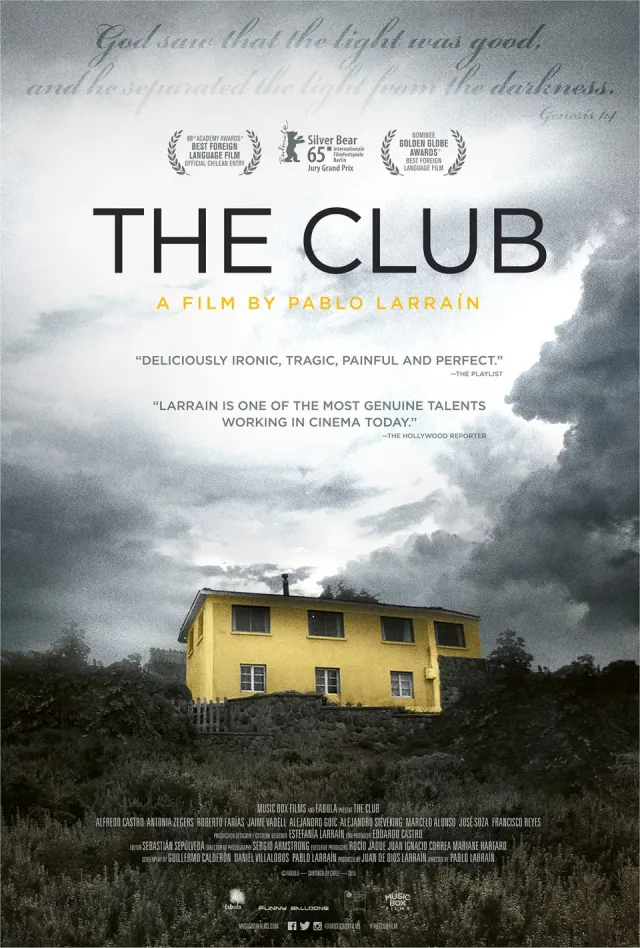
Four retired Catholic priests live under the supervision of a caretaker in a secluded house beside a small Chilean coastal town. Their quiet routine is disturbed when a new priest arrives and a former victim appears outside, demanding that the men face their past. Church officials send a visitor to assess the crisis, and the residents’ history of secrecy and institutional protection begins to surface. Pablo Larraín’s drama observes how the house functions as both refuge and confinement.
What drives the story
A newcomer and a visitor disrupt the house’s routine, forcing its residents and the Church to respond to buried accusations.
The people at its centre
The priests rely on one another and the caretaker for a protected life, while an outsider challenges the silence that has kept them there.
What it feels like
Dry humor and restrained performances sharpen a troubling examination of how institutions manage scandal and protect insiders.
Worth knowing
Its small, isolated group and focus on Church accountability make it a chamber drama rather than a broad procedural about a criminal case.