Based on recorded story, mood and style. Your preferences can change the order.
Family and care · Investigation
What changes The Coffee Table is tagged uncomfortable and darkly comic; The Other Side of the Door is tagged haunting and sorrowful.
Maria and Michael, a British couple living in India, are grieving their young son Oliver after a fatal accident. Maria learns of a ritual at an abandoned temple that is said to let a bereaved person speak once more with the dead. She is warned not to open the door separating the living from the dead, but her encounter with Oliver draws her back and brings a presence into the family’s home. Her daughter Lucy becomes part of the danger Maria must confront.
Based on recorded story, mood and style. Your preferences can change the order.
Investigation
What changes The Coffee Table: tightly contained, escalating and social encounters. The Devil Inside: investigation grows into abrupt horror.
Isabella travels to Rome to learn more about her mother, Maria, who has spent years in a psychiatric hospital after committing murders during an exorcism. Filming the investigation with a documentary crew, Isabella consults priests and witnesses while confronting events that resist clear explanation. The found-footage horror blends family history, religious ritual and investigative uncertainty, letting the camera’s limited access become part of the threat.
Based on recorded story, mood and style. Your preferences can change the order.
Investigation
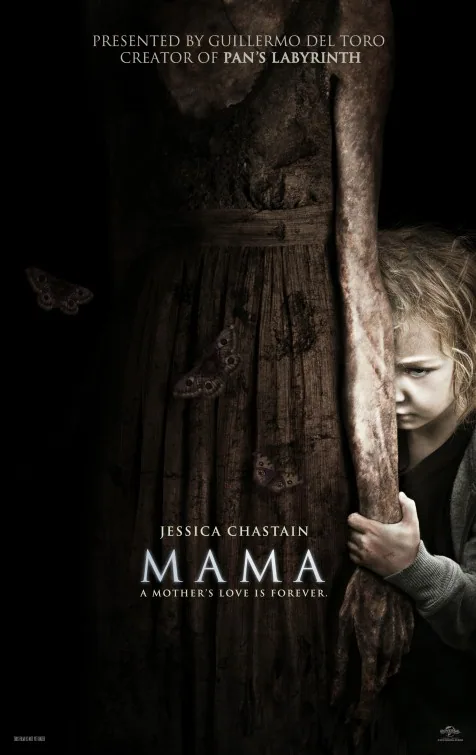
What changes The Coffee Table: tightly contained, escalating and social encounters. Mama: slow-building and escalating menace.
Two sisters are discovered alive after years in an isolated cabin and are placed with their uncle and his reluctant partner. Their adjustment is disturbed by an unseen maternal presence that appears to have protected them. As the adults investigate the children's past, ordinary caregiving becomes entangled with supernatural jealousy, and the sisters' different attachments make the idea of returning home increasingly complicated.
Based on recorded story, mood and style. Your preferences can change the order.
Investigation
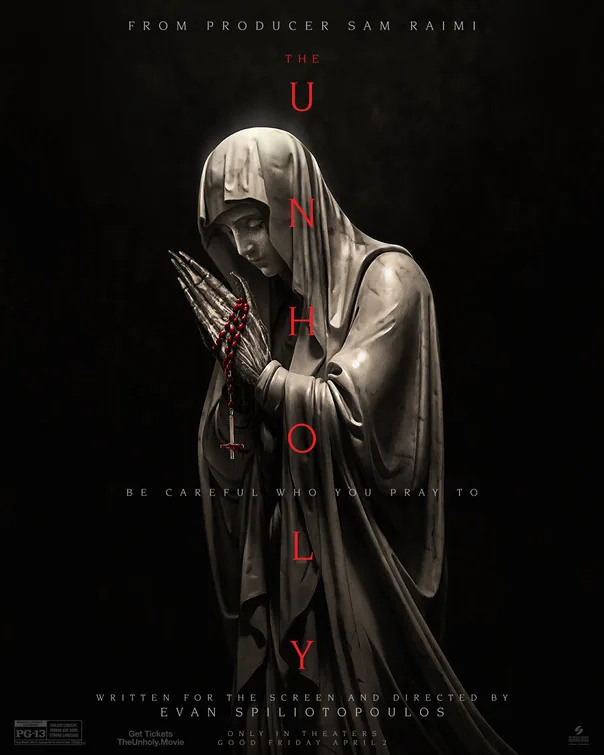
What changes The Coffee Table: tightly contained, escalating and social encounters. The Unholy: inquiry and public gatherings build toward a religious confrontation.
Alice, a young woman with a hearing impairment, claims to receive visions of the Virgin Mary and begins healing people in her town. A journalist investigates the reported miracles, while church officials and residents debate what is happening. The supernatural horror drama connects faith, public attention and the possibility of deception, as the community’s hope becomes inseparable from the danger surrounding Alice.
Based on recorded story, mood and style. Your preferences can change the order.
Investigation
What changes The Coffee Table: tightly contained, escalating and social encounters. Goodnight Mommy: slow-burn unease, repeated domestic routines and gradual mystery escalation.
After their mother returns from facial surgery with her head covered in bandages, twin boys Elias and Lukas find her behavior strangely distant and severe. The family lives in an isolated modern house, where closed blinds, rules about silence, and a widening gap between the brothers and their mother create a tense domestic mystery. Their suspicions grow as small inconsistencies accumulate and the children try to determine whom they can trust. This Austrian psychological horror film relies on restraint, repetition, and the twins' limited point of view rather than frequent shocks.
Based on recorded story, mood and style. Your preferences can change the order.
Family and care
What changes The Coffee Table is tagged uncomfortable and darkly comic; The Parenting is tagged awkward and spooky.
A young couple brings their relationship to a weekend gathering with both families at a country house. The visit is already tense because of different expectations and unresolved family dynamics, but a supernatural presence in the home turns the meeting into a horror-comedy ordeal. As the guests try to understand what is happening, polite introductions give way to panic, exposing how little control anyone has over the strange situation or each other's behavior.
Based on recorded story, mood and style. Your preferences can change the order.
What changes The Coffee Table: tightly contained, escalating and social encounters. Speak No Evil: slow-burn escalation, quiet social scenes and sudden shifts in threat.
During a holiday in Tuscany, Danish couple Bjørn and Louise befriend Dutch couple Patrick and Karin, then accept an invitation to visit their remote home. Small social discomforts accumulate as the guests notice troubling differences in the hosts' behavior and the children are caught in an awkward household dynamic. Bjørn and Louise struggle between politeness and the instinct to leave, turning an ordinary weekend visit into a study of boundaries and fear. Christian Tafdrup's thriller uses restrained interactions and escalating tension to make social compliance feel dangerous.
Based on recorded story, mood and style. Your preferences can change the order.
Family and care
Expect claustrophobic and confrontational, with escalating and domestic pacing.
Newly pregnant Belinda and her husband Norman are trying to build a quiet home when his estranged stepmother Solange needs somewhere to stay. Her arrival changes the balance of the household as she presses into private routines, family decisions and Belinda's pregnancy. Belinda's attempts to set boundaries meet hostility and manipulation, making the couple question how far their obligations extend and whether the threat is social, supernatural or both.
Based on recorded story, mood and style. Your preferences can change the order.
What changes The Coffee Table: tightly contained, escalating and social encounters. Knock Knock: measured and escalating.
When two stranded young women arrive at Evan Webber’s home during a storm, he lets them in and then has sex with them while his family is away. The encounter is initially framed as temptation, but the visitors later claim to be underage and use that disclosure, together with coordinated humiliation, to control him. Evan’s choices and dishonesty matter; so do the film’s abrupt reversals, the women’s leverage and the uncertainty around what they have told him. Eli Roth’s home-invasion thriller turns a suburban house into a trap where seduction gives way to punishment and sexual coercion. Keep the consensual-looking affair the story presents distinct from the later assault and threats, without adopting the intruders’ moral rhetoric as the film’s final truth.
Jesus and Maria are a young couple caring for their newborn when an argument over an ordinary household purchase leads to a catastrophic accident. Unable to face its consequences, Jesus tries to keep the truth from his wife as visitors and family members move through the apartment. The confined domestic setting turns routine conversation into mounting suspense, blending bleak comedy with horror as guilt and the impossibility of sustaining a lie tighten around the couple.
What drives the story
A new father conceals a terrible household accident as guests arrive and the situation becomes harder to control.
The people at its centre
Jesus tries to manage the truth alone while Maria and their visitors remain unaware of the crisis.
What it feels like
Tightly limited space lets banal social exchanges become increasingly unbearable and darkly comic.
Worth knowing
Its extreme domestic premise turns dread into a study of deception rather than supernatural horror.
parenthoodguiltsecrecy
Mood
uncomfortable · darkly comic · tense · shocking
Pacing
tightly contained · escalating · social encounters