Based on recorded story, mood and style. Your preferences can change the order.
Coming of age · Sport and competition
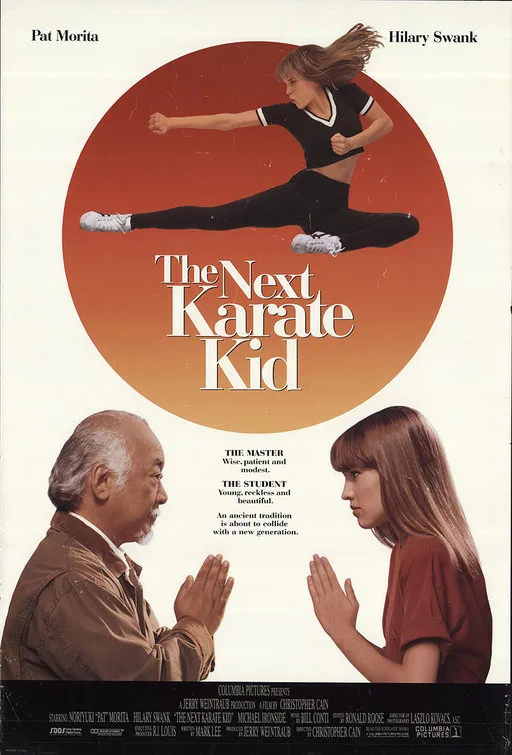
What changes The Next Karate Kid: training and school confrontations progress toward julie’s decision to stand up for herself. The Karate Kid Part II: steady and action-led.
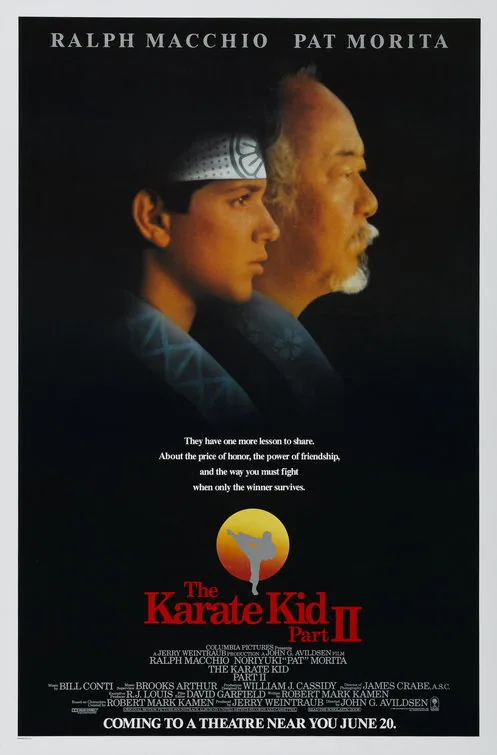
When Mr. Miyagi learns that his father is dying, he returns to Okinawa with Daniel LaRusso. The visit brings him back into contact with Yukie and with Sato, a former friend whose resentment has hardened into a dangerous feud. Daniel, far from the tournament that shaped the first film, finds himself pulled into the conflict and into a new understanding of his teacher's past. The sequel shifts the story from training for competition toward honor, belonging and inherited obligations.
Both share themes of mentorship, plus an earnest atmosphere.
Why this matches +
Genres: Drama / Sport
Shared film traits
Based on recorded story, mood and style. Your preferences can change the order.
Coming of age · Family and care
What changes The Next Karate Kid: training and school confrontations progress toward julie’s decision to stand up for herself. The Beautiful Game: brisk, game-centered and character-focused.
A teacher in a working-class coastal town begins coaching a youth soccer team after an encounter with a professional player. The team brings together local teenagers with different skills, temperaments and pressures at home, and training creates a new shared routine for them. As the coach helps the players see a future beyond their immediate circumstances, the film blends a sports story with a portrait of community life and the role of patient adult support.
Based on recorded story, mood and style. Your preferences can change the order.
Coming of age
What changes The Next Karate Kid: training and school confrontations progress toward julie’s decision to stand up for herself. Mommy: emotional surges, close domestic scenes and uneven shifts between warmth and conflict.
Diane Després brings her volatile teenage son Steve home from an institution and tries to build a workable life despite financial and emotional strain. Their intense bond is tested by Steve's unpredictable behavior and by the limits of the care available to them. A neighbor, Kyla, becomes an important presence, offering moments of calm while coping with her own difficulties. Xavier Dolan's drama shifts between tenderness, conflict, and hope, using intimate performances and a changing frame to keep the family relationship at the center of its turbulent world.
Both share themes of grief, plus a reflective atmosphere.
Why this matches +
Genres: Drama
Shared film traits
Based on recorded story, mood and style. Your preferences can change the order.
What changes The Next Karate Kid: training and school confrontations progress toward julie’s decision to stand up for herself. The Souvenir Part II: julie revisits anthony’s life, develops a film drawn from their relationship and and discovers that translating memory into a scene requires choices..
After the death of her boyfriend Anthony, film student Julie returns to school and begins shaping a final project from their relationship. She tries to reconcile what she experienced with what others remember, while directing actors and managing her own doubts about how to tell the story. The film treats filmmaking as both a creative task and an imperfect way of revisiting grief.
Based on recorded story, mood and style. Your preferences can change the order.
Family and care
What changes The Next Karate Kid: training and school confrontations progress toward julie’s decision to stand up for herself. Confessions: chaptered, escalating and revelation-driven.
Before leaving her junior high school, teacher Yuko Moriguchi addresses her class about her daughter’s death in the school swimming pool. She says two of the students in the room were responsible and describes a deliberate response to what she sees as a failure of the justice system. The class breaks into shifting reactions as the students’ histories emerge through testimony, memory and flashback. Tetsuya Nakashima’s thriller turns school routines into a stage for revenge, guilt and contested ideas of responsibility.
Based on recorded story, mood and style. Your preferences can change the order.
What changes The Next Karate Kid: training and school confrontations progress toward julie’s decision to stand up for herself. Miracle in Cell No. 7: framed flashback structure, emotional prison episodes and melodramatic progression.
Memo lives with his young daughter Ova and his mother in rural Turkey, where his affectionate nature and cognitive disability make him vulnerable to misunderstanding. After a tragic accident involving a military officer's daughter, Memo is wrongly accused of murder and sent to prison. The men in Cell No. 7 gradually recognize his innocence and help him maintain a bond with Ova despite the barriers between them. This Turkish drama uses a courtroom injustice and prison community to tell an emotional story about parental love, dignity, and the possibility of compassion within a harsh system.
Based on recorded story, mood and style. Your preferences can change the order.
Family and care
What changes The Next Karate Kid: training and school confrontations progress toward julie’s decision to stand up for herself. Beanpole: character-driven, quiet tension and emotional ruptures.
In the aftermath of the Second World War, nurse Iya works in a crowded Leningrad hospital while coping with episodes that temporarily immobilize her. Masha returns from the front and resumes a complicated relationship with Iya, whose life has become entangled with the cost of war. As the women try to imagine a future in a damaged city, their bond is shaped by trauma, dependence, desire, and conflicting ideas about motherhood.
Based on recorded story, mood and style. Your preferences can change the order.
Family and care
What changes The Next Karate Kid: training and school confrontations progress toward julie’s decision to stand up for herself. Home for the Holidays: a single holiday gathering concentrates family conflicts and new disclosures and tentative reconciliations.
After losing her job, Claudia Larson flies from Chicago to Baltimore for Thanksgiving with her parents, Adele and Henry. Her daughter has chosen to stay home with her boyfriend, and Claudia is already anxious about the holiday before her younger brother Tommy arrives with his business partner Leo. Their relatives bring conflicting habits, old resentments and unexpected news into the family home. Over the course of the gathering, jokes and arguments give way to moments of intimacy, as Claudia faces the instability in her own life and sees that her family’s flaws coexist with genuine affection.
Both share themes of resilience, plus an earnest atmosphere.
Why this matches +
Genres: Drama / Family
Shared film traits
Based on recorded story, mood and style. Your preferences can change the order.
Family and care
What changes The Next Karate Kid: training and school confrontations progress toward julie’s decision to stand up for herself. The Unbreakable Boy: episodic, family-centered and uplifting.
Austin is a boy whose autism and brittle bone disease shape daily life for him and his family. His parents respond to medical crises, social misunderstandings and the demands of raising a child with care that is tested by exhaustion and uncertainty. Based on Scott LeRette's book, the family drama focuses on Austin's personality and on the adults learning to see resilience as part of ordinary life rather than a cure or a simple inspirational lesson.
Mr. Miyagi travels to Boston for a ceremony honoring Japanese American veterans and reconnects with Louisa Pierce, the widow of his wartime commander. At her home he meets her granddaughter Julie, whose grief over her parents’ deaths has made her angry and isolated. Miyagi offers to help, but Julie’s behavior draws her into conflict at school with a group of domineering Air Force cadets. Training in karate gives Julie a disciplined way to manage anger and defend herself. Their relationship develops as mentor and student, with Miyagi learning that care sometimes means guiding rather than shielding someone from every challenge.
What drives the story
Julie’s grief and defiance make it difficult to accept the support Miyagi offers after her parents’ deaths.
The people at its centre
Miyagi balances patience with firm boundaries as Julie learns to trust his guidance and her own ability.
What it feels like
The sports drama uses martial-arts training as a path toward emotional steadiness and self-respect.
Worth knowing
It extends the Karate Kid mentorship pattern through a new student whose conflict is rooted in bereavement and school pressure.
griefmentorshipdiscipline
Mood
earnest · encouraging · reflective · spirited
Pacing
Training and school confrontations progress toward Julie’s decision to stand up for herself
Visual style
Boston streets · school grounds · Japanese gardens and carefully staged martial-arts practice
Storytelling
Miyagi mentors a bereaved teenager; school conflict with cadets; karate channels grief into discipline