Explore films connected to The Return of the Soldier through War trauma, Memory and identity, Class and marriage. Choose the qualities you want to carry into your next watch.
What should feel similar?
Find your next favourite
9 films · Closest overall matches
Hide films you’ve seen or don’t want. Saved on this device.
No matches for this combination yet.
Try another option or reset your choices to see more films.
Based on recorded story, mood and style. Your preferences can change the order.
War and civilian life · Memory and identity
Expect melancholic and intimate, with measured pacing.
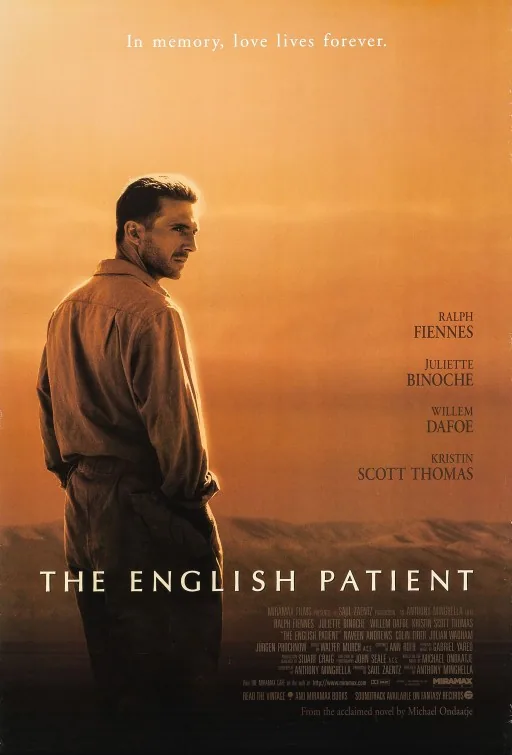
Near the end of the Second World War, a nurse tends a severely burned man in an abandoned Italian monastery while fragments of his earlier life emerge. His memories return to a desert mapping expedition, an affair with a married woman and decisions whose consequences cross wartime allegiances. Other displaced people briefly form a household around the patient's care, placing his consuming lost romance beside more tentative attempts to remain open to life.
Based on recorded story, mood and style. Your preferences can change the order.
War and civilian life · Memory and identity
Expect intimate and melancholy, with nonlinear and measured pacing.
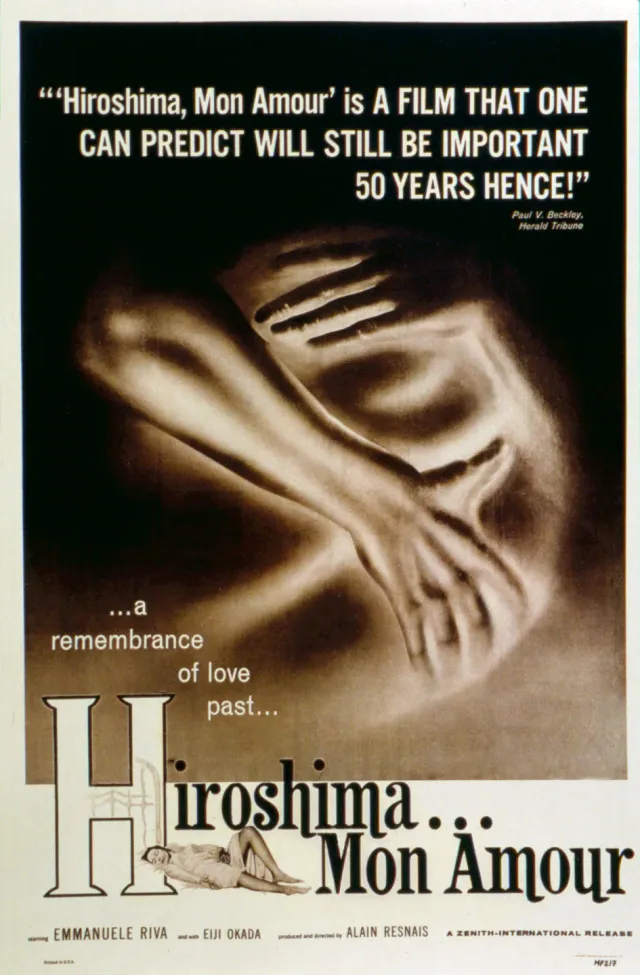
A French actress and a Japanese architect begin an affair in postwar Hiroshima, where her film work about peace does not grant her full access to the city’s history. Their conversations open onto her earlier love affair in occupied Nevers and the punishment that followed its loss. Repetition, fragmented images and documentary traces let one memory interrupt another without making the woman’s private suffering equivalent to the atomic bombing. The architect can ask her to remember, but cannot turn memory into shared ownership. The film’s formal argument lies in that unfinished encounter between personal recollection, public catastrophe and the limits of witnessing.
Based on recorded story, mood and style. Your preferences can change the order.
War and civilian life · Mental health
What changes The Return of the Soldier: measured, domestic, reflective and gradually intensifying. The Messenger: measured, episodic encounters and emotionally cumulative.
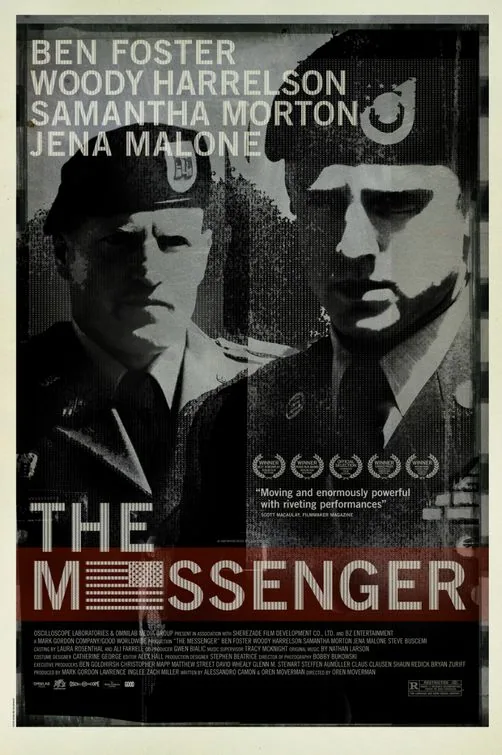
Will Montgomery returns from Iraq wounded, carrying the effects of combat and a broken engagement. Before discharge, he is paired with veteran Captain Tony Stone to deliver military casualty notices. Their visits bring them into direct contact with families experiencing grief, anger and disbelief. When Will meets Olivia, a widow whose response seems contained, he begins to cross the professional boundary Stone has taught him to maintain. The assignment forces both men to face how they handle loss, duty and the possibility of connection.
Based on recorded story, mood and style. Your preferences can change the order.
War and civilian life · Memory and identity
What changes The Return of the Soldier: measured, domestic, reflective and gradually intensifying. The Light Between Oceans: long-form emotional arc, measured period drama and consequences unfold over years.
After World War I, lighthouse keeper Tom Sherbourne and his wife Isabel live in isolation on Janus Rock, longing for a child after repeated miscarriages. A boat carrying a dead man and an infant washes ashore, and Isabel persuades Tom to raise the baby as their own without reporting the discovery. Their decision brings joy but binds them to a secret that affects another grieving family. Derek Cianfrance's period romance examines love, parenthood, and moral responsibility through the remote setting and the long consequences of one desperate choice.
Based on recorded story, mood and style. Your preferences can change the order.
War and civilian life · Memory and identity
What changes The Return of the Soldier is tagged melancholy and restrained; Ivan's Childhood is tagged lyrical and somber.
A boy whose family has been destroyed by war crosses dangerous territory to report intelligence to Soviet soldiers. Officers attempt to redirect him toward safety, but revenge and the disappearance of ordinary childhood make another life difficult for him to imagine. Dreams interrupt the military present with tactile images of affection and freedom. The film places a child's usefulness to war beside what that usefulness cannot restore, refusing to let competence in danger stand as proof that his damaged world has become acceptable.
Based on recorded story, mood and style. Your preferences can change the order.
Memory and identity
Expect romantic and melancholy, with time-spanning and reflective pacing.
A soldier on leave meets a young woman whose summer visit turns into a close relationship before his deployment. Their connection is maintained through letters as military service repeatedly delays decisions about a shared future. The romance moves between private longing and public events, asking how intimacy changes when one person’s life is governed by duty, distance and circumstances neither can control.
Based on recorded story, mood and style. Your preferences can change the order.
War and civilian life · Mental health
What changes The Return of the Soldier: measured, domestic, reflective and gradually intensifying. Coming Home: character-led, gradual and emotionally escalating.
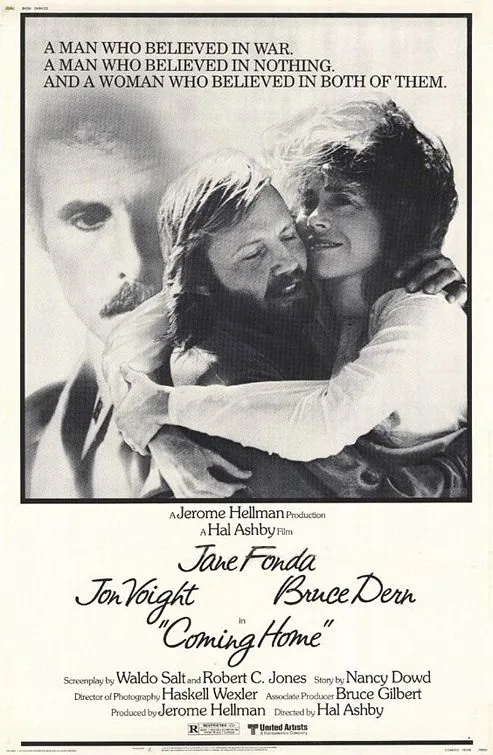
In 1968 California, Sally Hyde watches her Marine husband Bob leave for Vietnam and gradually finds a life of her own. While volunteering at a veterans' hospital, she meets Luke Martin, a former Marine whose war injuries have left him paralyzed and whose views differ sharply from Bob's. Sally and Luke grow close as she learns about wounded veterans and the war's lasting effects. When Bob returns, all three must confront changing loyalties, trauma, and the divide between military duty and private life.
Based on recorded story, mood and style. Your preferences can change the order.
Mental health · Memory and identity
What changes The Return of the Soldier: measured, domestic, reflective and gradually intensifying. The Green Ray: real-time conversations, episodic travel, observational pauses and open ending.
After a relationship ends and her planned holiday falls apart, Delphine spends the summer moving between possible destinations without finding a place where she feels comfortable. Friends invite her into group vacations, family members offer alternatives and strangers try to draw her into casual romance, but she resists each arrangement. Her loneliness is real, yet she cannot make herself perform the easy sociability expected of a single traveler. In Biarritz, a conversation about Jules Verne’s green ray gives her a reason to keep watching the sunset. A chance meeting near the end of her wandering offers a different kind of company, while the film stays close to hesitation, small gestures and uncertain hope.
Based on recorded story, mood and style. Your preferences can change the order.
What changes The Return of the Soldier: measured, domestic, reflective and gradually intensifying. Jules and Jim: episodic and accelerating.
Before the First World War, Austrian Jules and Frenchman Jim share an artistic life and become fascinated by Catherine, whose independence unsettles the image of love they have built around her. War places the friends in opposing armies; their later reunion permits a household that appears to preserve every attachment. Yet Catherine’s desires do not settle into the men’s arrangement, and Jim’s hopes for a stable future collide with her fear of being abandoned or possessed. Truffaut’s adaptation of Henri-Pierre Roché’s novel moves across years with breathless speed, making the early play of possibility feel increasingly fragile. Its romantic freedom is neither a simple endorsement of non-monogamy nor a reason to romanticize the violence and devastation that follow.
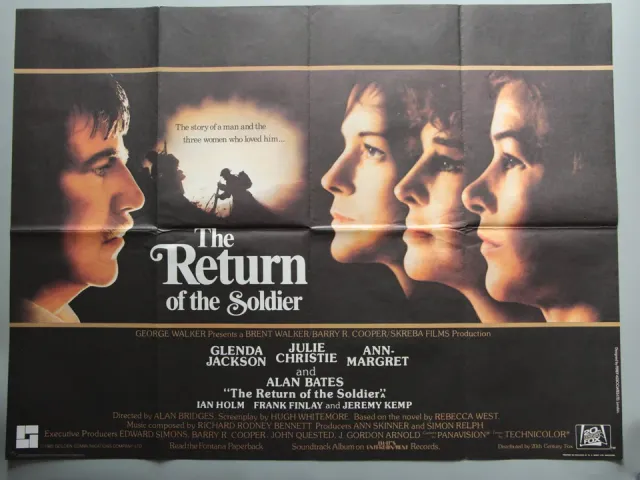
During the First World War, Captain Chris Baldry leaves for the front after a farewell party with his wife Kitty. Two years later he returns to England suffering from shell shock and unable to recognize Kitty, asking instead for Margaret Grey, the woman he loved before the war. Chris’s cousin Jenny and a doctor help navigate the strained household as Kitty struggles with the change and Margaret recalls their interrupted past. Margaret’s visits bring Chris comfort, but the adults disagree about whether restoring his memory would help him. When they decide to tell him about the child he lost, the memory brings back the soldier Kitty knew and the prospect that he may return to the front.
What drives the story
Chris’s changed memory turns a marriage into a dispute over whose version of his recovery should prevail.
The people at its centre
Kitty, Margaret and Jenny respond differently to Chris’s dependence and to the possibility of restoring the man who left for war.
What it feels like
The intimate drama weighs the relief of present happiness against the cost of returning a traumatized man to his former identity.
Worth knowing
This is a literary war drama centered on shell shock and domestic care, rather than a battlefield action story.