Both share themes of grief and belonging, plus a tender and restrained atmosphere.
Why this matches +
Genres: Drama
Shared film traits
Based on recorded story, mood and style. Your preferences can change the order.
Coming of age · Family and care
Expect gentle and restrained, with measured and minimal pacing.
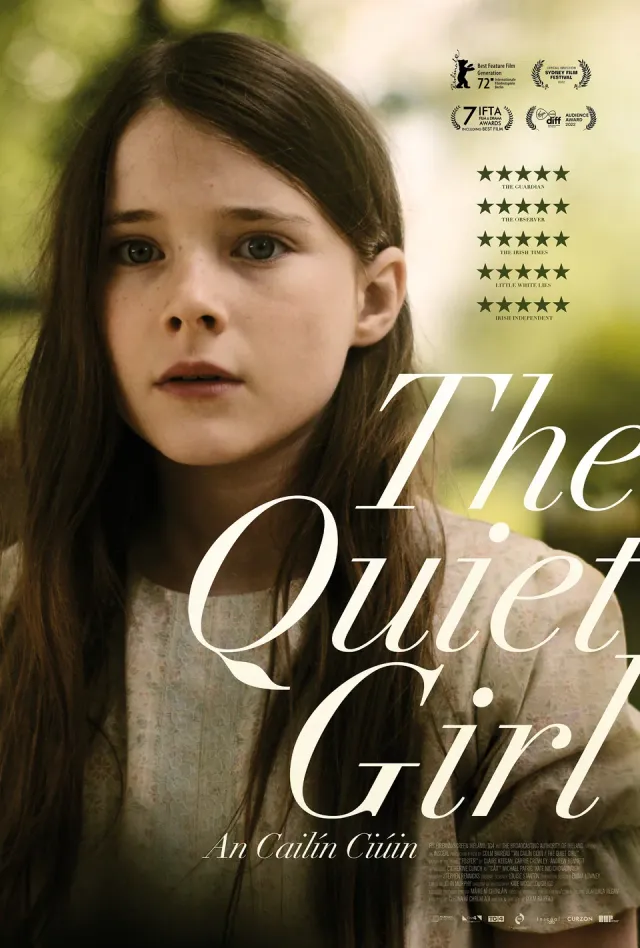
Nine-year-old Cáit is sent from her crowded home to stay with distant relatives in rural Ireland for the summer. Eibhlín welcomes her with patient care, while the more reserved Seán gradually makes room for the child in the routines of the farm. As Cáit learns the household’s silences and small acts of kindness, she discovers how attention can make a neglected child feel safe and how grief can remain present without being explained.
Based on recorded story, mood and style. Your preferences can change the order.
Family and care · Memory and identity
What changes Close: quiet, patient, elliptical and emotionally cumulative. Swan Song: cameron considers a secret replacement procedure, meets the version of himself meant to continue his life and and weighs love against honesty..
In a near future, husband and father Cameron Turner is diagnosed with a terminal illness and offered a way to spare his family grief: a clone can take his place without their knowledge. Cameron weighs the promise of continuity against the ethics of replacement and the loss of a final chance to say goodbye. The intimate science-fiction drama makes identity a family decision.
Based on recorded story, mood and style. Your preferences can change the order.
Social hierarchy · Memory and identity
What changes Close: quiet, patient, elliptical and emotionally cumulative. Nickel Boys: measured, episodic and reflective.
In 1960s Florida, Elwood Curtis is sent to a brutal reform school after a wrongful arrest, where he befriends the more pragmatic Turner. The boys negotiate the institution's violence and uncertain rules for staying safe, while their different understandings of resistance shape their bond. RaMell Ross's adaptation of Colson Whitehead's novel uses subjective visual perspectives, making memory and the boys' relationship central to a history of abuse and survival.
Based on recorded story, mood and style. Your preferences can change the order.
Coming of age
What changes Close: quiet, patient, elliptical and emotionally cumulative. Moonlight: measured.
Across childhood, adolescence and adulthood, a quiet boy from Miami learns different ways to protect himself from bullying, instability at home and expectations of masculinity. A drug dealer and his partner offer care complicated by the economy harming his mother, while one friendship creates a vulnerable possibility of intimacy. The divisions between the three periods reveal how a hardened adult identity can preserve earlier wounds without extinguishing the desire to be known.
Based on recorded story, mood and style. Your preferences can change the order.
Coming of age · Family and care
What changes Close is tagged tender and observant; The Eight Mountains is tagged contemplative and warm.
Pietro first meets Bruno as a boy during a summer in an Alpine village, and the two form a friendship that continues through long periods apart. Pietro grows up moving between city life and the mountains, while Bruno remains tied to the place and the work of building a home there. Their adult relationship carries the film across decades, exploring inheritance, ambition and the different ways people seek a life that feels like their own.
Based on recorded story, mood and style. Your preferences can change the order.
Family and care · Memory and identity
What changes Close: quiet, patient, elliptical and emotionally cumulative. Yi Yi: interwoven stories follow each family member as separate events reveal overlapping questions about life and perspective.
Over the course of a year in Taipei, the middle-class Jian family faces a wedding, a grandmother’s stroke, business troubles and the strains of ordinary family life. Father NJ reconnects with a former love while negotiating a new business deal; his wife Min-Min leaves for a Buddhist retreat; daughter Ting-Ting navigates adolescent relationships; and young Yang-Yang observes the adults with unusual curiosity. Each family member sees only part of the whole, and the film follows how private choices ripple through the household and its wider community.
Both share themes of friendship, plus a tender atmosphere.
Why this matches +
Genres: Drama
Shared film traits
Based on recorded story, mood and style. Your preferences can change the order.
Family and care · Memory and identity
What changes Close: quiet, patient, elliptical and emotionally cumulative. The Supremes At Earl's All-You-Can-Eat: decade-spanning, reflective and episodic.
Odette, Barbara Jean and Clarice have been close friends since their youth, calling themselves the Supremes after the Motown group. Across decades, they share marriage, children, work and loss, meeting regularly at Earl's All-You-Can-Eat. When illness and personal crises bring painful memories back to the surface, the friends must decide how to support one another while acknowledging old wounds. Tina Mabry's ensemble drama centers Black female friendship as a durable source of joy and care.
Based on recorded story, mood and style. Your preferences can change the order.
Family and care · Mental health
What changes Close: quiet, patient, elliptical and emotionally cumulative. His Three Daughters: contained, dialogue-heavy and gradually softening.
Katie, Christina and Rachel gather in their father's New York apartment as he approaches the end of his life. They have lived with different degrees of distance from him and from one another, and the practical work of caring for him brings old resentments into the open. As the sisters wait and negotiate decisions, their compressed time together reveals competing versions of family history, responsibility and love without reducing their differences to a simple reconciliation.
Based on recorded story, mood and style. Your preferences can change the order.
Family and care · Social hierarchy
Expect quiet and austere, with patient and seasonal pacing.
In the final winter of the Second World War, a Sicilian soldier arrives in the alpine village of Vermiglio and is taken in by a local family. His presence changes the lives of the household's daughters, especially Lucia, and draws private desires into the rhythms of village life. Maura Delpero observes the family across seasons as war, religion, work and social expectations shape what each generation can say aloud and what futures remain possible.
Léo and Rémi share a close friendship through childhood games, sleepovers and summers at a flower farm in rural Belgium. When classmates begin labeling their intimacy, Léo becomes more guarded and turns toward new peers and ice hockey, leaving Rémi to make sense of the distance. A sudden loss changes the story into an intimate portrait of grief, guilt and the ways a boy tries to understand feelings he has been taught to conceal.
What drives the story
A question from classmates changes how Léo understands his closeness with Rémi, and their shifting friendship leaves consequences that he must face.
The people at its centre
Léo moves from avoiding social judgment toward acknowledging his attachment, his anger and the grief he cannot readily express.
What it feels like
Restrained performances and close observation let small changes in posture, routine and proximity carry major emotional force.
Worth knowing
An intimate account of childhood friendship and grief, told through emotional behavior rather than explanatory dialogue.