Based on recorded story, mood and style. Your preferences can change the order.
What changes Departures is tagged tender and reflective; Ordinary People is tagged melancholic and intimate.
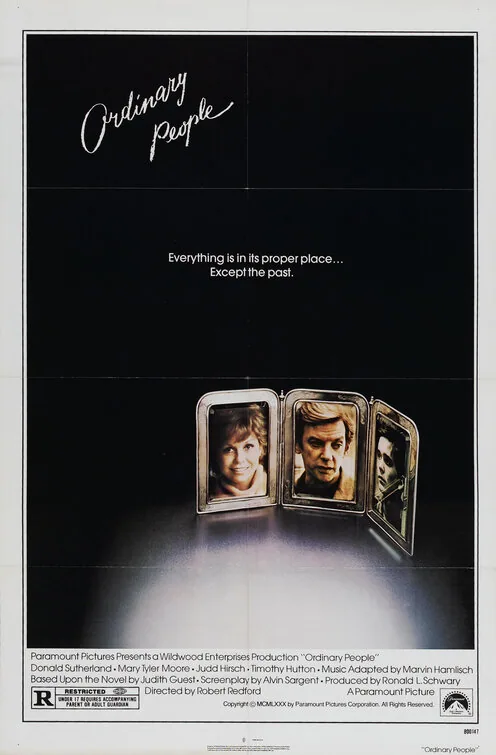
After the accidental drowning death of their eldest son Buck, the affluent Jarrett family tries to resume ordinary routines. Younger son Conrad returns home after a suicide attempt and psychiatric hospitalization, struggling with guilt and the belief that he should have died instead. Therapy with Dr. Berger helps him name grief and anger, while his father Calvin tries to reconnect with both sons’ absence. His mother Beth maintains control through social appearances and finds Conrad’s vulnerability intolerable. Their conflict forces Calvin to recognize that family recovery may not mean preserving the household intact.
Both centre on grief and adjustment and care partnership.
Why this matches +
Genres: Drama / Comedy
Shared film traits
Based on recorded story, mood and style. Your preferences can change the order.
Expect wry and tender, with conversation-led and measured pacing.
A Montreal professor nearing death is reunited with his estranged son, who tries to make his final days more comfortable and reconnects him with old friends and former lovers. Their visits expose differences in politics, values and memory, but also leave room for humor and reconciliation. The film treats mortality through conversation, friendship and the imperfect work of repairing a relationship before time runs out.
Based on recorded story, mood and style. Your preferences can change the order.
What changes Departures: measured. Drive My Car: slow and layered.
Theater director Yūsuke Kafuku travels to Hiroshima to stage Uncle Vanya and is assigned a quiet driver, Misaki. Rehearsals, long drives and the use of recorded lines gradually create room for both to confront grief and difficult memories. Ryusuke Hamaguchi gives the adaptation a patient, conversational structure, using Chekhov’s play and the red Saab as recurring spaces where private pain can be approached indirectly.
Based on recorded story, mood and style. Your preferences can change the order.
What changes Departures is tagged tender and reflective; Hamnet is tagged intimate and somber.
Chloé Zhao’s adaptation imagines the marriage of Agnes and William Shakespeare around the death of their young son Hamnet and the grief that follows. Agnes’s perspective keeps domestic care, intuitive knowledge and loss in the foreground, while the later theatre sequence proposes a powerful artistic response to bereavement. The connection between this private tragedy and Hamlet is the film’s imaginative premise, not a documented explanation of Shakespeare’s writing. Its intimate attention to family life builds toward an emotionally expansive performance, asking how art can give grief form without claiming to recover the historical couple’s private thoughts.
Both share themes of family, plus a bittersweet atmosphere.
Why this matches +
Genres: Drama
Shared film traits
Based on recorded story, mood and style. Your preferences can change the order.
Expect lyrical and somber, with episodic and measured pacing.
A man remembers childhood in a Welsh mining family before changes in work and landscape dissolved the world he knew. Wage conflict divides his father from older brothers, while schooling, romance and religious gossip expose other hierarchies inside a community he still loves. Injuries and departures accumulate beneath the warmth of song and family ritual. The drama makes recollection both a shelter and an admission of loss, presenting industrial change through the child who cannot yet understand every pressure shaping the adults around him.
Both centre on mortality reckoning and care partnership.
Why this matches +
Genres: Drama
Shared film traits
Based on recorded story, mood and style. Your preferences can change the order.
What changes Departures: measured. Cries and Whispers: slow burn.
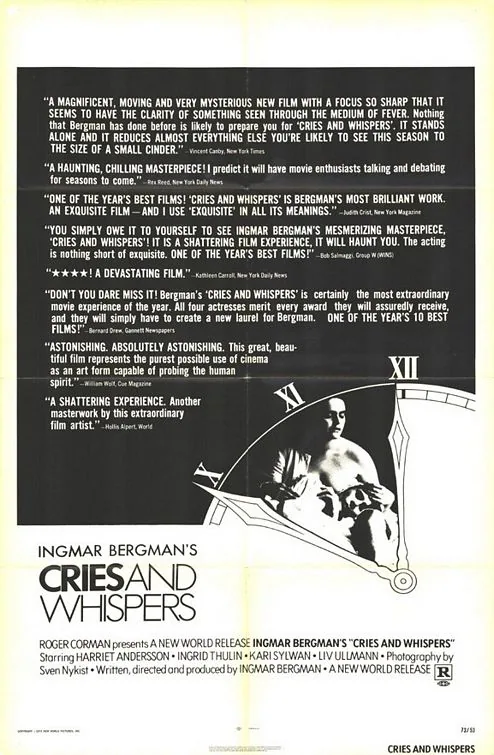
Agnes is dying in a red-walled family house while her sisters Maria and Karin return, each carrying a different form of distance from her suffering. Anna, the maid, offers the physical comfort her relatives struggle to give, but her care does not grant her equal authority in the household. Memory and an uncanny return briefly reopen the possibility of tenderness before the sisters resume their separate lives. Bergman's close framing and saturated color make bodily pain intimate without resolving it into a reassuring story of reconciliation.
Based on recorded story, mood and style. Your preferences can change the order.
What changes Departures: measured. Indiana Jones and the Dial of Destiny: brisk and escalating.
An aging archaeologist approaches retirement with his marriage and sense of purpose damaged by bereavement. His goddaughter's attempt to sell part of a time-related artifact brings a former Nazi's ambitions into the present and forces a renewed pursuit across old connections. Their competing attitudes toward antiquities gradually reveal different forms of attachment to the past. The late adventure makes the desire to revisit history emotionally literal, asking whether fascination with another age can coexist with obligations to people still sharing one's own.
Both centre on grief and adjustment and care partnership.
Why this matches +
Genres: Drama
Shared film traits
Based on recorded story, mood and style. Your preferences can change the order.
What changes Departures is tagged tender and reflective; All About My Mother is tagged warm and emotional.
After her teenage son Esteban is killed while trying to get an actress's autograph, nurse Manuela returns to Barcelona to find his other parent and face a past she had left behind. She becomes involved with actresses, friends and people facing illness or abandonment, and care begins to move beyond the conventional family she thought she had lost. Almodóvar folds theatrical performance into intimate grief, linking maternal love to chosen kinship without presenting those connections as uncomplicated. The film's emotional center is not the search alone, but the network Manuela helps sustain.
Based on recorded story, mood and style. Your preferences can change the order.
What changes Departures is tagged tender and reflective; Elizabethtown is tagged melancholic and warm.
A designer whose product failure has destroyed his professional confidence is interrupted in a suicidal crisis by news of his father's death. Traveling to collect the remains brings him into a family whose rituals and disagreements offer a different measure of the life he thought he had failed. A flight attendant's persistent attention opens another connection, but grief and self-worth cannot be settled simply by accepting a more cheerful itinerary.
After his orchestra dissolves, a cellist returns with his wife to his hometown and answers an advertisement he mistakes for work in travel. The job instead involves preparing bodies for cremation, bringing financial relief alongside secrecy and social stigma. Learning the ceremony's careful physical language changes his understanding of dignity and family grief, while unresolved anger toward his absent father tests whether professional attentiveness can reach the loss he has kept apart from everyone else's. Daigo’s work is not embalming as spectacle but a repeated ceremony that restores dignity to grieving families.
What drives the story
An unexpected profession teaches a displaced musician how deliberate bodily care can mediate grief, while concealing the work threatens his marriage and public belonging.
The people at its centre
Daigo's mentorship under Sasaki contrasts with his wife's initial rejection of the occupation, and encounters with bereaved families expose needs his own unresolved history makes difficult to acknowledge. Sasaki’s mentorship gives Daigo a craft, while Mika’s changing response grows from witnessing the work rather than a quick conversion.
What it feels like
Patient ceremonial detail and gentle workplace humor coexist with physical discomfort and sadness, allowing repeated gestures to acquire emotional meaning without becoming supernatural intervention.
Worth knowing
Match on stigmatized care work transforming a person's relation to grief, rather than treating the former musical career as the film's main performance-ambition story. The father’s funeral changes Daigo’s understanding, but the film need not imply reconciliation erases abandonment.
CareGriefDignity
Mood
Tender · Reflective · Bittersweet
Pacing
Measured
Visual style
Grounded · Ritual detail · Intimate
Storytelling
Stigmatized care profession · Ceremony as communication · Absent father reckoning