Based on recorded story, mood and style. Your preferences can change the order.
Expect intimate and melancholic, with measured pacing.
Across childhood, adolescence and adulthood, a quiet boy from Miami learns different ways to protect himself from bullying, instability at home and expectations of masculinity. A drug dealer and his partner offer care complicated by the economy harming his mother, while one friendship creates a vulnerable possibility of intimacy. The divisions between the three periods reveal how a hardened adult identity can preserve earlier wounds without extinguishing the desire to be known.
Both centre on family obligation and values reassessment.
Why this matches +
Genres: Drama
Shared film traits
Based on recorded story, mood and style. Your preferences can change the order.
What changes Five Easy Pieces: measured. Locke: a real-time drive unfolds through phone conversations and consequences.
On the eve of a major concrete pour, construction manager Ivan Locke leaves work and drives toward a hospital after learning that a colleague from a past affair is in labor. He manages the consequences through a chain of phone calls while his marriage, career, and professional duties begin to unravel. The contained drama uses one car journey to examine responsibility, keeping its protagonist physically alone while his choices connect him to many others.
Based on recorded story, mood and style. Your preferences can change the order.
What changes Five Easy Pieces: measured. The 400 Blows: observational episodes and open-ended finish.
Antoine Doinel grows up in Paris feeling unwanted at home and misunderstood at school. Small acts of defiance, including truancy and a failed attempt to sell a stolen typewriter, draw him deeper into conflict with the adults who supervise him. His parents send him to a youth observation center, where a rare interview lets him speak about his life without interruption. Antoine escapes and runs toward the sea he has never seen, ending the film alone at the shoreline. The story follows a child's search for space and recognition rather than a neat reform narrative.
Based on recorded story, mood and style. Your preferences can change the order.
Expect intimate and emotional, with measured pacing.
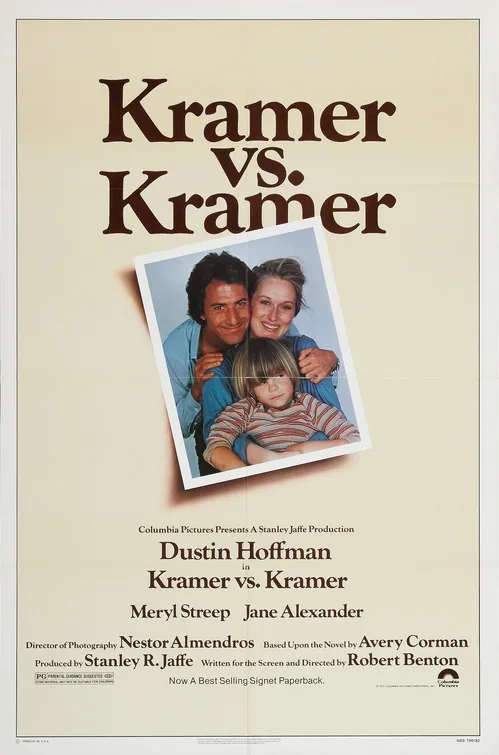
An advertising executive's wife leaves their marriage, forcing him to become the everyday parent to a son whose routines he barely knows. Awkward practical tasks gradually create a deeper relationship, while the demands of his job begin to conflict with care. When the mother returns seeking custody, their private reassessment of family becomes an adversarial legal process that threatens to simplify both parents' motives.
Based on recorded story, mood and style. Your preferences can change the order.
What changes Five Easy Pieces: measured. The Color of Money: steady.
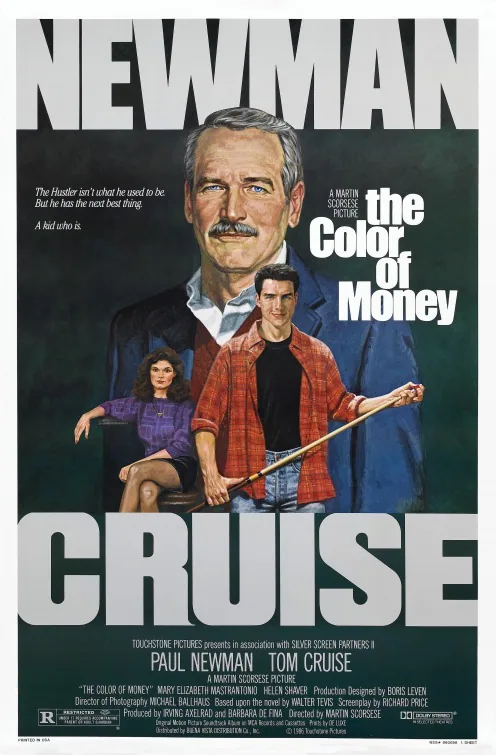
A former pool hustler recognises profitable talent in a brash young player and offers to teach him the business of winning selectively. Travelling together exposes differences between patient manipulation, showmanship and genuine competitive ambition. As the older man's appetite for playing returns, the mentorship becomes a contest over control, honesty and whether the pupil still needs his teacher.
Both share an intimate and melancholic atmosphere.
Why this matches +
Genres: Drama / Biography
Shared film traits
Based on recorded story, mood and style. Your preferences can change the order.
What changes Five Easy Pieces: measured. The Diving Bell and the Butterfly: a slow alphabet read aloud lets bauby compose a book from inside an unresponsive body..
After a stroke leaves fashion editor Jean-Dominique Bauby with locked-in syndrome, he wakes in a hospital unable to speak or move except for one eyelid. A speech therapist develops a letter-by-letter blinking system, allowing Bauby to communicate with his family and dictate the memoir on which the film is based. Julian Schnabel’s drama begins within Bauby’s restricted point of view, then opens into memories, imagination, and the lives of visitors. It follows the act of writing as a way to remain connected while living with profound physical paralysis.
Based on recorded story, mood and style. Your preferences can change the order.
What changes Five Easy Pieces is tagged restless and intimate; Giant is tagged expansive and reflective.
A marriage between Texas rancher Bick Benedict and Maryland socialite Leslie connects family life to a ranch economy built on land, oil and racial hierarchy. Jett Rink’s discovery of oil changes the balance of wealth and authority, while later generations confront discrimination against Mexican Americans that the older ranch culture normalizes. The narrative’s long span gives social change a personal scale, but its central white family still controls much of the film’s viewpoint. The famous diner confrontation complicates Bick’s inheritance of power without making one late gesture resolve the structures the story has spent decades establishing.
Both share themes of alienation and responsibility, plus an intimate and melancholic atmosphere.
Why this matches +
Genres: Drama
Shared film traits
Based on recorded story, mood and style. Your preferences can change the order.
What changes Five Easy Pieces: measured. Paris, Texas: slow burn.
A silent man found wandering in the desert is reunited with a brother who has been raising his young son. Relearning conversation and parenthood brings fragments of a damaged family history into view. He and the boy eventually travel in search of the child's mother, but recovering contact requires confronting why the family separated and what a reunion can realistically repair.
Based on recorded story, mood and style. Your preferences can change the order.
What changes Five Easy Pieces: measured. The Last Picture Show: episodic year and loss accumulates.
In the oil town of Anarene, high-school friends Sonny Crawford and Duane Jackson drift through their final year as the places that structure the town begin to close. Both become involved with Jacy Farrow, whose wealth and ambitions offer a path away from local routine. Sonny’s relationship with Ruth, the adult wife of his high-school coach, creates an uneasy attachment shaped by age and power. Billy, a disabled teenager, is treated as a town fixture and later becomes the target of a cruel sexual initiation arranged by his friends. Sam the Lion’s pool hall and movie theater are among the few places where young people gather; his death makes the town feel smaller still. The story follows desire, boredom and loss without promising that growing up will deliver a clear escape.
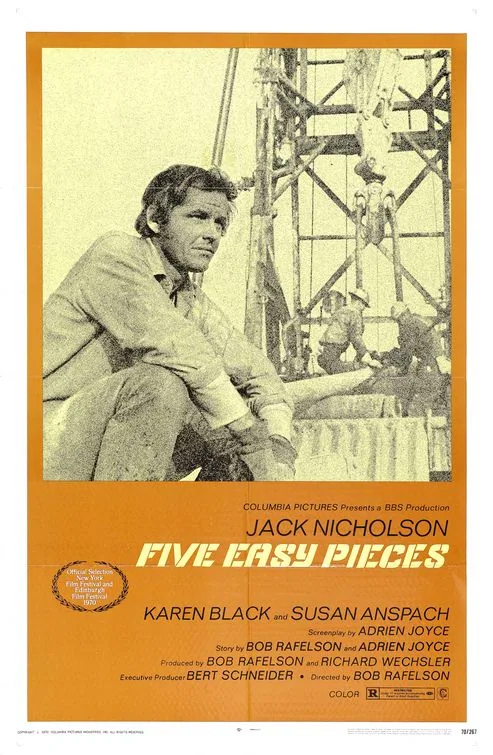
Oil-rig worker Bobby Dupea returns with his waitress girlfriend Rayette to the affluent musical family he left behind after learning that his father is gravely ill. His anger at class privilege coexists with the authority he exercises over Rayette, whose needs he repeatedly treats as interruptions to his self-invention. At home he cannot obtain the recognition he wants from his father, and a new attraction offers another route to leave rather than a stable answer to who he is. The film’s pauses and awkward exchanges make his mobility visible as an uneven privilege: he can reject worlds and people in ways Rayette cannot easily mirror.
What drives the story
A family illness draws Bobby back to the class world he rejected, exposing how his refusal of fixed identity also permits repeated escape from intimate responsibility. Bobby’s return does not repair the way he has treated Rayette during his attempted escape.
The people at its centre
Bobby resents others’ class judgments yet controls Rayette’s place in his life; his unresponsive father prevents confession from becoming mutual reconciliation. Music links his inherited privilege to a talent he has tried to disown.
What it feels like
Road travel, piano music, long pauses and uncomfortable social encounters form a restless character study rather than a clean return-home transformation. Awkward pauses and unglamorous rooms resist the romance of a clean road transformation.
Worth knowing
Compare with class estrangement and failed self-reinvention, while refusing to romanticize Bobby’s mobility as freedom equally available to Rayette or as discovery of an authentic self. His ability to leave repeatedly is a material advantage, not proof of freedom from class.
ClassIdentityAlienation
Mood
Restless · Intimate · Melancholic
Pacing
Measured
Visual style
Grounded · Intimate · Road imagery
Storytelling
Self-exiled musician returns · Unequal treatment of partner · Departure without resolution