Based on recorded story, mood and style. Your preferences can change the order.
What changes High Life: nonlinear, slow and contemplative and episodic crew history. Kiss of the Spider Woman: conversation-led.
In a Brazilian prison cell, political prisoner Valentin shares space with Molina, a gay man jailed for a sexual offense. Molina recounts vivid film fantasies to pass the time and soften the prison's harsh routines, while Valentin distrusts the stories and resists the authorities' effort to extract information. Their conversations gradually create an unexpected bond, as fantasy, desire, loyalty, and political danger make the cell a place of both coercion and connection.
Based on recorded story, mood and style. Your preferences can change the order.
Romance and intimacy
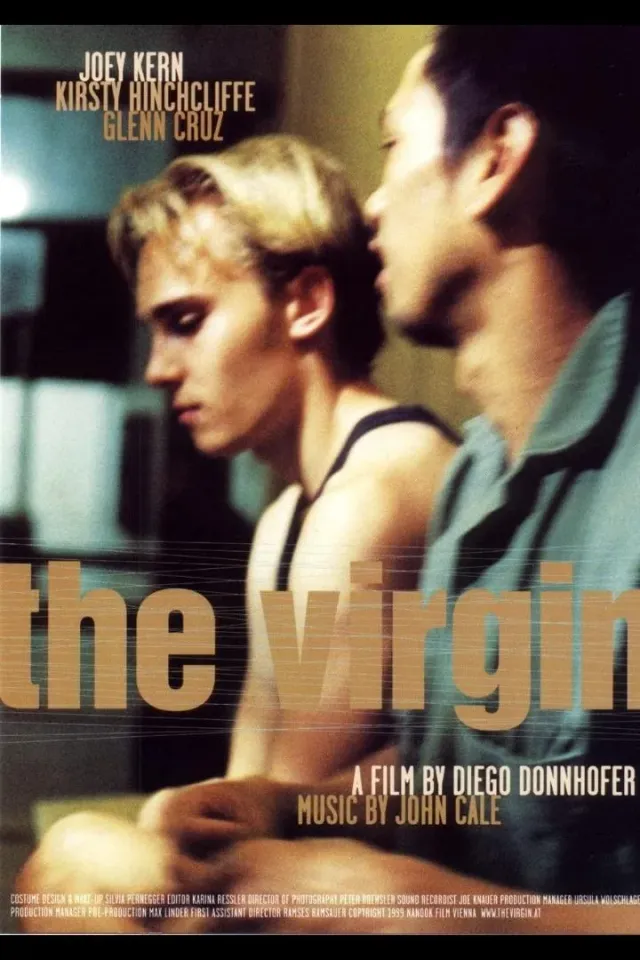
What changes High Life: nonlinear, slow and contemplative and episodic crew history. The Virgin: the film follows their movement across several cities and the emotional difference between konrad’s detachment and nina’s involvement.
Konrad, who calls himself The Virgin, moves through a life of travel, hustling and drug use without allowing events to touch him. Nina sees him as an example and follows him across Vienna, Athens, Cairo and Giza, but she experiences each encounter with far greater intensity. As the pair’s journeys and relationships unfold, the contrast between Konrad’s detachment and Nina’s vulnerability becomes the film’s central tension. Their travels reveal how a person can imitate another’s apparent freedom while becoming more exposed to hurt.
Based on recorded story, mood and style. Your preferences can change the order.
Space exploration · Survival
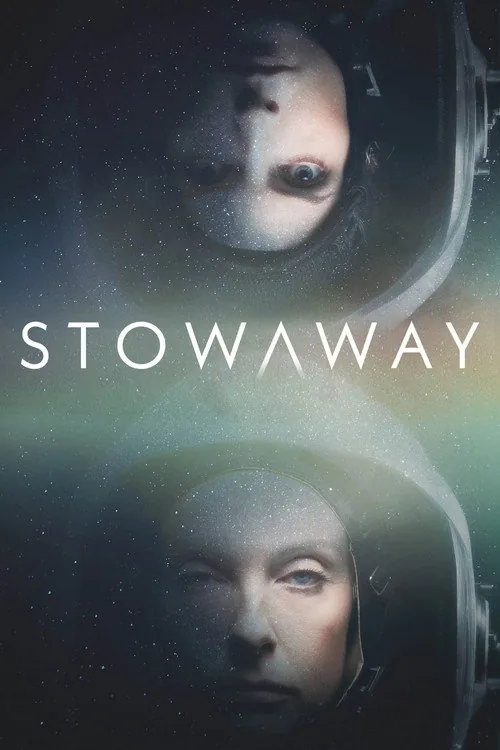
What changes High Life: nonlinear, slow and contemplative and episodic crew history. Stowaway: discovery and diagnosis, deliberative ethical conflict and high-risk spacewalk.
A three-person crew departs Earth for a two-year mission to Mars, but discovers an injured launch technician concealed aboard their spacecraft. The extra passenger creates an oxygen shortage that the ship cannot solve with its supplies, turning an ambitious mission into a moral crisis. Commander Marina Barnett, biologist David Kim, and medical researcher Zoe Levenson disagree over how to protect the crew and the stowaway. The contained science-fiction drama examines shared responsibility and sacrifice within the precise limits of a small spacecraft.
Based on recorded story, mood and style. Your preferences can change the order.
What changes High Life: nonlinear, slow and contemplative and episodic crew history. Here: a non-linear structure revisits one place across multiple generations.
The film remains anchored to one location while moving across different periods and generations of people who live in or pass through it. Domestic routines, relationships, and historical change become visible through the space itself, making the room a witness to lives it cannot control. The drama adapts a graphic-novel structure into a meditation on memory, time, family, and the meanings that accumulate around an ordinary place.
Based on recorded story, mood and style. Your preferences can change the order.
What changes High Life: nonlinear, slow and contemplative and episodic crew history. Battleship Potemkin: intense.
Sailors subjected to degrading conditions challenge the officers commanding their ship, and a confrontation over rotten food becomes a catalyst for mutiny. Public mourning and solidarity in a nearby port place the uprising inside a wider struggle over state violence. The film arranges bodies, crowds and abrupt collisions of images into a deliberately political account in which collective feeling becomes as important as the actions of any named individual.
Based on recorded story, mood and style. Your preferences can change the order.
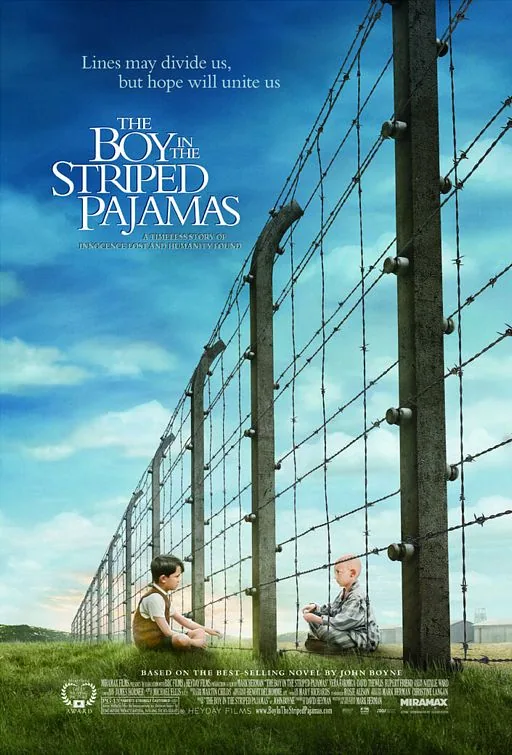
What changes High Life: nonlinear, slow and contemplative and episodic crew history. The Boy in the Striped Pajamas: fable-like progression and inevitable tragedy.
Eight-year-old Bruno moves with his family to the countryside when his father, an SS officer, takes command of a nearby concentration camp. Believing the prisoners’ uniforms mark a farm, Bruno explores the area and befriends Shmuel, a Jewish boy on the other side of the fence. Their conversations continue as Bruno’s sister absorbs Nazi ideology and his mother begins to understand what the camp is. When Shmuel’s father disappears, Bruno enters the camp in disguise to help search for him, with devastating consequences. The film presents this as a fable through a child’s limited understanding, but Holocaust educators have warned that its implausible premise can leave viewers with misleading ideas about camp life and the knowledge of ordinary Germans. It should not be used as a representative historical account.
Based on recorded story, mood and style. Your preferences can change the order.
Space exploration
What changes High Life: nonlinear, slow and contemplative and episodic crew history. Hidden Figures: steady and escalating.
At NASA’s segregated Langley center, mathematician Katherine Johnson, computing-unit leader Dorothy Vaughan and aspiring engineer Mary Jackson confront different barriers to work they are qualified to do. The space race creates demand for their expertise but does not automatically grant access, credit or promotion; each woman develops a distinct strategy, and their friendship makes those efforts more sustainable. The film compresses events and invents the composite supervisor Al Harrison. NASA historians have also noted that the famous bathroom walk was a real kind of injustice but not an event that happened to Johnson as shown. The drama’s momentum should not turn institutional change into a gift from one benevolent manager.
Based on recorded story, mood and style. Your preferences can change the order.
Survival
What changes High Life: nonlinear, slow and contemplative and episodic crew history. Nickel Boys: measured, episodic and reflective.
In 1960s Florida, Elwood Curtis is sent to a brutal reform school after a wrongful arrest, where he befriends the more pragmatic Turner. The boys negotiate the institution's violence and uncertain rules for staying safe, while their different understandings of resistance shape their bond. RaMell Ross's adaptation of Colson Whitehead's novel uses subjective visual perspectives, making memory and the boys' relationship central to a history of abuse and survival.
Based on recorded story, mood and style. Your preferences can change the order.
Space exploration
What changes High Life: nonlinear, slow and contemplative and episodic crew history. Voyagers: a contained ensemble story shifts from routine to increasingly unstable conflict.
A group of children are raised and sent aboard a long-distance spacecraft to reach a habitable planet generations later. When their adult supervisor dies, the young crew question the rules that have structured their lives, and their expedition becomes an experiment in power and desire. The enclosed science-fiction drama turns a mission into a study of social order, inherited purpose, and how quickly fragile systems can change.
A group of prisoners serving life sentences is sent on a space mission toward a black hole, where a scientist conducts experiments on the crew. Monte, a reserved prisoner, tries to survive the journey and protect his young daughter Willow as the ship’s isolated routines and power imbalances deepen. The film uses its confined spacecraft, experimental medicine, and nonlinear storytelling to examine intimacy, coercion, parenthood, and the possibility of choosing a different life.
What drives the story
Monte tries to protect his daughter aboard a prison ship where a scientist’s experiments control the crew’s lives.
The people at its centre
The bond between Monte and Willow contrasts with the coercive relationships imposed by the mission’s authority structure.
What it feels like
A formally daring space drama uses confinement and fragmented time to focus on bodily autonomy and parenthood.
Worth knowing
Its science fiction is intimate and ethically focused on one prison crew, rather than a mission to save Earth or explore new worlds.
coercionparenthoodisolation
Mood
austere · dreamlike · disturbing · meditative
Pacing
nonlinear · slow and contemplative · episodic crew history