Both share themes of loneliness and friendship, plus a melancholic and intimate atmosphere.
Why this matches +
Genres: Biography / Drama
Shared film traits
Based on recorded story, mood and style. Your preferences can change the order.
Work and ambition · Memory and identity
Expect reflective and wry, with measured and dialogue-led pacing.
In 1996, Rolling Stone reporter David Lipsky travels to Illinois to interview novelist David Foster Wallace after the publication of Infinite Jest. The pair spend several days together in Wallace’s home and on the road, talking about writing, fame, loneliness, addiction and the expectations placed on a writer whose book has become a cultural event. Lipsky records the conversations, but their growing rapport is complicated by competition, guardedness and the knowledge that the interview will eventually be published.
Based on recorded story, mood and style. Your preferences can change the order.
Work and ambition · Memory and identity
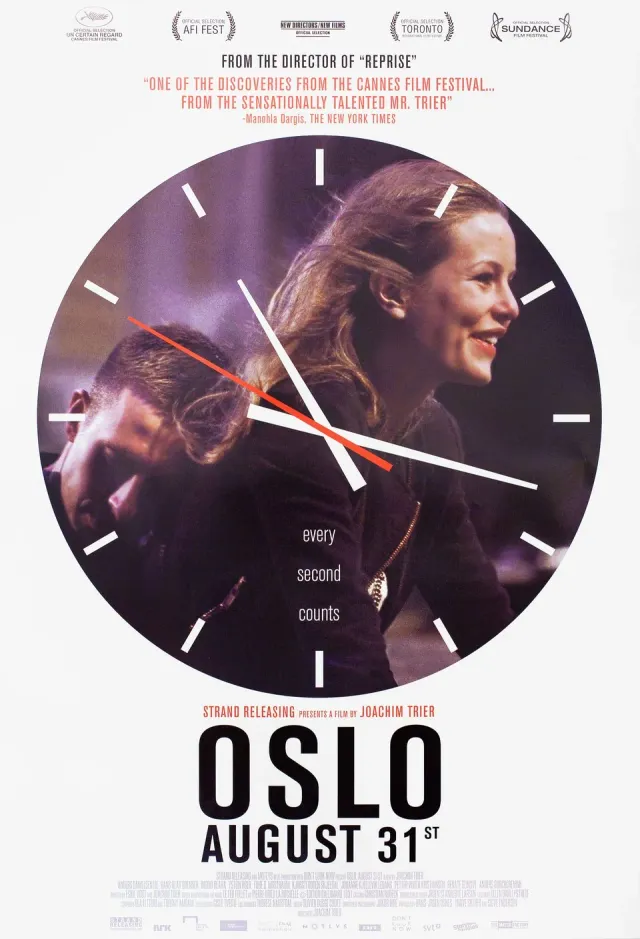
What changes Oslo, August 31st: measured, conversational and quietly escalating. The Virgin: the film follows their movement across several cities and the emotional difference between konrad’s detachment and nina’s involvement.
Konrad, who calls himself The Virgin, moves through a life of travel, hustling and drug use without allowing events to touch him. Nina sees him as an example and follows him across Vienna, Athens, Cairo and Giza, but she experiences each encounter with far greater intensity. As the pair’s journeys and relationships unfold, the contrast between Konrad’s detachment and Nina’s vulnerability becomes the film’s central tension. Their travels reveal how a person can imitate another’s apparent freedom while becoming more exposed to hurt.
Based on recorded story, mood and style. Your preferences can change the order.
What changes Oslo, August 31st: measured, conversational and quietly escalating. Beautiful Boy: fragmented and recurrent.
Journalist David Sheff tries to understand and help his teenage son Nic through repeated cycles of drug use, treatment and relapse. The story shifts between the father's perspective and Nic's experience, showing how affection can persist alongside exhaustion and uncertainty. Felix van Groeningen adapts a family memoir into an intimate drama about addiction that avoids a simple recovery arc, focusing instead on care, fear and the limits of control.
Based on recorded story, mood and style. Your preferences can change the order.
What changes Oslo, August 31st: measured, conversational and quietly escalating. Requiem for a Dream: intense.
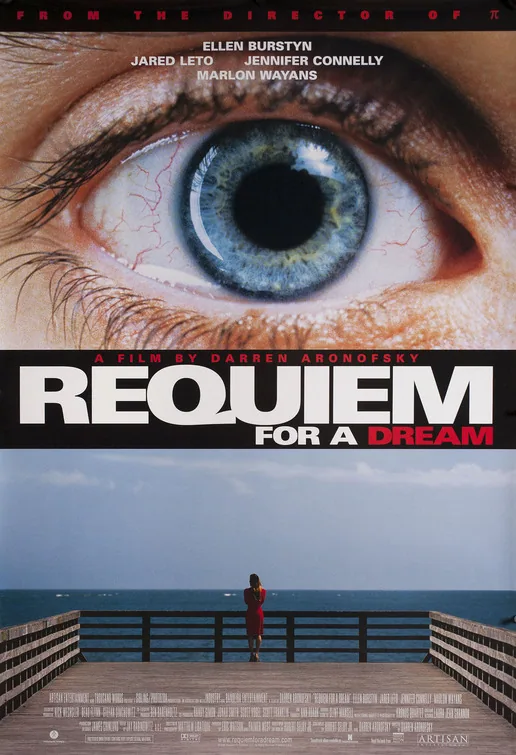
A lonely widow imagines that appearing on television will transform her life while her son and his friends pursue money and independence through drug dealing. Their hopes initially make escalating substance use appear useful or manageable. Separate routines converge into increasingly compulsive attempts to maintain the conditions of a desired future, exposing how recognition, romantic security and bodily control can each be narrowed into dependence.
Both share recovery drama, plus themes of recovery.
Why this matches +
Genres: Drama
Shared film traits
Based on recorded story, mood and style. Your preferences can change the order.
Mental health · Memory and identity
What changes Oslo, August 31st: measured, conversational and quietly escalating. The Outrun: nonlinear, reflective and gradually grounding.
After years of drinking in London, Rona returns to the remote Orkney islands where she grew up and begins rebuilding her life. The film moves between her present attempt at sobriety, memories of a difficult childhood and the relationships that led her to leave. Working among wind, sea and wildlife gives Rona a practical daily rhythm, but recovery remains uneven, shaped by family care, shame and her search for a way to inhabit the place again.
Both share themes of recovery and friendship, plus an intimate atmosphere.
Why this matches +
Genres: Drama
Shared film traits
Based on recorded story, mood and style. Your preferences can change the order.
Mental health · Memory and identity
What changes Oslo, August 31st: measured, conversational and quietly escalating. Causeway: slow, observational, understated and patient.
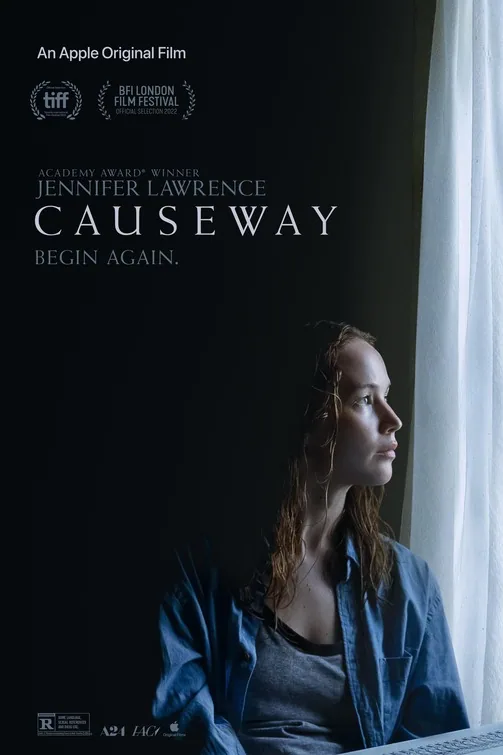
Army engineer Lynsey is recovering from a traumatic brain injury after deployment and hopes to return to military duty. When she must move back to New Orleans, ordinary tasks and memories make adjustment difficult. She finds a job cleaning pools and forms an unexpected friendship with James, an auto mechanic dealing with his own physical injury and grief. The film gives their conversations and gradual trust more weight than a conventional recovery arc.
Based on recorded story, mood and style. Your preferences can change the order.
Mental health · Romance and intimacy
What changes Oslo, August 31st: measured, conversational and quietly escalating. Eileen: slow-burn, character-focused, suspenseful and sharp turn.
In 1960s Massachusetts, Eileen Dunlop works at a juvenile detention facility and lives with her widowed, alcoholic father, whose behavior keeps her isolated. The arrival of psychologist Rebecca Saint John brings a new intellectual and emotional possibility into Eileen’s life. Their conversations and growing intimacy shift Eileen’s routine toward a dangerous secret involving an inmate and his family, turning a restrained character study into a tense psychological thriller.
Based on recorded story, mood and style. Your preferences can change the order.
Memory and identity
What changes Oslo, August 31st: measured, conversational and quietly escalating. A Single Man: measured and interior.
In 1960s Los Angeles, a British professor is grieving the sudden death of his partner and tries to move through one day while deciding whether he can continue living alone. Encounters with a friend, a student and strangers alter the emotional texture of that day without undoing his loss. The film turns clothing, color and routine into close expressions of grief, loneliness and the fragile possibility of renewed attention.
Based on recorded story, mood and style. Your preferences can change the order.
Mental health · Memory and identity
What changes Oslo, August 31st: measured, conversational and quietly escalating. The Chronology of Water: episodic, associative and emotionally cumulative.
Adapted from Lidia Yuknavitch’s memoir, the film follows Lidia from a difficult childhood into adulthood, where competitive swimming, intimate relationships, addiction, and writing become entwined with her effort to understand her past. Kristen Stewart shapes the story through a nonlinear, sensory approach that treats memory as something revisited and rewritten. Water becomes both a physical discipline and a recurring image for survival and self-expression.
Recovering addict Anders receives a day’s leave from treatment to attend a job interview in Oslo. He visits a friend, encounters people from his former life and moves through the city as he considers whether sobriety offers a future he can inhabit. Conversations about work, family, love and aging bring the gap between his hopes and what he has left undone into focus. Joachim Trier’s drama follows a single day with close attention to loneliness and the fragile possibility of beginning again.
What drives the story
A job interview and a return to the city bring Anders into contact with people who reflect on the life he wants and the past he cannot undo.
The people at its centre
Anders seeks closeness while struggling to answer his friend’s care or his former partners’ distance with a clear view of himself.
What it feels like
Long conversations and an ordinary city day create an intimate portrait of recovery that keeps the character’s inner crisis close to the surface.
Worth knowing
Its focus is one recovering man’s difficult return to ordinary urban life, not a medical account of treatment or a plot-centered crime story.
recoveryregretloneliness
Mood
melancholic · intimate · restless · clear-eyed
Pacing
measured · conversational · quietly escalating
Visual style
naturalistic Oslo locations · fluid city movement · soft daylight · observational framing
Storytelling
single-day structure · city portrait · recovery drama · adaptation of a novel