Both share themes of recovery, plus a raw and reflective atmosphere.
Why this matches +
Genres: Drama / Adventure
Shared film traits
Based on recorded story, mood and style. Your preferences can change the order.
Survival
What changes The Outrun: nonlinear, reflective and gradually grounding. Wild: episodic hike and flashback structure.
After the death of her mother and the unraveling of her marriage, Cheryl Strayed sets out alone on a long hike along the Pacific Crest Trail. She is inexperienced with the route and the weight of her pack, and each practical hardship brings memories of choices and losses she has tried to leave behind. Encounters with fellow hikers punctuate the solitude without turning the trail into a simple cure. Adapted from Strayed’s memoir, the film follows an interior recovery through physical distance and repeated effort. The film alternates trail hardships with remembered events, so resilience arrives through accumulation rather than one insight. Small errors with gear make each day's progress uncertain.
Both share themes of nature, plus a reflective and lyrical atmosphere.
Why this matches +
Genres: Drama
Shared film traits
Based on recorded story, mood and style. Your preferences can change the order.
What changes The Outrun: nonlinear, reflective and gradually grounding. The Salt Path: journey-led, measured and episodic.
Raynor and Moth Winn lose their home and learn that Moth has a serious illness, then decide to walk the South West Coast Path with few possessions. The journey exposes them to exhaustion, uncertainty and changing landscapes, while daily movement gives them a way to remain together through a period of upheaval. Adapted from Raynor Winn's memoir, Marianne Elliott's drama follows a couple trying to rediscover a sense of home through endurance and attention to the natural world.
Both share themes of memory, plus a raw and reflective atmosphere.
Why this matches +
Genres: Drama / Biography
Shared film traits
Based on recorded story, mood and style. Your preferences can change the order.
Mental health · Memory and identity
What changes The Outrun: nonlinear, reflective and gradually grounding. The Chronology of Water: episodic, associative and emotionally cumulative.
Adapted from Lidia Yuknavitch’s memoir, the film follows Lidia from a difficult childhood into adulthood, where competitive swimming, intimate relationships, addiction, and writing become entwined with her effort to understand her past. Kristen Stewart shapes the story through a nonlinear, sensory approach that treats memory as something revisited and rewritten. Water becomes both a physical discipline and a recurring image for survival and self-expression.
Both share recovery drama, plus themes of recovery.
Why this matches +
Genres: Drama
Shared film traits
Based on recorded story, mood and style. Your preferences can change the order.
Mental health · Family and care
What changes The Outrun: nonlinear, reflective and gradually grounding. To Leslie: measured, episodic, character-led and gradual.
Years after winning a local lottery, Leslie has lost the money and is living with alcoholism, unstable housing and damaged relationships. She returns to her West Texas hometown and reconnects with her adult son, whose offer of shelter comes with limits. Motel owner Sweeney eventually offers her work and a room, creating a fragile chance to rebuild trust. The drama focuses on recovery as a difficult series of choices supported by other people.
Based on recorded story, mood and style. Your preferences can change the order.
Family and care · Memory and identity
What changes The Outrun: nonlinear, reflective and gradually grounding. Swan Song: cameron considers a secret replacement procedure, meets the version of himself meant to continue his life and and weighs love against honesty..
In a near future, husband and father Cameron Turner is diagnosed with a terminal illness and offered a way to spare his family grief: a clone can take his place without their knowledge. Cameron weighs the promise of continuity against the ethics of replacement and the loss of a final chance to say goodbye. The intimate science-fiction drama makes identity a family decision.
Both share recovery drama, plus themes of recovery.
Why this matches +
Genres: Drama
Shared film traits
Based on recorded story, mood and style. Your preferences can change the order.
Mental health · Memory and identity
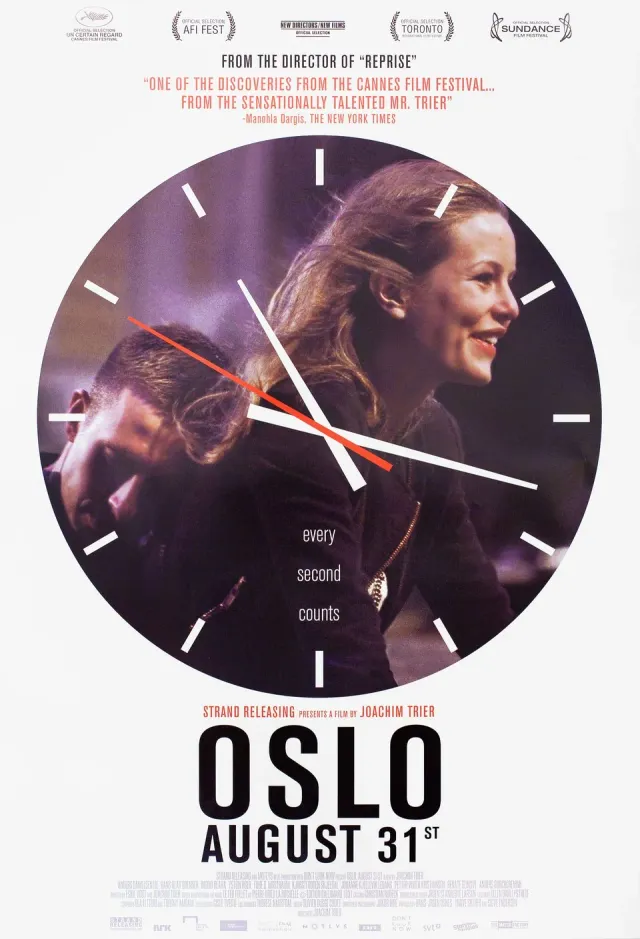
What changes The Outrun: nonlinear, reflective and gradually grounding. Oslo, August 31st: measured, conversational and quietly escalating.
Recovering addict Anders receives a day’s leave from treatment to attend a job interview in Oslo. He visits a friend, encounters people from his former life and moves through the city as he considers whether sobriety offers a future he can inhabit. Conversations about work, family, love and aging bring the gap between his hopes and what he has left undone into focus. Joachim Trier’s drama follows a single day with close attention to loneliness and the fragile possibility of beginning again.
Based on recorded story, mood and style. Your preferences can change the order.
Mental health · Family and care
What changes The Outrun: nonlinear, reflective and gradually grounding. Interiors: measured, chamber-like and reflective.
Arthur, a New York attorney, tells his wife Eve that he wants to separate and begin a different life. Their three adult daughters respond in different ways: Renata, a poet, feels caught between sympathy for her mother and concern for her father; Joey struggles with her own direction; and Flyn is often away working as an actress. When Arthur returns from a trip with Pearl, a warm and outgoing woman unlike Eve, the family must confront grief, resentment, and the emotional distance that has long shaped their home.
Based on recorded story, mood and style. Your preferences can change the order.
Mental health · Family and care
What changes The Outrun: nonlinear, reflective and gradually grounding. His Three Daughters: contained, dialogue-heavy and gradually softening.
Katie, Christina and Rachel gather in their father's New York apartment as he approaches the end of his life. They have lived with different degrees of distance from him and from one another, and the practical work of caring for him brings old resentments into the open. As the sisters wait and negotiate decisions, their compressed time together reveals competing versions of family history, responsibility and love without reducing their differences to a simple reconciliation.
Based on recorded story, mood and style. Your preferences can change the order.
What changes The Outrun: nonlinear, reflective and gradually grounding. Soul Surfer: steady recovery arc toward competition.
Teen surfer Bethany Hamilton loses an arm in a shark attack and works to return to competitive surfing with support from her family, friends and faith community. The biographical drama follows recovery through physical training, setbacks and a humanitarian trip that broadens her perspective. Its central movement is not simply toward a competition but toward rebuilding identity after a sudden change to a life organized around sport.
After years of drinking in London, Rona returns to the remote Orkney islands where she grew up and begins rebuilding her life. The film moves between her present attempt at sobriety, memories of a difficult childhood and the relationships that led her to leave. Working among wind, sea and wildlife gives Rona a practical daily rhythm, but recovery remains uneven, shaped by family care, shame and her search for a way to inhabit the place again.
What drives the story
A woman returns to her island home after treatment and tries to build a life in sobriety.
The people at its centre
Rona negotiates closeness with her parents while confronting memories that complicate her return.
What it feels like
Landscape and sound express recovery as a daily physical process rather than a simple turning point.
Worth knowing
Its fragmented time structure reflects memory without reducing addiction to one cause or cure.