Explore films connected to Pieces of a Woman through grief and private mourning, family pressure, loss and autonomy. Choose the qualities you want to carry into your next watch.
What should feel similar?
Find your next favourite
9 films · Closest overall matches
Hide films you’ve seen or don’t want. Saved on this device.
No matches for this combination yet.
Try another option or reset your choices to see more films.
Based on recorded story, mood and style. Your preferences can change the order.
What changes Pieces of a Woman: long immersive opening, quiet aftermath and emotionally gradual resolution. Tyrannosaur: deliberate, intense and character-led.
Joseph is a widower in northern England whose anger erupts across his daily life. After meeting Hannah, a charity-shop worker whose kindness initially unsettles him, he begins to return to her shop and accept a measure of help. Hannah’s life behind her public faith is controlled by an abusive husband, and the two form a connection shaped by private violence and shame. Paddy Considine’s drama follows whether compassion can survive when both characters are carrying damage they have struggled to name or escape.
Based on recorded story, mood and style. Your preferences can change the order.
Memory and identity
What changes Pieces of a Woman: long immersive opening, quiet aftermath and emotionally gradual resolution. The Divine Secrets of the Ya-Ya Sisterhood: alternating timelines and character-led.
A playwright's public comments about her childhood deepen a long-running rift with her mother and threaten to disrupt her upcoming wedding. The mother's lifelong friends intervene, bringing the daughter into a shared history that spans girlhood, marriage and painful family choices. The drama uses memories and an ensemble of older women to ask how adult children can understand parents without excusing the harm they experienced.
Based on recorded story, mood and style. Your preferences can change the order.
Memory and identity
What changes Pieces of a Woman: long immersive opening, quiet aftermath and emotionally gradual resolution. The Room Next Door: deliberate, conversation-led and quietly intense.
Ingrid, a successful writer, reconnects with Martha, a former colleague now living with terminal cancer. Martha asks Ingrid to stay close as she prepares to end her life on her own terms, and the two women retreat to a country house where companionship and difficult conversations replace the routines of the hospital. Their friendship, memories and conflicting responses to death create an intimate drama about autonomy, care and the limits of what one person can decide for another.
Based on recorded story, mood and style. Your preferences can change the order.
What changes Pieces of a Woman: long immersive opening, quiet aftermath and emotionally gradual resolution. Echo Valley: quiet farm routine is interrupted, investigation reveals a dangerous secret and mother faces escalating moral choices.
Kate lives a secluded life caring for horses at her Pennsylvania farm while grieving a personal loss. Her troubled daughter Claire arrives unexpectedly, hysterical and covered in someone else's blood, and Kate's instinct to protect her quickly collides with the need to understand what happened. As a dangerous secret emerges, mother and daughter become caught in choices that test their trust and expose the limits of unconditional loyalty. The psychological thriller turns a quiet rural home into the center of a tense story about sacrifice, family, and how far a parent will go to save a child.
Based on recorded story, mood and style. Your preferences can change the order.
What changes Pieces of a Woman: long immersive opening, quiet aftermath and emotionally gradual resolution. Hamnet: measured.
Chloé Zhao’s adaptation imagines the marriage of Agnes and William Shakespeare around the death of their young son Hamnet and the grief that follows. Agnes’s perspective keeps domestic care, intuitive knowledge and loss in the foreground, while the later theatre sequence proposes a powerful artistic response to bereavement. The connection between this private tragedy and Hamlet is the film’s imaginative premise, not a documented explanation of Shakespeare’s writing. Its intimate attention to family life builds toward an emotionally expansive performance, asking how art can give grief form without claiming to recover the historical couple’s private thoughts.
Based on recorded story, mood and style. Your preferences can change the order.
What changes Pieces of a Woman: long immersive opening, quiet aftermath and emotionally gradual resolution. To the Bone: treatment-house ensemble, incremental emotional shifts and open-ended recovery arc.
Twenty-year-old Ellen returns home after several attempts at treatment for anorexia and agrees, reluctantly, to enter a group program run by Dr. William Beckham. At the house she meets other patients facing different forms of eating disorders, while her stepmother, father, and younger sister try to support her from outside. Ellen's progress is uneven, and the film places recovery in relationships and daily decisions rather than a single turning point. It treats a difficult illness through the experiences of a young woman who must decide to participate in her own care.
Based on recorded story, mood and style. Your preferences can change the order.
Memory and identity
What changes Pieces of a Woman: long immersive opening, quiet aftermath and emotionally gradual resolution. The Quiet Girl: measured, minimal, patient and emotionally cumulative.
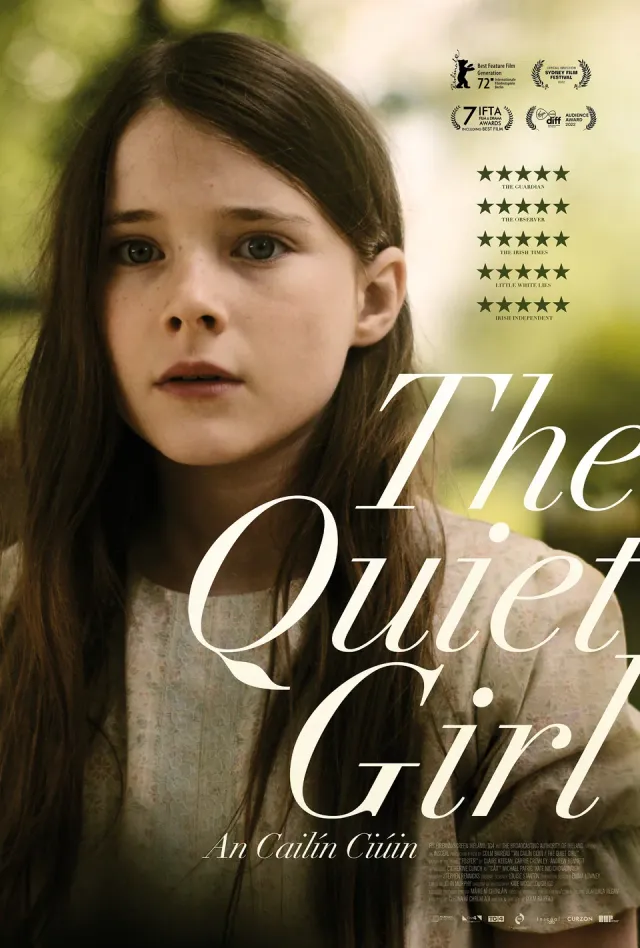
Nine-year-old Cáit is sent from her crowded home to stay with distant relatives in rural Ireland for the summer. Eibhlín welcomes her with patient care, while the more reserved Seán gradually makes room for the child in the routines of the farm. As Cáit learns the household’s silences and small acts of kindness, she discovers how attention can make a neglected child feel safe and how grief can remain present without being explained.
Based on recorded story, mood and style. Your preferences can change the order.
Memory and identity
What changes Pieces of a Woman: long immersive opening, quiet aftermath and emotionally gradual resolution. The Tree of Life: fragmented and contemplative.
Adult Jack reflects on his childhood in 1950s Texas, where his mother's warmth and his father's strict, ambitious parenting shaped his ideas about love and power. The memory of a family loss runs through his recollections, making ordinary moments of play, discipline and sibling rivalry feel charged with questions he could not answer as a child. The film moves between Jack's present, fragmented family memories and vast images of the universe's origins, placing private grief beside the scale of creation. Rather than offer a single explanatory account of the past, it lets images, music and recurrence carry much of the emotional argument. Jack's adult search is for a way to hold anger, love and absence together.
Based on recorded story, mood and style. Your preferences can change the order.
Memory and identity
What changes Pieces of a Woman: long immersive opening, quiet aftermath and emotionally gradual resolution. Martha Marcy May Marlene: slow psychological build, alternating timelines and unresolved ending.
After escaping a secluded commune in the Catskills, Martha seeks refuge at the lakeside home of her older sister Lucy and Lucy's husband. She struggles to adapt to their comfortable routines, while memories of the group's charismatic leader and controlling rules intrude on the present. The film moves between the household and Martha's earlier time at the commune, leaving uncertainty about what happened and whether she is still in danger.
Martha and Sean prepare for their first child, but a home birth ends in a devastating loss that alters their relationship and draws Martha's wealthy mother Elizabeth into an already fragile household. While Sean seeks ways to move forward and Elizabeth presses for accountability, Martha struggles to process grief in her own time. The film follows several months of private rupture and public judgment, using a long childbirth sequence and restrained domestic scenes to examine mourning that cannot be neatly resolved.
What drives the story
After losing their newborn, Martha tries to define what mourning means for her amid family expectations and a court case.
The people at its centre
Martha, Sean, and Elizabeth respond to loss in conflicting ways that make care feel both necessary and intrusive.
What it feels like
A grief drama begins with an immersive childbirth scene and then spends time with the slow, uneven work of mourning.
Worth knowing
Its focus is a mother's private grief and changing family ties, rather than a medical mystery seeking one simple cause.
grief and private mourningfamily pressureloss and autonomy
Mood
intimate · raw · somber
Pacing
long immersive opening · quiet aftermath · emotionally gradual resolution