Both share terminal illness, plus a reflective and intimate atmosphere.
Why this matches +
Genres: Drama
Shared film traits
Based on recorded story, mood and style. Your preferences can change the order.
Family and care · Memory and identity
What changes The Room Next Door: deliberate, conversation-led and quietly intense. His Three Daughters: contained, dialogue-heavy and gradually softening.
Katie, Christina and Rachel gather in their father's New York apartment as he approaches the end of his life. They have lived with different degrees of distance from him and from one another, and the practical work of caring for him brings old resentments into the open. As the sisters wait and negotiate decisions, their compressed time together reveals competing versions of family history, responsibility and love without reducing their differences to a simple reconciliation.
Based on recorded story, mood and style. Your preferences can change the order.
Family and care · Mental health
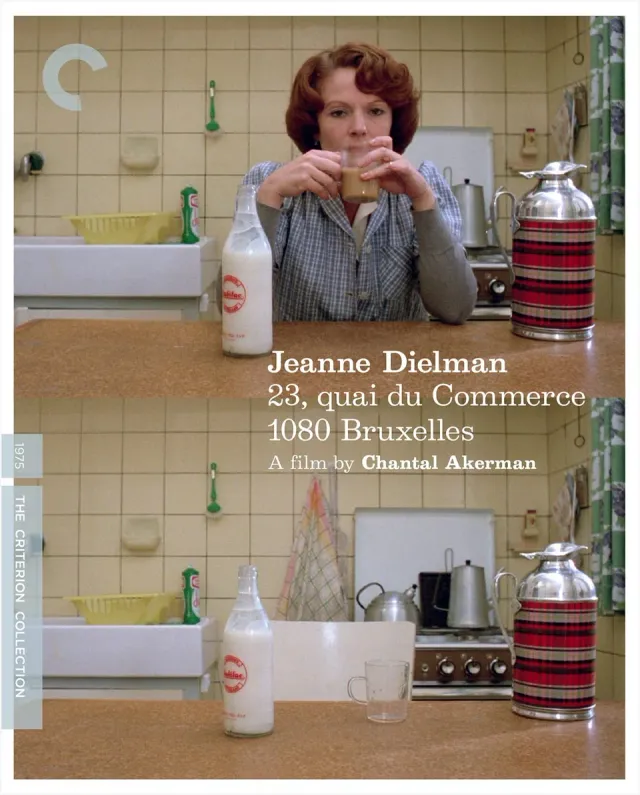
What changes The Room Next Door: deliberate, conversation-led and quietly intense. Jeanne Dielman, 23 quai du Commerce, 1080 Bruxelles: slow, repetitive and deliberate.
For several days in Brussels, widowed Jeanne Dielman moves through a carefully repeated schedule of cooking, cleaning, shopping and caring for her teenage son. She also receives a client at home each afternoon, fitting that work into the same disciplined routine. Small disruptions accumulate—a meal overcooks, an errand goes wrong, a task slips—until the rituals that structure her life no longer hold. The drama stays close to ordinary time and domestic labor.
Based on recorded story, mood and style. Your preferences can change the order.
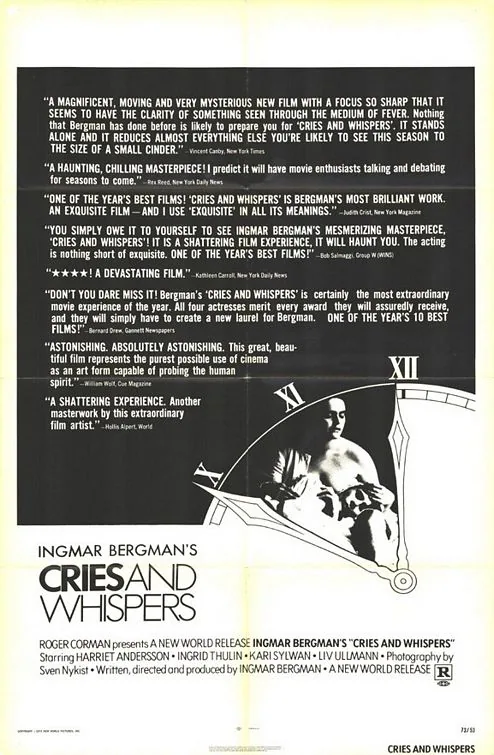
What changes The Room Next Door: deliberate, conversation-led and quietly intense. Cries and Whispers: slow burn.
Agnes is dying in a red-walled family house while her sisters Maria and Karin return, each carrying a different form of distance from her suffering. Anna, the maid, offers the physical comfort her relatives struggle to give, but her care does not grant her equal authority in the household. Memory and an uncanny return briefly reopen the possibility of tenderness before the sisters resume their separate lives. Bergman's close framing and saturated color make bodily pain intimate without resolving it into a reassuring story of reconciliation.
Both share themes of memory, plus an intimate atmosphere.
Why this matches +
Genres: Drama / romance
Shared film traits
Based on recorded story, mood and style. Your preferences can change the order.
Memory and identity
What changes The Room Next Door: deliberate, conversation-led and quietly intense. Sophie's Choice: gradual revelation and flashback.
In postwar Brooklyn, aspiring writer Stingo befriends Sophie, a Polish survivor of Auschwitz, and her volatile partner Nathan. Sophie gradually recounts how war, imprisonment and the people she lost shaped her life, while Nathan’s jealousy and instability make their present home unsafe. In a memory she has struggled to disclose, Sophie describes being forced by a Nazi officer to choose which of her two children would live; the coercion belongs to the persecution inflicted on her, not to any moral failing of her own. Stingo’s growing affection cannot repair the history that shapes their present.
Based on recorded story, mood and style. Your preferences can change the order.
Family and care · Memory and identity
What changes The Room Next Door: deliberate, conversation-led and quietly intense. Klara and the Sun: measured, intimate and quietly cumulative.
Klara is an Artificial Friend designed to accompany people, and she hopes to find a home where she can be useful. When she meets Josie, a teenager living with illness and family strain, the two form an immediate bond. Taika Waititi adapts Kazuo Ishiguro’s novel as a science-fiction drama about loyalty, care, and how an artificial companion interprets human grief and connection.
Based on recorded story, mood and style. Your preferences can change the order.
Memory and identity
What changes The Room Next Door: deliberate, conversation-led and quietly intense. Ingrid Goes West: obsession and move to los angeles, friendship deepens through imitation and exposure and emotional fallout.
After leaving a recovery facility, Ingrid Thorburn becomes fixated on Los Angeles influencer Taylor Sloane and uses her inheritance to move west and enter Taylor's social orbit. Ingrid studies Taylor's online posts, imitates her tastes, and stages encounters until the two become friends. The closeness gives Ingrid a sense of belonging, but the friendship rests on a one-sided performance and an imagined version of Taylor's life. As the gap between digital intimacy and real boundaries widens, Ingrid's need for attention threatens to undo the identity she has constructed.
Based on recorded story, mood and style. Your preferences can change the order.
Memory and identity
What changes The Room Next Door: deliberate, conversation-led and quietly intense. Last Night: suspicion during departure, intercut city-night encounters and quiet return and unresolved choice.
New York couple Joanna and Michael face a test of trust after Joanna notices Michael's closeness with a colleague during a party. On a business trip, Michael spends time with that colleague, while Joanna unexpectedly meets her former lover Alex and revisits the history they never fully resolved. The film follows both nights in parallel, tracing the quiet temptations and boundaries each spouse encounters. Rather than treating fidelity as a simple verdict, it observes how desire, memory, and a shared marriage can coexist uneasily.
Both share themes of friendship, plus a melancholy atmosphere.
Why this matches +
Genres: Drama
Shared film traits
Based on recorded story, mood and style. Your preferences can change the order.
Family and care · Memory and identity
What changes The Room Next Door: deliberate, conversation-led and quietly intense. The Eight Mountains: patient, seasonal, reflective and long-form.
Pietro first meets Bruno as a boy during a summer in an Alpine village, and the two form a friendship that continues through long periods apart. Pietro grows up moving between city life and the mountains, while Bruno remains tied to the place and the work of building a home there. Their adult relationship carries the film across decades, exploring inheritance, ambition and the different ways people seek a life that feels like their own.
Based on recorded story, mood and style. Your preferences can change the order.
What changes The Room Next Door: deliberate, conversation-led and quietly intense. Fish Tank: patient observation and gradual emotional disturbance.
Fifteen-year-old Mia lives with her mother and younger sister in an Essex housing estate, feeling restless and isolated from the people around her. Dance is one of the few things that gives her a sense of direction. When her mother’s new boyfriend enters the household, Mia becomes drawn into a complicated relationship that changes her understanding of trust and adulthood. Andrea Arnold’s British drama follows her through a compressed period of family tension and self-discovery, using close observation and a young protagonist’s perspective to depict a life with few easy choices.
Ingrid, a successful writer, reconnects with Martha, a former colleague now living with terminal cancer. Martha asks Ingrid to stay close as she prepares to end her life on her own terms, and the two women retreat to a country house where companionship and difficult conversations replace the routines of the hospital. Their friendship, memories and conflicting responses to death create an intimate drama about autonomy, care and the limits of what one person can decide for another.
What drives the story
A writer supports an old friend with terminal cancer as she makes a private decision about how to die.
The people at its centre
Ingrid offers presence and companionship while Martha insists on control over her final days.
What it feels like
Measured dialogue and composed images create room for grief, disagreement and the tenderness of a long friendship.
Worth knowing
The story emphasizes chosen intimacy and autonomy instead of a medical procedural or inspirational recovery arc.