Explore films connected to Sardar Udham through colonial violence and memory, resistance and political commitment, justice and revenge. Choose the qualities you want to carry into your next watch.
What should feel similar?
Find your next favourite
9 films · Closest overall matches
Hide films you’ve seen or don’t want. Saved on this device.
No matches for this combination yet.
Try another option or reset your choices to see more films.
Based on recorded story, mood and style. Your preferences can change the order.
Political resistance · War and civilian life
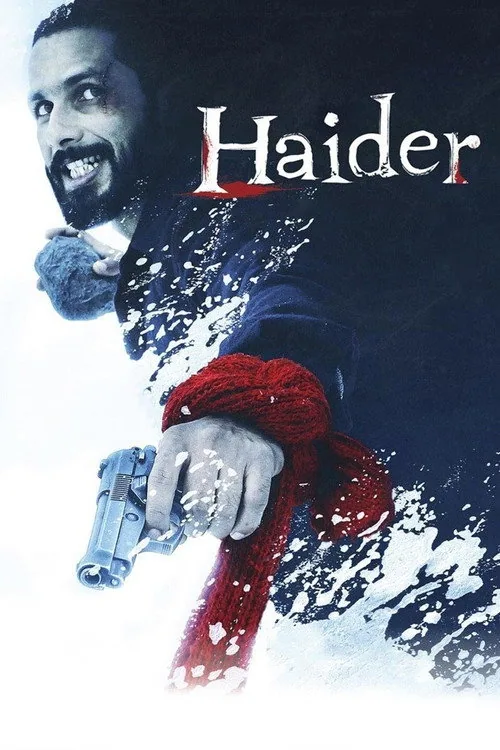
What changes Sardar Udham: present-day pursuit alternates with earlier memories, travel and surveillance build patient tension and massacre sequence reframes the final act. Haider: investigation-led opening, political tension and performance and tragic revenge escalation.
Set during the Kashmir insurgency of 1995, Haider returns to Srinagar after his father disappears during a military detention. His search draws him into a family crisis involving his mother Ghazala, his uncle Khurram, and Arshia, a journalist whose father works in the police. Vishal Bhardwaj relocates Hamlet to a conflict zone where grief, state violence, loyalty, and betrayal overlap. The result is a political tragedy that places Shakespeare's revenge story within the lived uncertainty of Kashmir.
Based on recorded story, mood and style. Your preferences can change the order.
Political resistance
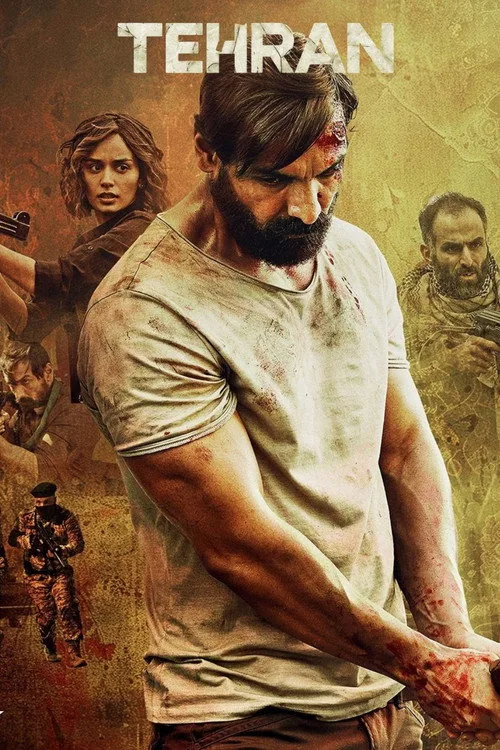
What changes Sardar Udham: present-day pursuit alternates with earlier memories, travel and surveillance build patient tension and massacre sequence reframes the final act. Tehran: attack creates a personal question, investigation expands into international politics and pursuit isolates the officer.
After a bombing in Delhi kills a young woman he knew, Special Cell officer Rajeev Kumar is drawn into an investigation that reaches beyond India. His pursuit of answers becomes an intelligence operation involving Iran and Israel, where diplomatic pressures and covert agendas complicate the search for responsibility. As the case unfolds, Rajeev finds himself isolated from the institutions that once supported him and hunted by opposing forces. The political thriller places one officer's need for justice inside a tense international landscape of espionage and state interests.
Based on recorded story, mood and style. Your preferences can change the order.
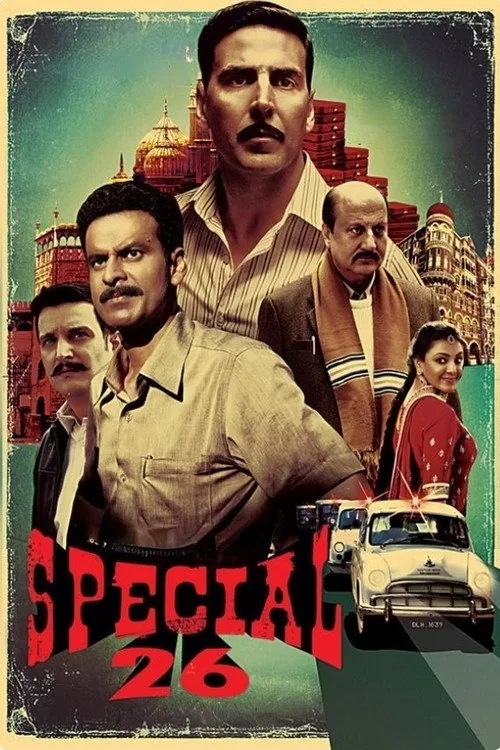
What changes Sardar Udham: present-day pursuit alternates with earlier memories, travel and surveillance build patient tension and massacre sequence reframes the final act. Special 26: procedural build, carefully staged heists and cat-and-mouse escalation.
Ajay Singh and his accomplices pose as government investigators, recruit unsuspecting local police to support their raids, and steal black money from powerful targets. They disperse after each operation and return to ordinary lives, while a real CBI officer begins to connect the deceptions. As the crew plans its most ambitious con, the film builds a measured cat-and-mouse contest around disguise, trust, and the practical details of a convincing fake raid.
Based on recorded story, mood and style. Your preferences can change the order.
Political resistance
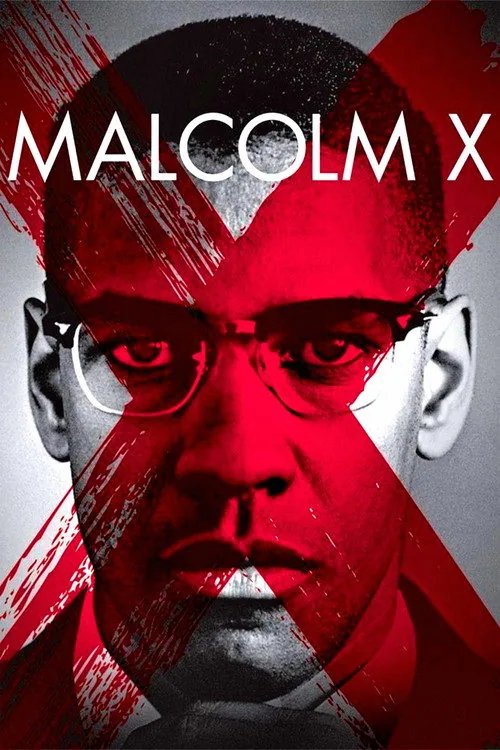
What changes Sardar Udham: present-day pursuit alternates with earlier memories, travel and surveillance build patient tension and massacre sequence reframes the final act. Malcolm X: a name change and religious transformation mark stages in a life shaped by racial violence and organizing..
Spike Lee’s biographical drama follows Malcolm Little from a childhood shaped by racial violence and family loss through his criminal years in Boston and Harlem. Imprisonment leads him to the Nation of Islam, where he becomes a prominent minister and adopts the name Malcolm X; later, a break with the organization and a pilgrimage to Mecca reshape his views. The film then follows his independent political work and assassination in 1965. Denzel Washington’s performance anchors a long, chaptered account based largely on The Autobiography of Malcolm X.
Based on recorded story, mood and style. Your preferences can change the order.
War and civilian life
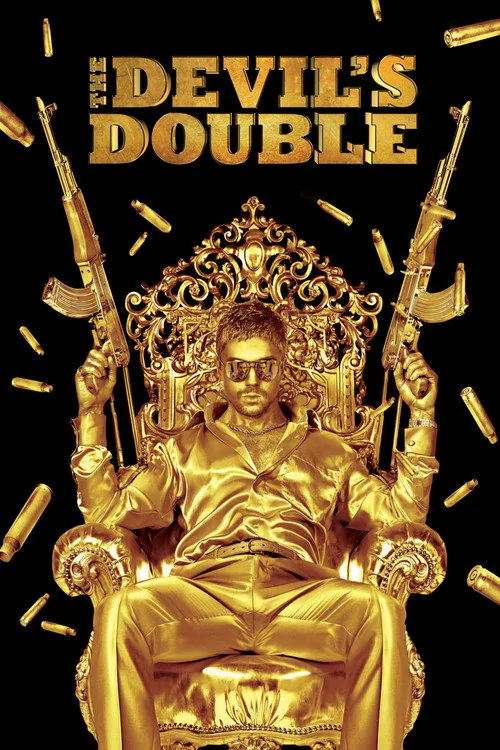
What changes Sardar Udham: present-day pursuit alternates with earlier memories, travel and surveillance build patient tension and massacre sequence reframes the final act. The Devil's Double: episodic escalation, high-tension encounters and sustained threat.
In 1987 Iraq, soldier Latif Yahia is forced to become the body double of Uday Hussein, Saddam Hussein's volatile son. Surgery and rehearsals make him resemble Uday, but the role also exposes him to a life of lavish excess, political violence, and constant danger. Latif attempts to preserve his own identity and protect his family while moving through the circles of power he was ordered to impersonate. Based on Yahia's account, the thriller uses doubling to examine coercion, survival, and the instability of a public persona under dictatorship.
Based on recorded story, mood and style. Your preferences can change the order.
War and civilian life
What changes Sardar Udham: present-day pursuit alternates with earlier memories, travel and surveillance build patient tension and massacre sequence reframes the final act. Hotel Mumbai: a multi-character siege structure moves through parallel survival efforts.
During the 2008 Mumbai attacks, hotel staff and guests are trapped in the Taj Mahal Palace while armed terrorists move through the building. Chef Hemant Oberoi and waiter Arjun try to protect visitors as police and families struggle to respond outside. The historical thriller follows multiple people under siege, emphasizing the practical acts of courage and coordination that emerge within a public space transformed by violence.
Based on recorded story, mood and style. Your preferences can change the order.
War and civilian life
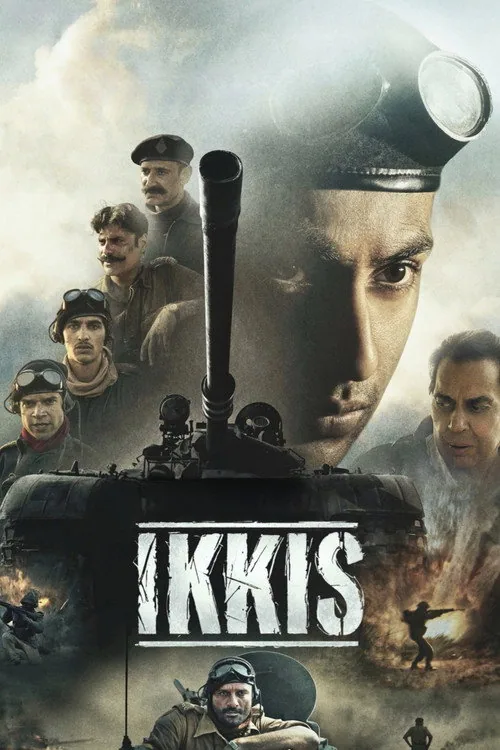
What changes Sardar Udham: present-day pursuit alternates with earlier memories, travel and surveillance build patient tension and massacre sequence reframes the final act. Ikkis: training forms the young officer, war brings him to the battlefield and memory connects the conflict's opposing sides.
Ikkis portrays Second Lieutenant Arun Khetarpal, a young Indian tank commander whose actions during the 1971 India–Pakistan War made him the youngest recipient of India's Param Vir Chakra. The film follows his military training, friendships, emerging romance, and entry into combat as he wrestles with the fear and purpose of a soldier barely past adolescence. It also frames his story through a later encounter between his father and a former Pakistani officer. The Hindi biographical war drama joins battlefield action with remembrance and a call for human understanding across national lines.
Based on recorded story, mood and style. Your preferences can change the order.
Political resistance
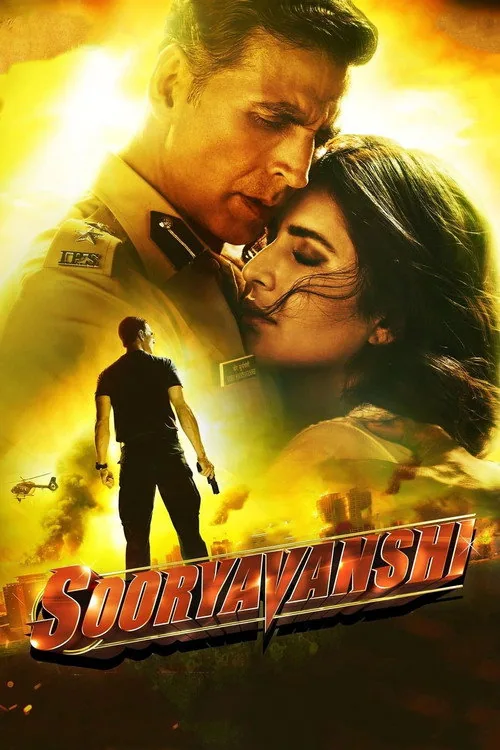
What changes Sardar Udham: present-day pursuit alternates with earlier memories, travel and surveillance build patient tension and massacre sequence reframes the final act. Sooryavanshi: investigation-led setup, action set pieces and large-scale climax.
Veer Sooryavanshi, chief of Mumbai’s Anti-Terrorism Squad, investigates a sleeper-cell network and a cache of explosives connected to a planned attack on the city. As the threat grows, the case draws in other police heroes from the connected cop-film universe of Rohit Shetty. Akshay Kumar leads a Hindi-language action film that combines intelligence work, large-scale chases, and a public-safety mission, with family responsibilities running alongside the increasingly urgent investigation.
Based on recorded story, mood and style. Your preferences can change the order.
Political resistance
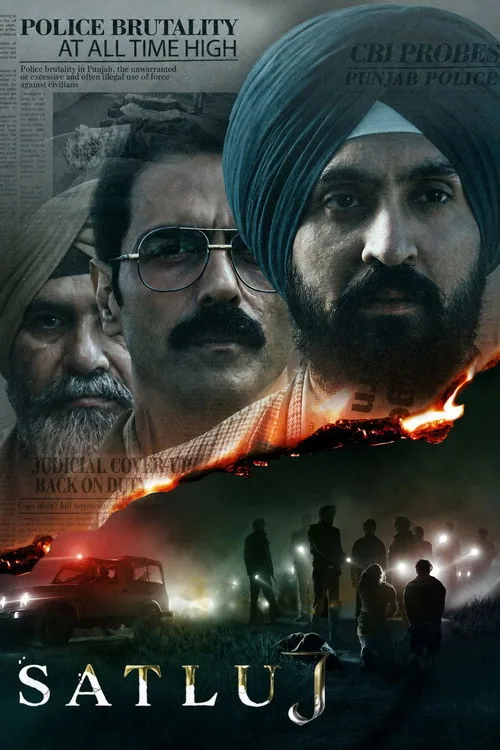
What changes Sardar Udham: present-day pursuit alternates with earlier memories, travel and surveillance build patient tension and massacre sequence reframes the final act. Satluj: an activist’s examination of cremation records exposes a pattern of disappearances during punjab’s insurgency..
In the early 1990s, Punjab human-rights activist Jaswant Singh Khalra investigates reports of people who disappeared during the insurgency and finds evidence that unidentified victims were secretly cremated. Working from municipal and cremation records, he attempts to document the scale of the deaths and bring the findings to public attention. His investigation places him and his family under increasing pressure from state authorities. Honey Trehan’s drama, originally titled Punjab ’95 and released in 2026 as Satluj, depicts Khalra’s activism and disappearance against a contested period of recent history.
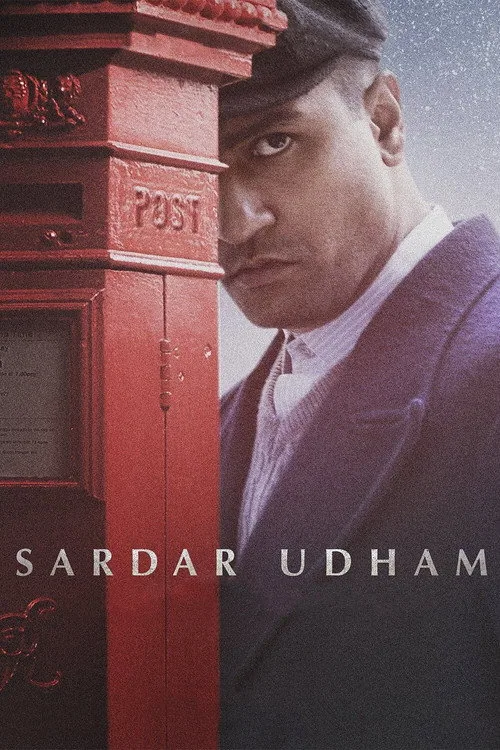
Udham Singh, a revolutionary who survived the 1919 Jallianwala Bagh massacre, travels from colonial India to London under aliases while pursuing former Punjab governor Michael O'Dwyer. The film moves between Udham's preparations in 1940 and earlier experiences of imprisonment, organizing, and political struggle. Its long, non-linear account links a planned assassination to the violence that shaped his resolve, while showing the years of surveillance and displacement required to reach his target.
What drives the story
Udham Singh's years-long pursuit of Michael O'Dwyer connects his journey through exile to the Jallianwala Bagh massacre.
The people at its centre
Udham survives through aliases and temporary alliances, keeping his inner life guarded as political purpose structures his choices.
What it feels like
A measured historical drama uses fragmented chronology and a lengthy massacre sequence to make memory central to its impact.
Worth knowing
The story follows a specific revolutionary's preparation and memory across decades, rather than a broad overview of Indian independence.
colonial violence and memoryresistance and political commitmentjustice and revenge
Mood
somber · patient · haunting
Pacing
present-day pursuit alternates with earlier memories · travel and surveillance build patient tension · massacre sequence reframes the final act
Visual style
muted period cinematography · detailed colonial-era locations · extended depiction of historical violence
Storytelling
revolutionary pursues a colonial official in London · non-linear structure revisits formative events · historical massacre shapes a long plan