An opportunist's factory operation becomes a rescue effort as escalating persecution turns employment, paperwork and money into fragile instruments of survival.
Why this matches +
These offer a related experience with a meaningful difference in story, tone, or presentation.
An adjacent discovery: a related idea with a different viewing experience.
Genres: Drama / Biography
Shared film traits
Based on recorded story, mood and style. Your preferences can change the order.
War and civilian life
What changes Jewish people struggle to survive Nazi persecution while decisions made under coercion carry immense moral weight; an industrialist's efforts to protect workers.
A businessman joins the Nazi occupation economy in Kraków intending to profit from factories staffed by exploited Jewish workers. His dependence on a Jewish accountant brings practical contact with lives that the regime treats as disposable. As ghetto clearance and camp violence expose the machinery of extermination, his priorities change, and commercial access becomes a precarious means of protecting workers from deportation and death.
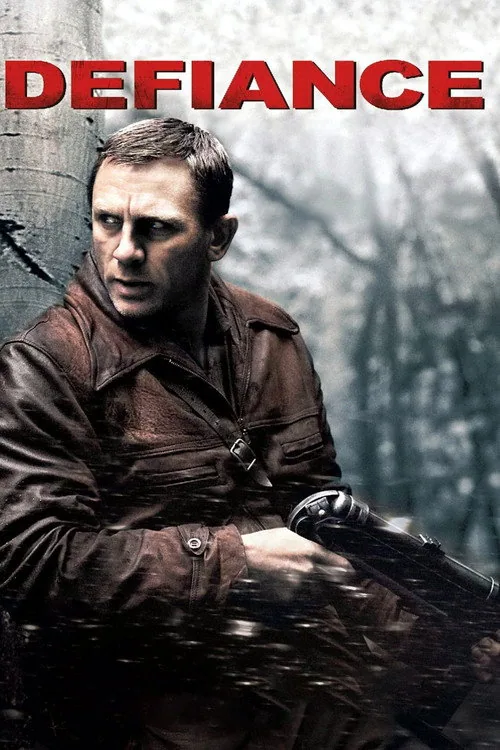
The group’s growth protects more refugees but makes food, mobility, and defense increasingly difficult.
Why this matches +
These offer a related experience with a meaningful difference in story, tone, or presentation.
An adjacent discovery: a related idea with a different viewing experience.
Genres: War / Drama
Shared film traits
Based on recorded story, mood and style. Your preferences can change the order.
War and civilian life · Survival
What changes Jewish people face dangerous decisions about survival, solidarity and resistance under Nazi occupation; a partisan community in the forest.
After Nazi forces and local collaborators kill their parents, the Bielski brothers flee into the forests of occupied Belarus and gather Jewish survivors around them. Tuvia prioritizes shelter and preservation of life, while Zus favors more aggressive resistance; the camp’s survival tests their leadership as winter, scarce food, internal conflict, and a German offensive close in. The war drama follows a refuge becoming a community, with armed resistance always tied to the vulnerable people it is meant to protect.
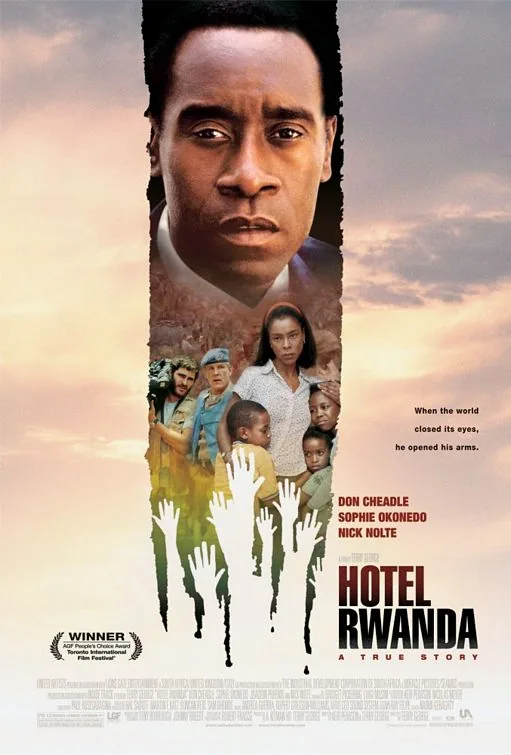
An improvised refuge survives through repeated negotiations whose apparent protections remain vulnerable to both armed intimidation and international abandonment.
Why this matches +
These offer a related experience with a meaningful difference in story, tone, or presentation.
An adjacent discovery: a related idea with a different viewing experience.
Genres: Drama / Biography
Shared film traits
Based on recorded story, mood and style. Your preferences can change the order.
War and civilian life · Survival
What changes People threatened by mass atrocity must navigate coercive authorities and scarce options to protect others; the Rwandan genocide.
A hotel manager in Kigali tries to keep guests, neighbours and his own family alive as organised anti-Tutsi violence makes ordinary professional routines inadequate. Contacts, supplies and the hotel's international status create temporary leverage, but outside promises repeatedly prove less protective than expected. Each negotiation exposes the limits of treating rescue as a question of commercial influence when the wider institutions with the power to intervene choose restricted obligations or withdrawal.
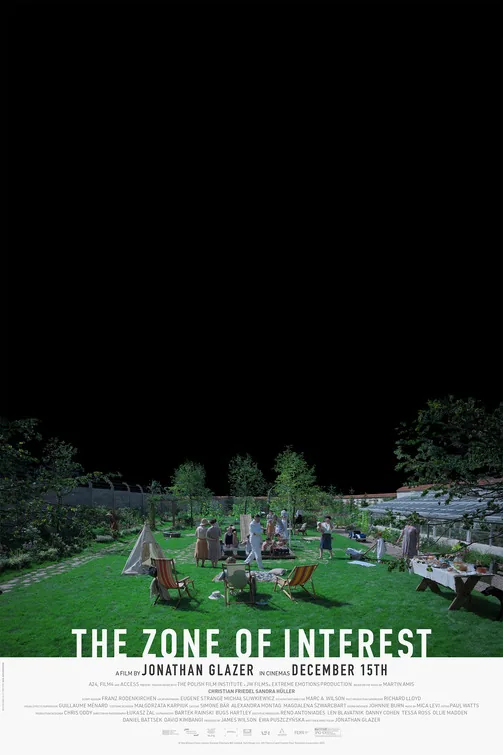
A family’s effort to make an ordinary home beside Auschwitz depends on refusing the human reality that their daily comfort encloses.
Why this matches +
These offer a related experience with a meaningful difference in story, tone, or presentation.
An adjacent discovery: a related idea with a different viewing experience.
Genres: Drama / Historical
Shared film traits
Based on recorded story, mood and style. Your preferences can change the order.
War and civilian life
What changes A film examines the machinery and proximity of a Nazi concentration camp through constrained lives and moral blindness; perpetrators' domestic life rather than prisoners' resistance.
Rudolf Höss, commandant of Auschwitz, and his wife Hedwig try to build a comfortable family life in a home and garden directly beside the camp. Their children play, visitors arrive and domestic routines continue, while the noises and smoke from the camp remain present beyond the wall. Rudolf’s work and Hedwig’s attachment to the household shape the family’s decisions, including arguments over status and relocation. The film does not follow prisoners through the camp as a conventional war story; it makes the surrounding domestic normality the frame through which the machinery of genocide is apprehended. Its starkest contrast is between the household’s attention to garden and status and the camp’s audible presence beyond their wall.
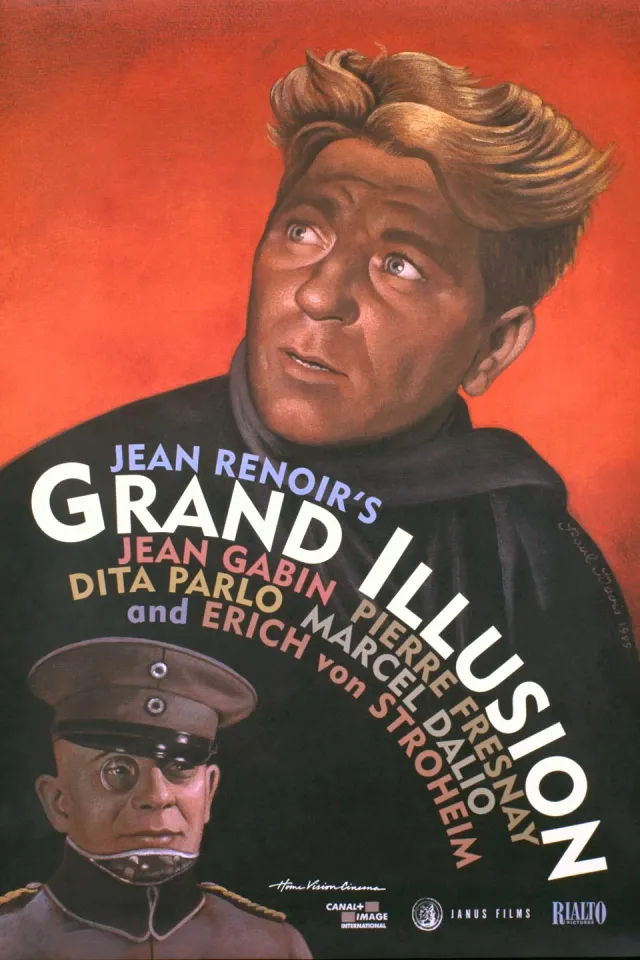
Escape plans structure the action, but each transfer between camps shifts the social meaning of captivity. De Boëldieu’s sacrifice protects others while also marking a class order he understands to be disappearing.
Why this matches +
These offer a related experience with a meaningful difference in story, tone, or presentation.
An adjacent discovery: a related idea with a different viewing experience.
Genres: War / Drama
Shared film traits
Based on recorded story, mood and style. Your preferences can change the order.
War and civilian life
What changes Prisoners under wartime captivity form bonds and debate loyalty, survival and resistance within an institutional hierarchy; French officers in World War I.
French officers held in German prisoner-of-war camps during the First World War form bonds that cross rank, nationality and class, but those bonds do not make their circumstances equal. Aristocratic captain de Boëldieu recognizes a shared code with German officer von Rauffenstein, while mechanic Maréchal and Jewish banker Rosenthal plan a more practical escape. The war’s changing fortunes expose the aristocrats’ fading social world and make the prisoners’ temporary solidarity less stable than it first appears. Renoir’s drama asks what holds people together when inherited class distinctions outlast formal declarations of fraternity. Its refuge story is humanist without presenting every character as interchangeable; Rosenthal’s Jewish identity and the contrasts in social mobility are central to what that humanism can and cannot include.
In a Nazi concentration camp, a Jewish counterfeiter is compelled to help produce forged currency for a German operation, gaining temporary survival at the cost of moral compromise. He and the other prisoners face choices shaped by coercion, scarcity and the risks of resistance. Based on wartime events, the drama focuses on constrained decisions under atrocity and on the uneasy line between collaboration forced by violence and active allegiance.
What drives the story
The counterfeit operation gives prisoners a narrow chance to survive inside a system built to destroy them.
The people at its centre
Sally’s compromises and the prisoners’ disagreements reveal that survival offers no clean moral position.
What it feels like
A controlled, procedural focus makes material detail and small choices carry the film’s tension.
Worth knowing
A coercion-centered camp drama differs from a broad military liberation narrative.