A retrospective interview becomes a musical life story, linking Cohan’s personal ambition to the changing forms of American popular performance.
Why this matches +
These films share important themes, atmosphere or storytelling interests with this selection.
Genres: Drama / Biography
Shared film traits
Based on recorded story, mood and style. Your preferences can change the order.
Music and performance
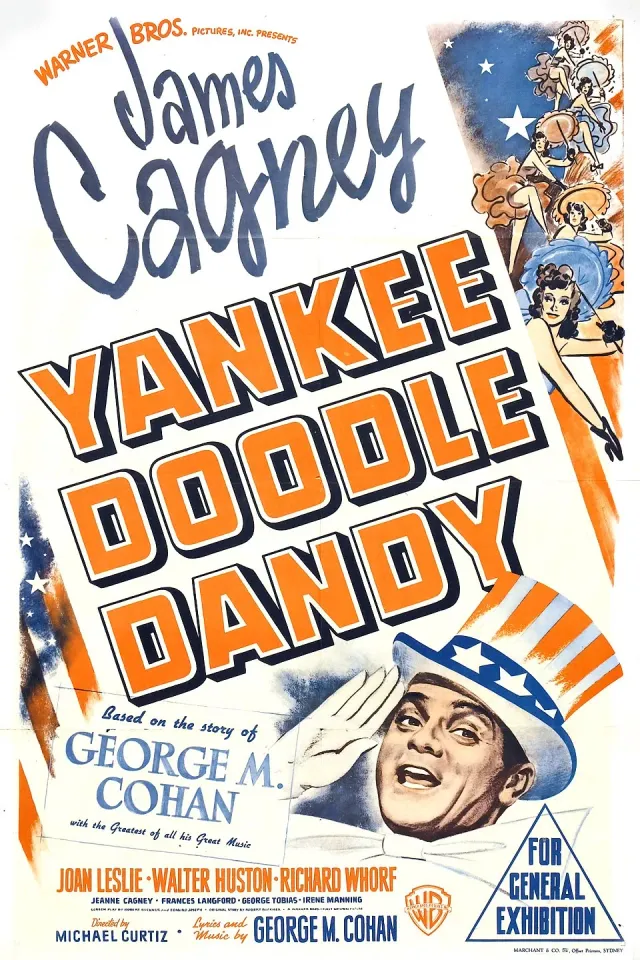
What changes Its own story: A retrospective interview becomes a musical life story, linking Cohan’s personal ambition to the changing forms of American popular performance.
The film frames George M. Cohan’s career through a visit to the White House, where he recounts his life to President Franklin Roosevelt. In flashbacks, Cohan grows up in a vaudeville family, finds success as a performer and songwriter, builds a partnership with Sam Harris, and becomes associated with patriotic stage songs such as “Over There.” James Cagney’s musical performance carries the story from family acts to Broadway spectacle. The film is an openly celebratory portrait made during wartime, and its polished biography compresses or reshapes the historical record for a show-business legend. Its finale transforms Cohan’s songs into a national memory performance.
The revue's casting choices give the sisters unequal opportunities, and Eddie's shifting attraction turns a professional competition into a personal one.
Why this matches +
These films share important themes, atmosphere or storytelling interests with this selection.
Genres: Romance / Musical
Shared film traits
Based on recorded story, mood and style. Your preferences can change the order.
Music and performance
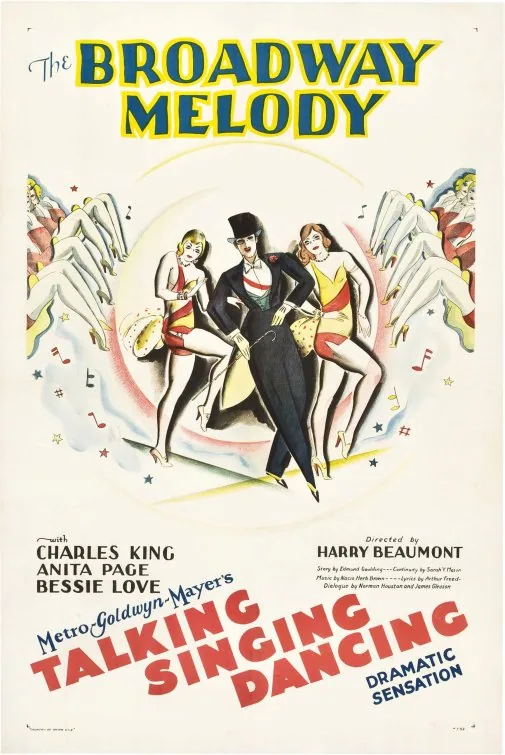
What changes Its own story: The revue's casting choices give the sisters unequal opportunities, and Eddie's shifting attraction turns a professional competition into a personal one.
Sisters Hank and Queenie Mahoney arrive in New York hoping to perform their vaudeville act in producer Francis Zanfield's revue. Hank relies on her business sense and talent, while Queenie's beauty attracts attention from the producer and the wealthy playboy Jock Warriner. Eddie Kearns, who is engaged to Hank, becomes drawn to Queenie, complicating the sisters' loyalty and their chances of success. As rehearsals and career opportunities reshape their plans, the film tests whether family devotion can survive rivalry in a world that treats women as performers and romantic prizes.
Barnum’s drive to turn a popular show into social legitimacy pulls him away from the performers whose work made his success possible.
Why this matches +
These films share important themes, atmosphere or storytelling interests with this selection.
Genres: Drama / Romance
Shared film traits
Based on recorded story, mood and style. Your preferences can change the order.
Music and performance
What changes Its own story: Barnum’s drive to turn a popular show into social legitimacy pulls him away from the performers whose work made his success possible.
P. T. Barnum builds a New York entertainment business by gathering performers excluded from conventional society and presenting them to paying crowds. As the show grows, Barnum chases elite approval and risks the trust of the troupe and his family, while singer Jenny Lind offers a new route to respectability. The musical uses that conflict to celebrate performance and belonging, but its bright, romanticized portrait substantially simplifies Barnum’s historical career and the exploitation of people he displayed. Its emotional appeal and its treatment of the real subjects should be kept distinct.
An entertainer's rise intensifies a marriage's imbalance when her earning power collides with her partner's pride and dependence on risky ventures.
Why this matches +
These films share important themes, atmosphere or storytelling interests with this selection.
Genres: Musical / Drama
Shared film traits
Based on recorded story, mood and style. Your preferences can change the order.
Music and performance
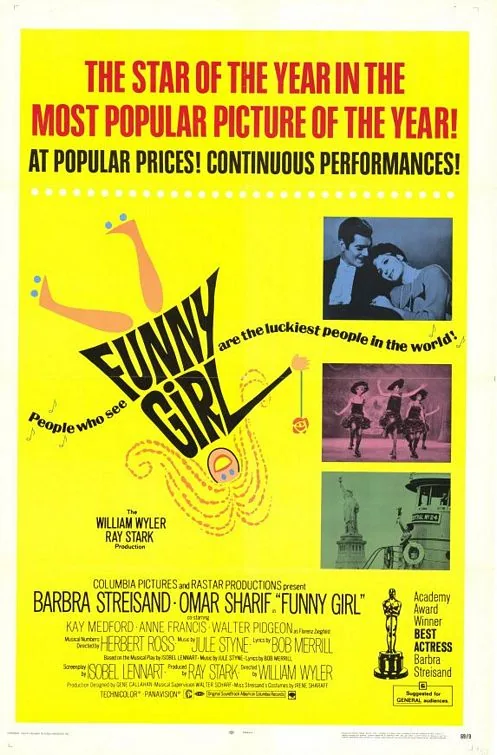
What changes Its own story: An entertainer's rise intensifies a marriage's imbalance when her earning power collides with her partner's pride and dependence on risky ventures.
Fanny Brice turns an appearance others consider unsuitable for the stage into the basis of a distinctive comic and musical persona. Professional success brings her closer to a glamorous gambler whose independence becomes harder to sustain as her career grows. Her confidence before an audience does not translate into security within their marriage. The film links show-business ascent with a relationship in which money, pride and unequal public standing make devotion unable to resolve recurring conflict.
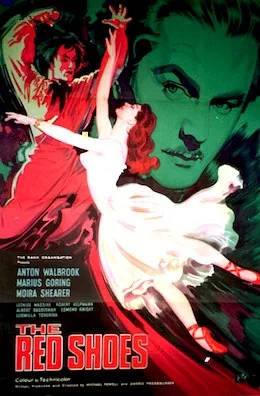
A ballerina’s ascent under a controlling impresario becomes entwined with her relationship with a young composer.
Why this matches +
These films share important themes, atmosphere or storytelling interests with this selection.
Genres: Drama / Music
Shared film traits
Based on recorded story, mood and style. Your preferences can change the order.
Music and performance
What changes Its own story: A ballerina’s ascent under a controlling impresario becomes entwined with her relationship with a young composer.
Young ballerina Vicky Page joins the celebrated company led by demanding impresario Boris Lermontov. Her performance in a new ballet makes her a star, while her growing love for composer Julian Craster competes with Lermontov’s insistence on total devotion to art. As professional triumph and personal attachment pull in opposing directions, Vicky must confront the costs of the life she has chosen.
Shared characteristics
Genre: Drama
Poster: Film rights holders; original promotional poster documented by Wikipedia · Image source
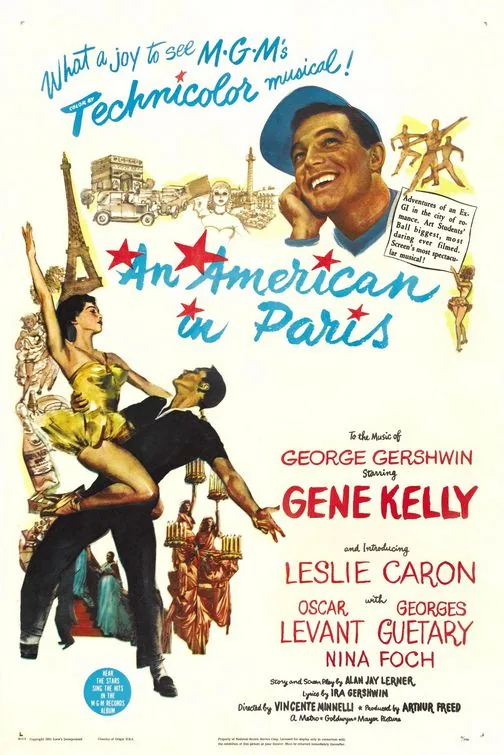
An artist's new patronage and a romantic encounter create competing obligations that money and charm cannot neatly reconcile.
Why this matches +
These films explore a related idea in a different setting, genre or style.
An adjacent discovery: a related idea with a different viewing experience.
Genres: Musical
Shared film traits
Based on recorded story, mood and style. Your preferences can change the order.
Music and performance
What changes Its own story: An artist's new patronage and a romantic encounter create competing obligations that money and charm cannot neatly reconcile.
An American former serviceman tries to make a living as a painter in Paris and receives attention from a wealthy woman whose patronage carries personal expectations. His attraction to a young dancer becomes complicated by her existing attachment to a man connected to his own social circle. Friendship, financial dependence and romantic imagination repeatedly cross, turning a city of artistic possibility into a place where pursuing a dream can also mean neglecting another person's claim.
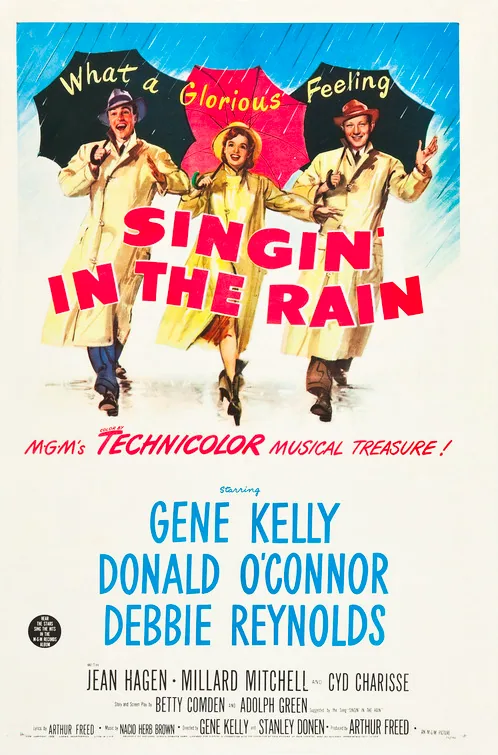
A studio's conversion to sound turns a production crisis into a dispute over whose performance and voice receive public credit.
Why this matches +
These films explore a related idea in a different setting, genre or style.
An adjacent discovery: a related idea with a different viewing experience.
Genres: Romance / Comedy
Shared film traits
Based on recorded story, mood and style. Your preferences can change the order.
Music and performance
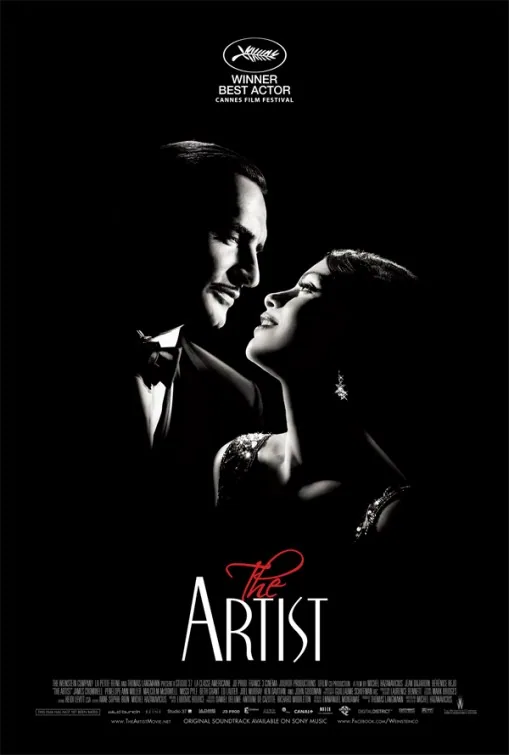
What changes Its own story: A studio's conversion to sound turns a production crisis into a dispute over whose performance and voice receive public credit.
A silent-film star faces an industry transition when sound threatens to expose the limitations of his established screen partnership. A young performer with a stronger voice helps transform a troubled production into a musical, while studio publicity tries to preserve the illusion that the existing leading lady supplies everything audiences hear. Romance and professional recognition become entangled with the hidden labour making cinematic glamour possible.
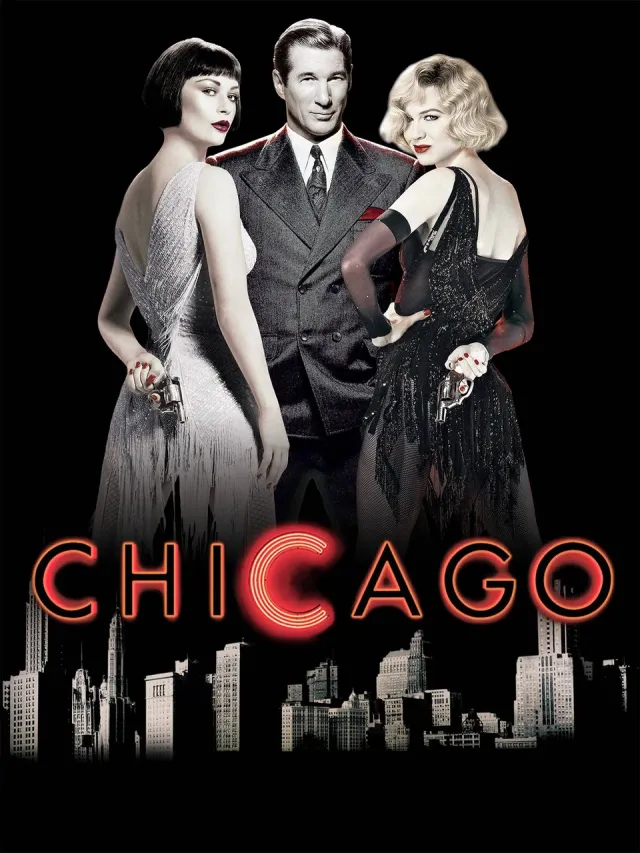
A defendant converts a criminal case into a publicity opportunity while competing for the limited attention on which her apparent value depends.
Why this matches +
These films explore a related idea in a different setting, genre or style.
An adjacent discovery: a related idea with a different viewing experience.
Genres: Drama / Comedy
Shared film traits
Based on recorded story, mood and style. Your preferences can change the order.
Music and performance
What changes Its own story: A defendant converts a criminal case into a publicity opportunity while competing for the limited attention on which her apparent value depends.
An aspiring performer jailed after a killing discovers that publicity may be more useful to her future than innocence or professional ability. Competition with another notorious prisoner unfolds through a lawyer and a media environment willing to package violence as entertainment. Fantasies staged as musical performances turn legal strategy, sexual reputation and public attention into elements of the same transaction, exposing how little sustained recognition depends on truth.
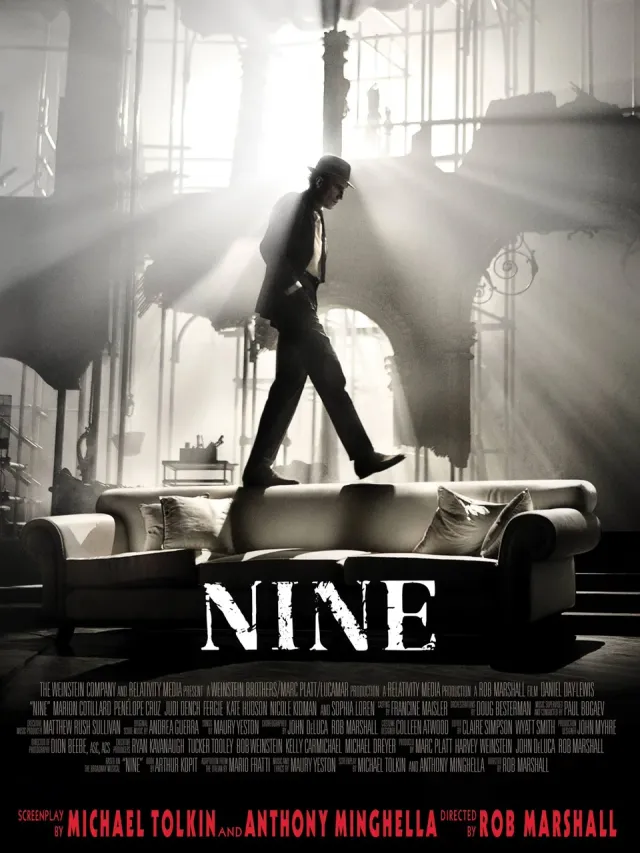
Guido’s stalled production forces him to revisit the relationships and memories he draws upon for art.
Why this matches +
These films explore a related idea in a different setting, genre or style.
An adjacent discovery: a related idea with a different viewing experience.
Genres: Drama / Musical
Shared film traits
Based on recorded story, mood and style. Your preferences can change the order.
Music and performance
What changes An introspective production block and sexualized memory replace the upward expansion of public spectacle, while musical fantasy exposes an artist-producer's divided private life.
Film director Guido Contini tries to make a new movie while facing a creative crisis and reflecting on the women whose affection and expectations shape his life. Rehearsals, memories and fantasy sequences overlap as he struggles to turn experience into art. The musical adapts a stage tradition of inward performance, making artistic ambition and romantic confusion part of the same elaborately staged problem.
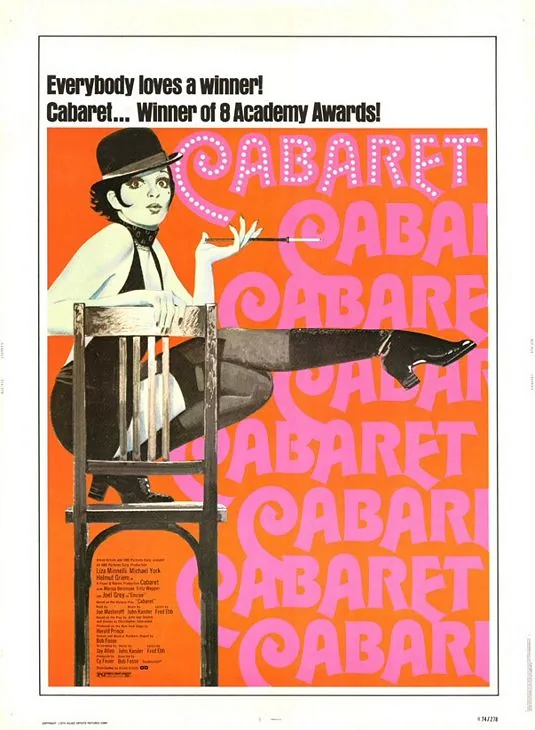
Romantic and sexual experiments unfold alongside fascism's rise, with the club's stage translating political change into performance but not stopping it. The songs comment on events without making performers politically omniscient.
Why this matches +
These films explore a related idea in a different setting, genre or style.
An adjacent discovery: a related idea with a different viewing experience.
Genres: Musical / Drama
Shared film traits
Based on recorded story, mood and style. Your preferences can change the order.
Music and performance
What changes Sexual ambiguity and encroaching political terror make the stage world much harsher than a lavish historical revue biography, while performance reveals the pressures surrounding its makers.
In 1931 Berlin, English academic Brian Roberts meets American performer Sally Bowles in the world around the Kit Kat Club. Their relationship, her attachment to a wealthy patron and the club's exuberant performances unfold as political exclusion becomes ordinary outside its stage. The musical numbers comment on the dramatic action without safely standing apart from it: spectacle can expose brutality while also helping a community treat it as someone else's problem. Personal freedom and romantic choice remain unequal as fascism tightens its hold. The Emcee's numbers can turn a casual audience's laughter into part of the film's critique.
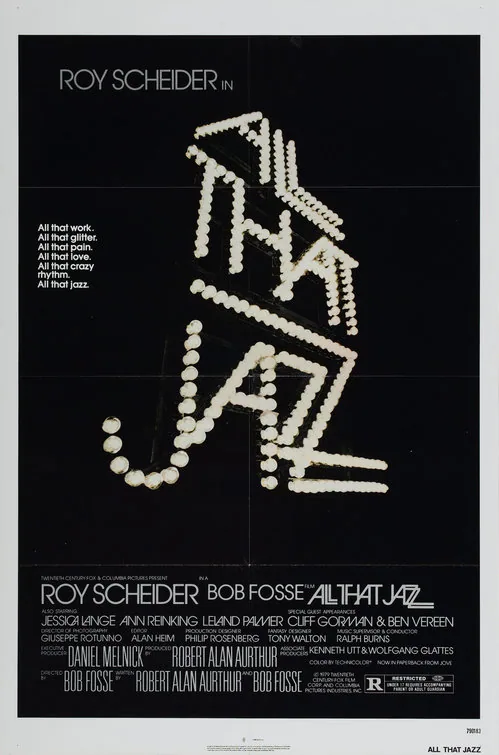
Gideon keeps moving between stage rehearsal, film editing and medical strain, trying to preserve work and appetite by editing out the evidence of collapse. The production process itself becomes the plot's accelerating clock.
Why this matches +
These films explore a related idea in a different setting, genre or style.
An adjacent discovery: a related idea with a different viewing experience.
Genres: Drama / Musical
Shared film traits
Based on recorded story, mood and style. Your preferences can change the order.
Music and performance
What changes Explicit sexuality, self-destructive excess and mortality make the theatrical production story far darker, while staging turns an ambitious producer's life into spectacle.
Joe Gideon, a Broadway director and choreographer, juggles a new stage production, the editing of his latest film, family obligations and a punishing work routine. His theatrical discipline depends on treating exhaustion as something to be cut around, while the people close to him watch that self-image fail. Fantasies with an imagined figure of death interrupt rehearsals and daily life, making performance a way to control what he cannot admit. Bob Fosse's semi-autobiographical musical turns the labor of making a show into a show about the cost of making one.
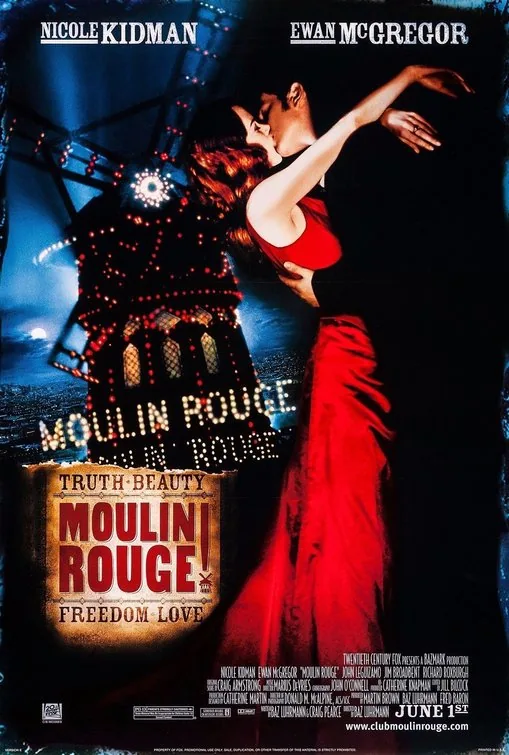
A secret romance develops inside a production financed by a possessive patron, forcing the lovers to turn performance into a means of concealment and expression.
Why this matches +
These films explore a related idea in a different setting, genre or style.
An adjacent discovery: a related idea with a different viewing experience.
Genres: Drama / Romance
Shared film traits
Based on recorded story, mood and style. Your preferences can change the order.
Music and performance
What changes Erotic patronage, doomed romance and rapid pop-song montage replace a broad impresario biography, while theatrical extravagance makes commercial risk emotionally seductive.
A young writer enters a Parisian cabaret hoping to join an artistic revolution and falls in love with its star performer. Their relationship must be concealed from a wealthy patron whose funding is expected to secure the venue's future and access to the woman he desires. A theatrical production becomes both cover and mirror for their romance, while illness and economic dependence make declarations of freedom increasingly fragile.
A technological change threatens a star's livelihood and identity while someone linked to his past finds new opportunity.
Why this matches +
These films explore a related idea in a different setting, genre or style.
An adjacent discovery: a related idea with a different viewing experience.
Genres: Drama / Romance
Shared film traits
Based on recorded story, mood and style. Your preferences can change the order.
Music and performance
What changes Its own story: A technological change threatens a star's livelihood and identity while someone linked to his past finds new opportunity.
A celebrated silent-film actor enjoys an established public identity just as recorded dialogue begins changing the industry around him. A young performer he briefly helps adapts to the new medium, and their careers move in opposite directions. Pride and fear make offers of assistance difficult to accept, turning professional obsolescence into a private crisis about whether affection can survive unequal success.
The changing narrators make the band’s shared history feel disputed rather than settled.
Why this matches +
These films explore a related idea in a different setting, genre or style.
An adjacent discovery: a related idea with a different viewing experience.
Genres: Music / Drama
Shared film traits
Based on recorded story, mood and style. Your preferences can change the order.
Music and performance
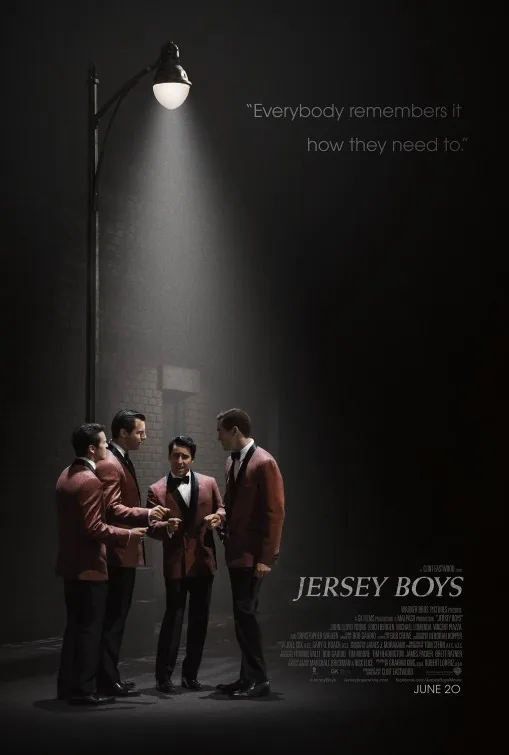
What changes Its own story: The changing narrators make the band’s shared history feel disputed rather than settled.
Four young men from New Jersey form the Four Seasons and rise from local performances to international success, with Frankie Valli’s distinctive voice at the center. Told in sections shaped by the band members’ perspectives, the story tracks recording breakthroughs alongside debts, family strain and changing loyalties. The musical biopic examines the cost of group ambition while returning to the songs that made the band recognizable.
An industry ascent unfolds alongside a spouse's decline, turning professional support into an intimate conflict over dependence, dignity and sacrifice.
Why this matches +
These films explore a related idea in a different setting, genre or style.
An adjacent discovery: a related idea with a different viewing experience.
Genres: Drama / Romance
Shared film traits
Based on recorded story, mood and style. Your preferences can change the order.
Music and performance
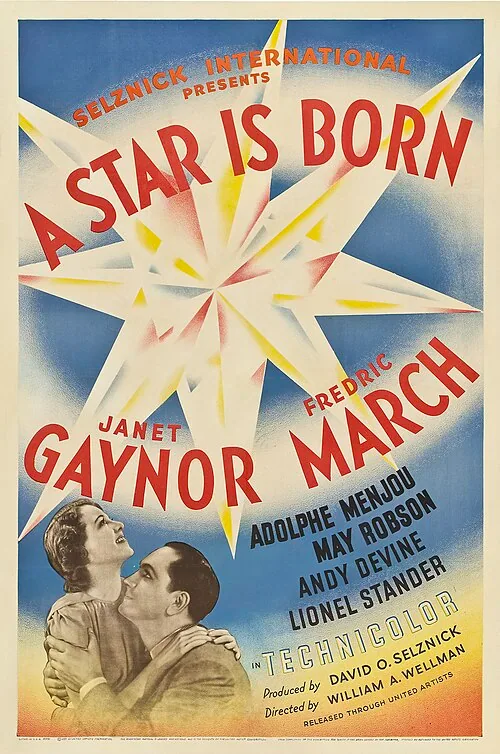
What changes Addiction, marital decline and tragic sacrifice replace the expansive stage revue, while public success places intimate commitments under pressure.
An aspiring actress arrives in Hollywood and receives help from an established actor whose career is beginning to collapse. Their professional collaboration becomes marriage, but her growing recognition intensifies the imbalance between public success and his dependence on alcohol. Attempts to protect one another become tangled with pride and sacrifice, exposing the cost of a relationship whose partners are moving in opposite directions within the same industry.
A manager's strategy for commercial access reshapes an ensemble by treating performers' bodies, voices and relationships as adjustable parts of a marketable product. Curtis moves the group toward crossover success by changing its sound, billing and lineup, creating winners and costs.
Why this matches +
These films explore a related idea in a different setting, genre or style.
An adjacent discovery: a related idea with a different viewing experience.
Genres: Drama / Musical
Shared film traits
Based on recorded story, mood and style. Your preferences can change the order.
Music and performance
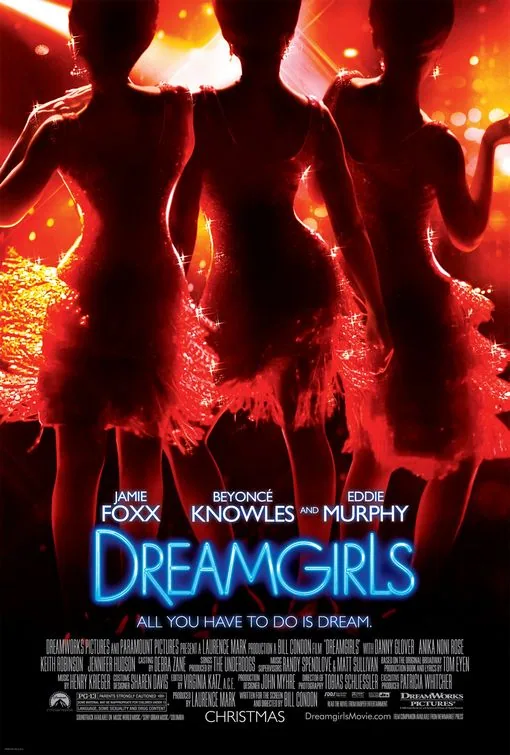
What changes A sharper ensemble conflict over musical control and personal betrayal replaces the historical impresario chronicle, while commercial stage success reshapes private relationships.
A vocal trio enters the recording business through a manager who can see a route to success in markets structured by racial exclusion. The pursuit of crossover appeal changes the group's sound, public image and distribution of attention, pushing its most distinctive singer out of the center. Romantic dependence and professional control become difficult to separate as different women seek a voice in the work and futures being sold under their names. Effie’s vocal power does not protect her from a business model that increasingly sells another face and sound.
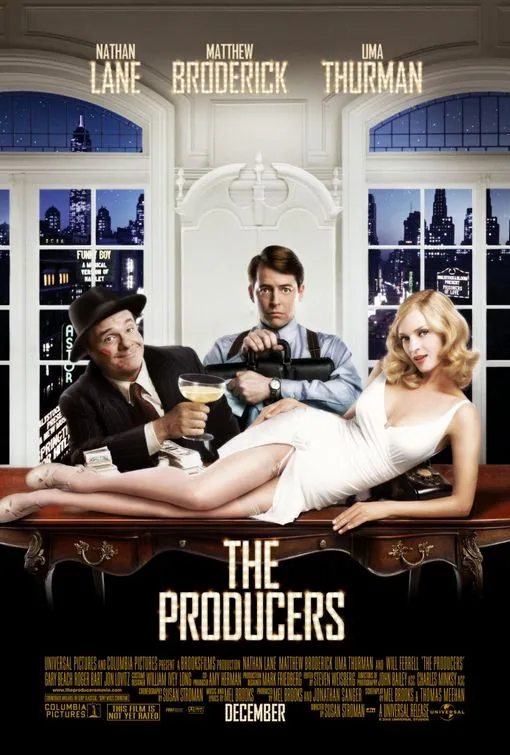
Leo’s wish to become a producer makes him vulnerable to Max’s scheme and complicates his sense of right and wrong.
Why this matches +
These films explore a related idea in a different setting, genre or style.
An adjacent discovery: a related idea with a different viewing experience.
Genres: Comedy / Music
Shared film traits
Based on recorded story, mood and style. Your preferences can change the order.
Music and performance
What changes Its own story: Leo’s wish to become a producer makes him vulnerable to Max’s scheme and complicates his sense of right and wrong.
After a Broadway flop, producer Max Bialystock hires accountant Leo Bloom, who notices that a deliberately unsuccessful show could make money through excess investment. Max persuades the anxious Leo to form a partnership and find the worst play they can produce. They choose Springtime for Hitler, written by former Nazi Franz Liebkind, and hire director Roger De Bris, expecting outrage to close the show. Instead the musical becomes an unexpected hit, turning the pair’s fraud into a public success they cannot control.
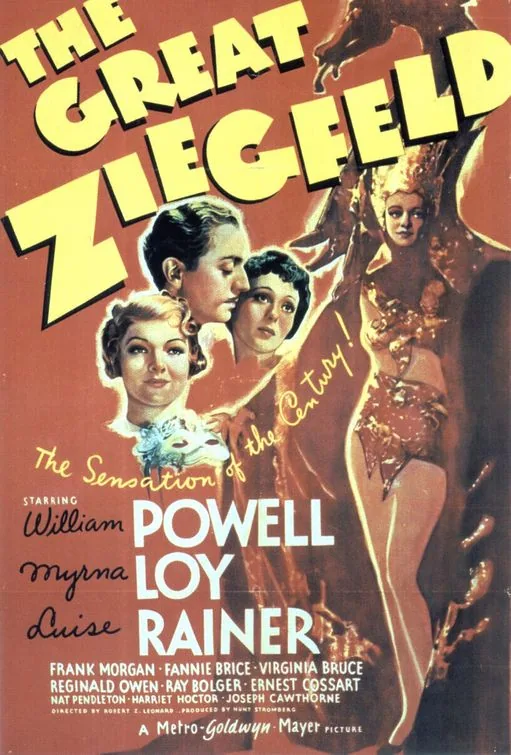
Florenz Ziegfeld arrives in New York determined to build a theatrical spectacle grander than his rival Jack Billings can offer. His career moves through lavish productions, romantic relationships and financial setbacks, with performers and collaborators helping turn his ambitions into the Follies. The film presents Ziegfeld as an impresario whose work depends on both extravagance and the people he assembles. Its enormous musical numbers are central to the experience, while the biographical story simplifies real lives and events into a studio-era celebration of showmanship.
What drives the story
Ziegfeld’s desire to outdo competing impresarios drives a succession of productions whose scale grows with his reputation and financial risk.
The people at its centre
His ambitions shape his relationship with performers and partners, particularly as the public image of success clashes with private instability.
What it feels like
The film alternates biography with elaborate stage numbers, including the famous long-running spectacle of the Follies. Its rhythm shifts between backstage melodrama and revue.
Worth knowing
A choice for viewers interested in early Hollywood musicals and theatrical spectacle. Its portrait is highly dramatized and celebratory, so it is not a reliable full biography of Ziegfeld or his performers.