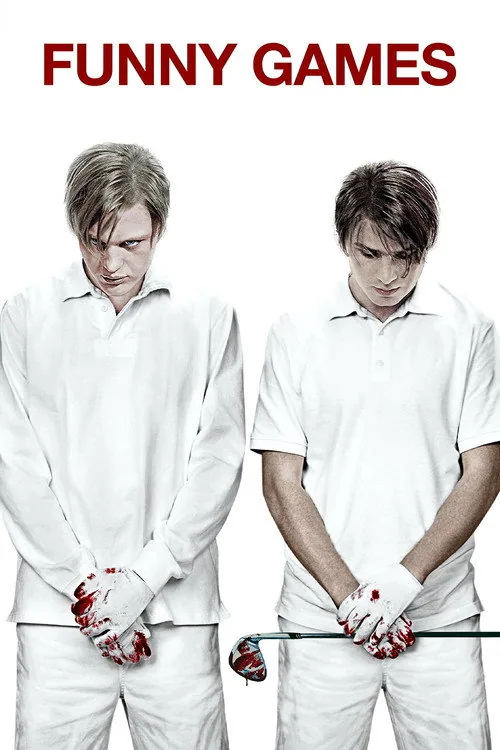
The Farbers are held hostage and subjected to the captors’ arbitrary games.
Why this matches +
These films share important themes, atmosphere or storytelling interests with this selection.
Genres: Thriller / Horror
Shared film traits
Based on recorded story, mood and style. Your preferences can change the order.
Constructed reality
What changes Its own story: The Farbers are held hostage and subjected to the captors’ arbitrary games.
George and Ann Farber arrive with their son at a lake house, where two polite young men ask for small favors and then refuse to leave. The visitors injure George and force the family to participate in a sequence of cruel “games,” while the film repeatedly draws attention to the audience and its expectations of violence. Michael Haneke’s English-language remake closely reproduces his 1997 film and uses direct address and a startling rewind to frustrate conventional thriller rules. The violence is presented as an ethical challenge to spectatorship, not as triumphant action.
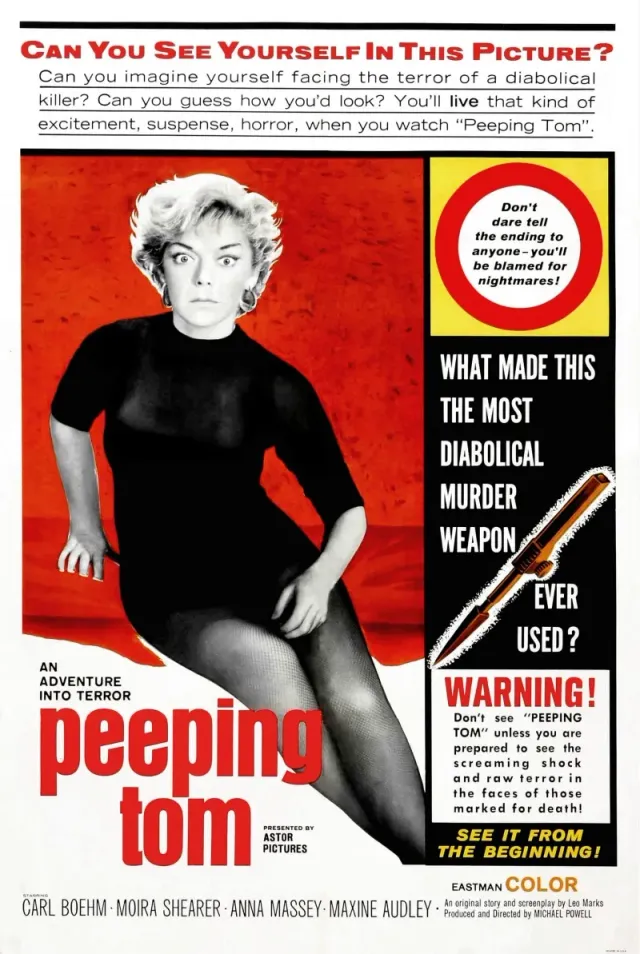
A filmmaker’s compulsion to capture fear drives a series of murders while his outwardly ordinary life invites suspicion.
Why this matches +
These films share important themes, atmosphere or storytelling interests with this selection.
Genres: Horror / Thriller
Shared film traits
Based on recorded story, mood and style. Your preferences can change the order.
What changes Its own story: A filmmaker’s compulsion to capture fear drives a series of murders while his outwardly ordinary life invites suspicion.
Mark Lewis works in film production and photographs women, but he secretly uses a camera to record the terror of people he murders. His quiet relationship with Helen, a young woman living in his building, offers a glimpse of intimacy that conflicts with his compulsion. The film follows the danger created when image-making, childhood trauma and a desire for control become inseparable.
Shared characteristics
Genre: Horror
Genre: Thriller
Genre: Drama
Poster: Film rights holders; original promotional poster documented by Wikipedia · Image source
An obsessive performance of professional normality collides with violent impulses inside a culture too self-absorbed to notice reliable differences.
Why this matches +
These films share important themes, atmosphere or storytelling interests with this selection.
Genres: Crime / Drama
Shared film traits
Based on recorded story, mood and style. Your preferences can change the order.
What changes Its own story: An obsessive performance of professional normality collides with violent impulses inside a culture too self-absorbed to notice reliable differences.
A wealthy investment banker maintains an immaculate public identity through grooming rituals, status competition and rehearsed social behaviour. Beneath that performance he recounts increasingly extreme acts of violence while colleagues struggle to distinguish one interchangeable professional from another. The certainty of his account becomes unstable, making personal monstrosity inseparable from a social world that treats appearances as more important than recognising the person underneath.
Soo-hyun’s decision to repeatedly hunt and punish the killer makes revenge the engine of the entire story.
Why this matches +
These films share important themes, atmosphere or storytelling interests with this selection.
Genres: Crime / Thriller
Shared film traits
Based on recorded story, mood and style. Your preferences can change the order.
What changes Its own story: Soo-hyun’s decision to repeatedly hunt and punish the killer makes revenge the engine of the entire story.
After a serial killer murders his fiancée, intelligence agent Kim Soo-hyun sets out to punish the man himself rather than leave justice to the police. His repeated pursuit and release of the killer becomes a contest that erodes the distinction between investigation and revenge. The South Korean thriller is known for graphic violence and an unflinching treatment of cruelty; its central question is what retaliation does to the person who chooses it.
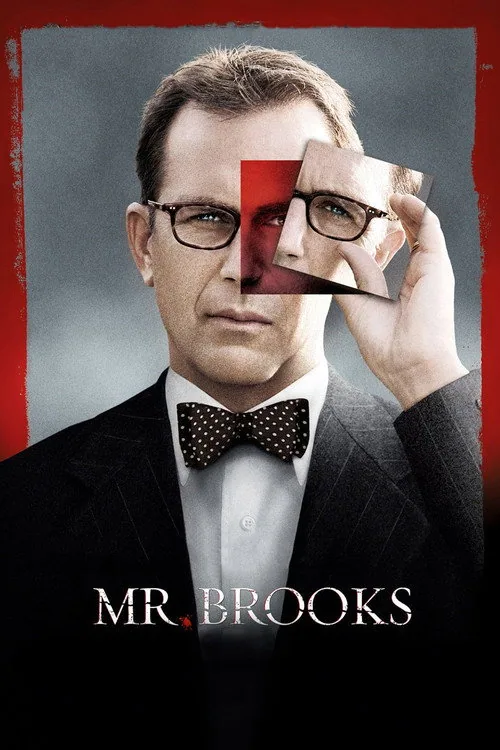
A witness to Brooks’s latest murder asks to join his next one, turning a secret routine into a risky partnership.
Why this matches +
These films share important themes, atmosphere or storytelling interests with this selection.
Genres: Crime / Thriller
Shared film traits
Based on recorded story, mood and style. Your preferences can change the order.
What changes Its own story: A witness to Brooks’s latest murder asks to join his next one, turning a secret routine into a risky partnership.
Earl Brooks is a respected Portland businessman and family man whose private life is controlled by an urge to kill. After a man photographs him during a murder, Brooks allows the witness to accompany him on another crime, while detective Tracy Atwood closes in and a violent fugitive targets her. The thriller makes outward respectability, compulsive violence, and the effort to control an imagined inner voice part of the same uneasy investigation.
The husband's effort to structure his wife's recovery through therapy becomes a contest over who gets to interpret her grief. The retreat's symbolic world destabilizes, rather than validates, his authority.
Why this matches +
These films explore a related idea in a different setting, genre or style.
An adjacent discovery: a related idea with a different viewing experience.
Genres: Horror / Drama
Shared film traits
Based on recorded story, mood and style. Your preferences can change the order.
What changes Its own story: The husband's effort to structure his wife's recovery through therapy becomes a contest over who gets to interpret her grief. The retreat's symbolic world destabilizes, rather than validates, his authority.
After their young son dies in an accident, a grieving couple retreat to an isolated cabin called Eden, where the husband, a therapist, tries to treat his wife's fear through exposure. His professional confidence collides with her distress, their unequal expectations and the film's increasingly violent images of nature and the body. The cabin becomes a chamber in which care, domination, guilt and desire cannot be cleanly separated. Lars von Trier's chaptered, formally extreme film uses symbolic and disputed ideas; it does not provide a trustworthy clinical account of grief or mental illness.
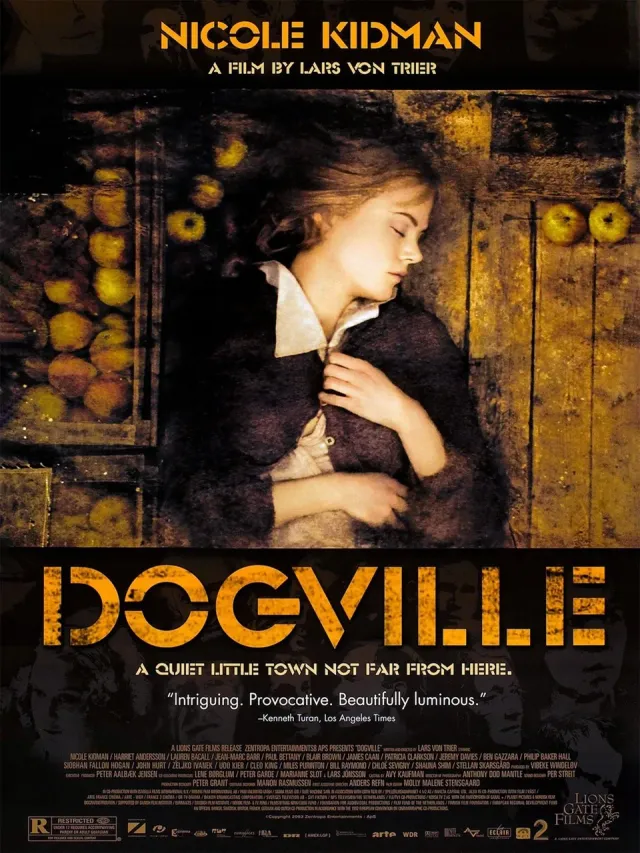
Conditional hospitality becomes a labor bargain whose terms worsen whenever the fugitive's outside options narrow, making the town's claimed generosity a structure of coercion. After a search notice raises the town’s perceived risk, residents increase their demands while Grace’s alternatives shrink.
Why this matches +
These films explore a related idea in a different setting, genre or style.
An adjacent discovery: a related idea with a different viewing experience.
Genres: Drama / Crime
Shared film traits
Based on recorded story, mood and style. Your preferences can change the order.
What changes Its own story: Conditional hospitality becomes a labor bargain whose terms worsen whenever the fugitive's outside options narrow, making the town's claimed generosity a structure of coercion. After a search notice raises the town’s perceived risk, residents increase their demands while Grace’s alternatives shrink.
A woman fleeing gangsters accepts shelter in an isolated town, where an aspiring moral leader proposes her presence as a test of communal generosity. Work initially offered as gratitude becomes the condition of being allowed to remain, and her increasing vulnerability gives neighbors leverage to demand more. When the protection they claim to provide becomes systematic exploitation, a later reversal of power questions both the community's self-description and the moral certainty of punishing it. Its exposed stage makes spectators watch private coercion as collective behavior, not as unseen domestic misfortune.
A drugged celebration breaks the troupe’s trust and turns a shared rehearsal space into a panicked social maze.
Why this matches +
These films explore a related idea in a different setting, genre or style.
An adjacent discovery: a related idea with a different viewing experience.
Genres: Drama / Horror
Shared film traits
Based on recorded story, mood and style. Your preferences can change the order.
Constructed reality
What changes Its own story: A drugged celebration breaks the troupe’s trust and turns a shared rehearsal space into a panicked social maze.
A French dance troupe gathers at an abandoned school in 1996 to rehearse and celebrate a successful performance. After the party’s communal sangria is spiked with a hallucinogen, suspicion spreads and the dancers’ behavior becomes increasingly frightened and volatile. The isolated building turns their celebration into a night of confusion, conflict, and danger. Gaspar Noé’s experimental film combines extended dance performances, improvisation, and long takes to present collective panic through the dancers’ shifting perceptions.
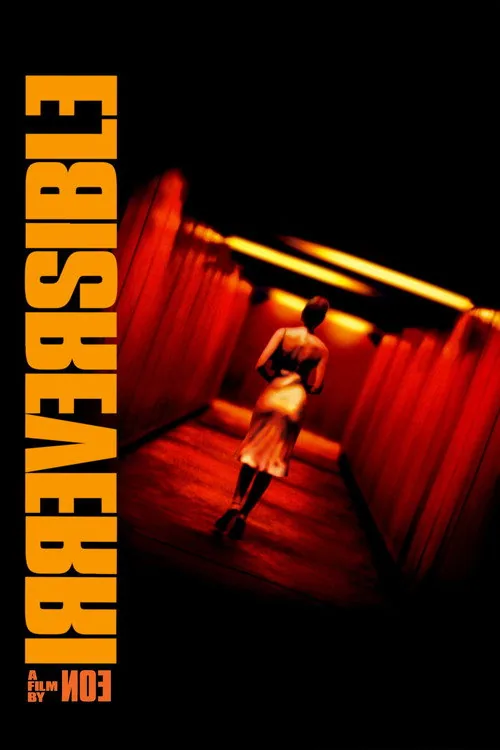
The reversed structure starts with irreversible consequences and makes earlier scenes carry the weight of what viewers have already witnessed.
Why this matches +
These films explore a related idea in a different setting, genre or style.
An adjacent discovery: a related idea with a different viewing experience.
Genres: Drama / Crime
Shared film traits
Based on recorded story, mood and style. Your preferences can change the order.
What changes Its own story: The reversed structure starts with irreversible consequences and makes earlier scenes carry the weight of what viewers have already witnessed.
Alex’s night out with her partner Marcus and her former partner Pierre is revealed in reverse order, beginning with the violent aftermath of a crime. As the film moves backward, the events that led to that night become clearer, and the audience must reconsider the characters’ earlier calm in light of what is already known. Gaspar Noé’s French drama is formally disorienting and contains prolonged sexual violence and brutal revenge violence, requiring careful consideration of content comfort.
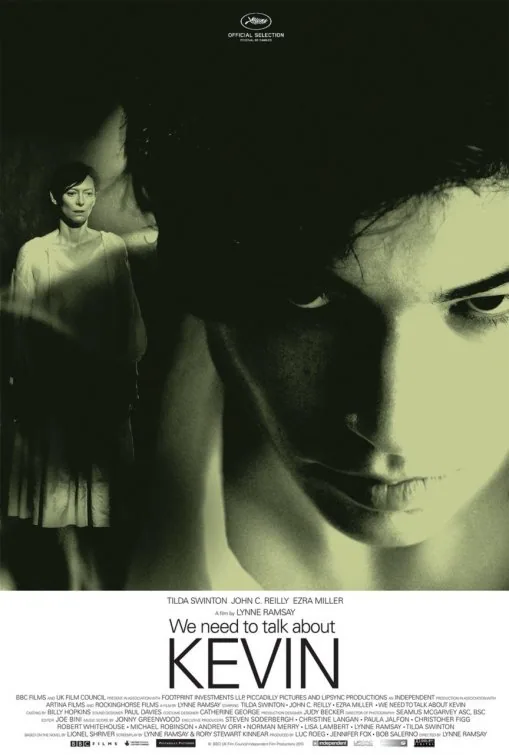
A mother reconstructs her relationship with her son while living with the aftermath of his violence.
Why this matches +
These films explore a related idea in a different setting, genre or style.
An adjacent discovery: a related idea with a different viewing experience.
Genres: Drama / Thriller
Shared film traits
Based on recorded story, mood and style. Your preferences can change the order.
What changes Its own story: A mother reconstructs her relationship with her son while living with the aftermath of his violence.
Eva tries to understand how her relationship with her son Kevin reached a devastating point, revisiting fragments of family life and the public aftermath of an act of violence. The story moves between memory, guilt and the strained routines of Eva's present, withholding easy explanations about nature, nurture or responsibility. Lynne Ramsay's adaptation uses images and sound to make recollection feel unstable and emotionally charged.
The repeated passage through familiar school spaces gradually changes how earlier ordinary moments feel.
Why this matches +
These films explore a related idea in a different setting, genre or style.
An adjacent discovery: a related idea with a different viewing experience.
Genres: Drama / Thriller
Shared film traits
Based on recorded story, mood and style. Your preferences can change the order.
What changes Its own story: The repeated passage through familiar school spaces gradually changes how earlier ordinary moments feel.
Over the course of an ordinary school day, the film follows several students through corridors, classrooms and small social encounters before their paths converge in a sudden act of violence. It offers fragments rather than a conventional explanation, shifting perspective and revisiting moments with little interpretive guidance. The restrained surface makes routine detail unsettling, while its refusal to simplify causation leaves space for difficult questions.
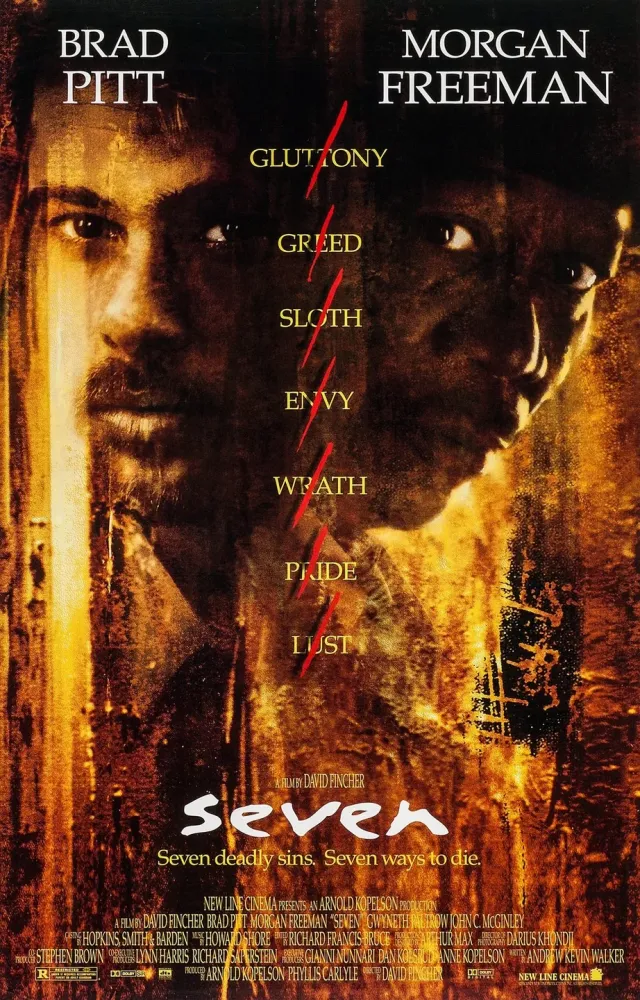
A patterned murder investigation develops into a contest over whether the detectives can refuse the emotional roles their opponent is preparing for them.
Why this matches +
These films explore a related idea in a different setting, genre or style.
An adjacent discovery: a related idea with a different viewing experience.
Genres: Thriller / Mystery
Shared film traits
Based on recorded story, mood and style. Your preferences can change the order.
What changes Its own story: A patterned murder investigation develops into a contest over whether the detectives can refuse the emotional roles their opponent is preparing for them.
A weary detective approaching retirement and an impatient younger partner investigate killings arranged around a moralising pattern. Each crime scene expands the sense that their unseen opponent is treating the city as both evidence and audience for a private doctrine. Their work exposes different responses to pervasive cruelty, while the intrusion of the case into ordinary hopes for a home makes professional distance increasingly difficult to maintain.
An urgent serial-killer search is advanced through a coercive interview bargain that links external evidence with a trainee's private history.
Why this matches +
These films explore a related idea in a different setting, genre or style.
An adjacent discovery: a related idea with a different viewing experience.
Genres: Crime / Drama
Shared film traits
Based on recorded story, mood and style. Your preferences can change the order.
What changes Its own story: An urgent serial-killer search is advanced through a coercive interview bargain that links external evidence with a trainee's private history.
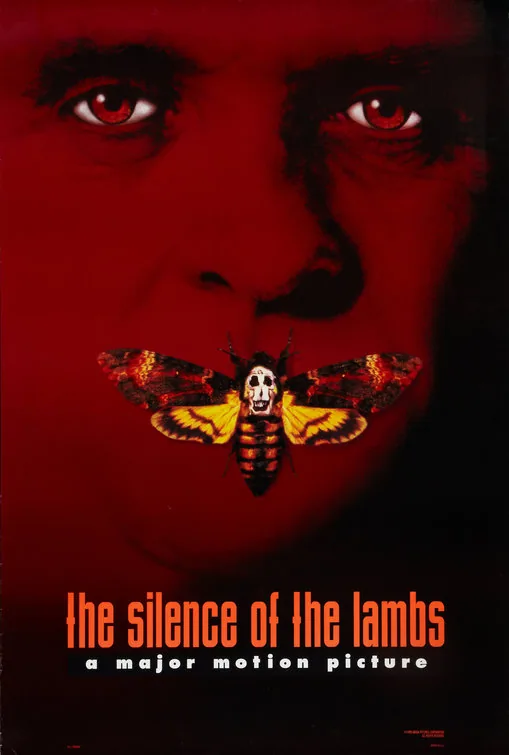
FBI trainee Clarice Starling is sent to interview an imprisoned psychiatrist whose insight might help locate a serial killer holding another woman captive. The prisoner converts access to information into a demand for personal disclosure, making progress depend on navigating an unequal and dangerous exchange. Working through evidence beyond his guidance, Clarice must distinguish professional judgement from the humiliation, curiosity and manipulation directed toward her.
Takabe’s effort to explain the murders is complicated by a suspect who refuses the usual logic of motive and memory.
Why this matches +
These films explore a related idea in a different setting, genre or style.
An adjacent discovery: a related idea with a different viewing experience.
Genres: Horror / Mystery
Shared film traits
Based on recorded story, mood and style. Your preferences can change the order.
What changes Its own story: Takabe’s effort to explain the murders is complicated by a suspect who refuses the usual logic of motive and memory.
Detective Kenichi Takabe investigates a string of murders in Tokyo in which unrelated suspects confess but cannot explain their actions. Each victim bears an X-shaped wound, and the cases lead Takabe and forensic psychologist Shin Sakuma to Kunihiko Mamiya, a former psychology student who seems unable to retain memories. Mamiya’s questions and apparent hypnotic influence unsettle the investigators, while Takabe’s home life is strained by his wife Fumie’s illness. The case becomes a psychological struggle in which certainty, responsibility and control gradually erode.
Joong-ho uses his old investigative instincts to locate Mi-jin as police procedure and public pressure repeatedly obstruct the search.
Why this matches +
These films explore a related idea in a different setting, genre or style.
An adjacent discovery: a related idea with a different viewing experience.
Genres: Crime / Thriller
Shared film traits
Based on recorded story, mood and style. Your preferences can change the order.
What changes Its own story: Joong-ho uses his old investigative instincts to locate Mi-jin as police procedure and public pressure repeatedly obstruct the search.
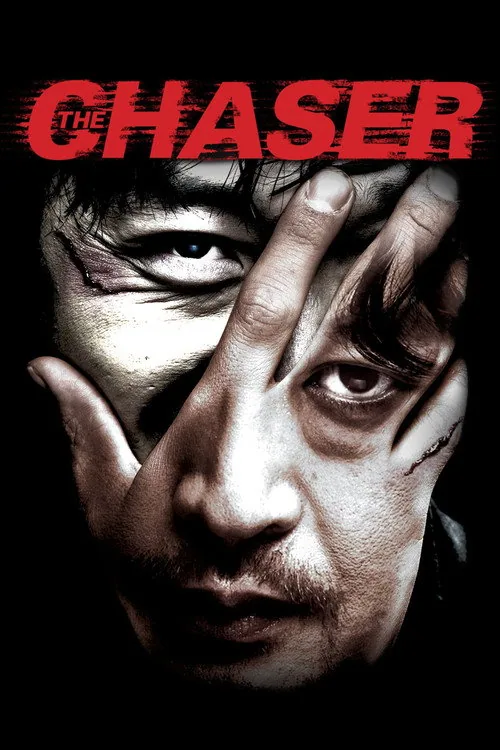
Joong-ho, a financially troubled former detective who now exploits women as a pimp, notices that several of his workers have disappeared after meeting the same client. He sends Mi-jin to contact the man and then realizes she may be in immediate danger. When the client is arrested and admits to being a serial killer, procedural failures threaten to release him before Joong-ho can find Mi-jin. The South Korean crime thriller follows a deeply compromised pursuer through a race against time, exposing both police dysfunction and the violence embedded in his own livelihood.
An elusive criminal's intermittent evidence creates a prolonged investigation whose uncertainty becomes a sustaining obsession of its own.
Why this matches +
These films explore a related idea in a different setting, genre or style.
An adjacent discovery: a related idea with a different viewing experience.
Genres: Thriller / Mystery
Shared film traits
Based on recorded story, mood and style. Your preferences can change the order.
What changes Its own story: An elusive criminal's intermittent evidence creates a prolonged investigation whose uncertainty becomes a sustaining obsession of its own.
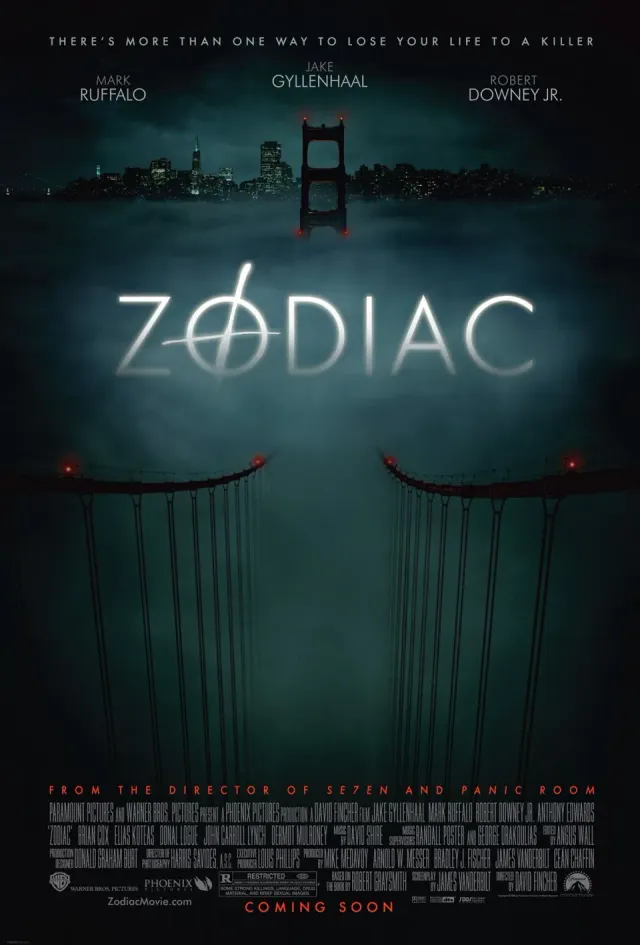
A series of killings and public messages draws police officers and newspaper staff into a search for an offender who controls attention through selective disclosure. Years of interviews, uncertain identifications and jurisdictional boundaries make progress difficult to distinguish from renewed speculation. A cartoonist's growing private commitment to the case exposes the personal cost of treating an unresolved account as a problem that more persistence must eventually close.
Reading a former partner's novel turns an old breakup into a present-tense reckoning.
Why this matches +
These films explore a related idea in a different setting, genre or style.
An adjacent discovery: a related idea with a different viewing experience.
Genres: Drama / Thriller
Shared film traits
Based on recorded story, mood and style. Your preferences can change the order.
What changes Its own story: Reading a former partner's novel turns an old breakup into a present-tense reckoning.
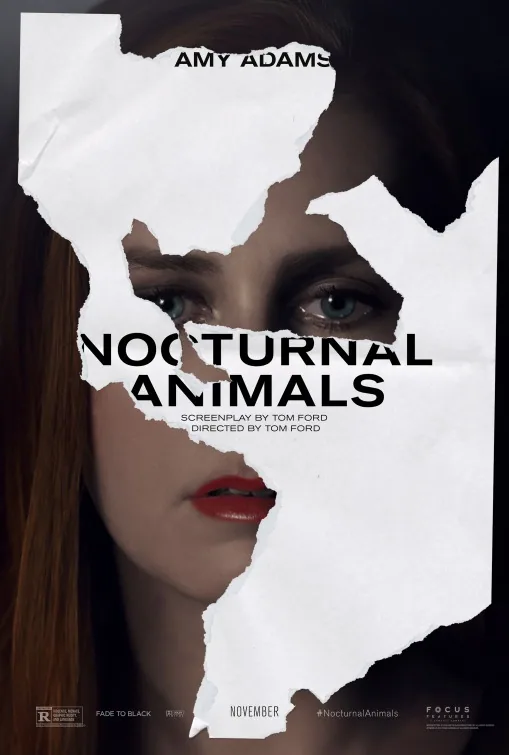
Susan Morrow is a successful Los Angeles gallery owner whose marriage feels increasingly hollow when a manuscript arrives from her former husband Edward, whom she left years earlier. As she reads his violent novel, its story of a family under attack begins to echo her own past and unsettles the life she has built. Tom Ford moves between the book's stark thriller and Susan's composed present, making interpretation itself part of the suspense.
A beginner's rapid adaptation to a market's incentives escalates from opportunistic documentation towards manufacturing the conditions of valuable footage.
Why this matches +
These films explore a related idea in a different setting, genre or style.
An adjacent discovery: a related idea with a different viewing experience.
Genres: Crime / Thriller
Shared film traits
Based on recorded story, mood and style. Your preferences can change the order.
What changes Its own story: A beginner's rapid adaptation to a market's incentives escalates from opportunistic documentation towards manufacturing the conditions of valuable footage.
An unemployed outsider discovers that graphic footage of crime and disaster can be sold to local television news. Learning what a producer rewards, he turns observation into increasingly active manipulation of scenes and people. Professional self-improvement language conceals a predatory account of success, while the relationship between an ambitious freelancer and an institution hungry for sensational material makes exploitation look like efficient business practice.
Jesse’s rise changes the balance of attention and resentment around her.
Why this matches +
These films explore a related idea in a different setting, genre or style.
An adjacent discovery: a related idea with a different viewing experience.
Genres: Horror / Drama
Shared film traits
Based on recorded story, mood and style. Your preferences can change the order.
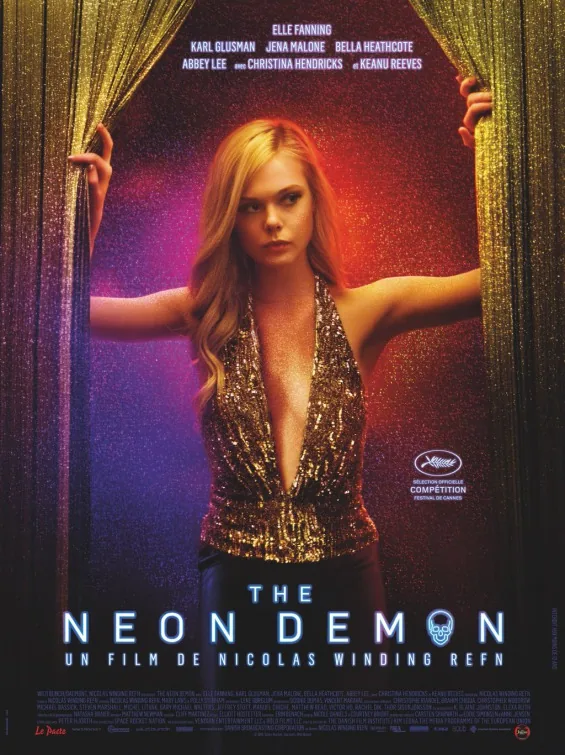
What changes Its own story: Jesse’s rise changes the balance of attention and resentment around her.
Sixteen-year-old Jesse arrives in Los Angeles hoping to become a model and quickly attracts attention in a world where youth and appearance are treated as marketable assets. Her growing success sharpens the envy of older models and brings her into contact with people who see beauty as something to possess. Nicolas Winding Refn turns the fashion industry into a stylized horror fable about aspiration, image and the violence hidden beneath admiration.
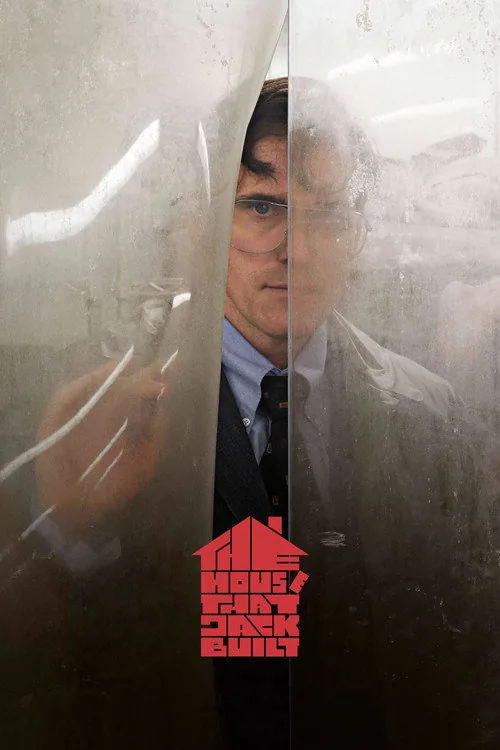
Serial killer Jack recounts a series of murders to a companion he calls Verge, presenting each killing as one of several formative “incidents.” His efforts to hide evidence become increasingly elaborate and sometimes grotesque, while he tries to build a house from the bodies he has collected. Lars von Trier’s psychological horror film shifts between crime episodes, art-history arguments, and a final journey through a vision of Hell. It is formally self-conscious and deliberately provocative, framing Jack’s explanations as unreliable and morally repellent rather than asking viewers to admire his crimes.
What drives the story
Jack recounts murders to Verge and arranges the bodies into a house before their journey into Hell.
The people at its centre
Jack tries to elevate cruelty into an artistic achievement, while Verge listens and challenges the logic of his self-justification.
What it feels like
The film contains graphic murder, torture, sexual violence, and cruelty toward children and animals.
Worth knowing
Its extreme content and art-theory digressions are part of a provocation, not a conventional serial-killer thriller.
ViolenceArtDelusion
Mood
Provocative · Grim · Surreal
Pacing
Jack’s account of his crimes becomes an argument with the figure guiding him toward judgment.