Based on recorded story, mood and style. Your preferences can change the order.
What changes Train Dreams: episodic and decades-long accumulation. The Company Men: layoffs disrupt established routines, job search and financial strain accumulate and parallel choices lead to reassessment of work.
During a recession-driven downsizing at shipbuilding company GTX, high-level employee Bobby Walker loses the job and lifestyle that shaped his sense of success. He searches for another executive position while his family adjusts to shrinking finances, then reluctantly joins his brother-in-law's construction crew. His former mentor Gene McClary and colleague Phil Woodward face their own consequences as the film follows several men through unemployment, status loss, and decisions about work and family.
Based on recorded story, mood and style. Your preferences can change the order.
What changes Train Dreams: episodic and decades-long accumulation. The Treasure of the Sierra Madre: slow-burn and character-led.
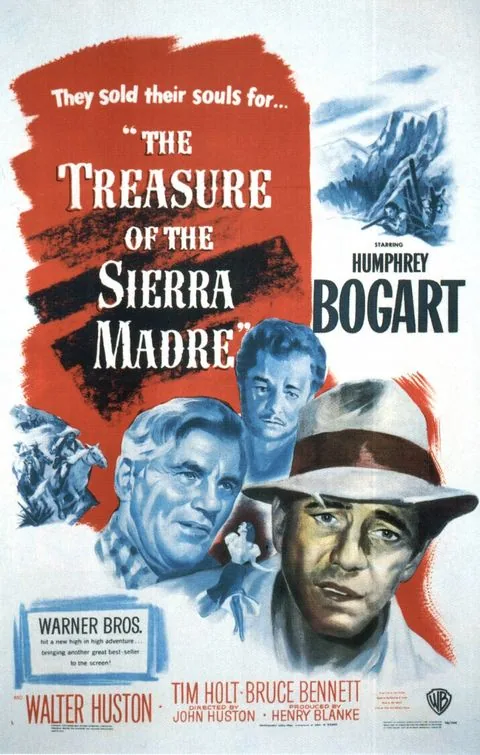
In 1920s Tampico, unemployed Americans Fred Dobbs and Bob Curtin meet an old prospector, Howard, and use their wages and a lottery win to finance a search for gold in the Sierra Madre mountains. Howard's experience helps them find a rich deposit, but the discovery changes their partnership. Dobbs becomes suspicious that the others may take more than their share, and even routine decisions about guarding, dividing and carrying the gold begin to seem like threats. The miners' isolation makes trust difficult, while the rugged journey and danger from bandits offer real reasons for caution. The film turns a frontier adventure into a study of how imagined wealth can make a man interpret every friend as a rival.
Based on recorded story, mood and style. Your preferences can change the order.
What changes Train Dreams: episodic and decades-long accumulation. Places in the Heart: measured and seasonal progression.
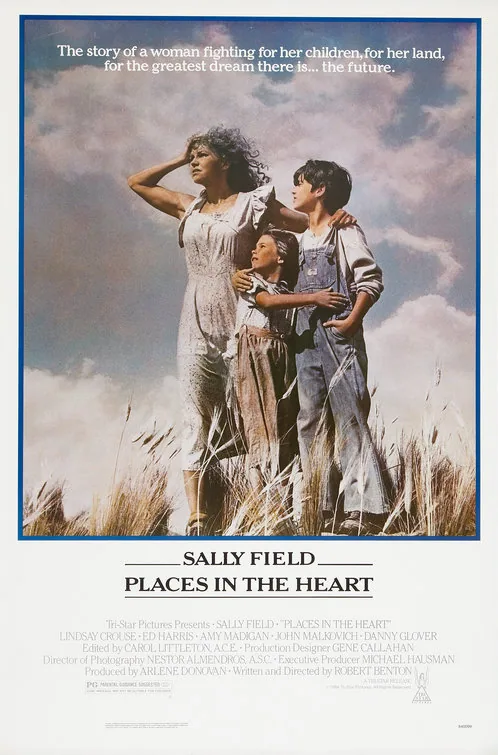
In Depression-era Texas, widowed Edna Spalding tries to keep her farm after her husband's death. She hires a blind boarder and a Black laborer, whose work and differing circumstances become central to the household's survival through a difficult season. Their practical cooperation unfolds against racism, economic insecurity and family grief, giving the farm's struggle a wider view of interdependence in a small community.
Both centre on grief and adjustment and values reassessment.
Why this matches +
Genres: Drama / Art
Shared film traits
Based on recorded story, mood and style. Your preferences can change the order.
What changes Train Dreams: episodic and decades-long accumulation. Three Colours: Blue: measured and fragmentary.
After a car crash kills her composer husband and young daughter, Julie survives and tries to erase the attachments that bind her to her former life. She leaves the family home, avoids her husband’s unfinished music and seeks anonymity in Paris. Yet the score continues to surface in fragments, and Olivier asks her to help complete the work they had been creating together. Julie also learns that her husband’s private life was not what she believed. Her attempt at freedom becomes less about forgetting than deciding what she can carry forward and with whom she can share it. The film repeatedly interrupts scenes as music catches Julie off guard, making memory arrive without her consent.
Both centre on grief and adjustment and values reassessment.
Why this matches +
Genres: Comedy / Romance
Shared film traits
Based on recorded story, mood and style. Your preferences can change the order.
What changes Train Dreams: episodic and decades-long accumulation. A Good Year: leisurely.
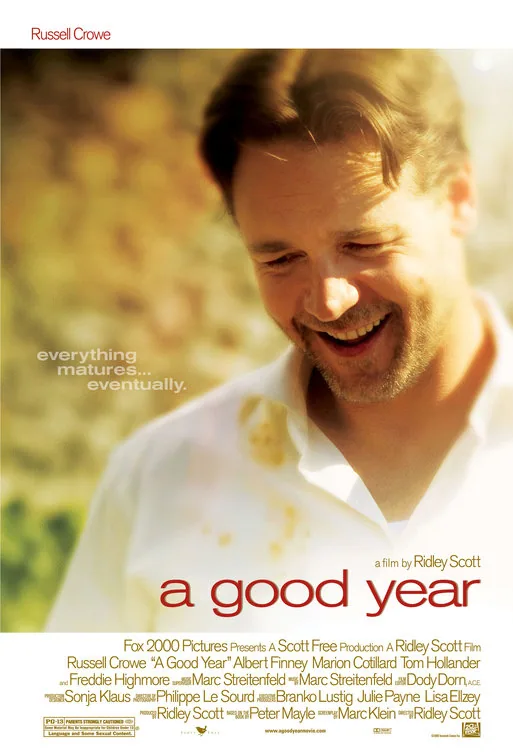
A ruthless London financier inherits the Provençal estate where his uncle taught him pleasures that his adult working life has largely displaced. He arrives intending to sell, but a professional suspension leaves him among a protective winemaker, a woman he has offended and a visitor with a possible claim to the property. Deciding what to do with the vineyard becomes a choice between treating people and places as assets and accepting attachments that cannot be managed for immediate advantage.
Based on recorded story, mood and style. Your preferences can change the order.
What changes Train Dreams: episodic and decades-long accumulation. One Life: interwoven timelines, steadily building and reflective.
In 1938, London stockbroker Nicholas Winton visits Prague and encounters refugee families facing the threat of Nazi persecution. He helps organize a rescue effort to bring children to safety in Britain, while the film also follows Winton decades later as he reflects on those he could not save. The dual-time structure connects a practical act of coordination with the burden of memory, asking how one person understands responsibility after history has moved on.
Based on recorded story, mood and style. Your preferences can change the order.
What changes Train Dreams: episodic and decades-long accumulation. Battleship Potemkin: intense.
Sailors subjected to degrading conditions challenge the officers commanding their ship, and a confrontation over rotten food becomes a catalyst for mutiny. Public mourning and solidarity in a nearby port place the uprising inside a wider struggle over state violence. The film arranges bodies, crowds and abrupt collisions of images into a deliberately political account in which collective feeling becomes as important as the actions of any named individual.
Based on recorded story, mood and style. Your preferences can change the order.
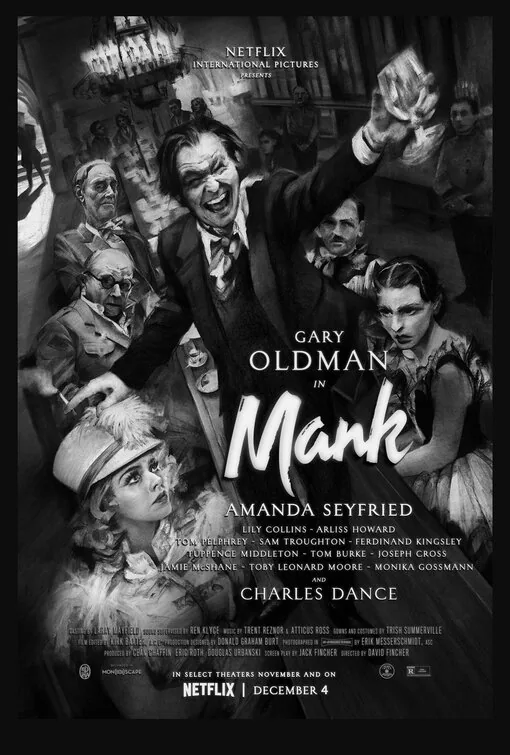
What changes Train Dreams: episodic and decades-long accumulation. Mank: interwoven and process-focused.
Screenwriter Herman J. Mankiewicz works on the screenplay that will become Citizen Kane while recovering at a secluded ranch. Flashbacks follow his encounters with Hollywood power brokers, political campaigning, and the film industry's social circles as he develops a story shaped by personal observation. David Fincher's black-and-white drama explores creative credit and influence through a stylized portrait of a writer navigating a system that rewards access while contesting who authored a celebrated film.
Based on recorded story, mood and style. Your preferences can change the order.
What changes Train Dreams: episodic and decades-long accumulation. Fences: dialogue-led scenes accumulate into rupture and reckoning.
A sanitation worker in 1950s Pittsburgh tries to hold authority within his household while carrying anger from opportunities and racial barriers he believes were denied to him. His marriage and relationships with his sons reveal the consequences of treating protection as control. The adaptation of August Wilson’s play keeps its attention on language, family intimacy and the burden of history rather than broad external action.
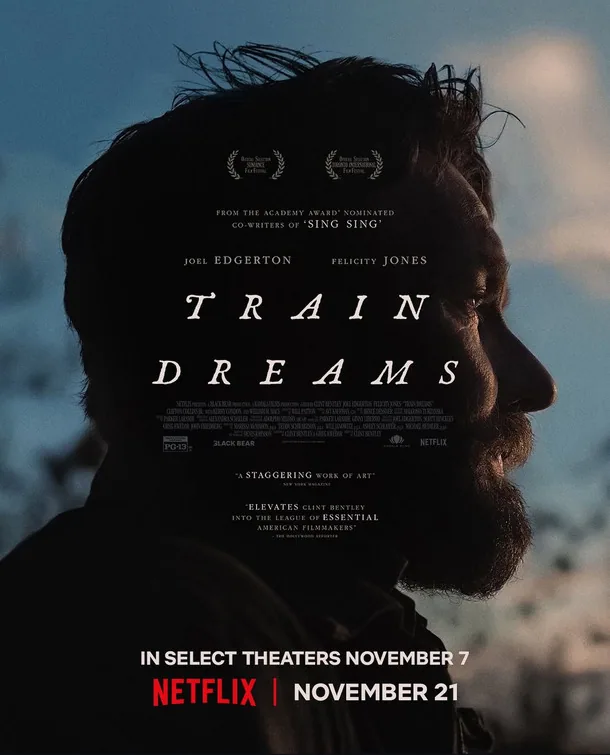
In the early twentieth-century American West, Robert Grainier works as a logger and railroad laborer, moving between remote jobs and the home he is building with Gladys. Industrial expansion brings wages and connection while isolating workers from families and exposing them to dangerous conditions and racialized violence. The film includes the murder of a Chinese laborer by fellow loggers, an episode that complicates Robert’s quiet, observant presence and appears later here than in Denis Johnson’s novella. Over decades, work, love and loss register against a landscape changing faster than Robert can control. Clint Bentley’s adaptation follows an ordinary life rather than a conventional rise-to-greatness plot.
What drives the story
A laborer’s private life unfolds alongside the railroad’s arrival, so national progress is felt through absences, work and a changing landscape.
The people at its centre
Robert’s reserved attention makes his relationships visible through small acts, but the crew’s murder of a Chinese laborer complicates any reading of him as merely outside the violence; the film relocates the episode from the novella’s opening.
What it feels like
Patient pacing, natural locations and long views let environment carry the passage of time; the film favors accumulation and grief over plot twists.
Worth knowing
For viewers drawn to reflective stories about ordinary lives, labor and social change. The adaptation rearranges and omits material from Johnson’s novella, including where it places the murder of a Chinese laborer.