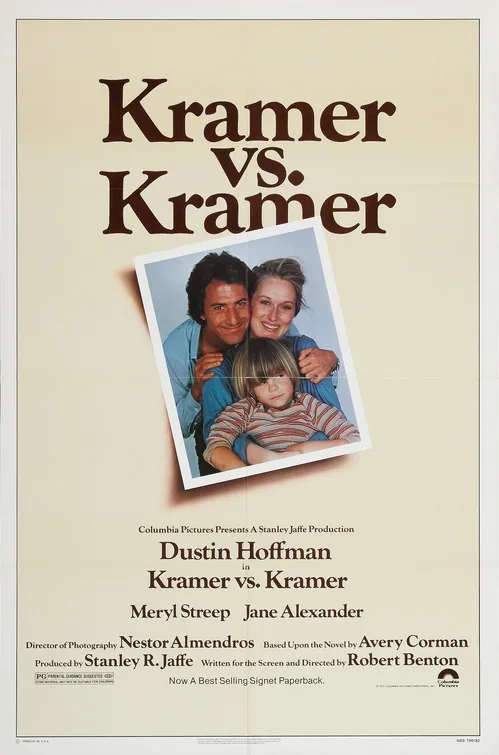
An abrupt change in caregiving exposes the imbalance of a marriage, then a custody dispute converts personal growth into competing public arguments.
Why this matches +
These films share important themes, atmosphere or storytelling interests with this selection.
Genres: Drama
Shared film traits
Based on recorded story, mood and style. Your preferences can change the order.
What changes Its own story: An abrupt change in caregiving exposes the imbalance of a marriage, then a custody dispute converts personal growth into competing public arguments.
An advertising executive's wife leaves their marriage, forcing him to become the everyday parent to a son whose routines he barely knows. Awkward practical tasks gradually create a deeper relationship, while the demands of his job begin to conflict with care. When the mother returns seeking custody, their private reassessment of family becomes an adversarial legal process that threatens to simplify both parents' motives.
A group-home supervisor supports residents as her own past resurfaces through a new arrival. She helps Jayden and Marcus while facing family history.
Why this matches +
These films share important themes, atmosphere or storytelling interests with this selection.
Genres: Drama
Shared film traits
Based on recorded story, mood and style. Your preferences can change the order.
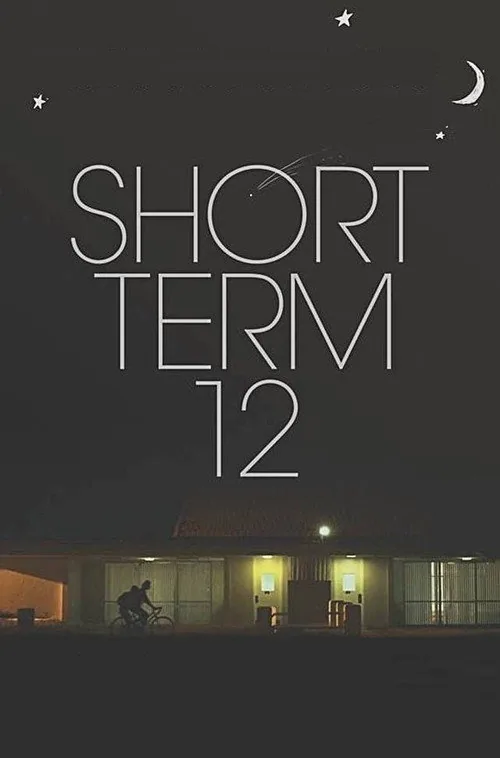
What changes Its own story: A group-home supervisor supports residents as her own past resurfaces through a new arrival. She helps Jayden and Marcus while facing family history.
Grace Howard supervises teenagers at Short Term 12, a group home where she works alongside her partner Mason. She supports residents but struggles to discuss her own past and a recent pregnancy. Grace grows close to Jayden, a newcomer whose distance from staff echoes parts of Grace’s experience, while Marcus faces the transition to adulthood outside the facility. Destin Daniel Cretton’s drama centers the daily work of care and the emotional boundaries that caregivers and young residents negotiate.
The film’s central action is Conrad’s attempt to live with grief, while the family’s outward order repeatedly blocks honest mourning.
Why this matches +
These films share important themes, atmosphere or storytelling interests with this selection.
Genres: Drama
Shared film traits
Based on recorded story, mood and style. Your preferences can change the order.
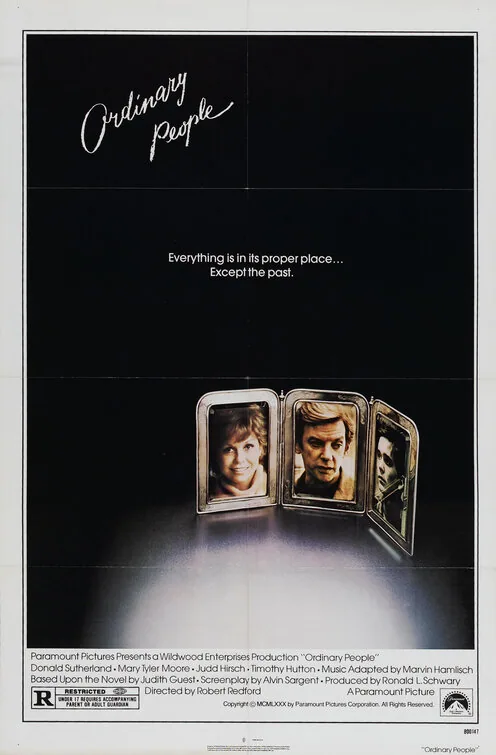
What changes Its own story: The film’s central action is Conrad’s attempt to live with grief, while the family’s outward order repeatedly blocks honest mourning.
After the accidental drowning death of their eldest son Buck, the affluent Jarrett family tries to resume ordinary routines. Younger son Conrad returns home after a suicide attempt and psychiatric hospitalization, struggling with guilt and the belief that he should have died instead. Therapy with Dr. Berger helps him name grief and anger, while his father Calvin tries to reconnect with both sons’ absence. His mother Beth maintains control through social appearances and finds Conrad’s vulnerability intolerable. Their conflict forces Calvin to recognize that family recovery may not mean preserving the household intact.
The collapse of wealth and marriage prompts Jasmine to rebuild a respectable identity through selective memory, while present relationships expose what her account leaves out. The chronology reveals information without serving as a clinical explanation.
Why this matches +
These films share important themes, atmosphere or storytelling interests with this selection.
Genres: Drama
Shared film traits
Based on recorded story, mood and style. Your preferences can change the order.
What changes Its own story: The collapse of wealth and marriage prompts Jasmine to rebuild a respectable identity through selective memory, while present relationships expose what her account leaves out. The chronology reveals information without serving as a clinical explanation.
After her husband Hal's fraud and death destroy their privileged life, Jasmine arrives at her sister Ginger's modest San Francisco apartment still performing the status she has lost. Memories interrupt her attempts to secure work and a new partner, exposing the lies and harm surrounding the marriage she remembers selectively. Ginger's practical support is indispensable, but Jasmine's contempt for her sister's choices makes dependence humiliating. The fractured chronology keeps the past present without turning distress into a diagnosis or a moral sentence.
A mutually chosen separation becomes adversarial when distance, career choices and lawyers make custody a proxy for unresolved marital grievances.
Why this matches +
These films share important themes, atmosphere or storytelling interests with this selection.
Genres: Drama / Romance
Shared film traits
Based on recorded story, mood and style. Your preferences can change the order.
What changes Its own story: A mutually chosen separation becomes adversarial when distance, career choices and lawyers make custody a proxy for unresolved marital grievances.
Theatre director Charlie and actor Nicole try to separate without turning their life with young son Henry into a legal contest. Nicole takes a television role in Los Angeles and returns to her family there, while Charlie's work and home remain in New York. Their attempt to use a mediator breaks down; lawyers turn private disappointments into strategic claims over custody and money. A bitter argument makes years of resentment audible, but practical care and shared history remain after the marriage ends. They reach an arrangement that lets Nicole and Henry stay in California while Charlie keeps an active role.
A deathbed vigil exposes the difference between family obligation and sustained bodily care, with memories and an uncanny episode testing what the survivors can bear.
Why this matches +
These films explore a related idea in a different setting, genre or style.
An adjacent discovery: a related idea with a different viewing experience.
Genres: Drama
Shared film traits
Based on recorded story, mood and style. Your preferences can change the order.
What changes Its own story: A deathbed vigil exposes the difference between family obligation and sustained bodily care, with memories and an uncanny episode testing what the survivors can bear.
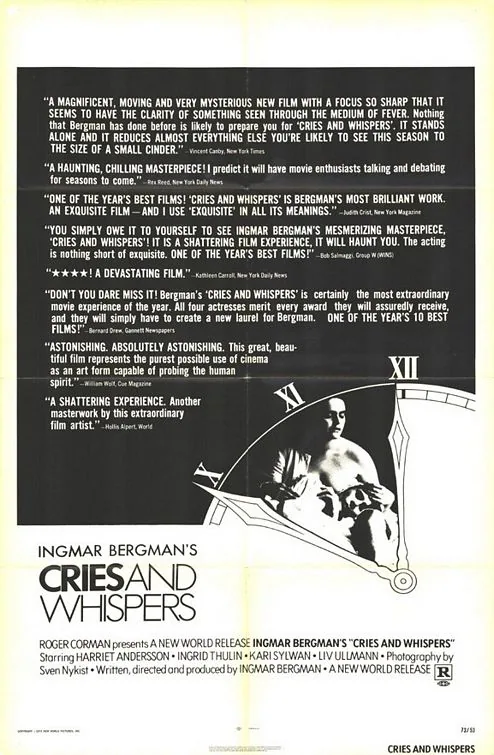
Agnes is dying in a red-walled family house while her sisters Maria and Karin return, each carrying a different form of distance from her suffering. Anna, the maid, offers the physical comfort her relatives struggle to give, but her care does not grant her equal authority in the household. Memory and an uncanny return briefly reopen the possibility of tenderness before the sisters resume their separate lives. Bergman's close framing and saturated color make bodily pain intimate without resolving it into a reassuring story of reconciliation.
An unexpected guardianship forces a grieving man to revisit the place and history he has been unable to re-enter.
Why this matches +
These films explore a related idea in a different setting, genre or style.
An adjacent discovery: a related idea with a different viewing experience.
Genres: Drama
Shared film traits
Based on recorded story, mood and style. Your preferences can change the order.
What changes Its own story: An unexpected guardianship forces a grieving man to revisit the place and history he has been unable to re-enter.
After his brother Joe dies, Lee Chandler returns to the Massachusetts town he left and learns that he has been named guardian of Joe's teenage son, Patrick. The practical arrangements bring him face to face with an earlier catastrophe: a house fire accidentally killed Lee's three children, and he could not remain in the community afterward. Patrick wants to stay with friends and his band, while Lee cannot imagine rebuilding a life there. The two negotiate care without a consoling cure, settling on a future that preserves a relationship Lee can bear.
A domestic arrangement produces a disputed incident whose interpretation threatens two families' futures.
Why this matches +
These films explore a related idea in a different setting, genre or style.
An adjacent discovery: a related idea with a different viewing experience.
Genres: Drama
Shared film traits
Based on recorded story, mood and style. Your preferences can change the order.
What changes Its own story: A domestic arrangement produces a disputed incident whose interpretation threatens two families' futures.
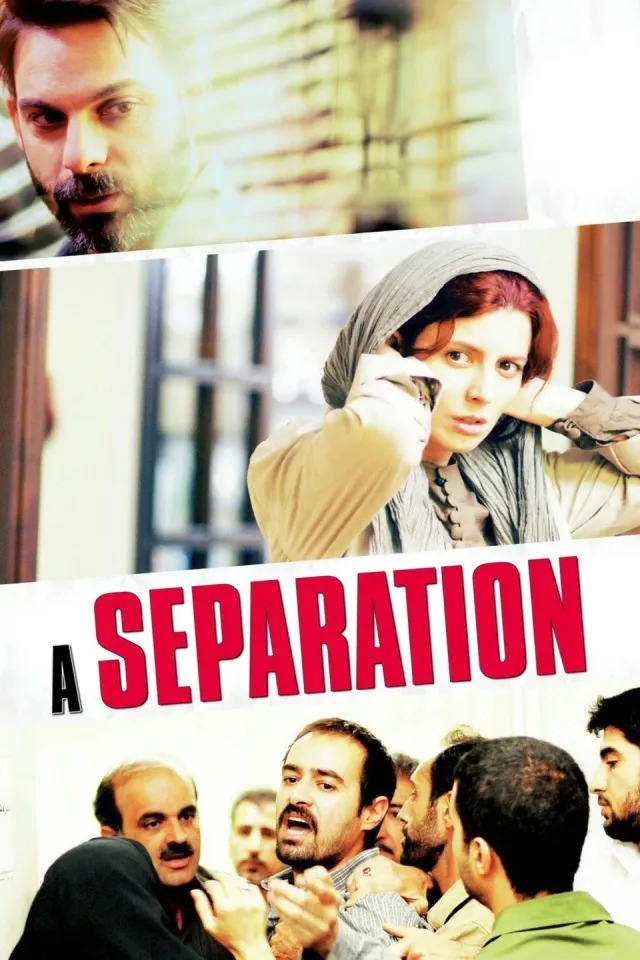
A couple's disagreement about leaving Iran leads to a household separation and the hiring of a caregiver for an elderly father. An incident between the caregiver and the husband produces accusations whose consequences reach both families. Class, religious obligation and partial knowledge complicate every account, while a daughter is pressed to navigate loyalties that the adults cannot reconcile.
The Paris plan exposes how much of the marriage depends on a future the couple has not honestly agreed to pursue.
Why this matches +
These films explore a related idea in a different setting, genre or style.
An adjacent discovery: a related idea with a different viewing experience.
Genres: Drama / Romance
Shared film traits
Based on recorded story, mood and style. Your preferences can change the order.
What changes Its own story: The Paris plan exposes how much of the marriage depends on a future the couple has not honestly agreed to pursue.
In 1950s Connecticut, Frank and April Wheeler present themselves as a successful young couple, though both feel trapped by a life that has not matched their ambitions. April’s plan to move the family to Paris briefly gives them a shared future, but Frank’s promotion and another pregnancy reopen disagreements about work, parenthood and escape. Their neighbors and the Givings family provide a social world that encourages conformity, while John Givings speaks more openly about the Wheelers’ self-deception. When their plan collapses, both make increasingly destructive choices: April performs an abortion herself and dies from blood loss, leaving Frank to face the irreversible cost of their conflict.
A long mother-daughter bond, rather than one external crisis, gives shape to the film; Emma's illness makes earlier friction and everyday care feel newly consequential.
Why this matches +
These films explore a related idea in a different setting, genre or style.
An adjacent discovery: a related idea with a different viewing experience.
Genres: Drama / Comedy
Shared film traits
Based on recorded story, mood and style. Your preferences can change the order.
What changes Its own story: A long mother-daughter bond, rather than one external crisis, gives shape to the film; Emma's illness makes earlier friction and everyday care feel newly consequential.
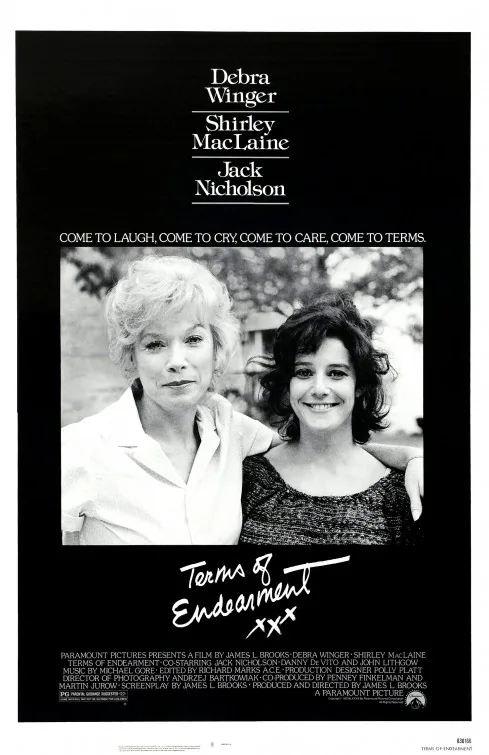
Aurora Greenway's close relationship with her daughter Emma is affectionate but controlling, and the two remain entangled after Emma marries college professor Flap Horton. Emma builds a family in Iowa while Aurora begins a romance with retired astronaut Garrett Breedlove. Financial strain and marital suspicion complicate Emma's life, then a cancer diagnosis forces mother and daughter to reconsider what their arguments have concealed. Their conversations, partners and children bring the two generations together as Emma's illness changes the family's priorities and leaves Aurora with an unexpected responsibility.
Shifting actors, rooms and timelines are not a puzzle for Anthony to solve; they place viewers inside the disorientation that shapes his choices.
Why this matches +
These films explore a related idea in a different setting, genre or style.
An adjacent discovery: a related idea with a different viewing experience.
Genres: Drama / Psychological
Shared film traits
Based on recorded story, mood and style. Your preferences can change the order.
What changes Its own story: Shifting actors, rooms and timelines are not a puzzle for Anthony to solve; they place viewers inside the disorientation that shapes his choices.
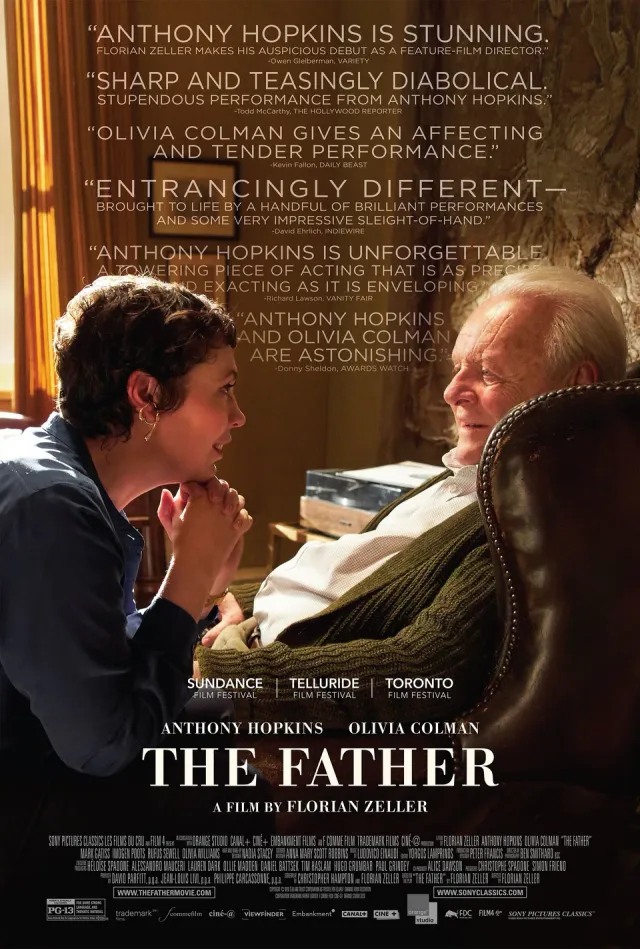
Anthony, an older man living alone in London, insists he does not need help even as his daughter Anne struggles to find a caregiver he will accept. He is certain his watch has been stolen and that Anne is still married, but the people and rooms around him begin to change without warning. A man who claims to be Anne’s husband appears in Anthony’s flat; Anne herself seems to have a different face, and dates and memories refuse to line up. The film stays close to Anthony’s perception, making the audience share his uncertainty rather than explain it from outside. As Anne weighs her responsibilities and her own life, Anthony searches for the familiar home and mother he can no longer locate.
A couple's present-day crisis is interwoven with the earlier attraction that brought them together.
Why this matches +
These films explore a related idea in a different setting, genre or style.
An adjacent discovery: a related idea with a different viewing experience.
Genres: Drama / Romance
Shared film traits
Based on recorded story, mood and style. Your preferences can change the order.
What changes Its own story: A couple's present-day crisis is interwoven with the earlier attraction that brought them together.
Dean and Cindy's relationship is shown across two periods: the early days when attraction makes a shared future feel possible, and a later marriage strained by routine, work and different expectations. Their weekend at a motel becomes a pressure point where affection and resentment coexist. Derek Cianfrance's intimate drama cuts between the beginnings and unraveling of a relationship without reducing either version to a simple explanation.
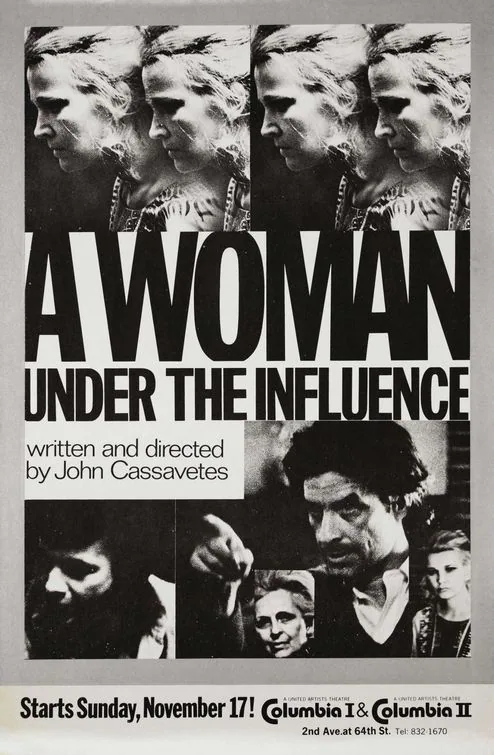
Mabel Longhetti is devoted to her children and husband Nick, but her unpredictable behavior alarms the people around her. Nick struggles to reconcile love for her with the expectations of their family and community, eventually agreeing to psychiatric treatment. When Mabel returns home, both face the difficult question of whether the household can welcome her without demanding that she become someone else.
What drives the story
A family’s response to Mabel’s behavior leads to psychiatric treatment and a tense attempt to rebuild life at home.
The people at its centre
Nick loves Mabel but cannot easily support her on her own terms, while relatives and children react to their conflict.
What it feels like
Long, emotionally exposed performances create a demanding domestic drama without reducing its characters to a simple diagnosis.
Worth knowing
The film treats mental-health crisis and family distress with uncomfortable intensity rather than offering an easy therapeutic resolution.
Family pressureMental healthLove
Mood
Raw · Intense · Compassionate
Pacing
Emotional escalation · Intimate scenes
Visual style
Naturalistic performance · Domestic interiors
Storytelling
Marriage under strain · Institutional treatment · Family reunion