1962 · George Marshall & Henry Hathaway & John Ford
Runtime: 2h 44mMPA rating: G
Explore films connected to How the West Was Won through Migration, Inheritance, National mythology. Choose the qualities you want to carry into your next watch.
What should feel similar?
Find your next favourite
9 films · Closest overall matches
Hide films you’ve seen or don’t want. Saved on this device.
No matches for this combination yet.
Try another option or reset your choices to see more films.
Based on recorded story, mood and style. Your preferences can change the order.
War and civilian life
Expect elegiac and reflective, with episodic pacing.
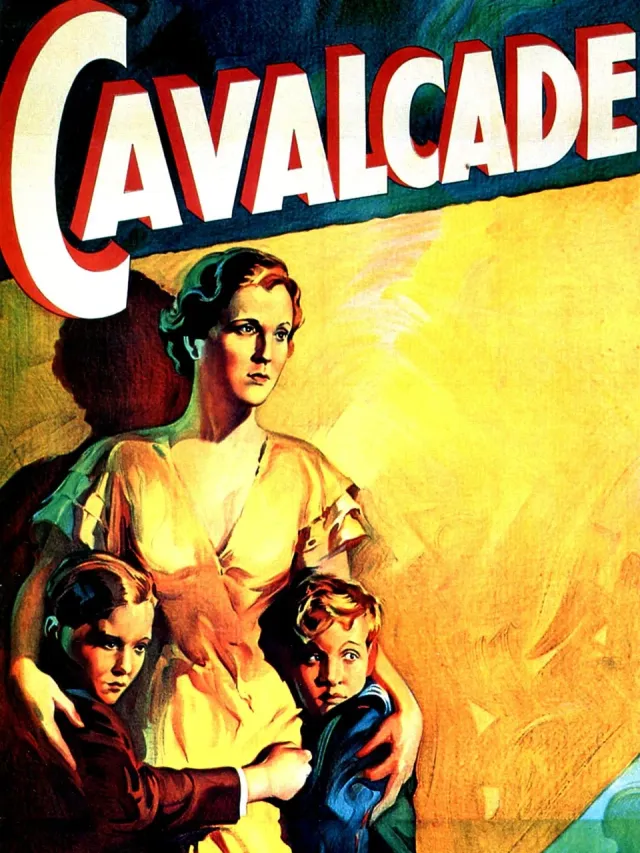
Cavalcade follows the affluent Marryot household and its servants from New Year's Eve 1899 through three decades of public change. The Boer War, the Titanic, World War I, deaths and new generations enter the family pageant, while the Bridges household supplies a parallel view of domestic labor and class aspiration. Cross-class affection does not dissolve that hierarchy, and imperial and national ceremonies shape what history means to the film's central family. Its sweeping sentiment is a perspective on the past, not a neutral survey of it.
Based on recorded story, mood and style. Your preferences can change the order.
Expect epic and emotional, with episodic pacing.
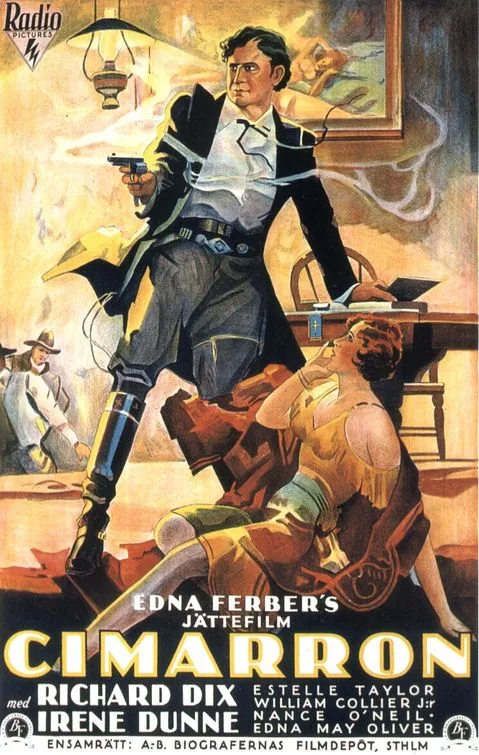
After the 1889 Oklahoma land run, restless newspaper editor Yancey Cravat brings his wife Sabra to a frontier town where she gradually builds a civic and editorial life of her own. Yancey's departures and returns leave Sabra to meet the social changes the film presents as national progress. That sweeping viewpoint centers settler ambition and includes Indigenous people and Black characters through the period's limited representational conventions. Its epic scale and Sabra's development can be discussed without accepting the frontier ideology as neutral history.
Based on recorded story, mood and style. Your preferences can change the order.
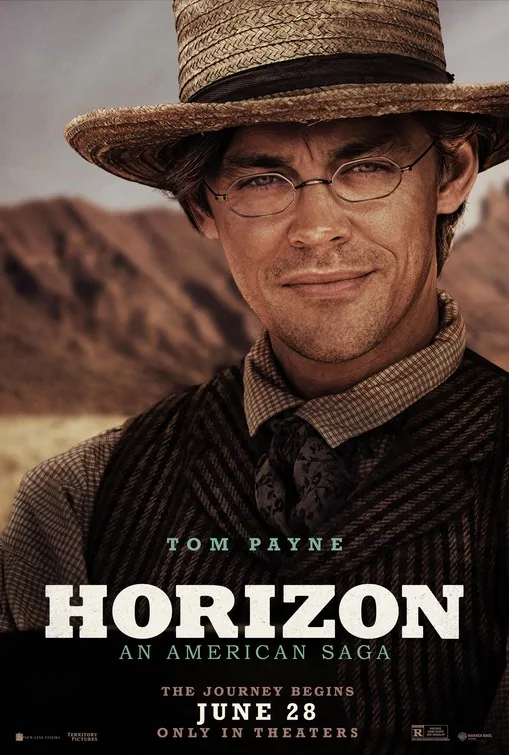
What changes How the West Was Won: episodic. Horizon: An American Saga – Chapter 1: a multi-threaded chapter lays groundwork for a continuing frontier epic.
In the years before and after the Civil War, settlers, soldiers, and Indigenous communities encounter the expansion of a frontier town called Horizon. Multiple storylines follow people arriving, defending homes, and confronting the consequences of settlement. The Western is structured as the opening of a larger saga, emphasizing movement across a wide landscape while placing family ambition beside the violence and displacement that accompany territorial expansion.
Based on recorded story, mood and style. Your preferences can change the order.
War and civilian life
Expect tragic and romantic, with episodic pacing.
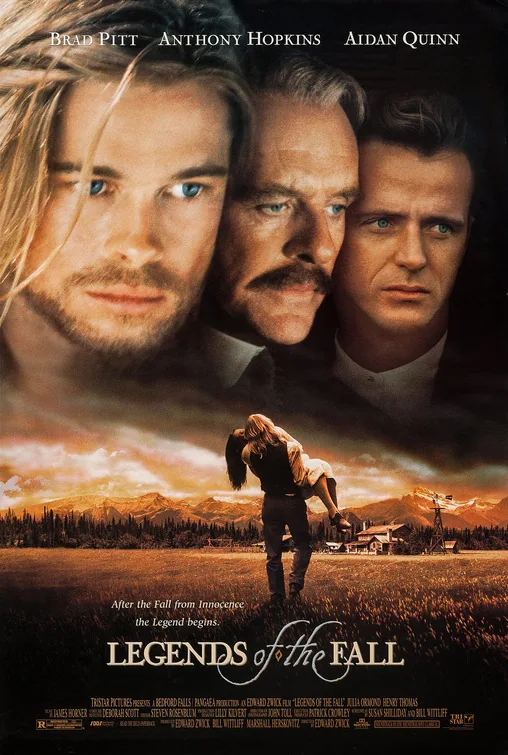
Three brothers raised on a Montana ranch enter the First World War with different expectations of duty and belonging. One death reorganizes their relationships with their father and the woman whose engagement linked her to the family. The returning brother's grief turns into absence, renewed attachments and violence that cannot remain a private condition. The multigenerational melodrama makes landscape and family myth large enough to contain longing without making them reliable shelter from rivalry, political compromise or the consequences of idealizing an untamable man.
Both share an expansive and adventurous atmosphere.
Why this matches +
Genres: Adventure / Drama
Shared film traits
Based on recorded story, mood and style. Your preferences can change the order.
What changes How the West Was Won: episodic. Hidalgo: measured and character-led.
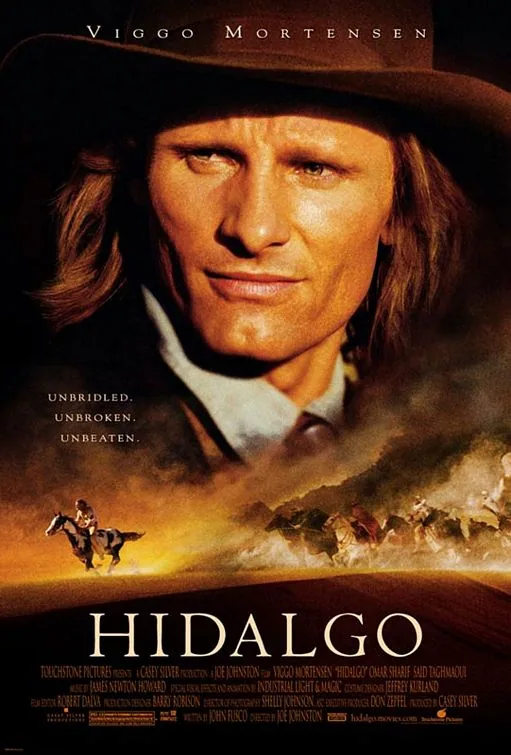
A mustang rider accepts an invitation to compete in a demanding Arabian desert endurance race with his horse Hidalgo. The contest becomes a struggle against harsh conditions and against assumptions that an American outsider cannot belong there. The adventure frames endurance as mutual care between rider and horse rather than simple domination of a rival. Wide desert landscapes and steady race sequences give the film a classic, old-fashioned expedition scale.
Both centre on family obligation and protective flight.
Why this matches +
Genres: Drama / War
Shared film traits
Based on recorded story, mood and style. Your preferences can change the order.
What changes How the West Was Won: episodic. The Searchers: expansive and episodic.
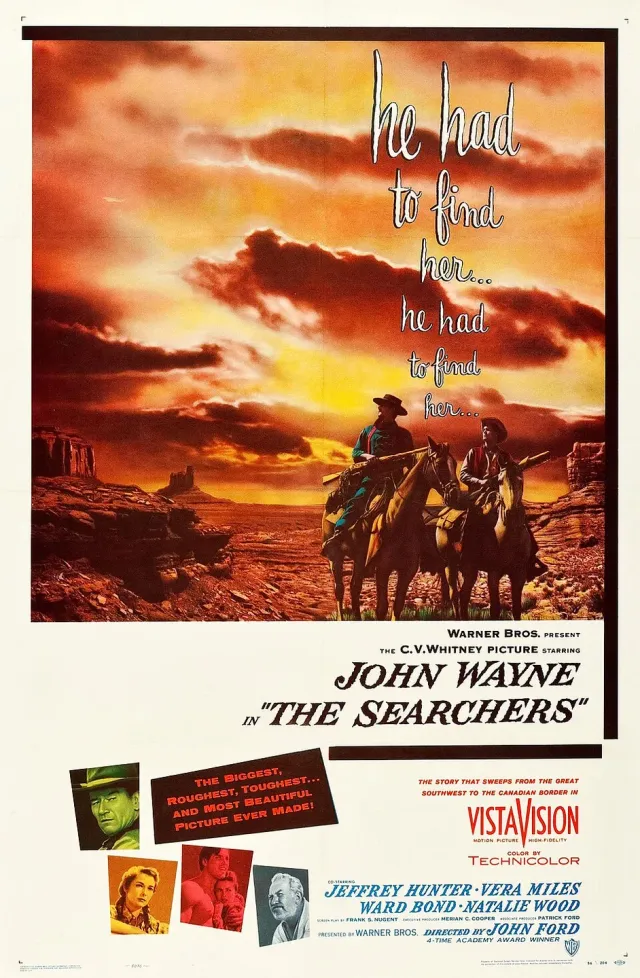
Civil War veteran Ethan Edwards returns to his brother's Texas home and joins a pursuit after a Comanche raid kills much of the family and takes young Debbie. Ethan and Debbie's adopted, part-Cherokee brother Martin search for years, but they do not share the same purpose: Martin hopes to bring Debbie home, while Ethan's racism makes him question whether she should be rescued if she has assimilated into Comanche life. Their route crosses ranches, military posts and settlements, while Martin's attachment to Laurie and Ethan's fixation on the search complicate their return to ordinary life. When they finally find Debbie, Martin has to prevent Ethan's hatred from determining her fate. The film's iconic Western landscape frames a story that exposes the violence and racial hierarchy embedded in its frontier mythology.
Based on recorded story, mood and style. Your preferences can change the order.
What changes How the West Was Won: episodic. Red River: measured, journey-based and building.
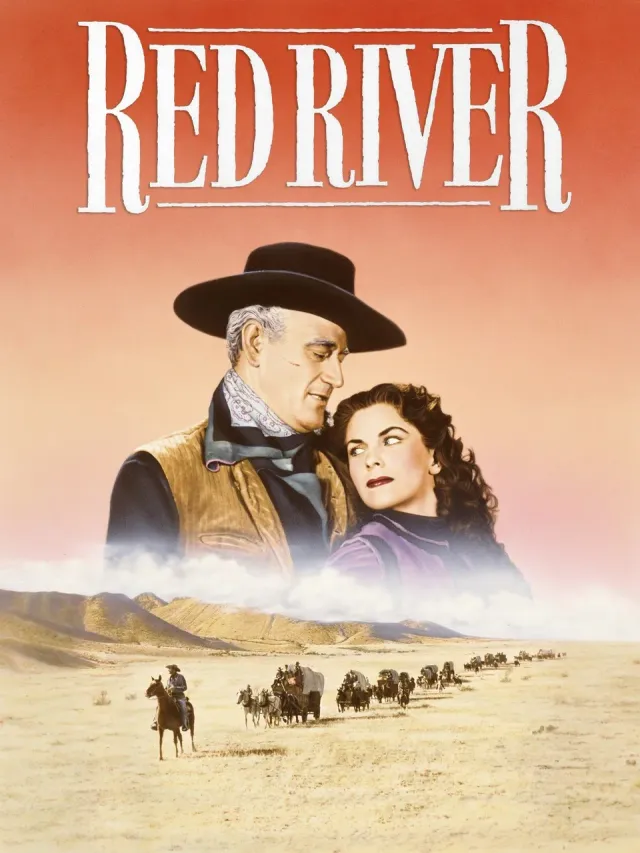
After taking a teenage orphan, Matt Garth, under his care, rancher Thomas Dunson builds a Texas cattle empire with him. Years later, financial pressure leads Dunson to drive a huge herd toward a distant railhead, but his stubborn route and harsh control increasingly endanger the drovers. Matt challenges his authority and takes the herd toward a closer market, leaving Dunson behind. The two men then move toward a reckoning as Dunson follows the drive and tries to reclaim both the cattle and the son he helped raise. Their conflict turns a cattle journey into a struggle over inheritance, loyalty and command.
Based on recorded story, mood and style. Your preferences can change the order.
Expect expansive and reflective, with measured and episodic pacing.
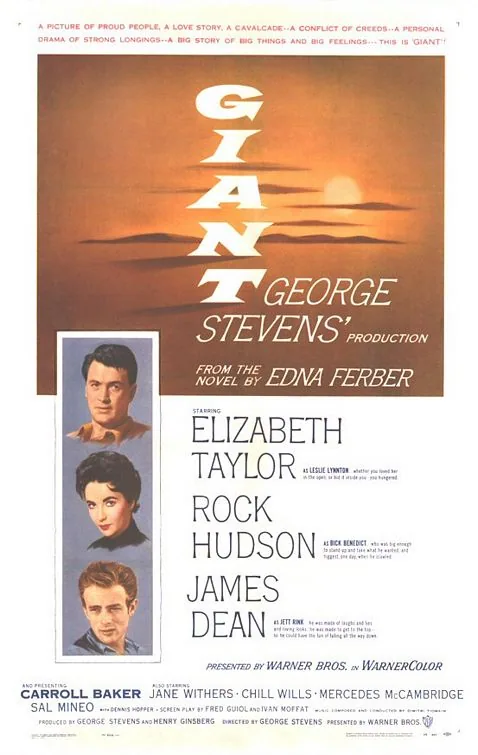
A marriage between Texas rancher Bick Benedict and Maryland socialite Leslie connects family life to a ranch economy built on land, oil and racial hierarchy. Jett Rink’s discovery of oil changes the balance of wealth and authority, while later generations confront discrimination against Mexican Americans that the older ranch culture normalizes. The narrative’s long span gives social change a personal scale, but its central white family still controls much of the film’s viewpoint. The famous diner confrontation complicates Bick’s inheritance of power without making one late gesture resolve the structures the story has spent decades establishing.
Based on recorded story, mood and style. Your preferences can change the order.
What changes How the West Was Won: episodic. Lion: two-part and measured.
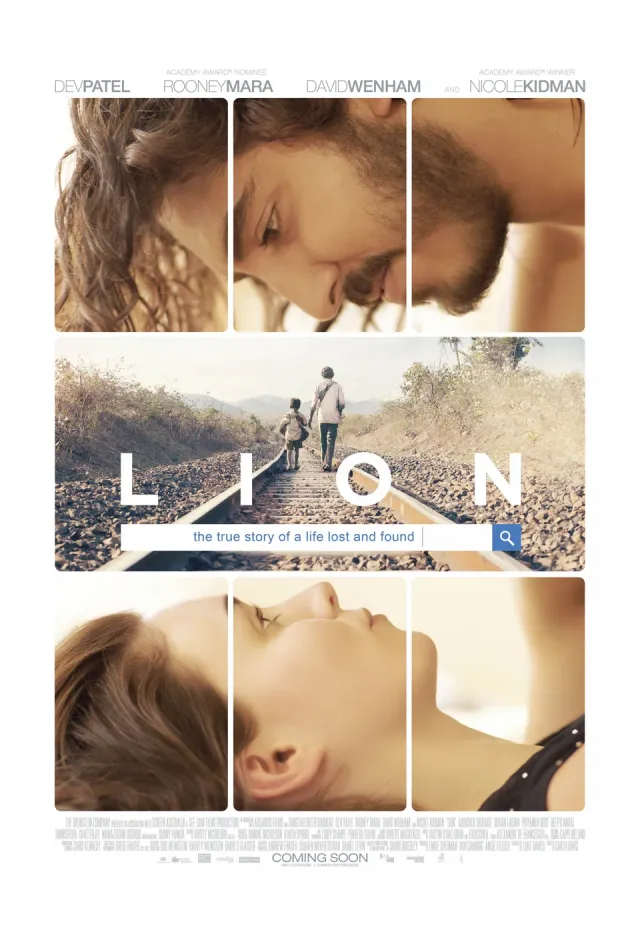
A small boy becomes separated from his brother and travels so far by train that the words he knows cannot guide him home. After danger and institutional care, adoption gives him a secure life in Australia, but remembered sensations later reopen the absence of the family who never learned where he went. Digital maps provide a means of searching without making memory precise. The biographical drama holds two forms of belonging together, making reunion an expansion of attachment rather than proof that one family was only a substitute.
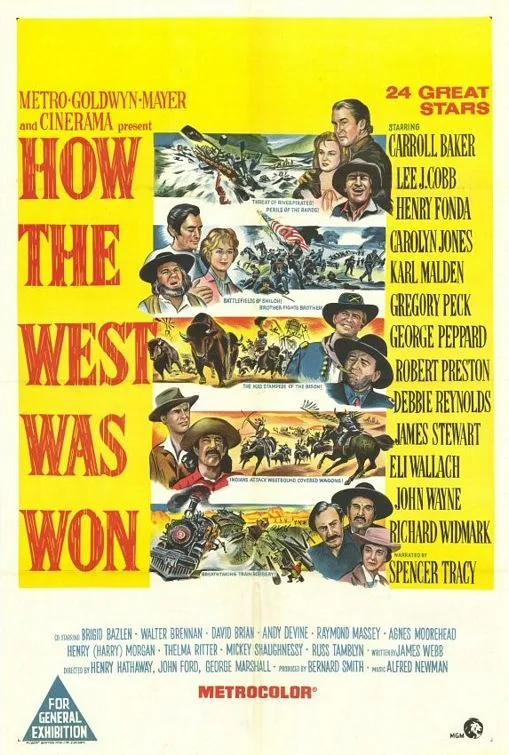
A family’s descendants travel through migration, the California Gold Rush, the Civil War, railroad construction and frontier life across five episodes, using kinship to connect decades of settler expansion. The format keeps movement, landscape and opportunity in the foreground, while Indigenous dispossession and the violence that enabled settlement receive less narrative authority. Shot in three-panel Cinerama, the film was designed as panoramic spectacle; the scale of its images helps explain why its national-progress framing can feel so persuasive. It premiered in London in 1962 and opened widely in the United States in 1963, a dating difference worth retaining when comparing catalogues.
What drives the story
Linked generations provide continuity across five historical episodes, making expansion and migration the organizing process rather than one character’s continuous mission. The family’s continuity turns settlement into inheritance, even as the land’s earlier claims recede.
The people at its centre
Family attachments carry ambition and loss between chapters, while Indigenous characters and settlers occupy unequal positions within the film’s story of opportunity. Indigenous characters do not receive narrative space equal to the settler family’s historical movement.
What it feels like
Three-panel Cinerama landscapes and mass action create overwhelming horizontal spectacle, with episodic stops replacing the intimacy of a continuous character study. Three-panel projection makes landscape the film’s primary spectacle and ideological force.
Worth knowing
Compare with large-scale settler epics while identifying the conquest narrative as a perspective, not neutral history; distinguish its 1962 London premiere from the 1963 U.S. opening. Catalogues differ because a 1962 London premiere preceded the 1963 United States opening.