Based on recorded story, mood and style. Your preferences can change the order.
Family and care · Memory and identity
What changes The Last Showgirl: measured, character-led and reflective. The Room Next Door: deliberate, conversation-led and quietly intense.
Ingrid, a successful writer, reconnects with Martha, a former colleague now living with terminal cancer. Martha asks Ingrid to stay close as she prepares to end her life on her own terms, and the two women retreat to a country house where companionship and difficult conversations replace the routines of the hospital. Their friendship, memories and conflicting responses to death create an intimate drama about autonomy, care and the limits of what one person can decide for another.
Based on recorded story, mood and style. Your preferences can change the order.
Work and ambition · Memory and identity
What changes The Last Showgirl: measured, character-led and reflective. The Day of the Locust: measured, uneasy and escalating.
Tod Hackett arrives in 1930s Hollywood to work as a studio artist and becomes entangled with a group of people living at the margins of the film business. His attention turns toward aspiring actress Faye Greener, her former vaudeville father and neighbors whose hopes of recognition have curdled into dependence and resentment. As Tod’s interest deepens, the surrounding community’s private disappointments gather into a volatile public mood.
Based on recorded story, mood and style. Your preferences can change the order.
Memory and identity
What changes The Last Showgirl: measured, character-led and reflective. The Divine Secrets of the Ya-Ya Sisterhood: alternating timelines and character-led.
A playwright's public comments about her childhood deepen a long-running rift with her mother and threaten to disrupt her upcoming wedding. The mother's lifelong friends intervene, bringing the daughter into a shared history that spans girlhood, marriage and painful family choices. The drama uses memories and an ensemble of older women to ask how adult children can understand parents without excusing the harm they experienced.
Based on recorded story, mood and style. Your preferences can change the order.
Work and ambition · Family and care
What changes The Last Showgirl is tagged melancholic and intimate; To Leslie is tagged raw and tender.
Years after winning a local lottery, Leslie has lost the money and is living with alcoholism, unstable housing and damaged relationships. She returns to her West Texas hometown and reconnects with her adult son, whose offer of shelter comes with limits. Motel owner Sweeney eventually offers her work and a room, creating a fragile chance to rebuild trust. The drama focuses on recovery as a difficult series of choices supported by other people.
Based on recorded story, mood and style. Your preferences can change the order.
Memory and identity
What changes The Last Showgirl: measured, character-led and reflective. The Hours: interwoven timelines and emotional accumulation.
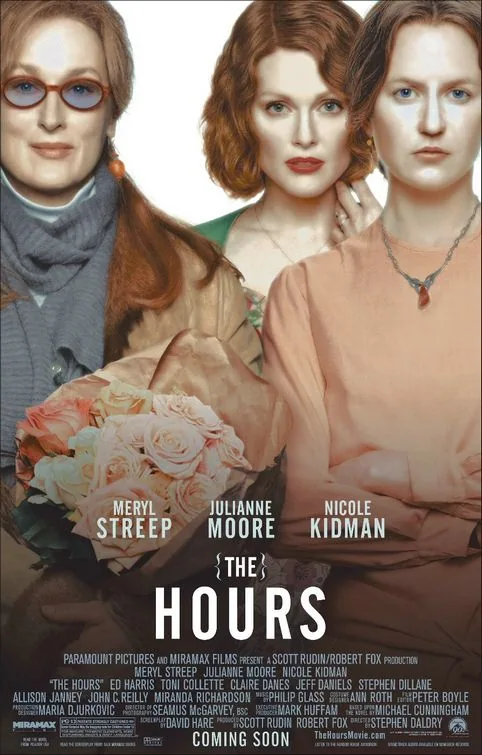
The film follows three women on separate days in different decades: Virginia Woolf in 1920s England, Laura Brown in 1950s Los Angeles and Clarissa Vaughan in contemporary New York. Virginia writes Mrs. Dalloway while struggling with illness and the restrictions of her life; Laura reads the novel as domestic dissatisfaction closes around her; Clarissa cares for Richard, a poet and former lover dying of AIDS. Editing and recurring gestures connect the women without making their experiences identical. The result is a literary drama about care, escape and the futures people imagine for themselves.
Based on recorded story, mood and style. Your preferences can change the order.
Memory and identity
What changes The Last Showgirl: measured, character-led and reflective. The Tree of Life: fragmented and contemplative.
Adult Jack reflects on his childhood in 1950s Texas, where his mother's warmth and his father's strict, ambitious parenting shaped his ideas about love and power. The memory of a family loss runs through his recollections, making ordinary moments of play, discipline and sibling rivalry feel charged with questions he could not answer as a child. The film moves between Jack's present, fragmented family memories and vast images of the universe's origins, placing private grief beside the scale of creation. Rather than offer a single explanatory account of the past, it lets images, music and recurrence carry much of the emotional argument. Jack's adult search is for a way to hold anger, love and absence together.
Based on recorded story, mood and style. Your preferences can change the order.
What changes The Last Showgirl: measured, character-led and reflective. Girl, Interrupted: measured and episodic.
After a suicide attempt, Susanna is admitted to a psychiatric hospital where her relationships with patients, staff and the charismatic Lisa challenge the diagnoses and accounts she has brought with her. Lisa’s rebellion gives Susanna a model of resistance but also exposes how manipulation can travel inside a language of freedom. The film’s adaptation of Susanna Kaysen’s memoir turns institutional life into an ensemble story about care, illness and identity, yet its focus on one young woman’s crisis cannot stand for all psychiatric treatment or diagnoses. Recovery is neither simply obedience nor glamorous rejection of help.
Based on recorded story, mood and style. Your preferences can change the order.
Work and ambition · Family and care
What changes The Last Showgirl: measured, character-led and reflective. Yi Yi: interwoven stories follow each family member as separate events reveal overlapping questions about life and perspective.
Over the course of a year in Taipei, the middle-class Jian family faces a wedding, a grandmother’s stroke, business troubles and the strains of ordinary family life. Father NJ reconnects with a former love while negotiating a new business deal; his wife Min-Min leaves for a Buddhist retreat; daughter Ting-Ting navigates adolescent relationships; and young Yang-Yang observes the adults with unusual curiosity. Each family member sees only part of the whole, and the film follows how private choices ripple through the household and its wider community.
Both share themes of work, plus a melancholic and intimate atmosphere.
Why this matches +
Genres: Drama
Shared film traits
Based on recorded story, mood and style. Your preferences can change the order.
Work and ambition · Memory and identity
Expect melancholic and intimate, with measured and conversational pacing.
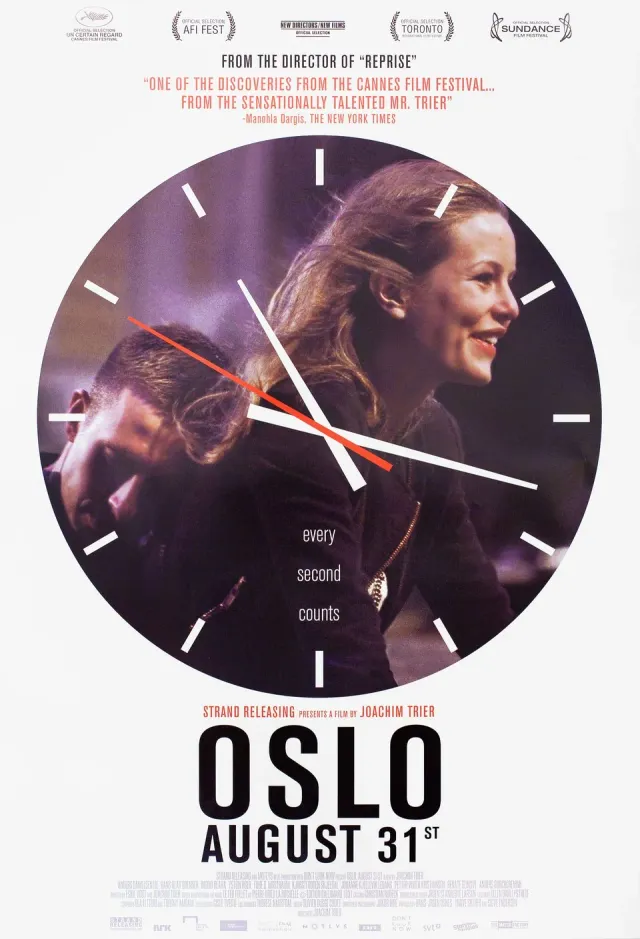
Recovering addict Anders receives a day’s leave from treatment to attend a job interview in Oslo. He visits a friend, encounters people from his former life and moves through the city as he considers whether sobriety offers a future he can inhabit. Conversations about work, family, love and aging bring the gap between his hopes and what he has left undone into focus. Joachim Trier’s drama follows a single day with close attention to loneliness and the fragile possibility of beginning again.
Shelly has performed for decades in a Las Vegas revue that is about to close, leaving her to face a sudden end to the work that has organized her life. She tries to find another place in a changing entertainment city while reconnecting with her estranged daughter and relying on younger performers. The drama follows a woman negotiating aging, labor and self-worth when a familiar stage no longer guarantees a future.
What drives the story
A veteran showgirl must imagine a life beyond a revue that is closing after decades.
The people at its centre
Shelly wants renewed closeness with her daughter as she faces choices her work had postponed.
What it feels like
Backstage routines and stage spectacle contrast a performer's public image with private uncertainty.
Worth knowing
The film focuses on labor and aging in entertainment rather than glamorous show-business success.