An adult's temporary care for his nephew changes how he listens, with children's questions and ordinary routines exposing uncertainty about family and the future.
What should feel similar?
Find your next favourite
9 of 20 films · Closest overall matches
Hide films you’ve seen or don’t want. Saved on this device.
No matches for this combination yet.
Try another option or reset your choices to see more films.
Repeated transitions in home, school and relationships accumulate into an emerging adult perspective.
Why this matches +
These films share important themes, atmosphere or storytelling interests with this selection.
Genres: Drama / Coming-of-age
Shared film traits
Based on recorded story, mood and style. Your preferences can change the order.
Coming of age
What changes Its own story: Repeated transitions in home, school and relationships accumulate into an emerging adult perspective.
A Texas boy grows from early childhood towards college while his family moves, changes partners and adapts to financial and emotional pressures. Ordinary conversations, sibling conflicts and shifting friendships accumulate without a single governing crisis. As the years pass, the adults' unfinished lives remain visible alongside his developing sense of identity, making growing up a process of observation as much as decisive action.
Dorothea asks Abbie and Julie to help her connect with Jamie, and their imperfect guidance reshapes the household's understanding of growing up.
Why this matches +
These films share important themes, atmosphere or storytelling interests with this selection.
Genres: Comedy / Drama
Shared film traits
Based on recorded story, mood and style. Your preferences can change the order.
Coming of age
What changes Its own story: Dorothea asks Abbie and Julie to help her connect with Jamie, and their imperfect guidance reshapes the household's understanding of growing up.
In 1979 Santa Barbara, single mother Dorothea worries that she cannot reach her teenage son Jamie, so she asks two younger women living in their house to help guide him. Photographer Abbie and Jamie's close friend Julie bring different ideas about adulthood, sexuality, and the changing world, while Dorothea's own perspective is shaped by the era in which she grew up. Their shared household becomes a loose education for all of them, built from arguments, music, and attempts to understand one another across generations.
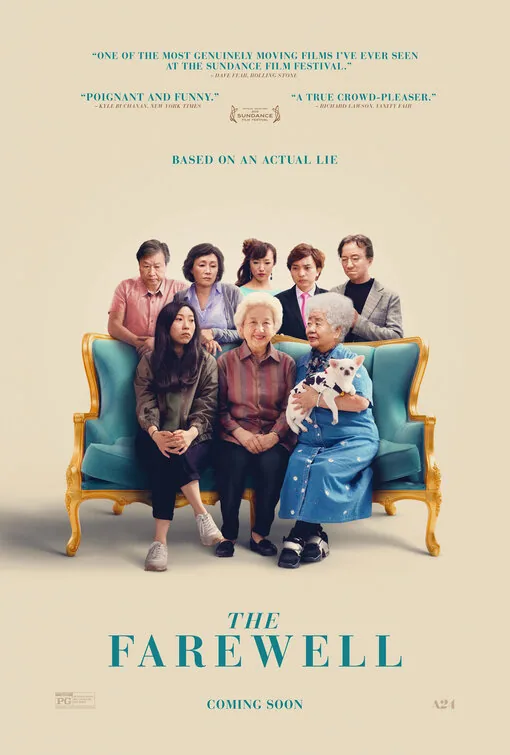
A staged family celebration turns knowledge of approaching loss into a practical dispute over who should carry emotional responsibility.
Why this matches +
These films share important themes, atmosphere or storytelling interests with this selection.
Genres: Drama / Comedy
Shared film traits
Based on recorded story, mood and style. Your preferences can change the order.
What changes Its own story: A staged family celebration turns knowledge of approaching loss into a practical dispute over who should carry emotional responsibility.
A Chinese American woman learns that her grandmother in China has received a terminal diagnosis that the family intends to conceal from her. A hastily arranged wedding creates a reason for relatives living abroad to gather without revealing why they have come. Returning against her parents' advice, the granddaughter struggles with a form of care that depends on collective concealment, while recognising that migration has already complicated what belonging and responsibility mean.
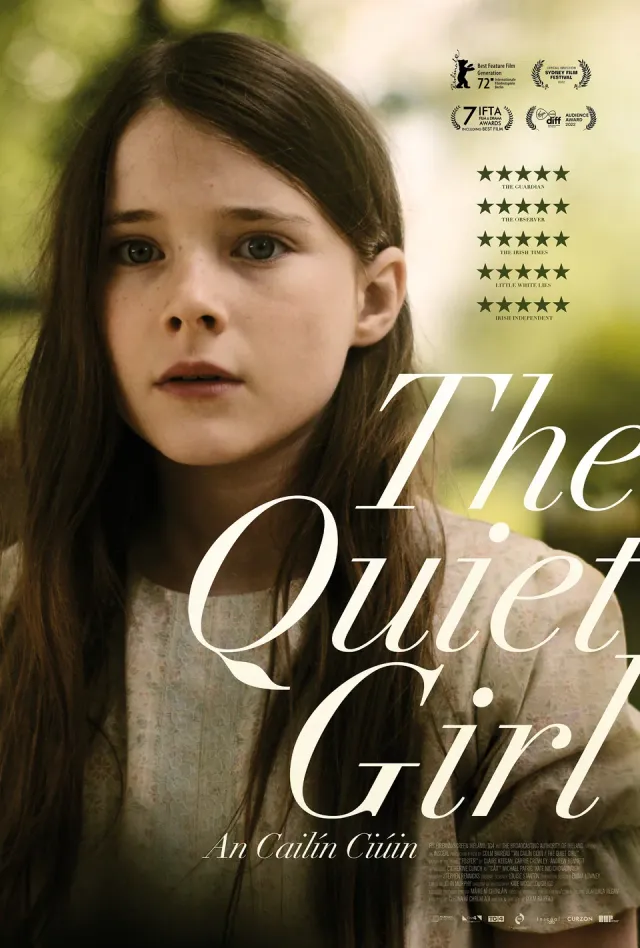
Cáit moves into a relative’s home for the summer, where daily chores and careful attention reveal a different model of family life.
Why this matches +
These films share important themes, atmosphere or storytelling interests with this selection.
Genres: Drama
Shared film traits
Based on recorded story, mood and style. Your preferences can change the order.
Coming of age · Memory and identity
What changes Its own story: Cáit moves into a relative’s home for the summer, where daily chores and careful attention reveal a different model of family life.
Nine-year-old Cáit is sent from her crowded home to stay with distant relatives in rural Ireland for the summer. Eibhlín welcomes her with patient care, while the more reserved Seán gradually makes room for the child in the routines of the farm. As Cáit learns the household’s silences and small acts of kindness, she discovers how attention can make a neglected child feel safe and how grief can remain present without being explained.
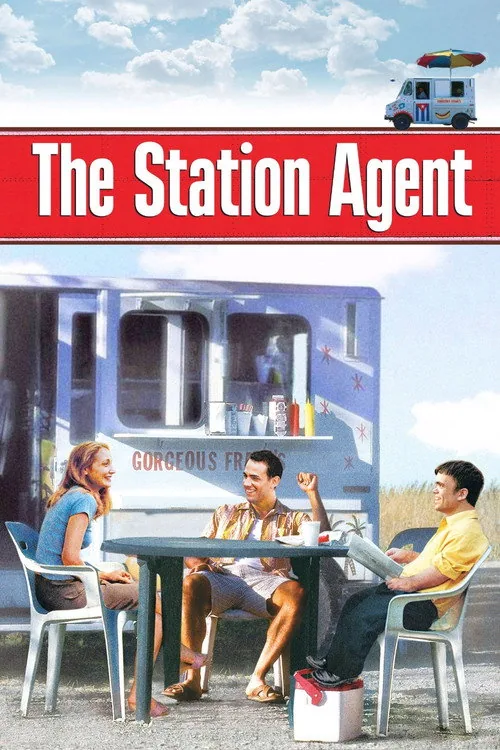
Fin’s attempt at seclusion is gradually interrupted by neighbors who keep returning and form a friendship without demanding instant intimacy.
Why this matches +
These films share important themes, atmosphere or storytelling interests with this selection.
Genres: Comedy / Drama
Shared film traits
Based on recorded story, mood and style. Your preferences can change the order.
What changes Its own story: Fin’s attempt at seclusion is gradually interrupted by neighbors who keep returning and form a friendship without demanding instant intimacy.
Finbar McBride, a private man with a passion for trains, inherits an abandoned station in rural New Jersey and hopes to live there alone. His quiet routine is interrupted by Joe, an outgoing vendor whose stand is nearby, and Olivia, an artist coping with a recent family loss. Although the three begin with different needs and little in common, repeated encounters build a tentative friendship. Tom McCarthy’s comedy-drama gives attention to silence, loneliness, and the awkward process of allowing other people into a life organized around solitude.
Duncan’s summer employment gives him a place to make choices outside the family dynamic that leaves him diminished.
Why this matches +
These films share important themes, atmosphere or storytelling interests with this selection.
Genres: Comedy / Drama
Shared film traits
Based on recorded story, mood and style. Your preferences can change the order.
Coming of age
What changes Its own story: Duncan’s summer employment gives him a place to make choices outside the family dynamic that leaves him diminished.
Fourteen-year-old Duncan is taken on a summer trip to a beach community with his mother, her condescending boyfriend Trent, and Trent’s daughter. Feeling out of place, he finds work at a water park where its informal manager Owen offers him friendship and room to try things for himself. The coming-of-age comedy follows Duncan’s growing confidence through summer routines, awkward romance, and pressure at home, showing how a different community can make adulthood feel less fixed.
Episodic childhood play gradually reveals an unstable household whose economic pressures are approaching consequences the child cannot control.
Why this matches +
These films share important themes, atmosphere or storytelling interests with this selection.
Genres: Drama
Shared film traits
Based on recorded story, mood and style. Your preferences can change the order.
Coming of age
What changes Harsher housing insecurity and adult instability replace the temporary caregiving arrangement, while patient attention to children's everyday perception exposes needs adults cannot fully resolve.
A young girl spends a summer roaming the budget motels and improvised play spaces near a major Florida tourist resort. Her mother's precarious work and escalating conflicts remain only partly visible through the child's adventures, while a motel manager repeatedly balances compassion against practical limits. The pleasures of unsupervised friendship unfold beside the risk of losing a fragile home, exposing a gap between childhood imagination and the adult systems shaping it.
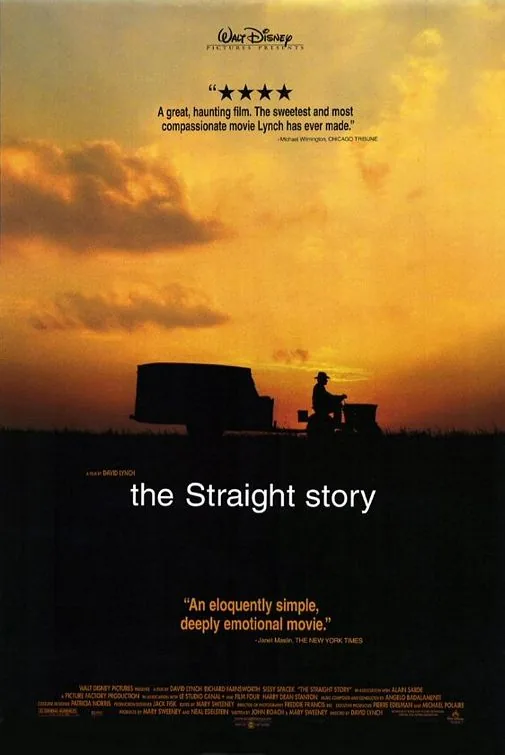
An elderly man undertakes a slow cross-state journey to visit his brother before another illness makes reconciliation impossible.
Why this matches +
These films share important themes, atmosphere or storytelling interests with this selection.
Genres: Drama / Adventure
Shared film traits
Based on recorded story, mood and style. Your preferences can change the order.
What changes Its own story: An elderly man undertakes a slow cross-state journey to visit his brother before another illness makes reconciliation impossible.
When 73-year-old Alvin Straight hears that his estranged brother Lyle has suffered a stroke, he decides to travel from Iowa to Wisconsin to see him. Alvin cannot drive because of his eyesight and refuses to depend on the family car, so he sets out on a small John Deere riding mower with a trailer. Mechanical problems slow the trip, and conversations with people he meets reveal pieces of his marriage, his wartime past and the long silence between the brothers. His daughter Rose worries about his health and the journey's practical risks, but Alvin persists. The distance is modest by road-movie standards and immense for the vehicle, turning each stop into an opportunity to decide what reconciliation can still mean.
A bus driver and poet notices his city while sharing a home with an aspiring artist. His routine shifts after a small loss and an encounter.
Why this matches +
These films share important themes, atmosphere or storytelling interests with this selection.
Genres: Drama / Comedy
Shared film traits
Based on recorded story, mood and style. Your preferences can change the order.
What changes Its own story: A bus driver and poet notices his city while sharing a home with an aspiring artist. His routine shifts after a small loss and an encounter.
Paterson, a bus driver in Paterson, New Jersey, follows a steady routine of work, walks with his dog, and quiet conversations at a local bar. He writes poems in a notebook, drawing on passenger conversations and daily details, while his wife Laura pursues creative ambitions at home. The film observes ordinary days without a crisis-driven plot. Jim Jarmusch’s drama finds variation in repetition, private art, neighborhood encounters, and the way a small loss interrupts a familiar rhythm.
The repeated routine is the film’s story engine; small disruptions reveal the family ties and loneliness that the schedule leaves outside its frame.
Why this matches +
These films share important themes, atmosphere or storytelling interests with this selection.
Genres: Drama
Shared film traits
Based on recorded story, mood and style. Your preferences can change the order.
What changes Its own story: The repeated routine is the film’s story engine; small disruptions reveal the family ties and loneliness that the schedule leaves outside its frame.
Hirayama works as a meticulous public-toilet cleaner in Tokyo, arranging his days around familiar routes, cassette tapes, books and photographs of trees. His routine is mostly self-chosen and gives him quiet satisfaction, but small interruptions gradually reveal relationships he keeps at a distance. His younger coworker Takashi’s needs, the arrival of Hirayama’s niece Niko and an unexpected encounter with a man from a nearby restaurant unsettle the pattern without turning it into a conventional quest. As these moments accumulate, Hirayama’s attention to work, nature and music becomes a way of meeting an uncertain life one day at a time.
A man's new relationship unfolds alongside memories of his father beginning a more honest life in old age.
Why this matches +
These films explore a related idea in a different setting, genre or style.
An adjacent discovery: a related idea with a different viewing experience.
Genres: Drama / Romance
Shared film traits
Based on recorded story, mood and style. Your preferences can change the order.
Memory and identity
What changes Its own story: A man's new relationship unfolds alongside memories of his father beginning a more honest life in old age.
After his father's death, Oliver remembers the older man's late-life coming out and the years of illness that followed, while beginning a hesitant relationship with actress Anna. Memories of his mother, his childhood and the family he thought he understood surface alongside the new romance. Mike Mills' drama shifts between periods with a light, personal touch, examining grief, honesty and the possibilities of starting over.
An adult revisits family memories and a sibling's death while the film places his private grief beside an immense cosmic history.
Why this matches +
These films explore a related idea in a different setting, genre or style.
An adjacent discovery: a related idea with a different viewing experience.
Genres: Drama / Coming-of-age
Shared film traits
Based on recorded story, mood and style. Your preferences can change the order.
Memory and identity
What changes Its own story: An adult revisits family memories and a sibling's death while the film places his private grief beside an immense cosmic history.
Adult Jack reflects on his childhood in 1950s Texas, where his mother's warmth and his father's strict, ambitious parenting shaped his ideas about love and power. The memory of a family loss runs through his recollections, making ordinary moments of play, discipline and sibling rivalry feel charged with questions he could not answer as a child. The film moves between Jack's present, fragmented family memories and vast images of the universe's origins, placing private grief beside the scale of creation. Rather than offer a single explanatory account of the past, it lets images, music and recurrence carry much of the emotional argument. Jack's adult search is for a way to hold anger, love and absence together.
The film's engine follows Will’s organized independence is challenged by a bond he did not plan; this keeps the stakes tied to observable choices.
Why this matches +
These films explore a related idea in a different setting, genre or style.
An adjacent discovery: a related idea with a different viewing experience.
Genres: Comedy / Drama
Shared film traits
Based on recorded story, mood and style. Your preferences can change the order.
Coming of age · Memory and identity
What changes Its own story: The film's engine follows Will’s organized independence is challenged by a bond he did not plan; this keeps the stakes tied to observable choices.
Will Freeman has arranged a comfortable life around avoiding obligations, until an invented family connection brings him into contact with isolated schoolboy Marcus. Their reluctant friendship draws Will into the boy’s family difficulties and forces both to reconsider their habits. The comedy balances dry observation with a gradual movement from self-protection toward care and responsibility.
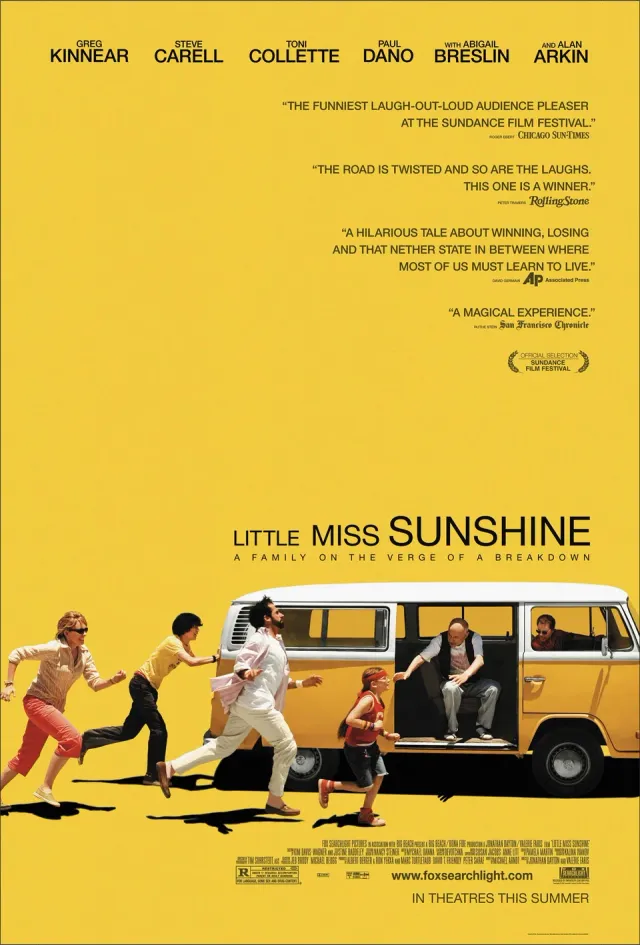
A time-sensitive road trip compresses incompatible family disappointments into shared practical obstacles before a public competition tests their loyalties.
Why this matches +
These films explore a related idea in a different setting, genre or style.
An adjacent discovery: a related idea with a different viewing experience.
Genres: Drama / Comedy
Shared film traits
Based on recorded story, mood and style. Your preferences can change the order.
What changes More profane ensemble comedy, suicidal despair and a death replace the quiet listening journey, while imperfect family care survives travel and conflicting expectations.
A young girl's chance to enter a beauty pageant sends her financially strained family across the Southwest in an unreliable van. Each passenger carries a private disappointment, from stalled ambition and wounded pride to bereavement and depression, and the journey gives them little room to avoid one another. As practical setbacks accumulate, the competition's promise of success exposes the family's need for a less conditional form of belonging.
A runaway's goal of reaching a wrestling school draws an unrelated fugitive into a road-and-river journey, then brings a caregiver into their improvised party.
Why this matches +
These films explore a related idea in a different setting, genre or style.
An adjacent discovery: a related idea with a different viewing experience.
Genres: Drama / Road movie
Shared film traits
Based on recorded story, mood and style. Your preferences can change the order.
Coming of age
What changes Its own story: A runaway's goal of reaching a wrestling school draws an unrelated fugitive into a road-and-river journey, then brings a caregiver into their improvised party.
Zak escapes a state-run care facility with help from his roommate, determined to train as a professional wrestler under his idol, the Salt Water Redneck. Tyler, a crabber who has lost his livelihood and retaliated against the men who drove him out, is also on the run. The two travel toward the wrestling school by raft and back roads, developing a friendship through practical lessons, shared risk and Zak's persistent goal. Eleanor, the facility's caregiver, follows them, but changes course when she learns Zak may be sent to a more restrictive institution. The journey becomes a negotiation over who gets to make decisions about Zak's future, while Tyler has to choose between continued escape and responsibility for another person.
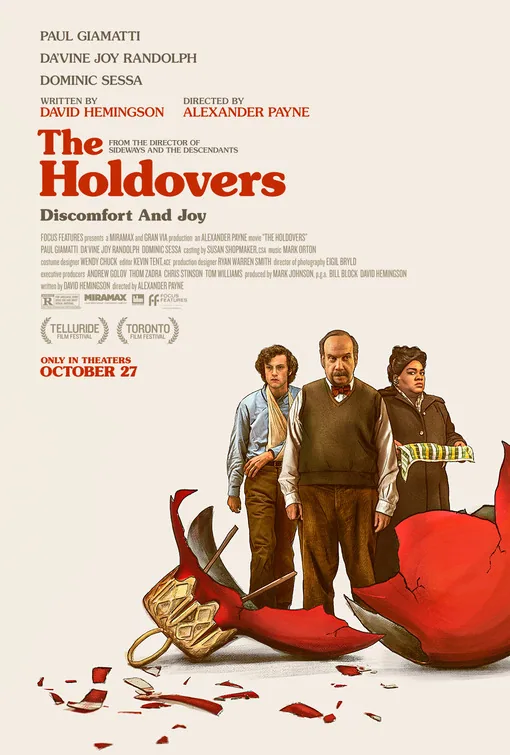
The enforced holiday stay gives the teacher, student and cook time to see past the roles that usually keep them apart.
Why this matches +
These films explore a related idea in a different setting, genre or style.
An adjacent discovery: a related idea with a different viewing experience.
Genres: Drama / Comedy
Shared film traits
Based on recorded story, mood and style. Your preferences can change the order.
Coming of age
What changes Its own story: The enforced holiday stay gives the teacher, student and cook time to see past the roles that usually keep them apart.
At Christmas break in 1970, strict classics teacher Paul Hunham is assigned to supervise the students who cannot return home from Barton Academy. The remaining group soon shrinks to Angus Tully, whose mother and new stepfather have left him behind, and Mary Lamb, the school’s grieving head cook. Their days together begin in mutual irritation, but a trip to Boston and the routines of the school draw out the loneliness and disappointments each has been hiding. Alexander Payne’s comedy-drama finds emotional movement in a temporary community whose members cannot simply leave one another.
An idealistic man moves among his three sisters after a marijuana arrest, unsettling their personal and family arrangements.
Why this matches +
These films explore a related idea in a different setting, genre or style.
An adjacent discovery: a related idea with a different viewing experience.
Genres: Comedy / Drama
Shared film traits
Based on recorded story, mood and style. Your preferences can change the order.
Coming of age
What changes Its own story: An idealistic man moves among his three sisters after a marijuana arrest, unsettling their personal and family arrangements.
Well-meaning organic farmer Ned Rochlin is arrested after selling marijuana to an undercover officer, and his girlfriend sends him away when he returns home. He moves between the households of his three sisters, each managing career, romance, or family tensions of her own. Ned’s honesty and loose boundaries disrupt their carefully managed lives, while their reactions reveal resentments and unmet needs. Jesse Peretz’s comedy-drama treats his apparent naivety as both a source of trouble and a challenge to the family’s habitual evasions.
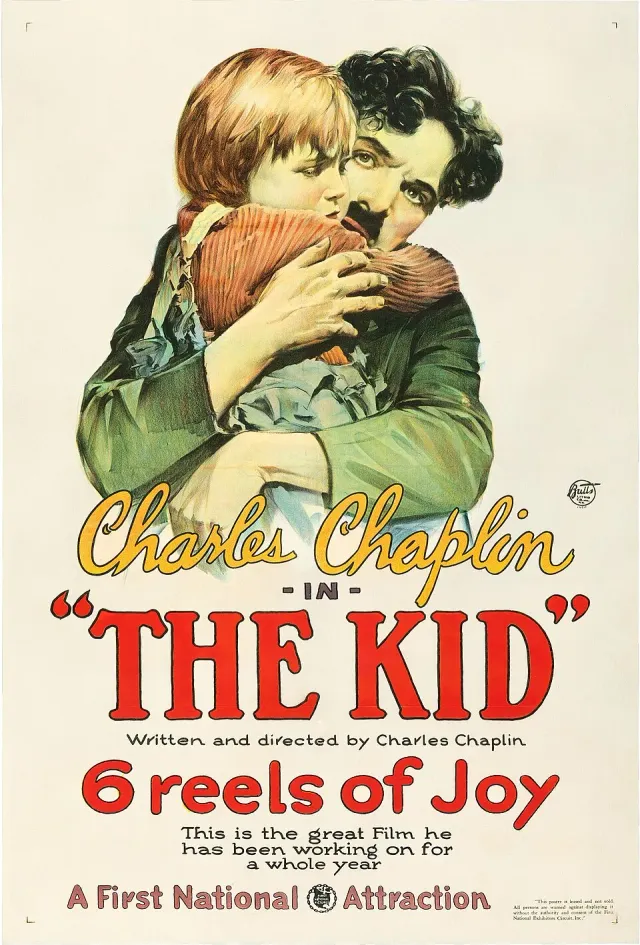
The Tramp’s improvised care becomes a family bond; the authorities’ attempt to place the boy elsewhere turns the comedy into a struggle to reunite them.
Why this matches +
These films explore a related idea in a different setting, genre or style.
An adjacent discovery: a related idea with a different viewing experience.
Genres: Drama / Comedy
Shared film traits
Based on recorded story, mood and style. Your preferences can change the order.
What changes Its own story: The Tramp’s improvised care becomes a family bond; the authorities’ attempt to place the boy elsewhere turns the comedy into a struggle to reunite them.
A young mother leaves her baby in a car with a plea that someone care for him, but thieves steal the vehicle and abandon the child in an alley. The Tramp finds the infant and, after failed attempts to pass him to strangers, decides to raise him. Five years later, the two survive through a small partnership: the boy breaks windows and the Tramp, now posing as a glazier, is paid to repair them. The child’s birth mother has since become successful and is unknowingly drawn back into his life. When officials take the boy from the Tramp, the film’s comic partnership becomes a separation story that tests the attachment both have built.
Retrospective attention to an apparently ordinary holiday reveals an emotional history that remains incomplete despite repeated attempts to interpret it.
Why this matches +
These films explore a related idea in a different setting, genre or style.
An adjacent discovery: a related idea with a different viewing experience.
Genres: Drama
Shared film traits
Based on recorded story, mood and style. Your preferences can change the order.
What changes A more painful retrospective gap around a parent's concealed distress replaces the present-tense caregiving exchange, while ordinary child-adult moments carry meanings neither can fully articulate.
An adult woman revisits a childhood seaside holiday with her young father through video fragments and memories she cannot fully complete. The trip's small pleasures coexist with hints of financial strain and emotional trouble that the child could notice without understanding. Revisiting ordinary gestures becomes an attempt to recognise the parent's experience without pretending that later knowledge can restore a complete account of the person he was.
The castaway’s repeated escape attempts give way to an unexpected relationship that changes how he understands the island and his future.
Why this matches +
These films explore a related idea in a different setting, genre or style.
An adjacent discovery: a related idea with a different viewing experience.
Genres: Animation / Drama
Shared film traits
Based on recorded story, mood and style. Your preferences can change the order.
Memory and identity
What changes Its own story: The castaway’s repeated escape attempts give way to an unexpected relationship that changes how he understands the island and his future.
A man is stranded on an uninhabited island after a storm and repeatedly tries to escape on rafts he builds from bamboo. An unseen force destroys each attempt, until he encounters a red turtle that changes the direction of his life. The island gradually becomes a place where he forms a family and watches the rhythms of nature and aging. Michael Dudok de Wit’s animated fable tells its story without spoken dialogue, using movement, sound and landscape instead.
Radio journalist Johnny temporarily cares for his young nephew Jesse while his sister helps Jesse’s father manage a difficult period. Their road travels for Johnny’s interviews become an improvised relationship between an adult and a child who ask direct questions about the future. The black-and-white drama is less driven by plot than by conversation, observing grief, caregiving, and the unfamiliar rhythms that form when family members spend sustained time together.
What drives the story
Jesse’s questions interrupt Johnny’s work and gradually change how he listens.
The people at its centre
Temporary caregiving lets the uncle and nephew build trust outside their usual roles.
What it feels like
The children interviewed across the country echo the film’s attention to uncertain futures.
Worth knowing
Its visual simplicity keeps performance and speech at the center.
FamilyCommunicationChildhood
Mood
Tender · Observant · Reflective
Pacing
An episodic road structure leaves space for listening and conversation
Visual style
Black-and-white photography · Handheld intimacy · Street portraits
Storytelling
Care partnership · Interviews · Intergenerational communication